

Military Events in the State of Alabama by Date and Location
Birmingham, Alabama
Joined March 2024
- Tweets1.2K
- Following155
- Followers205
- Likes318




Civil War Alabama retweeted
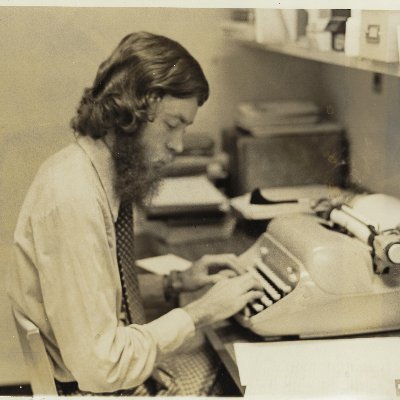
Today's Find: Grafenberg Medical Institute in #Dadeville tinyurl.com/4hs9wbks First operating medical school in #Alabama Graduate Louisa Shepard was first female MD in the U.S. South. Closed by the Civil War #histmed #medicalhistory

Civil War Alabama retweeted

Grave of General Braxton Bragg CSA
Mobile, Alabama (2013)
ebay.com/str/jlsphotos

Civil War Alabama retweeted
Admiral Raphael Semmes CSN Monument
Mobile, Alabama (2013)
ebay.com/str/jlsphotos

Civil War Alabama retweeted
Alabama State Monument
Gettysburg, Pennsylvania (2015)
ebay.com/str/jlsphotos


Civil War Alabama retweeted

162 years ago today Nathan Bedford Forrest's raid through north Alabama reached its bloody climax at a great railroad bridge, where his artillery pounded a Union garrison into surrender in the deadliest fight the region ever saw. It was a masterclass in exactly how to cut an enemy's lifeline.
This is the finale of the raid I described two days ago. After bluffing the garrison at Athens into surrendering, Forrest pushed on to his real prize: the Sulphur Creek Trestle, an enormous wooden railroad bridge that carried the vital supply line feeding Sherman's armies in Georgia across a deep ravine. Guarding it was a Union garrison of around 1,000 men, including United States Colored Troops and Tennessee Unionists, dug into two blockhouses and a fort protecting the trestle.
Forrest did not waste his men on a reckless charge. He was, above all, a practical killer of a soldier, and he had brought his artillery. On September 25 he positioned his guns on the high ground overlooking the fort and opened a punishing, sustained bombardment. For roughly two hours his cannon rained shells down into the crowded Union works, which were poorly sited to withstand plunging artillery fire. The effect was murderous. The defenders, packed into positions with little protection from above, were torn apart, unable to reply effectively to the guns on the heights.
After the bombardment had done its terrible work, Forrest sent in a demand for surrender. The Union commander met with him, saw the hopelessness of the situation, his men being slaughtered with no way to strike back, and capitulated. It was the bloodiest engagement ever fought in north Alabama. More than 200 Union soldiers had been killed, against only about 40 Confederates, most of the disparity caused by that devastating artillery fire.
Forrest captured the survivors, took the fort's guns and supplies, and then burned the great Sulphur Creek Trestle to the ground, exactly what he had come to do. The destruction of that bridge, along with the miles of track and other blockhouses his raid wrecked, tore a hole in the railroad supplying Sherman and forced the Union to divert thousands of troops to hunt Forrest and guard the line. It was a small but painful example of why Sherman called Forrest that devil and swore he had to be hunted down even if it cost the treasury and ten thousand lives. On this day, Forrest showed once again that a fast, hard-hitting raider with a few cannon could do damage out of all proportion to his numbers.

Civil War Alabama retweeted

The 22nd Alabama went into action at Chickamauga with 371 men--they came out with 166! The regiment lost five color bearers during repeated attacks against U.S. troops, eventually losing its regimental colors to the 121st Ohio.
Civil War Alabama retweeted

In 1844, Tallassee, Alabama’s first textile mill was established beside the river. Twenty years later, war transformed part of that mill into something very different.
A Confederate armory.
As Union forces threatened Richmond in 1864, Confederate ordnance officials transferred machinery and equipment for producing carbines from Virginia to Tallassee. The Tallassee operation was intended eventually to produce thousands of carbines annually. The war ended before that could happen.
Approximately 500 Tallassee carbines were manufactured in 1864 and 1865, and fewer than a dozen are known to survive today.
The armory escaped destruction. Union forces bypassed Tallassee in 1864 and 1865, failed to destroy it.


Civil War Alabama retweeted
You did not want to serve in the 22nd Alabama Infantry Regiment. My 4th great-grandfather William R. Smith (1818-1862) was killed at Shiloh, along with 312 from the regiment who were killed, wounded, or missing that day. They went into battle with 435! Had he survived Shiloh, he probably would’ve been killed or wounded at Chickamauga, where the regiment lost 205 out of 371 men—all killed and wounded, no missing. Four color bearers of the 22nd Alabama were shot down at Chickamauga. 💔

Civil War Alabama retweeted
Sept 5, 1862: The CSS Alabama captures and burns her first Union target, the Ocmulgee, eastern Atlantic, near the Azores. #OTD

Civil War Alabama retweeted
This flag probably belonging to 47th Alabama Infantry Regiment, was captured by PVT Stanislas Beneaux of Co. E, 35th New York during his regiment's advance against Confederate troops near the West Woods at the Battle of Antietam on 17 September 1862. My 4th great-grandfather, SGT George W.C. Jarvis, of Co. F, 47th Alabama, was wounded in action that day. He died on 29 October. Of 115 men present at the battle, 47th Alabama lost 10 KIA, 35 WIA, and 53 missing/captured; that's an 85% casualty rate.

Civil War Alabama retweeted

"The Alabama brigade has never failed to drive the enemy when ordered to attack, nor has it ever been driven from a position it was ordered to hold." -General Evander M. Law (Written in praise of the 4th, 15th, 44th, 47th, and 48th Alabama Infantry Regiments.)

Civil War Alabama retweeted
"General Lee, these men are Alabamians!"
— Brigadier General John C.C. Sanders (Battle of the Crater, Petersburg, Virginia, July 30, 1864)
Shouted by Sanders as he led Wilcox's Alabama Brigade in a decisive counterattack to seal the massive breach caused by Union explosives.

Civil War Alabama retweeted
"They surged up the mountain side like an overwhelming wave... Five times they pushed up that hill, five times they were driven back, but each time they reformed & came on again with absolute disregard of death." -Col Joshua L Chamberlain (on the 15th Alabama at Little Round Top)

Civil War Alabama retweeted
This .58-caliber carbine was made in Tallassee, Alabama in 1864. Approximately 500 were made. Fewer than a dozen original survive today, making it one of the rarest and most visually distinct Confederate-made firearms.
Long Live DiXie!


Civil War Alabama retweeted
The 88-foot tall Alabama Confederate Monument on Montgomery's Capitol Hill commemorates the 122,000 Alabamians who fought for the Confederacy during Lincoln’s War.


Civil War Alabama retweeted
The State of Alabama monument at Gettysburg on South Confederate Avenue. It represents the Spirit of Alabama pointing the way forward. A wounded soldier passes a cartridge box to his comrade, representing the determination to continue the struggle.

Civil War Alabama retweeted

A SHILOH STORY of FAITHFULNESS
Billy Patton was from Florence, Alabama. When the War came, he joined a local Company that became Company C, of the 16th Alabama Infantry Regiment. He was quickly elected a Lieutenant of the Company. His best friend was Sam, a family slave, his own age. Sam went to War with Billy. Before the two boys left with the Company, Sam told Billy's mother that no matter what, he would bring Billy home.
When a whole Union Army started landing at Pittsburg Landing on the Tennessee River, near a little Church named Shiloh, the 16th Alabama was sent to Corinth, Mississippi, along with about 44,000 other Confederates. Confederate General Albert Sydney Johnston decided to attack the Union Army at the Landing, before Union General Grant could be joined by another Union Army headed up by Union General Buell, overland from Nashville. And thus, the two day Battle of Shiloh started.
The 16th Alabama fought about mid day, on the first day of Shiloh. They fought in the Southeast corner of the Crossroads area, just North of Shiloh Church. There, Confederate Lieutenant Billy Patton was killed. Sam found his body and he took it back to Shiloh Church. The next morning, Sam found a mule in one of the abandoned Union camps. He put Billy's body on it, and he started back for the railhead at Corinth to take Billy back to his Mamma.
Somewhere on the 22 mile trek back to Corinth, Sam and the mule were stopped by Confederate Officers who were taking wounded men back to Corinth. They told him they needed that mule to replace mules and horses pulling wagons full of wounded. Some of those animals were dying in harness. They told Sam his friend was dead, and the wounded needed that mule way more than his dead friend did. They took Sam's mule away from him so that the wounded might be saved.
With his mule gone, Sam picked up his dead friend, whose Mamma he had promised that he would bring home. Sam put Billy over his shoulder, and he carried Billy back to Corinth, over hills and valleys, and through the mud in the low areas that had been churned up by Artillery wagons, Artillery guns, supply wagons, Cavalry horses. and thousands of men. I have no idea how many tough miles Sam carried Billy.
At Corinth, Sam got Billy's body on a train, to get him home to Florence, and to his Mamma. At least she was able to give her son a decent burial, unlike so many Confederates at Shiloh. Billy is buried with the rest of the family in their plot in the local cemetery.
The rest of the family story is that they took care of Sam for the rest of his life. Sam is buried today there at the family home. Sam kept his sacred promise he had made to Mrs. Patton!
The picture here is of course 25 year old, Lieutenant Billy Patton.
