

Calculation Consulting is a boutique consultancy that specializes in machine learning, AI, and data science
San Francisco
Joined January 2013
- Tweets15.1K
- Following4K
- Followers4.9K
- Likes89.6K
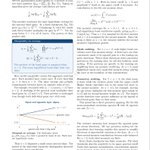

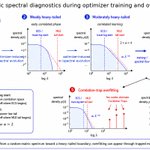



and one more subsection, I will add to the paper before I leave for vacation this week
Here I will describe two ideas
1. Why the average layer alpha is a good metric, even when the individual layer alphas are off
2. The difference between mode seeking and geometry, seeking and how we can gauge layers this way.

In finalizing the RG paper, I realize that I can connect the spectral flow directly to a a dilation beta function for each individual layer arising directly in BackProp
Once I’m sure this is correct. I’ll add it to the paper and submit an updated version.
Comments welcome

Check out JevFight
A cool game where 2 Jev models fight it out
jevfight.com/

𝗔 𝗦𝗽𝗲𝗰𝘁𝗿𝗮𝗹 𝗥𝗲𝗻𝗼𝗿𝗺𝗮𝗹𝗶𝘇𝗮𝘁𝗶𝗼𝗻 𝗚𝗿𝗼𝘂𝗽 𝗧𝗵𝗲𝗼𝗿𝘆 𝗼𝗳 𝗟𝗲𝗮𝗿𝗻𝗶𝗻𝗴
Yeah, it’s taken me almost a decade of work to get here! My new paper is finally live on arXiv.
This has been a labor of love, beginning with research at UC Berkeley and continuing independently with wonderful collaborators.
I spent much of this summer writing it up with substantial help from ChatGPT. It’s my first strongly AI-enabled research paper.
I believe we’re on the verge of a scientific revolution in AI. Yet we still don’t have a satisfactory theory explaining WHY deep learning works.
Why do remarkable capabilities emerge? Why do models generalize or overfit? Why do optimizers work? How does learning organize correlations?
𝗪𝗵𝗮𝘁 𝘁𝗵𝗲 𝗽𝗮𝗽𝗲𝗿 𝗽𝗿𝗼𝗽𝗼𝘀𝗲𝘀
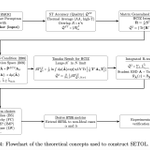
We bring together Heavy-Tailed Self-Regularization (HTSR), our Semi-Empirical Theory of Learning (SETOL), and optimization research into a proposed Renormalization Group (RG) framework.
𝗦𝗽𝗲𝗰𝘁𝗿𝗮𝗹 𝗥𝗚 𝗳𝗹𝗼𝘄𝘀: Truncation, rescaling, and changes of measure defining effective flows and candidate fixed points.
𝗠𝗮𝗿𝗴𝗶𝗻𝗮𝗹𝗶𝘁𝘆 𝗮𝘁 α ≈ 𝟮: Connecting scale invariance, the self-averaging boundary, and learned correlations.
𝗚𝗲𝗻𝗲𝗿𝗮𝗹𝗶𝘇𝗮𝘁𝗶𝗼𝗻: Understanding model quality, overfitting, and correlation traps through spectral statistics.
𝗪𝗪-𝗣𝗚𝗗: Using these ideas to develop better optimizers. A separate paper is coming soon!
Our broader hypothesis is:
𝗦𝗽𝗲𝗰𝘁𝗿𝗮𝗹 𝗨𝗻𝗶𝘃𝗲𝗿𝘀𝗮𝗹𝗶𝘁𝘆 𝗼𝗳 𝗟𝗲𝗮𝗿𝗻𝗶𝗻𝗴.
𝗔 𝗣𝗲𝗿𝘀𝗼𝗻𝗮𝗹 𝗡𝗼𝘁𝗲:
This is also an homage to my late PhD advisor, Karl Freed, a world expert in RG, and my undergraduate physics professor Kenneth Wilson, whose pioneering RG work earned him the Nobel Prize.
I tried to bring everything I learned from that old-school scientific education to bear on modern AI.
A huge thanks to Christopher Hinrichs for helping develop SETOL; Mirco Milletari a for helping develop the early ideas; Hari Prakash for his indispensable contributions to WW-PGD and our understanding of Correlation Traps , and Serena Peng for her work on early HTSR research.
I couldn’t have done this without them!
Ultimately, I developed WeightWatcher and its theory to help clients train, fine-tune, and evaluate better AI models. WeightWatcher has now exceeded 500,000 downloads.
This is a first draft of a proposal, not the final word. I welcome feedback, positive or negative, and hope you find it useful!


Calc Consulting retweeted

When we build statistical models of real neurons, they often end up near criticality, suggesting they're finely tuned to the edge of a phase transition.
Here we show how criticality emerges naturally (without fine-tuning) in models of large populations 👇
arxiv.org/abs/2609.09438

When I was a PhD student at Chicago, I worked on this problem of how to treat the 3- and 4-electron integrals that appear in the effective Hamiltonian that you get from open shell multi reference many body
The kind of stuff that arises quantum chemistry, nuclear shell theory, and some forms of bound state, quantum field theory (QED)
These integrals were large and non-negligible and the last student spent his entire career working on this. Even traveling to Los Alamos to work with the experts, there formulating the diagrammatic expansions.
I realized earlier that this was a bunch of nonsense. It was obvious that these were spurious because they violated spin symmetry. And also they didn’t appear in the semi empirical formulas of theory
I used to go running on the track every morning, and I worked out in my head, how to perform the unitary transformation on these intervals to put them into the base that I needed to evaluate them. InCoded this all up and evaluated them myself and discovered that they were completely negligible for computing the low lying states we were interested in
I should’ve published the work because it was an incredible technical challenge but once I realize they were all useless I just made a comment in one of my papers that we can simply ignore them and moved on
Unfortunately, I don’t have the notebook where I worked out all the math but at this point, I could probably revive it with Astra but I doubt anyone would care. Unless you’re working on some esoteric area bound state QED
Now I bring this up because I’ve gotten some complaints about the RG work in the SETOL because I don’t formally integrate over the truncated variables in the theory
And this is where scientific intuition really plays a role having worked with these effective theories and re-normalized interactions the first thing you wanna do is check to see if you really need to worry about all this stuff because frequently you can get to a first order semi-empirical theory that works very well by ignoring terms that aren’t probably going to be that important
Intuition is important in science
And so is luck


I am frequently asked, how wel does weightwatcher work on larger, more complex models like foundation-scale LLMs.
Here's an older result from LLama3, where we plot the weightwatcher PL exponent alpha, averaged for each layer type (K, Q, V, ...)
You can see that the theory works best for the K and Q matrices inside the Attention blocks
We see similar results on other foundation-scale models like Falcon, Qwen, etc, although the results are best for LLama3
We are trying to understand why it works so well here and not so much in other layers.

𝗥𝗲𝗻𝗼𝗿𝗺𝗮𝗹𝗶𝘇𝗮𝘁𝗶𝗼𝗻, 𝗘𝗺𝗲𝗿𝗴𝗲𝗻𝗰𝗲, 𝗮𝗻𝗱 𝗪𝗵𝘆 𝗗𝗲𝗲𝗽 𝗟𝗲𝗮𝗿𝗻𝗶𝗻𝗴 𝗪𝗼𝗿𝗸𝘀. Turns out, BackProp looks remarkably like defining a Wilsonian RG beta function for each layer. One of the deepest ideas in theoretical physics is that complex, emergent behavior can arise from simple microscopic rules.
Kenneth Wilson's Nobel Prize-winning renormalization group (RG) theory gives us a mathematical framework for understanding how this happens across scales.
We've been developing a spectral RG theory of deep learning, motivated by empirical observations of heavy-tailed weight matrices, scale invariance, and the remarkable tendency of well-trained neural networks to approach marginal spectral behavior near α ≈ 2.
But here's something surprising.
You don't even need to look at the weight spectra to see an intriguing connection to RG. Just look at the basic equations of backpropagation.
In Wilsonian RG, a beta function describes how a coupling changes with logarithmic scale:
β(g) = dg/d(log b)
Now consider a neuron with preactivation z = wx. Backpropagation gives us the exact identity:
w ∂L/∂w = z ∂L/∂z = ∂L/∂log|z|
That's precisely the mathematical form of a logarithmic scaling derivative.
And in a multilayer neural network, something even more interesting happens:
→ Each layer has its own beta-like logarithmic derivative.
→ These quantities are coupled across layers through the chain rule.
→ At stationary points of training, the corresponding dataset-averaged quantities vanish.
→ The resulting mathematical structure resembles a system of coupled RG beta functions.
This is a striking connection hiding in plain sight.
Of course, identifying these derivatives does not by itself establish a Wilsonian coarse-graining transformation. But it gives us a concrete mathematical starting point for investigating how coupled layerwise RG flows might emerge during learning.
And that brings us back to the bigger question:
Can we understand deep learning as a theory of emergence, in which different neural-network layers develop coupled, scale-dependent structures, potentially approaching their own fixed points?
Our spectral RG theory approaches this question empirically, through the eigenvalue distributions of trained weight matrices. The backpropagation equations suggest another route toward understanding the underlying dynamics.
We're working to bring these two perspectives together.
I've put together a thread walking through the mathematics, starting with Wilsonian RG and deriving the backpropagation identities step by step
Stay tuned for more

𝗔 𝗦𝗽𝗲𝗰𝘁𝗿𝗮𝗹 𝗥𝗲𝗻𝗼𝗿𝗺𝗮𝗹𝗶𝘇𝗮𝘁𝗶𝗼𝗻-𝗚𝗿𝗼𝘂𝗽 𝗩𝗶𝗲𝘄 𝗼𝗳 𝗟𝗲𝗮𝗿𝗻𝗶𝗻𝗴
1/11 Neural networks leave a spectral record of learning in their weights. My new paper asks why strong trained layers often develop power-law tails near α ≈ 2.
And how this can help us design better optimizers and prevent overfitting


𝗦𝗽𝗲𝗰𝘁𝗿𝗮𝗹 𝗨𝗻𝗶𝘃𝗲𝗿𝘀𝗮𝗹𝗶𝘁𝘆 𝗼𝗳 𝗟𝗲𝗮𝗿𝗻𝗶𝗻𝗴
11/11 The spectral RG view may extend from neural networks to XGBoost and other learners approaching fixed points. Spectral universality asks whether different learning rules converge toward similar effective correlation structures.
Public arXiv link to follow.

𝗧𝗲𝘀𝘁𝗶𝗻𝗴 𝗿𝗲𝗰𝗼𝘃𝗲𝗿𝘆 𝗳𝗿𝗼𝗺 𝗼𝘃𝗲𝗿𝘁𝗿𝗮𝗶𝗻𝗶𝗻𝗴
10/11 We also fix an overfit checkpoint.
In this preliminary experiment, continuing with WW-PGD recovers more test accuracy than the AdamW and Muon continuations shown.

𝗧𝗲𝘀𝘁𝗶𝗻𝗴 𝘀𝗽𝗲𝗰𝘁𝗿𝗮𝗹 𝗰𝗼𝗻𝘁𝗿𝗼𝗹
9/11 On MNIST, adding WW-PGD to AdamW moves layerwise exponents toward 2 while keeping test accuracy close to the baseline across five runs.
This tests whether we can steer the spectrum using WW-PGD while preserving predictive performance.

𝗧𝘂𝗿𝗻𝗶𝗻𝗴 𝘁𝗵𝗲 𝘁𝗵𝗲𝗼𝗿𝘆 𝗶𝗻𝘁𝗼 𝗮𝗻 𝗶𝗻𝘁𝗲𝗿𝘃𝗲𝗻𝘁𝗶𝗼𝗻
8/11 This suggests an optimizer intervention: WW-PGD.
WW-Projected Gradient Descent
After a base optimizer step, select a spectral window, nudge its shape toward α = 2, preserve its trace-log before blending, and mix the correction back into the weights.
You can test this now using the Python package: ww-_pgd

𝗧𝗲𝘀𝘁𝗶𝗻𝗴 𝘁𝗵𝗲 𝗽𝗿𝗼𝗽𝗼𝘀𝗲𝗱 𝗰𝗼𝗻𝗻𝗲𝗰𝘁𝗶𝗼𝗻
7/11 Trained checkpoints let us test the RG picture directly. Near α = 2, we compare energy across logarithmic bands, the ECS with the fitted power-law tail, and their normalization scales.
Together, these measurements turn the theory into a concrete experimental program.
