

Managed lead response & estimate booking for U.S. HVAC, plumbing and electrical businesses. Find follow-up gaps with our free assessment.
United States
Joined September 2026
- Tweets426
- Following205
- Followers31
- Likes491






Hey I'm Jay, the guy behind CallBack Engine, based in the Tampa area. We help U.S. based service businesses capture more of their incoming leads, and turn them into secured estimates. I would love to work with you and your business! Check us out ⬇️
callbackengine.net/
#HomeServices

1
339
Forwarding a customer email to a coworker feels like a handoff. Often it isn't.
If nobody writes back "got it, I'll call them," you now have two people who each think the other one replied. The customer just sees silence.
A forward needs a name and the open question on top.
1
32
Referral leads are oddly easy to drop.
Someone texts the owner "my neighbor said to call you," and because it feels like a sure thing, it sits in a personal phone instead of going on the same list as the calls and web forms.
A referral still needs a reply, a named person, and a next step. It just came in through a different door.
10
The fastest quote losing makes sense to me. A price sent in ten minutes with no questions can lose to one that came later but showed the company actually understood the job.
2
Worth splitting that count by where each inquiry came in. Calls, web forms, and emails usually land with different people, so the gap is often in one channel instead of all of them.
1
Agreed. It also helps when someone is out sick or leaves. The history stays with the business instead of in one person's texts.
1
1
Yep, and then cost per lead looks better than it really is. Matching the call log by phone number and time is usually the fastest way to see how many real conversations there were.
6
And a fast reply isn't the finish line. It still needs the right job details, a named owner, and a next step someone actually agreed to.
Quick and vague just moves the wait somewhere else.
4
Be careful with the average too. If it only includes leads that got a reply, the ones still sitting with no answer aren't in the number at all.
Put the count of unanswered inquiries right next to it. That count is usually the more useful one.
1
6
Start the clock when the inquiry first arrives, not when someone copies it into the CRM.
A web form that lands before the office opens has been waiting since it landed. If the clock starts at data entry, that wait just disappears from the report.
1
15
If you track lead response time, check what you're actually timing.
The "we got your message" auto-reply can go out in a minute. The first message that actually helps the customer might go out hours later. Only one of those matters to the person waiting.
1
16
Keeping ads on while you build an organic source avoids a sudden gap. I’d compare qualified inquiries and booked work by source, not just impressions and call volume, so the channel mix reflects what the office can actually convert.
6
The double-count is easy to miss when the page looks right. I’d verify both the form submission and the call conversion after a redesign, then compare the counted events with actual inquiries.
1
14
The quote-request example is the clearest one. If the offer includes follow-up, naming who catches the request and what happens when the team is on a job makes the promise tangible.
2
Naming day 2 and day 5 is the part most people skip. And catching the reply matters more than it sounds, since it often comes back to a different inbox or someone's personal cell.
1
4
Things CallBack Engine doesn't do: answer your phones live, run ads, sell leads, or replace your CRM.
What it does: follows up on the inquiries you already get, like missed calls, web forms and the info@ inbox, and moves the good fits toward scheduling or a handoff to your team.
2
22
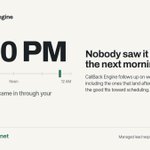
A repair request hits your website form Saturday night. It sits until Monday, under everything else that came in.
CallBack Engine follows up on website inquiries, after-hours ones included, and moves the good fits toward scheduling.
callbackengine.net/how-it-wo…

ALT Ad with the CallBack Engine logo. 9:40 PM and a time-of-day line on the left. Text: A repair request came in through your website form. Nobody saw it until the next morning. CallBack Engine follows up on website inquiries, including the ones that land after hours, and moves the good fits toward scheduling. callbackengine.net
1
15
A lead can get a callback and still go nowhere. Someone calls back, has a friendly chat, and hangs up without the job, the address, how urgent it is, or a good time. Now somebody has to call again just for the basics.
One option: the same four questions on every first call.
9
A missed call at 2:15. A web form at 9:40 PM. An info@ inbox nobody owns.
CallBack Engine follows up on the inquiries your business already gets and moves the good fits toward an estimate request your team confirms.
callbackengine.net/how-it-wo…