

I'm a content writer/editor with a 36+ year career in healthcare. Focused on helping others find health through common sense, exercise, diet, and supplements.
United States of America
Joined March 2014
- Tweets3.8K
- Following1.7K
- Followers1.5K
- Likes8.9K






Richard Matthews DC, DACNB retweeted

Hey @profgalloway - it's odd you should call Elon a traitor to the West. Let's have a look at the facts
Starlink has been the single most important private technological contribution to Ukraine's defense since '22. SpaceX rapidly deployed terminals when others couldn't or wouldn't and donated tens of thousands of units. SpaceX has done more to defend Ukraine than any private company on Earth by far
Separately, Elon has also done more than almost any other single actor to obliterate structural bottlenecks that have limited technology in the West for a long time:
• Orbital access costs (SpaceX's reusable rockets and unmatched launch cadence)
• Energy storage, electrification and grid resilience (Tesla's 4680 batteries, vehicles, and Megapack/Megablock)
• Autonomy and AI (Tesla's FSD, Robotaxi, Optimus and an unheard of compute buildout to increase intelligence through the Grok line of products)
• Public information flow (X’s shift away from prior institutional moderation and censoring)
• Human neural interfaces (Neuralink’s brain-computer implants for paralysis, speech, and eventual sight to the blind and beyond)
• Surface traffic congestion (Boring Company’s operational tunnels and lower-cost tunneling approach)
This list is not exhaustive
And worse, your rhetoric is clearly a call to violence against Elon. So, on behalf of everyone with a functioning brain not completely eroded by hatred and EDS...please shut the fu** up
Your gut bacteria may be writing your excuses. "It's just a little" and "gotta die from something" sound a lot like cravings talking. 11 easy steps to a healthier microbiome 👇
11 simple habits that make you a better host to your gut bugs.
neurodoc4u.substack.com/p/11…

Your gut bacteria wired your stress response before you could walk. That's #7 on my countdown. Here's the whole top ten 👇
10 reasons the microbiome runs more of your life than you think.
neurodoc4u.substack.com/p/to…
🤖 Made with AI

Richard Matthews DC, DACNB retweeted

On the sixteenth of December 1960 a twelve-year-old boy was put on a table in a San Jose hospital, given electric shocks until he was unconscious, and had an ice pick hammered through the thin bone above each eye and swept from side to side through the front of his brain, because his stepmother had told the doctor he was defiant. The doctor's fee was two hundred dollars.
Howard Dully was a big, clumsy, daydreaming boy whose mother had died when he was five, and his father had married a woman called Lou who could not stand him. She took him to six psychiatrists. All six told her the problem was not the boy. The seventh was Walter Freeman, who had performed more lobotomies than any man alive, who drove between state hospitals in a van he called the lobotomobile doing them by the dozen in an afternoon, with no gloves and no surgical training, and who had once done twenty-five in a day. Freeman's notes on Howard, which Howard did not read for forty-four years, record the symptoms. He objects to going to bed. He turns the lights on when there is broad daylight. He does not react to love or to punishment. He has a savage streak. On that evidence, and Lou's signature, and two hundred dollars, Freeman wrote that the boy would benefit from a transorbital lobotomy and did it four days later.
Howard remembers the table. He remembers waking with two black eyes and a fever and no idea what had been done to him, because nobody told him, then or ever. His father never spoke of it. Lou put him into a state institution the following year, and the boy with the holes in his brain spent the next forty years in and out of asylums, juvenile halls, a jail, halfway houses and the street, drinking, drifting, never quite able to say why he was the way he was, with a photograph that existed somewhere of a doctor in a suit standing over a child with a steel spike in each eye socket.
At fifty-six, driving a school bus, he went to find out. He found his file in Freeman's archive at a university in Washington, in the doctor's own handwriting, and read for the first time what his stepmother had said and what the doctor had agreed to. He went to see his father, who was eighty, and asked him why he had let it happen, and his father said he had been bullied into it. Howard told the story on the radio in 2005 and five million people listened to a man weep over a piece of paper.
Walter Freeman was not a quack. He was a professor of neurology, the man who had brought the lobotomy to America, and the operation had won its inventor the Nobel Prize for Medicine in 1949. The journals published him. The hospitals booked him. The newspapers called it a miracle. He did it to three and a half thousand people, nineteen of them children, and he kept doing it until 1967, when a patient died on the table and the hospital took his privileges away, and he spent his last years driving the country in the van looking up his old patients to prove it had worked.
That is what settled science looked like from inside, to a twelve-year-old. A mother's complaint, an expert's confidence, a procedure with a prize behind it, two hundred dollars, and a lifetime nobody could give back.
The same institutions now tell you what your child should eat, in the same voice, with the same certainty, and the leaflet has a logo on it. Howard Dully is in his seventies and still cannot say what was taken. Nobody ever apologised.

Pulled an all-nighter and your brain just quit?
In a small study, 7 men stayed up 36 hours. After 2 weeks of keto, they had fewer attention lapses and felt less sleepy than after 2 weeks of carbs.
A clue, not a license to skip sleep.
What's your brain like after a bad night?
Better Brain Health with a Ketogenic Diet on Amazon: amzn.to/4zXt00n

Richard Matthews DC, DACNB retweeted

Imagine a Scottish army surgeon in the 1790s telling a dying diabetic officer to skip the bread and eat blood pudding, old fatty meat, and rancid pork instead—and watching the sugar disappear from his urine.
That doctor was John Rollo. He trained in Edinburgh, joined the Royal Artillery as a surgeon in 1776, served in the West Indies, and later became Surgeon-General at Woolwich.
Diabetes was rare and deadly then. Doctors knew the urine of some patients tasted sweet, thanks to earlier work by Matthew Dobson, but most treatments failed.
In 1796 Rollo treated Captain Meredith of the Royal Artillery, a once-heavy man now wasting away. Rollo reasoned that the sugar in the urine came mainly from vegetable foods and decided to cut them back hard.
He put Meredith on an “animal diet”: blood puddings made of blood and suet, game or long-kept meats, fatty and even rancid pork when the stomach could handle it, plus some milk mixed with lime water and a little bread and butter. He also used medicines to calm the stomach.
Within weeks Meredith’s urine lost its sugar and he began regaining strength and flesh. When symptoms returned, Rollo tightened the diet further—dropping more of the milk and plant foods and switching to beef tea (meat broth). The patient improved again and returned to duty. Rollo published the case in 1797 and added more in 1798. He was among the first to systematically recommend a low-carbohydrate, meat-heavy diet for diabetes and is credited with helping popularize the term “diabetes mellitus.”
His approach—restricting starches and sugars while emphasizing animal foods—became a standard treatment for more than a century until insulin arrived in the 1920s. Patients who stuck to it often lived longer and felt better. Rollo even noted that some did better when they avoided all vegetables for a time, and later allowed a few low-sugar greens like spinach or cabbage once the disease was controlled.
He died in 1809, but his meat-first idea showed that what people ate could change the course of diabetes long before modern drugs existed.

Some days your brain feels older than your birthday.
Thoughts won't stay in one lane. Mid-sentence, you lose the thread.
Does your focus feel older than you are on some days?
Educational, not medical advice.
Better Brain Health with a Ketogenic Diet on Amazon: amzn.to/4zXt00n
Richard Matthews DC, DACNB retweeted

Elon Musk was asked at a private dinner what he would do if SpaceX and Tesla both failed simultaneously and he lost every dollar. The question was intended as a hypothetical ice breaker. His answer lasted 8 minutes and the table went silent.
He said he would move into the cheapest apartment he could find, buy a computer, and start building the next thing within 24 hours. Not in a week. Not after processing the loss. Within 24 hours. He said the loss of the money would not bother him. The loss of the companies would devastate him. But the devastation would last one night. The building would start the next morning.
Someone at the table asked what the "next thing" would be. He said he didn't know and that the not knowing wouldn't slow him down. "The thing finds you. You just have to be building when it arrives."
The answer reveals something about his relationship with money that most people misunderstand. Money is not the goal. Money is not even the scorecard. Money is the fuel that lets the machine run. Losing the fuel is a logistics problem. Losing the machine is a psychological one. He can survive the logistics problem overnight. The psychological recovery takes a morning.
This is the same man who put his last $35 million into SpaceX when both companies were failing. He did not diversify. He did not hedge. He put every remaining dollar into the thing he was building because the alternative, having money but no machine, was worse to him than having no money and a machine that might work.
The table at the dinner expected him to say something about resilience or growth mindset. Instead they got a man who described total financial destruction with the same emotional weight that most people describe losing a parking spot. The money is replaceable. The morning is for building. The building doesn't wait for recovery. Recovery IS building.
"The thing finds you. You just have to be building when it arrives." The richest man alive doesn't fear losing everything. He fears stopping.
Richard Matthews DC, DACNB retweeted

Now the truth finally comes out that the state of New York wants the Amish people‘s properties and land so they can build their data centers. How disgusting 🤮
 The Amish of Central New York told the seditious Governor Kathy Hochul they would pack up, abandon their farms and leave if the Governor tried forcing vaccines on their children. The Governor fined them over $100,000 and demanded they comply anyway.
When the Amish decided to fight back, taking the wicked Governor to court, Hochul's minion Senator Fahy drew up even more legislation to pressure them to leave, attacking their children again, this time through an anti-homeschooling bill.
Tens of thousands of acres of cleared Amish farmland are at stake. The Amish have spent decades clearing their land by hand and horse. The hard work has been done.
But if the Governor has her way, the Amish will be forced to sell that cleared land to the solar farms and data centers knocking on the doors for it.
Who will help the Amish stand up to this maniacal Governor? We need to expose this on social media and we need to get the right people involved to represent the Amish and help them fight This evil demonic power and control of New York. 

Lactate isn't just the burn in your legs. Brain support cells send it to neurons as backup fuel.
A study the book cites (Kujach 2020): cycling sprints sped up thinking tests as lactate and BDNF rose.
Educational, not medical advice.
Better Brain Health
amzn.to/4zXt00n
🤖 Made with AI

Your bacteria can push back.
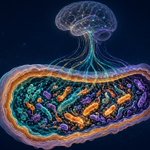
Ch. 2: in lab research (Maudsdotter 2011), Lactobacilli made lactic acid that broke down a toxic part of strep bacteria and cut damage to cells.
Educational, not medical advice. Listen to your doctor.
The Gut Bacteria Book
amzn.to/4qTgv1O
🤖 Made with AI

Fermentation is an old partnership.
Ch. 2: kefir, yogurt, Maasai fermented milk, and the SCOBY (a symbiotic culture of bacteria and yeast) as part of human history.
Educational, not medical advice. Listen to your doctor.
The Gut Bacteria Book
amzn.to/4qTgv1O
🤖 Made with AI

Your gut lining is habitat.
Ch. 2: microvilli — the tiny finger-like folds of the intestinal surface — are habitat for the bacterial communities living with you.
Educational, not medical advice. Listen to your doctor.
The Gut Bacteria Book
amzn.to/4qTgv1O
🤖 Made with AI

Your cells run on ancient partners.
Ch. 2: mitochondria are understood as ancient bacterial partners — endosymbionts. Cellular energy sits on the same host–microbe map.
Educational, not medical advice. Listen to your doctor.
The Gut Bacteria Book
amzn.to/4qTgv1O
🤖 Made with AI

Low-back pain. The gut can refer it.
Spine fine, abdomen like golf balls, ~2 weeks no BM. Pain gone after laxatives. Colon trouble can show up as back pain. Constipation: imbalanced gut bacteria, dehydration, stress, and more.
Not medical advice.
amzn.to/4qTgv1O
🤖 Made with AI

Richard Matthews DC, DACNB retweeted
The most successful drug advert in history said Lipitor cuts the risk of heart attack by 36%, and the truth was in the footnote.
What the headline said:
- 36% fewer heart attacks
What the asterisk said:
- On the sugar pill, 3 people in 100 had a heart attack
- On Lipitor, 2 people in 100 had a heart attack
Both statements describe the same trial. 3 down to 2 is a drop of about a third. It is also a difference of 1 person.
What that means for the 100:
- 1 avoided a heart attack
- 2 had one anyway
- 97 were never going to have one
- 100 took the tablet every day for over three years
- 100 were exposed to the side effects
Nobody sat in a surgery was ever told "this will help 1 in 100 of you." They were told 36%, by a doctor who had been told 36%, by a rep who was paid on it.
Lipitor went on to sell well over $100 billion.
That asterisk is the most expensive piece of punctuation ever printed.

Same parasite research. A food-sensitivity marker shows up too.
The Gut Bacteria Book (Ch. 10): T. gondii infection is also associated with gluten-sensitivity markers (Severance), not only mood findings.
Educational, not medical advice.
amzn.to/4qTgv1O
🤖 Made with AI

After a concussion, the fuel problem may outlast the hit.
Better Brain Health with a Ketogenic Diet looks at glucose strain and where nutritional ketosis fits.
Not a cure. Not a promise that diet heals concussion.
Educational, not medical advice.
amzn.to/4zXt00n
🤖 Made with AI