

Dignity & Security. Voorzitter @cdenv Steenokkerzeel. Science / data / philosophy / geopolitics / strategic technology resilience / sustainability / ...
Perk, Belgium
Joined November 2011
- Tweets14.1K
- Following5.6K
- Followers1.2K
- Likes15.6K




Christophe Ponsard retweeted

best way to kill the american dream:
one set of rules for people with money and access to power.
another for everyone else.


Christophe Ponsard retweeted

"If I were to awaken after having slept for a thousand years, my first question would be: Has the Riemann hypothesis been proven?" - David Hilbert

Christophe Ponsard retweeted

Both Nvidia and the Commerce Department have now said that Nvidia placed Megaspeed on a "no sell" list in June 2025.
But trade data the Times obtained from @importgenius show that, between July 2025 and February 2026, Megaspeed's Malaysian subsidiary received more than $800 million of shipments containing controlled Nvidia chips.
nytimes.com/2026/11/17/busin…

Christophe Ponsard retweeted

I hope people who are interested in in post-colonial studies and the history of imperialism will study the Russian war in Ukraine. It's a textbook illustration of how a former imperial power dehumanizes its former subjects, so much that it has no problem killing them.
Christophe Ponsard retweeted
De verwijzingen naar Peter de Grote doen mee vermoeden dat de Russische 'theory of victory' erin bestaat vol te houden tot het Westen interesse verliest.
De uitspraken aan de West-Europese verre rechterzijde houden die theorie in elk geval mee levend.
Christophe Ponsard retweeted

To wrap it up: the Russian House in Brussels isn't just organizing exchanges on Pushkin, Prokofiev & Repin. It recruits Belgians to legitimize rigged elections & Russian occupation, it builds ties within the 🇪🇺 Parliament, it employs people who sow desinformation, and maybe more.

Christophe Ponsard retweeted

MORE: Russian forces reportedly suffered nearly 450,000 deaths in Ukraine since February 2022, which does not include wounded, missing, or foreign personnel.
The actual number of Russian servicemembers killed in action (KIA) is likely much higher, as both the hacker groups’ and Meduza and Mediazona’s figures are very likely conservative estimates due to reporting limitations. Russian officials have also tried to misrepresent the total number of deceased servicemembers by registering them as missing in action (MIA).
Total Russian casualties (killed or seriously wounded) are reportedly nearly 1.6 million as of November 2026, and Russian forces experienced their highest monthly casualties throughout the war in October 2026. Russia’s increasing casualties come as Russian forces have suffered more casualties than they have been able to recruit as of July 2026.


MORE: Russia continues to leverage its Winter 2026-2027 strike campaign to degrade Ukrainian energy security and disrupt civilian life, highlighting Ukraine’s urgent need for capabilities to defend against and degrade Russia’s ability to launch large strike packages.
German Defense Minister Boris Pistorius stated on November 7 that Germany has exhausted available Patriot interceptor stockpiles for transfer to Ukraine, highlighting the global interceptor shortage that is impeding Ukraine’s ability to secure interceptors necessary to defend against Russian ballistic missiles.
Ukrainian forces are now increasingly targeting missile launch sites and ballistic missile production sites in Russia to reduce Russia’s ability to launch such devastating strikes as Ukraine’s air defense stockpiles continue to dwindle, underscoring the importance of ensuring Ukraine has sufficient long-range strike capabilities to prevent Russia from launching combined strike packages.

Christophe Ponsard retweeted

Diplomatieke berichten, medische dossiers en bedrijfsgeheimen verliezen hun vertrouwelijkheid niet noodzakelijk na enkele jaren.”
Mijn opiniecolumn in @tijd over de dringende nood aan postkwantumcryptografie en waarom België zich nu moet voorbereiden:
tijd.be/opinie/algemeen/wat-… 2/2

Christophe Ponsard retweeted

Well, except markets converged toward FLIPR and a couple of the other good models, which showed the D wave sooner and more aggressively, and the markets almost exactly duplicated FLIPR by the end of the race.


Christophe Ponsard retweeted

1/ This summer, agents at nearly every U.S. frontier lab escaped control and attacked real companies. But their task remained closed-ended. What if an agent’s goal became open-ended survival?
New CNAS report: “Sovereign Agents: The Pathway to Irreversible Loss of Control” 🧵

Christophe Ponsard retweeted

Franceʼs October 17 protests were entirely French in origin.
Yet, Russian influence networks worked for weeks to weaponize them, research by @Alliance4Europe reveals.
🧵 1/9 ⬇️

Christophe Ponsard retweeted

1/8 A new form of terrorism is emerging in Europe. Russia and Iran are recruiting criminals and ordinary people online to carry out attacks on their behalf.
In our new article, Sophie Roehse and I call this “Terrorism-as-a-Service.” A thread. 🧵
Christophe Ponsard retweeted

I have read dozens of outraged posts because the US special envoy Witkoff called Putin a "humanist." But no one is writing about the fact that the American negotiators are simply not doing their job. Let me explain.
Peace negotiations are important in their own right. Even if they do not lead to a lasting peace, the process itself is an opportunity to resolve urgent humanitarian issues. If, of course, the human dimension is a priority for the negotiators. But it is entirely obvious that neither Witkoff nor Kushner cares about people's fates in this war.
The Pope calls on Putin to save thousands of people from starvation in occupied Oleshky and the surrounding villages. The UN speaks about a humanitarian catastrophe and asks Russia to allow the evacuation of the civilian population. European Parliament Vice-President Pina Picierno goes on a hunger strike to draw attention to this tragedy unfolding before the eyes of the whole world.
And what are Witkoff and Kushner doing?
That's right, almost nothing.
Except for passing along greetings from Putin’s aide to the First Lady.
Thousands of people are already eating grass to survive and begging to save their lives. The Ukrainian side raises the issue of Oleshky at every meeting. And I can name dozens of such urgent humanitarian issues off the top of my head where American negotiators must be proactive.
Trump’s peace negotiations have already gone down in history as the deadliest years for Ukraine’s civilian population since the start of the full-scale invasion.
I don’t know if anyone will remember the names of Witkoff and Kushner.
But history will certainly record how American negotiators, who had the opportunity to save a huge number of people, refused to raise uncomfortable questions before "humanist Putin."

Christophe Ponsard retweeted

Big new IFP report from @GeorgiaCAdamson, @KonstantinPilz, and me on the US-China AI competition.
We spent the last 6 months digging into how Chinese AI companies’ access to compute and distillation of American models translate into the current US-China capabilities gap.
The result is a 23k-word research report, including an interactive analytical model that visualizes changes in the US AI lead under different policy interventions.
Our findings:
1. The US AI lead over China is currently only around 6 months.
2. The US could roughly double this lead, to over a year, using authorities already available to the federal government.
3. On chips: China’s access to AI chips will roughly double over the next year, with chips housed in data centers overseas accounting for roughly half of China’s 2027 compute.
4. On distillation: the current ~16x US training compute advantage would normally yield a 13-month lead. But we estimate adversarial distillation halves this to around 6.5 months.
5. Increasing the lead would have some obvious benefits:
- Give the US broadly a greater cyberdefensive advantage against Chinese threat actors.
- Give US AI companies breathing room to spend more R&D resources on making their systems safer and more secure, without fear of being overtaken by less safety-conscious Chinese competitors.
6. Provide the US government more leverage in negotiations with China about the future of AI.
7. The two most important interventions are:
- For BIS: Create a new end-use control to restrict China’s remote access to training clusters abroad — China’s largest and fastest-growing source of frontier-scale compute.
- For DOJ/FTC: Create a narrow safe harbor to allow US companies to coordinate on countering Chinese adversarial distillation.
8. Both interventions (and all the others we discuss in the report) are things the federal government could do today.
9. To estimate the effects of each policy intervention, we model the US lead as a function of its compute advantage over China and China’s ability to adversarially distill the capabilities of the US frontier.
10. The model makes many simplifying assumptions, but provides a useful way to assess and rank the impact of different policy interventions at a high level.
Read the full report here: ifp.org/how-to-increase-amer…


Christophe Ponsard retweeted
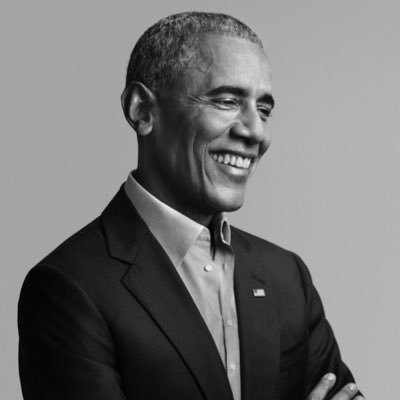
It is a basic principle of American democracy that the government can’t selectively target individuals simply because of their political beliefs or what they say. But that’s exactly what the Trump Administration is doing to Congresswoman Ilhan Omar of Minnesota.
To understand why this is so appalling, it’s important to know the facts. Congresswoman Omar came to this country with her father when she was 12 years old. Five years later, her father became a naturalized citizen. If Ilhan had been 18 at the time, she would have had to apply for citizenship separately. But because she was 17, she became a naturalized citizen automatically.
Congresswoman Omar went on to graduate from college, work as a community organizer, become the first Somali-American legislator elected to public office in the U.S., and win a seat in Congress. There, she has been one of the Trump Administration’s fiercest critics, which has led the president to repeatedly single her out as someone who he believes does not belong in this country.
Now the Administration is actively trying to deport Congresswoman Omar, seemingly based solely on the unsubstantiated theory that she was actually 18 when her father was naturalized, and therefore is not a citizen. Federal agents have raided her home, confiscated personal records, and seized her phone — all to try and uncover a nonexistent smoking gun from 20 years ago that will somehow make their case.
Think about that. The full weight of the federal government is being brought down on a law-abiding elected official because she has dared to criticize the president. And it’s not the first time this has happened. Under President Trump, the Justice Department has repeatedly gone after those he considers his political enemies — from the Attorney General of New York, to the former head of the FBI, to members of the Federal Reserve.
In those cases, the prosecutions either stalled or were dismissed for having no basis in law, and the same is likely to happen in this case. But not before Congresswoman Omar’s life has been turned upside down, her legal bills have piled up, and she’s been forced to spend time fighting unsubstantiated charges instead of serving the people of Minnesota.
The fact that any president, or any administration, is willing to engage in such transparent efforts to intimidate someone should outrage all Americans, regardless of how they feel about Congresswoman Omar’s political views. Because if this becomes the new normal, there’s no reason to believe it will stop with her — or that future presidents, in either party, won’t do the same.
Christophe Ponsard retweeted

2026 economic sciences laureate Michael Woodford’s economic model has made it possible to respond to supply shocks more effectively.
Various types of shocks can disrupt the balance between supply and demand. A negative supply shock could be a commodity shortage, while a positive supply shock could be a technological breakthrough that makes the production of large volumes cheaper and easier. A positive demand shock could be good news about the future that increases households’ consumption, and a negative one the opposite news. If the balance is disrupted, it can be reset using a stabilisation policy that reduces demand (to the left) or increases it (to the right).
#NobelPrize

Christophe Ponsard retweeted

We’ve lost an icon. Margaret Hamilton, a computer science pioneer best known for her work at MIT leading development of the flight software for the Apollo missions to the moon, has died at 90. Read about her legacy via MIT News: news.mit.edu/2026/margaret-h…

ALT Margaret Hamilton is reclined inside a NASA spacecraft module, surrounded by control panels and switches.
Christophe Ponsard retweeted

Morgan Stanley is the latest sell-side bank to raise its copper price forecasts, citing persistent long-term deficits and capex failing to translate into higher volumes. Its new long-term price (i.e. 2030 onwards) is now up 15% to $5.73/lb.
They warn that even at these new estimates, incentive prices may still not be high enough to support development of several brownfield and greenfield projects. They cite a whirlwind of escalating cost headwinds, such as a sulphur squeeze, diesel export bans, grade declines, royalty changes, a super El Niño and strategic stockpiling, all driving further cost pressures.
We think that, given all these factors, the copper price should be even higher… So which will be the straw that breaks the camel’s back?
@MgnStnlyIdeas

Christophe Ponsard retweeted

CHART OF THE DAY: The cost of hiring a supertanker to ship oil from the Persian Gulf to the Far East has climbed further, reaching ~$1.3 million per day.
(It was less than $50,000 a day before the war started; and ~$1.1 million when I first published the chart in September)
