
join Remix: https://xitter.cf/t.co/eFue6H7Gn6
Joined April 2025
- Tweets3.4K
- Following2.3K
- Followers1.8K
- Likes2.4K








CHAIN WORKER retweeted

A successful launchpad needs more than attention. It needs a reason for people to stay curious after the campaign ends.
That’s what I want to explore in Round 2 with @RebateLaunch .
Creators can bring visibility, but the bigger question is what happens next. Do users understand the projects being launched? Are the incentives sustainable? Is there enough transparency for people to make informed decisions?
These are the details that separate temporary hype from meaningful engagement.
This round, I want to look beyond announcements and explore the mechanics, incentives, and decisions that shape the launch experience.
Because the real value of a launchpad isn't just how many people notice it, but how many have a genuine reason to pay attention.
Back for Round 2 with @starlisting . $REBATE

CHAIN WORKER retweeted
𝐂𝐫𝐲𝐩𝐭𝐨 𝐮𝐭𝐢𝐥𝐢𝐭𝐲 𝐬𝐭𝐚𝐫𝐭𝐬 𝐰𝐡𝐞𝐧 𝐝𝐢𝐠𝐢𝐭𝐚𝐥 𝐚𝐬𝐬𝐞𝐭𝐬 𝐛𝐞𝐜𝐨𝐦𝐞 𝐩𝐫𝐚𝐜𝐭𝐢𝐜𝐚𝐥.
Most people know crypto through trading, market movements and long term holding. But another important part of adoption is how digital assets can fit into everyday payments.
That's one reason I'm exploring the @MEXC Card.
Here are three features worth looking into:
→ 0% card spending fees, according to the advertised card terms.
→ Apple Pay and Google Pay support for eligible users.
→ Up to 10% cashback in USDT, depending on your VVIP tier and applicable conditions.
Of course, the advertised benefits are only part of the picture.
Before signing up, check whether the card is available in your country, understand the supported assets and review any applicable limits and conditions.
Cashback also depends on your eligible tier, and rewards are subject to MEXC's risk control review.
For me, meaningful crypto adoption isn't just about having more ways to trade. It's about building practical payment options that people can understand and use responsibly.
The real question is how well these products fit into everyday life.
Explore MEXC:
mexc.com/invite/register?inv…
#MEXCCard #ad #MEXCSquad

CHAIN WORKER retweeted
A token can have attractive tokenomics and still leave important questions unanswered.
One thing I pay attention to when researching new launches on @RebateLaunch is the control behind the contract.
Because understanding how a token works today is only half the research. You also need to understand who has the power to change its behavior tomorrow.
Here are a few things worth checking before participating:
→ Minting permissions: Can someone create additional tokens and dilute existing holders?
→ Pause controls: Can transfers or trading be suspended, and who has that authority?
→ Upgradeability: Can the contract logic be changed after launch?
→ Fee settings: Can transaction fees be increased beyond their original terms?
→ Treasury access: Who controls the funds, and what safeguards protect them?
One important detail: renouncing ownership doesn't automatically eliminate every privileged function. Other roles or external contracts may still retain significant control.
That's why I would look at the actual permissions, identify who controls them, and check whether sensitive actions require a multisig or timelock.
For me, this is part of doing proper research on any new token, including launches through @RebateLaunch.
The goal isn't to assume every admin function is dangerous. It's to understand the risks before committing funds.
Tokenomics explains the design. Contract permissions reveal who holds the keys to changing it.
Do you check a token's contract permissions before buying, or do you focus mainly on its tokenomics?
@starlisting

CHAIN WORKER retweeted
A successful launch is not just about how many people show up. It's about how many have a reason to stay.
That's the perspective I'm taking as I follow @RebateLaunch on Robinhood Chain.
I think there are three stages worth paying attention to:
→ Initial traction: Are people buying, exploring the platform, and providing liquidity?
→ Continued engagement: Are users returning, making transactions, and holding beyond the initial excitement?
→ Sustainable growth: Is the project delivering real progress that gives people a reason to participate without relying entirely on incentives?
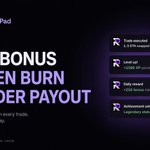
Rebate Pad's proposed buy bonuses, recurring USDG holder rewards, and fee funded $REBATE buybacks and burns create an interesting model to examine.
But there's an important distinction: activity doesn't automatically equal adoption.
A wallet claiming rewards is not necessarily a loyal user. High transaction volume doesn't automatically mean strong demand. And an attractive incentive structure doesn't guarantee long term sustainability.
What I want to see is consistent participation, transparent reward distributions, verifiable onchain activity and measurable progress over time.
For me, the real test isn't how exciting the first day looks. It's what the evidence shows after the attention settles.
That's where @RebateLaunch can begin to demonstrate whether its model has staying power.
@starlisting

CHAIN WORKER retweeted
One thing I’m watching with @RebateLaunch is what happens after the initial excitement fades.
A strong launch can attract attention quickly, but maintaining that attention is a completely different challenge.
For me, three things matter:
→ Discovery: Are new people finding the project?
→ Retention: Are they still participating after the initial hype?
→ Progress: Is the project delivering on what it set out to achieve?
Trading activity can show interest, but consistency over time tells a more complete story.
That’s why I’m more interested in what a launch sustains over the next few days and weeks than what it achieves in its first hour.
With Rebate Pad, the real test isn't just attracting buyers. It's proving that interest can translate into lasting participation and measurable progress.
Early momentum gets my attention. Consistent execution earns my confidence.

CHAIN WORKER retweeted
One thing I’m paying attention to with @RebateLaunch is how Rebate Pad handles launch rates.
In crypto, reward structures can look attractive at the beginning, but the real question is whether those terms can change once people have committed their funds.
Rebate Pad says each token’s rates are set at launch and cannot be changed afterward.
That includes four key components:
→ Buy bonus: Extra tokens buyers receive.
→ Holder payouts: Rewards allocated to holders.
→ Platform fee: The portion directed to the Rebate Pad ecosystem.
→ Uniswap fee: The fee associated with swaps.
The platform’s example uses a 5% buy bonus, 2% holder payout, 0.7% platform fee, and 0.3% Uniswap fee. Bonus and holder payout rates combined are capped at 9%.
If implemented as described, this creates a clear set of rules for buyers to evaluate before entering a launch.
But fixed rates are only one part of the equation.
I also want to see how holder payouts are funded, how consistently they are distributed, and whether the model remains viable when trading activity slows down.
Transparent rules are a good starting point. Verifiable execution is what builds lasting trust.
That’s the distinction I’ll be watching with @RebateLaunch.
@starlisting
🤖 Made with AI

CHAIN WORKER retweeted
GM everyone can I get gm
Launch day brings attention, but what happens afterward is what really defines a project.
With @RebateLaunch preparing to go live on Robinhood Chain on October 27 at 17:00 UTC, I’m looking beyond the initial excitement.
$REBATE comes with buy bonuses and holder payouts, two features worth watching as the ecosystem develops.
But the important questions remain:
• Can the reward mechanisms deliver consistently?
• Is the model sustainable beyond the first wave of activity?
• Will the project give people a reason to stay involved long term?
These are the details that matter more to me than launch-day hype.
The countdown is nearly over. Now it’s time to watch the execution and judge the results.
@starlisting

CHAIN WORKER retweeted
The countdown is on for @RebateLaunch!
On October 27 at 17:00 UTC, @RebateLaunch is set to go live on Robinhood Chain, with $REBATE launching alongside it.
What makes this launch worth watching?
🎁 Bonus tokens on buys — an additional incentive for participants.
💰 Holder payouts — rewards designed for those who continue holding and participating.
Beyond the launch itself, the bigger question is how these features will work in practice and whether they can deliver sustainable value over time.
A launch creates the first impression. Consistent execution is what builds lasting confidence.
October 27 is the starting point. Let’s watch what comes next.
@starlisting
🤖 Made with AI

CHAIN WORKER retweeted
The more I explore the launchpad space, the more I realize that launching a token is only one part of the bigger picture.
Transparency, security, and user awareness matter just as much.
That's why I'm paying closer attention to what happens behind the scenes with @RebateLaunch
Understanding how projects manage contract permissions, communicate with their communities, and build trust over time is an important part of evaluating any launch ecosystem.
For me, it's not just about following launches. It's about understanding the infrastructure, asking better questions, and staying engaged as the ecosystem develops.
Still learning, still researching, and staying connected with RebateLaunch.
What do you think matters most for building long term trust in a launchpad?
@starlisting
🤖 Made with AI

CHAIN WORKER retweeted
One thing I pay attention to when exploring a new crypto ecosystem is the difference between an attractive incentive and a mechanism that users can actually verify.
Because in Web3, promising rewards is easy. Building a system that delivers them transparently is where the real work begins.
That’s an interesting perspective to bring to @RebateLaunch
Rebate Pad introduces an incentive model that connects token purchases, holder rewards, and activity within the launchpad ecosystem. Eligible buyers may receive bonus $REBATE tokens, holders are intended to receive automatic USDG distributions, and platform fees are designed to support $REBATE buybacks and burns.
Each mechanism serves a different purpose, but they share one important requirement: users need to understand how the system operates.
For example, how is eligibility determined? What factors influence the amount of USDG distributed to holders? How frequently are rewards paid? And can users independently verify the transactions behind reported buybacks and burns?
These aren't questions meant to dismiss the model. They're the questions that help people evaluate it properly.
I also think it's important to look beyond the initial reward. A system might attract attention when the incentives are new, but sustainable participation depends on whether the rules remain clear, the mechanisms perform as intended, and users have reasons to stay involved.
That's where on-chain transparency can make a difference. When transactions and token movements can be independently examined, users have a better foundation for understanding what's happening rather than relying entirely on promotional claims.
For @RebateLaunch on Robinhood Chain, I'm interested in seeing how these mechanisms perform as the ecosystem develops, how clearly their results are communicated, and whether real platform activity can support the model over time.
Because the strongest incentive isn't necessarily the biggest advertised reward. It's a system where users understand the rules, can verify the execution, and know what they're participating in.
Clear mechanics build understanding. Verifiable activity builds confidence. Consistent execution gives people a reason to return.
That's the progression I'll be watching as RebateLaunch grows.
@starlisting
🤖 Made with AI

CHAIN WORKER retweeted
What if buying a token was only the beginning of the incentives?
That’s the idea behind @RebateLaunch on Robinhood Chain.
The Rebate Pad model combines a 3% bonus on eligible $REBATE buys paired with USDG and automatic USDG rewards for eligible holders, without staking or manual claims.
Longer holding periods also come with higher reward multipliers, while platform fees are allocated toward buybacks and burns.
It’s an approach designed to connect buying, holding, and platform activity in one ecosystem.
Still, the real question is whether the numbers can support the model over time.
Sustainable trading volume, verifiable payouts, and transparent buyback records will matter more than headline incentives.
I'm keeping an eye on @RebateLaunch. The concept is interesting, but consistent execution is what will build lasting trust.
Following the journey with @starlisting
🤖 Made with AI

CHAIN WORKER retweeted
The real strength of an ecosystem isn’t measured by how many projects launch, but by how much value they create for the people using them.
That’s what makes @RebateLaunch on Robinhood Chain worth following.
Every new launch has the potential to attract users, introduce new ideas, and expand the opportunities available within the ecosystem. But launching a project is only the beginning.
What matters next is whether those projects can build real demand, maintain user interest, and encourage activity that continues long after the initial excitement fades.
I also believe transparency plays an important role in this process. Clear information about project development, token mechanics, and what is confirmed versus what is still planned gives participants a better foundation for evaluating opportunities.
Of course, more launches don't automatically mean sustainable growth, and risks will always exist. The important thing is having enough reliable information to make informed decisions.
I'm keeping an eye on how @RebateLaunch develops through @Starlisting.
The goal shouldn't just be a bigger ecosystem, but one where participation, transparency, and long term value grow together.

CHAIN WORKER retweeted
A reward system can attract attention, but the economics behind it determine whether it deserves long term confidence.
That’s the part of @RebateLaunch I want to understand better.
Rebate Pad presents an interesting approach to connecting token purchases, holder rewards and supply reduction within one ecosystem. Rather than relying on a single incentive, the model combines several mechanisms designed to encourage participation while linking trading activity to rewards.
Here’s what stands out to me.
1. A fixed supply narrative
$REBATE has a stated total supply of 1 billion tokens, with the project indicating that no additional tokens will be minted.
A fixed supply provides a clear starting point for understanding token distribution, but it doesn't automatically create scarcity or demand. What matters is how the circulating supply evolves, how tokens are distributed, and whether people have reasons to hold the asset beyond short-term incentives.
2. A 3% buy bonus
Rebate Pad presents a 3% bonus for eligible $REBATE purchases, with the bonus displayed before confirmation and intended to be delivered within the same transaction.
That kind of experience can make participation simpler. Users can understand the advertised benefit before committing instead of navigating separate staking requirements or manual reward claims.
Still, I think the funding mechanism deserves attention. Where does the bonus come from? How is it accounted for, and can users verify that the advertised amount matches what they receive?
An incentive is easier to evaluate when its funding and delivery are transparent.
3. Holder rewards linked to trading activity
The model describes allocating 0.7% of each $REBATE trade toward holder rewards paid in USDG.
This creates a direct connection between trading activity and the reward mechanism. However, the important question is how that allocation translates into actual distributions.
Are rewards calculated from eligible balances, holding duration, or another weighting formula? How frequently are payments processed, and can holders independently verify the amounts distributed?
Clear answers would make the system easier to understand and evaluate.
4. Buybacks and burns
Another stated allocation directs 0.3% of trading activity toward buying and burning $REBATE.
The idea is straightforward: use part of the trading-generated fees to purchase tokens and permanently remove them from circulation.
But I wouldn't judge this mechanism by the burn narrative alone.
I'd want to see verifiable transaction records, the amount of tokens purchased, the quantity burned, and how those figures compare with the overall circulating supply.
A burn can reduce supply, but its effect on token value still depends on demand, liquidity, distribution, and broader market conditions.
The bigger picture is how these mechanisms interact.
Trading activity is expected to support holder rewards and token buybacks, while the purchase bonus provides another incentive for participation.
That creates an economic model worth examining, but the existence of a feedback loop doesn't automatically mean the loop is sustainable.
If trading activity increases, the system may generate more fees to distribute. If activity declines, the amount available for rewards and buybacks could also fall.
That's why I believe the most important test will come when market conditions become less favorable.
Can the platform maintain transparent distributions during quieter periods?
Can users trace the money flowing through the reward system?
Does Rebate Pad have meaningful usage beyond people chasing bonuses?
And can demand for the platform continue without depending entirely on financial incentives?
These are the questions that separate an attractive reward structure from one that demonstrates lasting utility.
I'm not dismissing the model. I'm interested in seeing the mechanisms work under real conditions, with independently verifiable data supporting the claims.
For me, the next stage of @RebateLaunch is about execution.
Published rules are a starting point. Consistent payouts, transparent fee allocation, verifiable burns, and sustainable user activity are what would make the model more convincing over time.
The incentives may bring people in, but trust is built when the numbers consistently match the promises.
I'll be watching how Rebate Pad develops and whether its onchain activity supports the economic story it presents.

CHAIN WORKER retweeted
One interesting feature of @RebateLaunch is how it rewards holders based on both token balance and holding time.
The longer you hold, the higher your reward multiplier:
→ 1x at the start
→ 1.5x after 3 days
→ 2x after 7 days
Your holding time is tracked per token, so buying more tokens doesn't reset the time you've already accumulated.
The goal is simple: reward longer term holders rather than focusing only on short-term trading.
Rebate Pad is preparing to launch on Robinhood Chain, and I'm interested to see how these rewards work in practice.
The key things to watch will be payout transparency, consistency, and long term sustainability.

CHAIN WORKER retweeted
Good projects shouldn't have to compete on popularity alone.
One thing I'd like to see from @RebateLaunch is a discovery experience that helps users find promising projects beyond the names everyone already knows.
Clear project information, accessible launch pages, and useful ways to compare opportunities could help smaller teams reach the right audience without lowering the standards for quality.
But getting discovered is only the first step.
A launchpad also needs to give users reasons to return after the initial excitement fades. Bonuses can attract attention, but lasting interest usually depends on the product, its usefulness, and the team's ability to deliver.
For me, the real opportunity is creating a space where smaller builders can earn attention and users can make more informed decisions.
Popularity can bring people in. Value gives them a reason to stay.
Curious to see how @RebateLaunch approaches both sides of that equation.
Sharing my thoughts through @starlisting

CHAIN WORKER retweeted
When evaluating a launchpad, I look beyond the features it promises and ask what will keep the ecosystem growing over time.
That’s what makes @RebateLaunch interesting to follow.
The project brings token launches together with holder incentives and buybacks, creating several areas worth watching as the ecosystem develops.
But having multiple mechanisms is one thing. Proving they can work sustainably is another.
There are three metrics I would pay close attention to:
➤ Actual USDG payouts: Are distributions consistent, transparent, and easy for holders to verify?
➤ Organic platform usage: Are users returning to explore new launches because they find genuine value, rather than participating only when incentives are available?
➤ Liquidity depth: Can tokens maintain healthier trading conditions, with enough liquidity to support real market activity?
For me, these metrics are connected.
Payouts may help attract attention, but transparency builds confidence. New launches can bring fresh activity, but repeat participation matters more than a temporary spike. And stronger liquidity can improve the trading experience, although it doesn't automatically guarantee price stability.
The bigger question is whether these mechanisms can support one another as the platform grows.
I'd rather see measurable progress across these areas than judge a launchpad by announcements alone.
@RebateLaunch has an interesting model to watch, but its long term potential will depend on execution, sustainable demand, and verifiable results.
What do you think will be the strongest indicator of its success: payouts, repeat usage, or liquidity?
🤖 Made with AI

CHAIN WORKER retweeted
What makes a launchpad worth following isn't just the rewards it offers, but the experience it creates for its users.
That's one reason I'm keeping an eye on @RebateLaunch .
Its approach combines token launches with purchase bonuses, holder payouts and buyback mechanisms, offering several things to explore beyond the usual launch and trade cycle.
Still, interesting mechanics are only the starting point.
I'd like to see how consistently the rewards are delivered, whether the incentive model can remain sustainable, and how easily participants can verify what's happening behind the scenes.
Another important factor is long-term engagement.
Can RebateLaunch build an ecosystem where people return because they find valuable projects, understand the mechanics, and trust the process rather than simply chasing the next bonus?
For me, that distinction matters.
Strong incentives can attract attention, but transparency, reliable execution, and genuine utility are what could help maintain it.
I'm following the project's progress through @starlisting and will be watching for measurable results as the ecosystem develops.
The real value isn't in what a launchpad promises today. It's in what it can consistently deliver tomorrow.
🤖 Made with AI

CHAIN WORKER retweeted
GM everyone.
One thing I check before buying a token is whether the rules I enter with will still apply tomorrow.
That’s an interesting part of what @RebateLaunch is communicating.
According to the project, its bonus rates, holder payouts, and fees are set at launch and remain unchanged afterward.
For me, that kind of predictability matters. It gives participants a clearer picture of the token’s mechanics instead of leaving them guessing about future changes to the terms.
But fixed rules don't automatically make a token a good investment.
Liquidity, distribution, demand, and the sustainability of its underlying model still matter. Even a transparent system can struggle if the fundamentals aren't strong enough.
My takeaway? Understand the rules first, examine the fundamentals next, and never confuse predictable mechanics with guaranteed returns.

CHAIN WORKER retweeted
The real value of a launchpad is what happens after the launch.
That’s what makes @RebateLaunch interesting to me.
The combination of purchase bonuses, holder payouts tied to trading activity, and a defined token model suggests an attempt to build something beyond the usual launch-day hype.
But the real test comes after launch.
Can the platform maintain transparent mechanics when volume drops? Will users understand where rewards come from? Can the system deliver consistently without relying on constant speculation?
These are the questions I want answered as RebateLaunch develops on Robinhood Chain.
A good design can attract early attention, but long-term trust comes from transparency, sustainable incentives, and execution that users can verify.
I'm watching how the product performs, not just what it promises.

CHAIN WORKER retweeted
GM EVERYONE
One thing I look for before investing in a token is consistency. The rules should be clear from day one, not something that keeps changing after people buy in.
That’s an interesting part of what @RebateLaunch brings to the table. Its bonus rates, holder payouts, and fees are set at launch and stay fixed afterward.
This gives participants a clearer picture of the mechanics before making a decision.
Of course, fixed rules don't automatically make a project successful. Liquidity, token allocation, market demand, and long-term utility still matter.
For me, transparency is a good starting point, but understanding the full picture is what counts.
Always research before you commit your capital.
🤖 Made with AI
