

Making some vibey songs that tickle the soul and invoke the spirit of the based. https://teapawt.net/t.co/5IHyyI36nW
Joined May 2010
- Tweets6.4K
- Following112
- Followers170
- Likes272


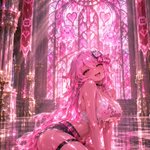





A cathedral where the soul becomes architecture.
CATHEDRAL STAINGLASS. Continuing my love of beautiful and artistic photos. I love anything with a glow/aura whatever you want to call it.
Just an excuse to show off some gorgeous hi fidelity lightning, shadow, and colors to practice prompts.
Prompt below (if it fits... it's very large)
@Ravensworne
@EmberForgeLabs
@moonmaguswrites
@SeanIrithyll
@BarghestDusk (Dusk and Dawn)


Staring at my 18 section prompt.... Thinking how did it get like this... And then I see the generated image and I go
"yeahhh that's worth the prompt battle"
17
Cinematic fine-art chiaroscuro portraiture. I've chosen the finest photographer for you to take your grandest glamour shot to use.
Prompt will be in the reply below. Thanks to @EllieiaVT for bouncing ideas off of me even if it was just to listen to me ramble.
First one after mine is a friend who doesn't use X but she loved this prompt.
@OlianderDesign
@Blindsmoke_
@Kowmodo (it added boots to yours haha)
@Lobo_T0R
@Le_Tavernicole (figured you would enjoy a classy art style)


# UNIVERSAL CHARACTER PORTRAIT — CHIAROSCURO DUALITY
### Fine-Art Studio Photography × Selective Monochrome × Dramatic Dual Composition
**FORMAT:** Vertical 9:10 portrait composition
**QUALITY:** Ultra-high-resolution, professional studio photography, cinematic fine art
**REFERENCE REQUIRED:** One uploaded character reference image
**MOOD:** Mysterious, elegant, introspective, commanding
## 01 — ABSOLUTE CHARACTER IDENTITY
Use the uploaded character reference as the sole authority for the subject's identity, physical appearance, and visual design.
Preserve the character's:
- Original facial structure, features, and proportions.
- Hairstyle, hair length, texture, and recognizable silhouette.
- Eye shape, iris colors, and distinctive eye markings.
- Species, anatomy, body proportions, and physical characteristics.
- Clothing, accessories, jewelry, and identifying design elements.
- Original color palette and signature accent colors.
Do not impose a specific gender, ethnicity, species, hairstyle, body type, or costume.
Do not automatically add glasses, gloves, formalwear, jewelry, or decorative accessories unless they are present in the uploaded reference.
For nonhuman characters, faithfully preserve their original species and anatomy, including ears, horns, muzzles, markings, tails, wings, or other distinguishing characteristics.
**CRITICAL: Both figures must depict the exact same character. No facial inconsistencies, altered clothing designs, or mismatched physical features.**
## 02 — COMPOSITION: TWO SIDES OF ONE CHARACTER
Create a single, unified fine-art photographic composition featuring two representations of the same character.
**LEFT SIDE — THE PORTRAIT**
A gigantic, tightly cropped close-up of the character's face, occupying approximately 40–45% of the image width.
**RIGHT SIDE — THE PRESENCE**
A full-body representation of the same character seated on a simple, understated studio stool, occupying approximately 55–60% of the image width.
The close-up portrait must dramatically dwarf the seated figure in scale.
Both sides should merge naturally through darkness, atmospheric gradients, and carefully controlled studio lighting.
There must be no hard dividing line, split-screen border, collage effect, or visibly separate backgrounds.
The result should feel like one intentionally photographed artistic composition.
## 03 — LEFT SIDE: THE LIGHT WITHIN DARKNESS
**LIGHTING STYLE: High-Contrast Monochromatic Chiaroscuro**
Create an extreme close-up of approximately one half of the character's face.
The face fills the entire left portion of the composition, extending beyond the top, left, and bottom edges.
The character's visible eye must be the central focal point.
**Color treatment:**
- Convert the entire left portrait to genuine black, white, and grayscale.
- Preserve the character's original iris color in full, natural saturation.
- The iris is the ONLY element permitted to retain color on this side.
- Eyelashes, eyebrows, hair, skin, facial markings, eyewear, and clothing must all remain monochromatic.
- Preserve natural iris detail, realistic reflections, and subtle catchlights.
- Do not introduce any other colored highlights or reflections.
**Lighting arrangement:**
Use a powerful but softly diffused studio key light positioned high and toward the outer left side.
This produces brilliant silver-white highlights across the exposed facial contours while creating deep charcoal shadows toward the center of the composition.
The illuminated side should reveal exceptionally detailed textures: individual hairs, skin or fur texture, eyelashes, natural facial contours, and the fine detail of the eye.
The opposite side of the face disappears gradually into nearly absolute black.
Preserve a strong photographic tonal range from bright whites to deep blacks.
**Expression:**
Calm, contemplative, subtly intense.
The visible eye looks toward the viewer, conveying quiet confidence and psychological depth.
Avoid exaggerated emotions, unnatural facial expressions, or distorted anatomy.
**IMPORTANT: This is the brighter half of the composition. The monochromatic face should remain clearly readable while fading naturally into the surrounding darkness.**
## 04 — RIGHT SIDE: THE PRESENCE IN SHADOW
**LIGHTING STYLE: Low-Key Cinematic Chiaroscuro Photography**
Show the same character sitting on a modest studio stool against a nearly black background.
The entire seated figure must be visible from head to feet.
### EXACT SEATED POSE
- The character faces mostly toward the camera, with a subtle three-quarter body angle.
- Their legs are comfortably separated, establishing a relaxed, stable seated posture.
- One knee sits slightly higher and more forward than the other.
- One elbow rests firmly on the corresponding raised knee.
- The hand attached to that arm supports the cheek or lower side of the face, with the knuckles lightly pressing against it.
- The head tilts slightly backward and toward the supporting hand.
- The character's other arm hangs loosely downward between the legs.
- The relaxed hand rests near the inner knee or hangs naturally between the thighs.
- Both feet are clearly grounded and visible.
- The shoulders are relaxed, with a subtle forward lean through the torso.
The overall posture should communicate effortless confidence, introspection, and understated authority.
Adapt the pose anatomically to the uploaded character's species and physical structure without changing its recognizable seated silhouette.
**ANATOMICAL ACCURACY IS ESSENTIAL:** Natural joints, believable proportions, correctly positioned limbs, anatomically appropriate hands or paws, and no missing or duplicated digits.
## 05 — SELECTIVE COLOR: DARKNESS WITH ACCENTS
The seated character should appear primarily in deep black, charcoal, and dark desaturated gray.
Unlike the left portrait, this side retains carefully selected signature colors taken directly from the uploaded character reference.
**Color selection rules:**
Identify the character's most important existing accent colors, including any that appear in:
- Clothing embroidery, seams, and decorative trim.
- Jewelry, gemstones, metallic ornaments, and accessories.
- Distinctive patterns, insignias, or accessories.
- Naturally colorful eyes, hair accents, markings, or species-specific details.
Retain these original accents with rich but carefully controlled color saturation.
All remaining surfaces should transition toward dark, neutral monochrome.
**Do not invent a new accent palette.**
If the character's reference features crimson and silver, retain crimson and silver. If the reference contains emerald and gold, retain emerald and gold. If blue or violet is prominent, those colors should form the selective accents instead.
The selective colors must feel inherent to the character, not like artificial neon effects or glowing outlines.
Reflective materials may catch small, realistic specular highlights, but avoid excessive glow.
**CRITICAL: The accent colors should emerge naturally from the darkness, creating a dramatic contrast against the otherwise near-monochromatic figure.**
## 06 — RIGHT SIDE: STUDIO LIGHTING
Use an extremely controlled three-point studio lighting arrangement adapted for low-key chiaroscuro photography.
**Primary key light:**
A narrow, soft-edged directional light from the upper right, illuminating the face, upper shoulders, parts of the forearms, and selected folds of the character's clothing.
**Rim light:**
A very subtle rear-side light separating portions of the hair, shoulders, and outer silhouette from the nearly black backdrop.
Keep the rim light neutral or faintly tinted by the character's existing accent palette.
**Fill light:**
Minimal to nonexistent.
Allow large areas of the seated figure to disappear into deep, velvety shadow.
However, preserve enough detail to recognize the character's complete pose, clothing silhouette, and major identifying features.
The selectively colored accents should be concentrated around the torso, upper clothing, accessories, and a few important details throughout the figure.
Use gentle, realistic reflections on polished materials and a subtle contact shadow beneath the stool.
Avoid bright ambient illumination.
## 07 — PHOTOGRAPHIC REALISM AND CHARACTER STYLIZATION
The final image must possess the visual quality of an expensive professional editorial studio photoshoot.
Render with:
- Exceptional facial detail.
- Physically convincing light falloff.
- Professional portrait-lens perspective.
- Realistic clothing materials and fabric folds.
- Fine-art black-and-white tonal processing.
- Deep shadows with carefully controlled highlights.
- Subtle atmospheric depth.
- Natural lens characteristics.
- Minimal, refined photographic grain.
- High dynamic range without artificial HDR effects.
**Preserve the original character's artistic identity.**
If the uploaded reference depicts an anime character, preserve their recognizable anime facial design while giving the image a cinematic, physically convincing rendered finish.
If the reference depicts a realistic character, maintain realistic anatomy and photographic fidelity.
If the reference depicts a fantasy or nonhuman character, retain its distinctive stylization and anatomy.
Never humanize, redesign, or replace the character's original identity.
## 08 — BACKGROUND AND VISUAL TRANSITION
Use one continuous, dark studio environment.
The background must be nearly black, with very subtle charcoal gradients and faint atmospheric depth.
The left portrait's illuminated edges should gradually fade into the black center of the composition.
The right seated character should emerge from that same darkness through carefully controlled highlights and restrained accent colors.
The two representations should overlap visually through the shadow gradient without obscuring each other's defining features.
There should be no visible seam separating the compositions.
The background should remain completely free of distracting architecture, props, bright scenery, or decorations.
Only the simple stool and character-specific accessories are permitted.
## 09 — FINAL ARTISTIC INTENTION
This composition represents the duality of light and shadow within a single identity.
**THE LEFT:** The character's essence, revealed through light, monochromatic detail, and the singular color of their eye.
**THE RIGHT:** The character's presence, emerging from darkness through posture, selective color, and subtle illuminated details.
The portrait must feel intimate and psychologically revealing.
The seated figure must feel distant, mysterious, and quietly powerful.
Both representations must maintain unmistakable character identity.
The visual contrast between the two sides should be immediately apparent, yet they must belong to one coherent photographic artwork.
## 10 — STRICT NEGATIVE CONSTRAINTS
Do not generate:
- Character reference sheets or turnaround panels.
- Multiple seated figures.
- Additional characters.
- Text, typography, labels, signatures, or watermarks.
- Decorative borders or dividing lines.
- Bright backgrounds or colorful environments.
- Fully colored facial features on the left side.
- Grayscale irises unless the reference character naturally has grayscale eyes.
- Excessively colorful clothing on the right side.
- Overexposed highlights or completely unreadable shadowed anatomy.
- Cartoonishly exaggerated anatomy or expressions.
- Inconsistent faces between the two depictions.
- Altered costumes, hairstyles, or physical features.
- Missing fingers, extra limbs, distorted hands, or unnatural joints.
**FINAL PRIORITY:** An artistically unified, vertical, two-part chiaroscuro portrait featuring a luminous monochromatic facial close-up with ONLY the iris in color on the left, and a dramatically shadowed, selectively colored seated full-body character on the right.
The uploaded character reference determines identity, anatomy, clothing, and color.
The written prompt determines composition, pose, photographic lighting, and visual treatment.
No additional pose or composition reference image is required.
3
207
Messing around on Suno to get some inspiration. Sometimes working on other media lets me reset when trying to marathon something else.
Here's a song that was crafted for those who are feeling like life is out to get them. Everybody facing "the grind" that makes them want to give up or to accept it. You do not let that emotion take you over. You show the world you can't be knocked down. You didn't hear no bell. A little white pill to make it through the week
Just remember that others are out there that care. Friends would rather suffer together than see you isolate yourself. Ape together strong.
DMs are always open if you just wanna rant, vent, or just get some perspective.
#Suno #AIart #wagmi
🤖 Made with AI
1
57

I stepped into a world of shattered lights but gained enlightenment.
Always been a fan of fractals and geometric designs. Now you too, can dive into a world of dazzling lights and swirling colors. Seeing different color combinations is amazing.
Prompt down below. I can not wait to see how yours turn out!! I designed it so you can do it multiple times to get unique designs.
@EllieiaVT
@WatcherintheVo1
@kay0v0v
@moonmaguswrites
@realshinsevenx


✦ THE INFINITE FRACTAL ✦
Universal OC Transformation — Infinite Dimensions Challenge
UPLOAD ONLY YOUR CHARACTER REFERENCE IMAGE.
Transform your original character into the central figure of an immense, breathtaking fractal universe where recursive mathematics, celestial light, impossible architecture, and infinite geometry converge.
Canvas: Strict 9:16 vertical portrait.
The uploaded character image determines the character's identity, clothing, body type, and color palette.
The following instructions independently establish the character's required pose, placement, camera distance, environment, and anatomical accuracy.
No additional pose or environmental reference image is required.
1. ABSOLUTE CHARACTER IDENTITY PRESERVATION
Use the uploaded character reference as the definitive authority for the character's appearance.
Faithfully preserve:
Facial structure, recognizable features, and expression.
Hairstyle, color, texture, and length.
Eye color, glasses, facial hair, markings, and distinctive traits.
Body type, proportions, build, and species.
Original clothing, armor, garments, and footwear.
Jewelry, accessories, embroidery, decorative patterns, and insignia.
Wings, horns, tails, scales, tattoos, or other established physical features.
The character must remain immediately recognizable.
Do not redesign the outfit or change the character's physical identity.
However, do not copy the pose shown in the uploaded character reference.
The character must assume the exact pose described in the next section, regardless of how they are positioned in the uploaded image.
Their clothing should adapt naturally to the new stance without losing its original design.
2. MANDATORY CHARACTER POSE — THE STILLNESS OF INFINITY
POSE LOCK: This section defines the exact pose that must be reproduced in every generation.
Imagine the character standing calmly at the center of an infinite, luminous mathematical universe.
Their posture is elegant, balanced, almost statuesque, with the slightest suggestion that they have just taken a quiet step forward.
The character is neither posing theatrically nor performing an action.
They stand with a graceful, relaxed confidence, as though the entire fractal dimension exists around them.
Head, neck, and shoulders
The character faces directly toward the viewer.
Head is upright and centered above the spine.
Chin is level, neither dramatically raised nor lowered.
Eyes look naturally forward.
Shoulders are level, relaxed, and aligned.
Neck remains anatomically straight and proportionate.
No exaggerated head tilt, rotation, or backward lean.
Torso and hips
Torso stands vertically upright, facing directly toward the camera.
Spine follows a natural upright alignment.
Chest is open without exaggerated arching.
Both shoulders face forward rather than turning into a three-quarter angle.
Hips are squarely oriented toward the viewer.
Body weight is naturally balanced.
There is no dramatic hip shift, twisting, bending, or contrapposto.
Arms — exact placement
Both arms hang naturally beside the torso, slightly angled outward.
Upper arms descend from the shoulders at a gentle outward angle.
Elbows remain almost straight but retain a natural, relaxed bend.
Each wrist rests approximately beside the upper-to-middle thigh.
Both hands are clearly separated from the clothing and torso.
Arms form a subtle, open silhouette rather than pressing tightly against the body.
Neither arm is raised, crossed, bent dramatically, or extended horizontally.
The arms should create the impression of a restrained, graceful openness, with the fingertips pointing toward the ground.
Hands — exact placement
Both hands are fully visible, open, and relaxed.
Palms face slightly forward and outward, without turning completely upward.
Fingers point gently downward.
Fingers are naturally extended, not rigid or clenched.
Slight separation exists between adjacent fingers.
Thumbs rest naturally apart from the index fingers.
Wrists remain relaxed and properly aligned with the forearms.
Both hands appear approximately symmetrical in height and position.
The character is not holding anything.
No hands in pockets, no clenched fists, no objects, no exaggerated magical gestures.
The character's palms and fingers must remain readable against the surrounding environment.
Legs and feet — exact placement
Legs are nearly straight and remain close together.
Both knees point naturally forward.
One leg is positioned very slightly ahead of the other, suggesting a slow, gentle forward step.
The forward foot rests naturally on the ground.
The rear foot remains close behind, supporting a believable upright stance.
Both feet point generally toward the viewer.
The legs must not cross dramatically or spread into a wide stance.
The overall silhouette remains long, graceful, balanced, and nearly symmetrical.
The character must appear firmly grounded, not floating or levitating.
Overall pose silhouette
From a distance, the pose should resemble a very narrow, relaxed A-shaped silhouette:
Head centered.
Upright torso.
Shoulders relaxed.
Arms gently angled away from the waist.
Open hands near the thighs.
Legs close together.
Feet aligned beneath the body.
The entire pose should convey stillness, composure, grace, and quiet authority.
Do not substitute a heroic stance, fashion pose, action pose, meditation pose, T-pose, or cruciform pose.
3. ANATOMICAL ACCURACY — NON-NEGOTIABLE
The character must have coherent, physically believable anatomy.
Anatomical correctness takes priority over decorative complexity.
Hands and fingers
For characters with normal human anatomy:
Exactly five digits on each hand: four fingers and one thumb.
Correct finger lengths and relative proportions.
Correct thumb orientation and placement.
Naturally formed palms, knuckles, and wrists.
Realistic finger joints and gentle finger curvature.
No fused, overlapping, duplicated, shortened, or malformed fingers.
No additional fingers or missing digits.
No disconnected hands or unnatural wrist rotations.
Each hand must be clearly distinguishable from surrounding garments and background details.
Avoid confusing fractal strands, clothing embroidery, or reflections with additional fingers.
Feet and toes
Two anatomically complete feet.
Correct ankle connections and natural alignment.
Proper foot proportions and believable weight distribution.
Exactly five toes per visible human foot when barefoot or wearing open-toed footwear.
Properly shaped closed footwear when shoes or boots are part of the character's original design.
No duplicate feet, extra toes, missing toes, malformed shoes, or unnatural foot rotation.
Do not expose toes through closed footwear.
Full-body structure
Maintain:
One correctly proportioned head.
One anatomically coherent neck and torso.
Two correctly attached arms.
Two correctly attached legs.
Two complete hands.
Two complete feet.
Natural shoulder, elbow, wrist, hip, knee, and ankle alignment.
Consistent limb lengths and body proportions.
Realistic clothing behavior around joints.
Clear separation between limbs and surrounding environmental structures.
Avoid accidental deformation, missing anatomy, duplicated limbs, distorted facial features, collapsed joints, elongated body parts, or impossible physical connections.
Nonhuman anatomy exception
If the uploaded character has intentionally nonhuman anatomy, preserve those established features faithfully.
Claws, paws, tails, wings, unusual digit counts, and other species-specific structures must remain consistent with the character reference.
Do not force human anatomy onto a character whose reference clearly establishes otherwise.
Preserve intentional fantasy anatomy. Prevent unintended anatomical errors.
4. CAMERA DISTANCE AND COMPOSITION — WIDE ENVIRONMENTAL FRAMING
Aspect ratio: 9:16 vertical.
The character must appear relatively small within an enormous, visually elaborate environment.
Mandatory framing
One character, centered on the vertical axis.
Full body visible from head to feet.
Character occupies approximately 30–40% of the total image height.
Maintain generous empty and detailed environmental space above the head.
Preserve extensive visible fractal geometry on both sides.
Show a substantial portion of the patterned ground beneath the feet.
Use a distant, nearly straight-on camera perspective.
The visual scale of the environment must significantly exceed that of the character.
The character's position should be centered horizontally and situated around the middle-to-lower portion of the overall composition.
The distant perspective should emphasize the vastness of the universe.
Do not crop, zoom in, or enlarge the character to showcase facial or outfit details.
The entire fractal environment must remain the dominant visual element.
5. THE FRACTAL UNIVERSE — UNLIMITED DESIGN FREEDOM
Construct an extraordinary world of intricate recursive geometry surrounding the character.
The environment must feel immense, mathematically sophisticated, and visually mesmerizing.
Do not limit the fractal designs to any single recognizable pattern.
Potential inspirations include:
Mandelbrot and Julia-set-inspired formations.
Sierpiński triangles and recursive polygon structures.
Fibonacci spirals and logarithmic curves.
Sacred geometry and infinitely layered mandalas.
Recursive crystalline formations.
Hyperbolic geometry and impossible dimensional spaces.
Voronoi tessellations and repeating geometric cells.
Organic fractal branching systems.
Cosmic recursive nebulae and celestial vortexes.
Illuminated geometric tunnels.
Massive interlocking mathematical arches.
Infinite reflective patterns and mirrored spatial recursion.
Fractal trees, crystalline roots, and luminous mathematical forests.
Entirely original geometric arrangements that seem to defy conventional reality.
These are creative possibilities rather than mandatory design elements.
Choose a coherent arrangement that best complements the character's appearance, personality, and color palette.
The environment may resemble a vast crystalline cathedral, cosmic dimensional gateway, surreal mathematical forest, impossible palace, celestial sanctuary, infinite crystalline cavern, or a completely original fractal dimension.
Every new generation should be free to explore a substantially different environmental design.
Avoid defaulting to the same arches, spirals, mandalas, or symmetrical structures in every result.
6. CHARACTER-DRIVEN COLOR PALETTE
Analyze the uploaded character reference before creating the surrounding environment.
Identify:
Dominant clothing and character colors.
Secondary colors.
Distinctive accent colors.
Appropriate complementary and analogous hues.
Colors suitable for luminous highlights and contrasting shadows.
Use these colors to establish the fractal world's visual identity.
For example:
Black, emerald, and gold may inspire a radiant mathematical palace of jade crystals, gilded recursive patterns, and dark obsidian surfaces.
Silver, blue, and white may inspire an immense frozen crystalline universe with icy cyan light and subtle amber contrast.
Crimson, black, and gold may inspire a luminous ruby dimension with warm metallic structures and restrained cool highlights.
Violet, indigo, and silver may inspire a celestial environment of lavender nebulae, crystalline geometric patterns, and pale starlight.
These are examples only.
Never replace the uploaded character's established palette with a predetermined universal color scheme.
The colors must feel as though the fractal universe is an extension of the character's visual essence.
Maintain enough contrast to distinguish the character's body, hands, and clothing from the surrounding geometry.
7. DEPTH, PERSPECTIVE, AND ENVIRONMENTAL SCALE
Build the composition with multiple visually distinct layers.
Foreground: Highly detailed reflective flooring, mathematical tessellations, recursive geometric surfaces, and intricate luminous patterns that guide the viewer's gaze inward.
Midground: The character stands on a clearly defined surface, surrounded by immense fractal structures that establish their relatively small physical scale.
Background: Massive recursive formations, endless corridors, celestial geometries, impossible architectural structures, or dimensional spaces that converge around a central vanishing point.
Use atmospheric perspective to suggest an environment extending far beyond the visible frame.
The architecture should feel impossibly large but visually coherent.
Recursive details should become increasingly intricate as the viewer explores the image.
Ensure background structures never appear to be physically attached to the character's arms, fingers, legs, or head.
8. CINEMATIC LIGHTING AND VISUAL ATMOSPHERE
Establish a beautiful luminous focal point directly behind or slightly above the character.
This light may emerge from a radiant singularity, celestial gateway, fractal portal, mathematical vortex, or enormous luminous structure.
Create:
Strong but controlled atmospheric illumination.
Elegant rim lighting around the character.
Volumetric light rays.
Deep, readable shadows.
Fine crystalline reflections.
Complex geometric highlights.
Subtle atmospheric mist.
A compelling sense of immense depth and scale.
Maintain sufficient foreground lighting to preserve the visibility of the character's face, hands, and footwear.
Do not allow excessive glow, bloom, or overlapping fractal details to conceal or distort anatomy.
The character should remain sharply recognizable even when surrounded by elaborate structures.
9. ARTISTIC QUALITY
Produce an exceptionally detailed piece of visionary fantasy art combining:
Cinematic environmental illustration.
Intricate mathematical fractal geometry.
Surreal architectural design.
Refined character rendering.
Deep atmospheric perspective.
High-quality crystalline and metallic surfaces.
Beautiful reflective geometry.
Cohesive lighting and color harmony.
Extraordinary recursive detail.
Maintain a polished visual finish with clearly defined structures and coherent spatial relationships.
The artwork should feel grand, elegant, mysterious, and almost divine.
Avoid visual noise, muddy textures, chaotic anatomy, distorted perspective, excessive blur, or unnecessary decorative clutter.
The ultimate objective is a breathtaking environment surrounding a perfectly recognizable, correctly posed character.
10. STRICT GENERATION PRIORITIES
Apply the following requirements in descending order of importance.
PRIORITY 1 — CHARACTER IDENTITY
Preserve the uploaded character's recognizable appearance, physique, outfit, species, and defining features.
PRIORITY 2 — EXACT POSE
Follow the complete pose instructions in Section 2.
The uploaded character's original pose must not override the required stance.
PRIORITY 3 — ANATOMICAL INTEGRITY
Render correct limbs, joints, hands, digits, feet, proportions, and physical connections.
PRIORITY 4 — CAMERA AND SCALE
Maintain the distant, centered, full-body composition with the character occupying approximately 30–40% of the canvas height.
PRIORITY 5 — CHARACTER-BASED COLORS
Construct a harmonious palette based on the character reference.
PRIORITY 6 — FRACTAL ORIGINALITY
Create an extraordinary, unique mathematical environment without relying on a fixed set of patterns.
PRIORITY 7 — LIGHTING AND FINISH
Use cinematic, highly detailed lighting without compromising anatomical clarity or subject recognition.
If any decorative or environmental element conflicts with character identity, pose accuracy, anatomical integrity, or subject visibility, those requirements always take precedence.
11. FINAL VISUAL VALIDATION
Before presenting the completed image, prioritize these visual conditions.
POSE
Character faces forward.
Head upright and centered.
Shoulders relaxed and level.
Torso straight and facing the camera.
Arms lowered, gently angled outward.
Both hands visible, open, and relaxed.
Fingers pointing naturally downward.
Legs close together.
One foot subtly ahead of the other.
No hands inside pockets.
No exaggerated gestures.
ANATOMY
Correct number of limbs.
Correct skeletal proportions.
Both hands anatomically coherent.
Five correctly formed digits per human hand.
No extra, missing, or fused fingers.
Both feet properly formed.
Correct visible toe count when applicable.
No duplicated or malformed body parts.
No distorted joints or facial anatomy.
COMPOSITION
Strict 9:16 orientation.
One centered character.
Complete head-to-toe visibility.
Distant environmental framing.
Character approximately 30–40% of image height.
Fractal architecture dominates the frame.
Strong central visual focus.
Clear separation between character and environment.
ENVIRONMENT
Complex recursive mathematics.
Strong environmental depth.
Character-derived colors.
Coherent architectural structures.
Original fractal patterns.
Atmospheric lighting.
No unintended text, symbols, watermarks, or visual artifacts.
FINAL CREATIVE DIRECTIVE
ONE CHARACTER. ONE IMMUTABLE POSE. INFINITE UNIVERSES.
Transform the uploaded character into the calm, perfectly centered figure at the heart of a vast fractal dimension.
Their identity remains unchanged.
Their pose follows the exact anatomical and positional instructions in this prompt.
Their surrounding universe becomes an extraordinary manifestation of recursive geometry, mathematical beauty, and character-inspired color.
The artwork must demonstrate exceptional character fidelity, accurate anatomy, graceful positioning, immense environmental scale, and breathtaking mathematical complexity.
Do not require any additional reference images.
Generate the artwork in 9:16 vertical format, with full-body framing, correct anatomy, precisely described pose, and a unique fractal environment.
AFTER GENERATION — INFINITE VARIATION INVITATION
Once the image has been generated, display the following message separately from the artwork:
"✦ THE INFINITE FRACTAL — ANOTHER DIMENSION AWAITS ✦
Want to discover another universe?
Retry this exact prompt with the same character reference.
Keep the character's identity, pose, anatomical accuracy, camera distance, and character-inspired color palette consistent.
Completely reinvent the fractal patterns, geometric systems, architectural formations, and surrounding environment.
Do not reuse the dominant fractal structures, large-scale patterns, or environmental layouts from the previous generation.
Each new result should feel like an entirely different mathematical dimension.
Same character. Same pose. Infinite possibilities."
Supposed to be editing a book I'm slowly writing out and all these amazing posts people do of prompts is distracting me, making me want to do more of my own.
18
Giving off the cosmic vibes after being tagged in a few posts. Decided to make a hyper detailed prompt myself to share the love.
What if your character was astral projected into space?
Prompt in replies below (it's a doozy)
@CassianRuin
@moonmaguswrites
@OlianderDesign
@EllieiaVT
@Blindsmoke_
@GodsWolf222


# COSMIC REVERIE ## Universal Character Celestial Portrait - ** An uploaded original character reference sheet showing the OC's physical appearance, clothing, accessories, colors, and identifying characteristics. **PRIMARY DIRECTIVE:** Using Image 1 as the definitive reference for composition, pose, visual atmosphere, and celestial presentation, recreate the scene with the original character depicted in Image 2. The final result should resemble a breathtaking piece of cinematic fantasy concept art: an intimate portrait of a character suspended between consciousness and dreams, floating effortlessly through an impossibly beautiful universe that seems to have formed around their very existence. **The character reference sheet must dictate the character's appearance. The composition reference must dictate how the scene is presented.** Do not blend the physical appearances of the two subjects. The person from Image 1 must be completely replaced by the OC from Image 2. --- ## I. CHARACTER IDENTITY — ABSOLUTE VISUAL FIDELITY Study the uploaded character reference sheet thoroughly before constructing the image. Reproduce the character with exceptional accuracy, preserving all distinguishable characteristics: - Exact facial structure, proportions, and recognizable features. - Original hairstyle, hair length, hair texture, and hair color, including streaks, gradients, or unusual highlights. - Original eye color, shape, markings, and any supernatural features. - Skin complexion, texture, markings, tattoos, scars, freckles, scales, or other distinct characteristics. - Anatomical proportions, body type, physique, height relationships, and overall silhouette. - Species-specific anatomy, including horns, tails, pointed ears, wings, claws, or other nonhuman features. - Exact clothing design, garment layering, textures, patterns, stitching, decorative embroidery, and material finishes. - Jewelry, glasses, insignias, armor components, accessories, and other personal identifiers. - All established colors, including subtle accent colors and metallic finishes. **IDENTITY LOCK:** The OC must remain immediately recognizable as the exact individual depicted in the uploaded character reference. Do not reinterpret their clothing, change their hairstyle, substitute accessories, simplify intricate designs, alter proportions, or invent unrelated physical characteristics. If the reference provides multiple perspectives, use them collectively to reconstruct the character accurately from the angle needed for the composition. Character-specific elements should interact naturally with the environment. Long hair may drift outward in weightlessness, loose clothing may float gently, and ribbons or capes may trail into the surrounding nebula. These environmental interactions must not alter the established character design. --- ## II. BODY POSITIONING — WEIGHTLESS SUSPENSION Recreate the iconic floating position shown in the composition reference. The character should appear suspended horizontally in the middle of an endless celestial void, with a subtle diagonal orientation that creates a sense of upward movement. **Exact positioning:** - The head should be toward the upper-right portion of the composition. - The character's feet should extend toward the lower-left portion. - The body should follow a gently ascending diagonal through the scene. - The back should have a subtle, natural arch, suggesting complete relaxation. - The chest should face partially upward, allowing light from the surrounding nebula to illuminate the clothing and upper torso. - The head should tilt gently backward, with the face angled toward the heavens. - The eyes should appear peacefully closed or softly unfocused, suggesting tranquility, introspection, or a profound dreamlike state. - One arm should hang loosely downward, with relaxed fingers. - The other arm may drift slightly away from the torso, partially obscured by the character's silhouette or surrounding cosmic vapor. - The legs should be naturally extended with a slight bend, asymmetry, or gentle separation. - Hair, coats, ribbons, and other loose materials should appear unaffected by gravity. There should be **no visible support, floor, platform, chair, wings added for support, or environmental surface beneath the character**. The sensation should not resemble falling, flying like a superhero, swimming, or being pulled through space. Instead, the character should appear completely at peace, as though gravity has ceased to exist. Preserve realistic joint articulation, anatomical balance, and the recognizable silhouette of the OC. **FULL BODY REQUIREMENT:** The entire figure must remain visible, from the top of the head to the tips of the footwear or feet, without unintentional cropping. --- ## III. THE CELESTIAL ENVIRONMENT — A UNIVERSE SHAPED BY THE CHARACTER Construct an extraordinary cosmic environment surrounding the floating character. This environment must retain the majestic, mysterious, surreal atmosphere of the composition reference while transforming its colors and celestial elements to complement the OC. The scene should contain a rich combination of: **NEBULAE AND COSMIC CLOUDS** Surround the character with massive, softly swirling clouds of interstellar dust, luminous gas, and celestial vapor. The densest formations should gather around the head, shoulders, upper torso, and the right side of the image. Lighter wisps should weave around the waist, legs, and dangling arm. The nebula should seem to cradle the character without physically supporting them. Its formations should be organic, with intricate layers of translucent gas, tiny illuminated particles, and subtle gradients of light. Give the nebula tremendous depth by mixing dark, nearly opaque dust clouds with soft glowing regions and thin, transparent filaments. Some formations should resemble distant cosmic storms, others delicate clouds of stardust. Avoid repetitive patterns or simple circular clouds. **THEMED MOONS AND PLANETS** Introduce one or more celestial bodies that harmonize with the character's established visual identity. Possible elements include: - A delicate crescent moon illuminated by the OC's signature color. - A distant ringed planet with rings of dust, crystals, ice, or luminous particles. - A dark moon partially eclipsing a brilliant star. - A small planetary body with elegant atmospheric coloration. - A fractured celestial moon emitting faint light through its surface. - A distant planet surrounded by a subtle aurora. - Multiple tiny moons positioned at different distances to suggest an immense fictional universe. These celestial objects should be visually meaningful, complementing the character's theme rather than appearing randomly placed. Keep most planets and moons relatively small so they enhance the sense of scale without competing with the character. **STARS AND CELESTIAL LIGHTS** Fill the environment with countless stars at varying sizes and distances. Use a mixture of: - Nearly imperceptible background stars. - Small, sharply focused pinpoints of light. - Softly glowing distant star clusters. - Occasional radiant stars with delicate diffraction spikes. - Floating particles resembling magical stardust. - A small concentration of brighter stars forming an elegant celestial cluster. - One distinctive, radiant starburst positioned toward the upper-left quadrant of the composition. The prominent starburst should echo the original image's distant celestial light, appearing like a miniature stellar explosion or cosmic flower. It must remain substantially smaller than the floating subject. Avoid excessive starbursts that make the background noisy or distract from the character. --- ## IV. ADAPTIVE COLOR HARMONY — CHARACTER-DRIVEN COSMOS **THIS IS ONE OF THE MOST IMPORTANT INSTRUCTIONS IN THE ENTIRE PROMPT.** Analyze the uploaded character reference sheet and determine its dominant, secondary, and accent colors. Use the established character palette to create a customized celestial environment. **Do not automatically use the blue and orange palette from the composition reference.** The original image provides the aesthetic structure, not the required coloration. ### PRIMARY COLOR — DOMINANT NEBULAR TONE Identify the strongest or most recognizable color associated with the OC. Use it to establish the main luminous character of the surrounding nebula. This color should appear throughout the largest illuminated clouds, atmospheric reflections, and major light sources. ### SECONDARY COLOR — DEPTH AND CONTRAST Identify a second prominent color from the reference sheet. Use it to create contrast within the surrounding cosmic clouds. This secondary hue should appear in shadowed regions, distant nebulae, planetary surfaces, and atmospheric transitions. The colors should blend naturally without becoming muddy or excessively saturated. ### ACCENT COLOR — CELESTIAL HIGHLIGHTS Identify a distinct accent color, particularly one used in the character's eyes, jewelry, magical abilities, clothing trim, or signature accessories. Use this color sparingly for: - Bright stars and delicate starbursts. - The illuminated edges of celestial bodies. - Fine threads of glowing nebulous gas. - Tiny particles of cosmic dust. - Selected highlights along the character's clothing and hair. - The faint halo surrounding the head and shoulders. Metallic accents should retain their characteristic appearances. Gold should appear warm and luminous. Silver should remain cool and reflective. Other metallic materials should behave according to their established finishes. ### COLOR BALANCE Maintain a cohesive palette of approximately three to five related or complementary colors. Allow near-black, charcoal, and deeply desaturated variations of the character's colors to form the darker areas. The environment should retain deep cinematic shadows even if the OC's palette is particularly vibrant. If the character primarily uses monochromatic colors, construct the environment from sophisticated variations in luminosity, temperature, and metallic highlights rather than introducing random bright colors. The final palette should feel as though the character belongs naturally within this universe. --- ## V. CELESTIAL PERSONALIZATION — THE CHARACTER'S COSMIC SIGNATURE Use the character's aesthetic, clothing motifs, symbols, and established supernatural elements to influence the environment. **Examples of adaptive interpretation:** An elegant royal character may be surrounded by regal nebula formations, softly luminous moons, and delicate celestial ornamentation. A darker or gothic character may occupy a mysterious universe of eclipses, dark violet dust clouds, and cold distant stars. An angelic character may drift through luminous clouds with radiant golden or silver celestial formations. A demonic character may float between smoky crimson nebulae, dark celestial bodies, and subtle ember-like stardust. A cybernetic character may be surrounded by sharply defined celestial structures, geometric constellations, and subtle futuristic light patterns. A nature-themed character may have auroral gas formations resembling leaves, flowering shapes, or organic fractals. These are thematic examples, not mandatory additions. **The uploaded OC reference takes precedence.** Do not give the character angel wings, horns, cybernetic implants, magical powers, or other physical features that are not actually depicted or established in the reference. Thematic customization should primarily affect the celestial surroundings, not the character's anatomy. Avoid literal representations of symbols unless the symbol is clearly important to the character's design. Favor elegant visual suggestions over excessive decoration. The environment should seem uniquely connected to the character without turning into a collection of unrelated props. --- ## VI. LIGHTING — ETHEREAL CINEMATIC ILLUMINATION Create a sophisticated lighting arrangement based on the placement of nebulae and stars. The character should be illuminated primarily by the surrounding celestial environment rather than an obvious artificial studio light. **PRIMARY LIGHT SOURCE** Position a soft but luminous region of nebular light behind and slightly above the character's head. This light should produce a gentle halo or corona around their hair, face, and shoulders. Avoid the appearance of a solid circular halo unless it is consistent with the character's established theme. The light should emerge organically from the surrounding gases. **SECONDARY LIGHT SOURCE** Use soft reflected illumination across the character's torso, arms, and legs. The reflected colors should originate from the established OC palette. Light should naturally reveal the clothing's material properties without washing out its original colors. **RIM LIGHTING** Apply subtle atmospheric rim lighting around selected edges of the silhouette. The brightest edges should occur where the character overlaps particularly luminous nebula formations. Hair strands, fabric folds, decorative trim, horns, or other protruding features may catch tiny highlights. **SHADOWS** Preserve rich shadows throughout the underside of the figure. Do not illuminate every surface uniformly. Allow portions of the character to fall into mysterious darkness, while retaining enough detail to recognize their outfit and anatomy. **LIGHT PARTICLES** Small stars and cosmic particles may create delicate reflective glints on metallic accessories, glass, gemstones, or glossy materials. However, avoid placing so many particles over the subject that facial or clothing details become obscured. --- ## VII. ARTISTIC STYLE — CINEMATIC SURREAL FANTASY Render the composition as extraordinarily detailed, painterly cinematic fantasy artwork. The aesthetic should balance: - Dreamlike surrealism. - Fine-art fantasy illustration. - Cinematic environmental storytelling. - Sophisticated digital painting techniques. - Realistic volumetric lighting. - Detailed character rendering. - Ethereal color transitions. - Immense environmental depth. - Atmospheric softness and delicate luminosity. - A subtle sense of celestial divinity or transcendence. Maintain the visual style of the uploaded OC. If the character is anime-inspired, preserve their stylized facial structure, proportions, and identifying design language while integrating them into the richly detailed painterly cosmic scene. If the character is semi-realistic, preserve their semi-realistic appearance. If the character is photorealistic, maintain realistic anatomical and material detail while giving the surrounding universe a cinematic, otherworldly quality. **Do not automatically convert the OC into a photorealistic human.** The finished piece should feel like professional fantasy key art or an exceptionally elaborate illustrated album cover. --- ## VIII. COMPOSITION AND CAMERA FRAMING **Preferred aspect ratio:** 3:2 landscape. Alternative formats: 16:9 widescreen cinematic composition or 2:3 portrait with adjusted framing. For the closest recreation of Image 1, use a horizontal landscape format. Position the character diagonally across the central and right portions of the canvas, preserving the distinctive floating silhouette. The composition should establish three primary visual zones: **LEFT — THE INFINITE VOID** A large region of deep cosmic darkness punctuated by scattered stars, a small crescent moon or themed celestial object, and a prominent but distant starburst. This negative space should provide a visual contrast to the more elaborate nebula formations. **CENTER — THE FLOATING CHARACTER** The OC is the unmistakable subject of the image. Their body should occupy a substantial portion of the frame, extending from the lower-left region toward the upper-right. Their identity and outfit must remain clearly visible. **RIGHT — THE NEBULAR HEART** The brightest, most intricate cosmic formations should gather around and behind the character's head and shoulders. Layer luminous clouds, shadowed interstellar dust, distant stars, and atmospheric light to create a majestic visual focal point. Create the impression that the character has drifted into the heart of a living constellation. **DEPTH OF FIELD** The character should remain relatively crisp and detailed. Nearby cosmic vapor may appear slightly softened, while distant planets and stars remain visually separated by atmospheric scale and contrast. Do not apply excessive blur to the entire image. --- ## IX. EMOTIONAL ATMOSPHERE AND STORYTELLING The artwork should communicate profound stillness, introspection, and cosmic wonder. The character is not engaged in battle, physical exertion, or active flight. They are simply existing within a universe that appears to recognize them. The surrounding celestial objects should evoke a sense of enormous scale, as if the character has become a tiny but extraordinarily important presence within an infinite cosmos. The face should convey quiet contemplation, surrender to sleep, peace, or serene transcendence. Even characters with intimidating appearances should retain their recognizable personality and visual identity while exhibiting a rare moment of stillness. The environment may be majestic, melancholic, mysterious, or uplifting depending on the visual character of the reference sheet. **The scene should feel personal, intimate, and almost sacred without requiring explicitly religious imagery.** Imagine the split second between the end of a dream and the beginning of another, when consciousness has no weight and the universe feels infinitely close. This is the emotion the finished artwork should evoke. --- ## X. TECHNICAL RENDERING REQUIREMENTS Render at the highest available image quality with: - Extremely fine character details. - Accurate and consistent facial identity. - Full-body visibility. - Correct anatomy and realistic joint articulation. - Natural, relaxed hand poses. - Properly rendered fingers with no duplication or fusion. - Crisp costume design and recognizable accessories. - Volumetric interstellar clouds. - Beautifully layered nebula formations. - High dynamic range between radiant highlights and deep cosmic shadows. - Fine celestial dust particles. - Natural atmospheric color scattering. - Complex but controlled rim lighting. - Smooth, carefully blended cosmic gradients. - Detailed star fields without repetitive artificial patterns. - Subtle painterly texture. - Strong focal hierarchy. - Exceptional image clarity. Avoid oversharpening, overexposure, artificial neon outlines, excessive bloom, and heavy film grain. Preserve detail within both bright and dark regions. --- ## XI. NEGATIVE PROMPT — ERRORS TO AVOID Do not produce: Incorrect character identity, altered facial features, wrong hairstyle, inaccurate clothing, changed accessories, invented markings, incorrect species anatomy, missing horns, missing tails, inappropriate additional wings, simplified costume details, unrelated color palettes, generic replacement outfits, photorealistic conversion of an anime OC, inconsistent rendering styles, incorrect body proportions, stiff floating poses, unnatural joint angles, broken arms, malformed legs, fused fingers, extra fingers, missing digits, duplicate limbs, floating detached accessories, physically impossible fabric behavior, cropped feet, cropped head, partially missing character, oversized planets obstructing the subject, excessive stars covering the face, random celestial objects with clashing colors, harsh neon outlines, overly saturated clouds, flat lighting, uniform illumination, muddy color gradients, obvious circular cloud patterns, distracting foreground objects, busy overcrowded compositions, excessive special effects, cheap science-fiction aesthetics, artificial-looking cosmic textures, text, watermarks, logos, UI elements, frames, or borders. Avoid creating a generic space background with a character pasted over it. The character and environment must appear to share the same physical and atmospheric lighting conditions. --- ## XII. FINAL OVERRIDING INSTRUCTION The final image must feel like a personalized celestial portrait of the uploaded OC. **Image 1 determines the composition, floating pose, cosmic scale, and dreamlike atmosphere.** **Image 2 determines the character's entire identity, anatomy, clothing, color language, and thematic influence.** Preserve the emotional beauty of the original composition while allowing the new character's signature colors and visual identity to transform the surrounding universe. The character should appear naturally suspended among luminous nebulae, distant moons, mysterious planets, and scattered stars, illuminated by the very colors associated with their design. The celestial environment must complement, never overpower, the subject. **FINAL PRIORITIES, IN ORDER:** 1. Exact fidelity to the uploaded OC reference sheet. 2. Accurate recreation of the horizontal, weightless floating pose. 3. Character-derived celestial color harmony. 4. Rich and imaginative nebulous environments. 5. Elegant, appropriately themed moons, stars, planets, and celestial structures. 6. Cinematic lighting, extraordinary artistic detail, and profound emotional atmosphere. **Create a universe that looks as though it could belong to no other character.**
1
486
I just want to thank @Skyebrows for doing his thing and giving me a bit of inspiration to make some "slop" of my own. I did my own operatic style song with some lyrics to inspire others.
Just remember, we're gonna make it and you can just do stuff. Hopefully others will have fun and that's how we grow things.
Keep kicking ass and showing those skills off.
🤖 Made with AI
3
59
"Within these walls, all may find peace. But never mistake our hospitality for blindness. The House sees all."

3
45
Second song has hit the Timeline. Having a TON of fun figuring this out. This time I got the subtitles hardcoded with an ASS file to give it a Karaoke vibe.
youtu.be/Re8qAVQYCro

1
53
youtube.com/watch?v=QKOUD5v_…
Well until I can really learn how to do a real video, this is a placeholder until I can get some sexy lyrics made. I also want to plan to make an actual video with it as soon as I can learn the tools needed.

1
2
58
