
PhD at UMich CSE. I design and develop systems to make interfaces accessible
- Tweets31
- Following438
- Followers383
- Likes120

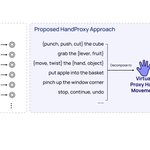


ALT A figure showing a comparison between the existing approach and the proposed HandProxy approach. The existing approach usually relies on a list of discrete, predefined commands such as "Activate the lever," "Select the cube," "Open the box," "Close the box," "Resize the window," and "Resize the object". The proposed HandProxy approach supports more natural, expressive interactions using varied and context-rich phrases like "{punch, push, cut} the cube," "grab the {lever, fruit}," "{move, twist} the {hand, object}," "put apple into the basket," "pinch up the window corner," and general control commands like "stop, continue, undo." These inputs are decomposed into virtual proxy hand movements, which then interact directly within a virtual environment.

ALT a figure showing possible factors causing hand interactions to be unavailable, including situational impairments (e.g., occupied hands, fatigue after long term use), environmental constraints (e.g., confined physical space, virtual object out of reach), and upper-body limitations (spasm or tremor, rapid fatigue, poor coordination, difficulty controlling distance/direction)


ALT A group photo of student volunteers at CHI 2025. PC: Hiroki Kaimoto


