

Commercialization & Go-to-Market strategy + Fractional Revenue Leader for B2B Tech (SaaS, Manufacturing, Distribution, DeepTech)
Cary, NC
Joined May 2009
- Tweets4.2K
- Following266
- Followers50.9K
- Likes2.3K






Chip Royce - Help B2B Tech Reach its Potential retweeted

Successful B2B Go-To-Market =
Important Problem Seeking a Solution +
Right Product +
For the Best Industry(ies) +
Messaging Customer Understands +
Customer's Preferred Sales Channel +
Effective Sales Motion
I help B2B tech companies solve this equation.
DM or visit bio links
Chip Royce - Help B2B Tech Reach its Potential retweeted
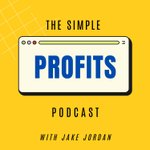
Our principal, @ChipRoyce had a great discussion about #rehumanizing business and how to grow through #partnerships with @jakejordan on the Simple Profits Podcast
youtube.com/watch?v=RTB_XeaL…

Chip Royce - Help B2B Tech Reach its Potential retweeted
This week's featured #RDU business/tech events:
Wednesday 1/3: Monthly Meetup (Triangle Content Creators Meetup)
Thursday 1/4: Out of Office "OOO" (@FrontierRTP )
Friday 1/5: Coffee Call (Virtual) (@NDeftech )
More info & register for these events : flywheeladvisors.com/events-…

Chip Royce - Help B2B Tech Reach its Potential retweeted
This week's top business/tech events in the #Raleigh #Durham #Triangle
Thursday 8/24: Open House (@NCStateENT)
Thursday 8/24: Small Business Roundtable (@NCMBC)
Thursday 8/24: Cary Social Hour (@raleighfounded)
Entire calendar: flywheeladvisors.com/events-…

Chip Royce - Help B2B Tech Reach its Potential retweeted
This week's top business/tech events in the #Raleigh #Durham #Triangle
Tu 8/8: Triangle Biotech Tuesday @TriBiotechTues
We 8/9: Analytics-Based Enterprise Performance Management: FENG-Raleigh
Th 8/10: How do I build a Sales Process? @RiOT
All events: flywheeladvisors.com/events-…

Chip Royce - Help B2B Tech Reach its Potential retweeted
How do you choose the right #partnerships for your #B2B company?
Tomorrow, I'll share tips from my biz dev experience:
- Finding complementary companies
- Avoiding shady reputations
- Channels that make a difference
Be the first to read, sign up here: bit.ly/3P3acYV

Chip Royce - Help B2B Tech Reach its Potential retweeted
Top 3 #RDU business/tech events (week ending 7/15/23)
Wed 7/12
Designing the Complete Product - @RIoTonSocial
Thurs 7/13
Meet in the Middle Networking - @acgraleighdurha
Triangle Women in STEM HH - @ncbiotech
More details at our event calendar: bit.ly/3KjsEKb

Chip Royce - Help B2B Tech Reach its Potential retweeted
This week's top business/tech events in the #Raleigh #Durham #Triangle
Tuesday 7/4: Happy 4th of July!
Wednesday 7/5: @downtowntechies Raleigh Happy Hour
Thursday 7/6: On The Menu: Navigating Your Plot Twist (@Frontier RTP)
Entire calendar: bit.ly/3KjsEKb

Chip Royce - Help B2B Tech Reach its Potential retweeted
Some companies plan only to sell direct.
Others wonder if indirect channels can add to their sales strategy.
Yesterday, I shared four clues, when companies should hold off on indirect sales.
Hint: Two or more clues guarantee failure
bit.ly/3JyO456 bit.ly/3P3acYV
Chip Royce - Help B2B Tech Reach its Potential retweeted
This week's top business/tech events in the #Raleigh #Durham #Triangle
Tuesday 6/27: The Science of Socializing (@ncbio)
Wednesday 6/28: Hangar 6 – Deep Tech Innovation Workshop (@ffvcnc)
Thursday 6/29: Out Of Office “OOO” (@FrontierRTP)
Entire calendar: bit.ly/3KjsEKb

Chip Royce - Help B2B Tech Reach its Potential retweeted

50 Ideas That Shaped My Thinking
1. Inversion: Avoiding stupidity is easier than trying to be brilliant. Instead of asking, “How can I help my company?” you should ask, “What’s hurting my company the most and how can I avoid it?” Identify obvious failure points, and steer clear of them.
2. Doublespeak: People often say the opposite of what they mean, especially in political language. It allows people to lie while looking like they’re telling the truth. As George Orwell famously wrote in 1984, “War is peace. Freedom is slavery. Ignorance is strength.”
3. Theory of Constraints: A system is only as strong as its weakest point. Focus on the bottleneck. Counterintuitively, if you break down the entire system and optimize each component individually, you’ll lower the effectiveness of the system. Optimize the entire system instead.
4. Preference Falsification: People lie about their true opinions and conform to socially acceptable preferences instead. In private they’ll say one thing. In public, they’ll say another.
5. Faustian Bargain: A man once sold his soul to a demon in exchange for knowledge. At first, it seemed like a smart trade. But the man lost in the long-run. Tragically, what the man lost was more valuable than what he earned. In short, he won the battle but lost the war.
6. Mimetic Theory of Desire: Humans are like sheep. We don’t know what we want, so we imitate each other. Instead of creating our own desires, we desire the same things as other people. The entire advertising industry is built on this idea.
7. Mimetic Theory of Conflict: People who are similar are more likely to fight than people who are different. That’s why Civil Wars and family feuds create the worst conflicts. The closer two people are and the more equality between them, the greater the potential for conflict.
8. Talent vs. Genius: Society is good at training talent but terrible at cultivating genius. Talented people are good at hitting targets others can’t hit, but geniuses find targets others can’t see. They are opposite modes of excellence. Talent is predictable, genius is unpredictable.
9. Competition is for Losers: Avoid competition. Stop copying what everybody else is doing. If you work at a for-profit company, work on problems that would not otherwise be solved. If you’re at a non-profit, fix unpopular problems. Life is easier when you don’t compete. (Hint: don’t start another bottled water company).
10. Secrets are Hidden in Plain Sight: Most people think of secrets as Easter eggs. They assume that if a secret is important, it’s necessarily going to be hard to find. The best ideas can come from things that are so well-known that they aren’t well-seen.
11. The Never-Ending Now: The structure of our social media feeds blinds us to history, as it causes us to live in an endless cycle of ephemeral content consumption. The structure of the Internet pulls people away from age-old wisdom.
12. Demand Curves Slope Down: The harder something is to do, the fewer people will do it. For example, raise the price of a product and fewer people will buy it. Lower the price and more people will buy it. Economics 101.
13. Look for Things That Don’t Make Sense: The world always makes sense. But it can be confusing. When it is, your model of the world is wrong. So, things that don’t make sense are a learning opportunity. Big opportunities won’t make sense until it’s too late to profit from them.
14. The Wisdom of Paradox: Logic is the key to scientific truths, but paradoxes are the key to psychological ones. When it comes to the human condition, the deepest truths are often counter-intuitive. When you find two opposites that are both true, start exploring.
15. Law of Shitty Click-Through Rates: Most marketing strategies have a short window of success, as click-through rates decrease as tactics mature. For example, the first banner-ad has a click-through rate of more than 70%. Now we avoid them with ad-blockers.
16. Russell Conjugation: Journalists often change the meaning of a sentence by replacing one word with a synonym that implies a different meaning. For example, the same person can support an estate tax but oppose a death tax — even though they are the same thing.
17. Opportunity Cost: By reading this tweet, you are choosing not to read something else. Everything we do is like this. Doing one thing requires giving up another. Whenever you explicitly choose to do one thing, you implicitly choose not to do another thing.
18. Overton Window: You can control thought without limiting speech. You can do it by defining the limits of acceptable thought while allowing for lively debate within these barriers. For example, Fox News and MSNBC set limits on what political thoughts they consider acceptable, but in the grand scheme of things, they’re both fairly conventional. The political spectrum stretches far beyond the ideas they entertain, but ideas outside their limits are shunned.
19. Planck’s Principle: Science doesn’t progress because people change their views. Rather, each new generation of scientists has different views. As old generations pass away, new ideas are accepted and the scientific consensus changes.
20. Bike-Shed Effect: A group of people working on a project will fight over the most trivial ideas. They’ll ignore what’s complicated. They’ll focus too much on easy-to-understand ideas at the expense of important, but hard to talk about ideas. For example, instead of approving plans for a complicated spaceship, the team would argue over the color of the astronaut’s uniforms.
21. Table Selection: This idea comes from poker, where you’re advised to choose your opponents carefully. That means you shouldn’t compete against the best people. You don’t need to get good at doing difficult things if you get good at avoiding difficult things. If you want to win, pick an easy table and nail your execution.
22. Goodhart’s Law: When a measure becomes a target, it ceases to be a good measure. One hospital took too long to admit patients so a penalty was given for 4+ hour wait times. In response, ambulance drivers were asked to slow down so they could shorten wait times.
23. Gall’s Law: A complex system that works is invariably found to have evolved from a simple system that worked. A complex system designed from scratch never works and cannot be patched up to make it work. You have to start over with a working simple system.
24. Hock Principle: Simple, clear purpose and principles give rise to complex and intelligent behavior. Complex rules and regulations give rise to simple and stupid behavior.
25. Parkinson’s Law: Work expands to fill the time available. People don’t want to look like they’re lazy, so they find extra tasks to tackle, even if they’re trivial. If you have six months to complete a project, it will take six months to complete. Set deadlines accordingly.
26. The Second Law of Thermodynamics: The world tends towards disorder. That’s why your room becomes messier and messier over time. It’s also why an engine converts only ~35% of its energy into useful work. Time moves towards increasing one direction: increasing entropy.
27. The Paradox of Specificity: Focus isn’t as constraining as it seems. In the age of the Internet, when everybody has Google search and personalized social media feeds, differentiation is free marketing. The more specific your goal, the more opportunities you’ll create for yourself. Narrowing your aperture can expand your horizons.
28. Emergence: When things interact, they often birth new, unpredictable forms. Therefore, the sum total of a system is more than its component parts. As a system evolves, its structure can transform — just like how water becomes cold water until it turns into ice.
29. Occam’s Razor: If there are multiple explanations for why something happened and they are equally persuasive, assume the simplest one is true. In the search for truth, remove unnecessary assumptions. Trust the lowest-complexity answer.
30. Hickam’s Dictum: The opposite of Occam’s Razor. In a complex system, problems usually have more than one cause. For example, in medicine, people can have many diseases at the same time.
31. Hormesis: A low dose of something can have the opposite effect of a high dose. A little bit of stress wakes you up, but a lot of stress is bad for you. Lifting weights for 30 minutes per day is good for you, but lifting weights for 6 hours per day will destroy your muscles. Stress yourself, but not too much.
32. Robustness Principle: Be conservative in what you do, be liberal in what you accept from others. It’s a design guideline for software and a good rule for life: Hold yourself to a higher standard than you hold others to.
33. Legibility: We are blind to what we cannot measure. Not everything that counts can be measured, and not everything that can be measured counts. But people manage what they can measure, so society repeats the same mistakes.
34. Horseshoe Theory: Extreme opposites tend to look the same. For example, a far-right movement and a far-left movement can be equally violent or desire a similar outcome. People on both sides are more similar to each other than they are to people in the center.
35. Availability Cascade: A self-reinforcing cycle that creates collective beliefs. An idea will gain traction once it enters the mainstream, which triggers a chain reaction, which causes lots of people to adopt it not because it’s true but because it’s popular.
36. Creativity Begins at the Edge: Change starts away from the spotlight. Then, it moves towards the center. That’s why the most interesting ideas at a conference never come from the main stage. They come from the hallways and the bar after sunset
37. The Copernican Principle: The more we learn about astronomy, the less it seems that earth is special. It’s a small part of the universe, and each human is a small part of the earth. We are all spinning through the solar system — nowhere near the beginning or end of time.
38. Personal Monopoly: Corporations reward conformity, but the Internet rewards people who are unique. If you work in a creative field, strive to be the only person who does what you do. Find your own style, then run with it. Create intellectual real estate for yourself.
39. The Paradox of Consensus: Under ancient Jewish law, if a suspect was found guilty by every judge, they were deemed innocent. Too much agreement implied a systemic error in the judicial process. Unanimous agreement sometimes leads to bad decisions.
40. Penny Problem Gap: Economists assume demand is linear, but people’s behavior totally changes once an action costs money. If the inventors of the Internet had known about it, spam wouldn’t be such a problem. If sending an email cost you $0.001, there’d be way less spam.
41. The Invisible Hand: Markets aggregate knowledge. Rising prices signal falling supply or increased demand, which incentivizes an increase in production. The opposite is true for falling prices. Prices are a signal wrapped in an incentive.
42. Base Rate: The average outcome for an event over time. They’re like batting averages for life, and they work best with big sample sizes. For example, if you’re starting a business, avoid the restaurant business where margins are low and competition is high.
43. Circle of Competence: Define the limits of your knowledge. Hint: the limits are smaller than you think. That’s because being an expert in one area doesn’t make you an expert in anything else. Be clear about what you know and don’t know.
44. Convexity: If you want to be lucky, look for opportunities with big upsides and low downsides. In addition to increased optionality, your errors will benefit you more than they harm you. Convex payoffs let you tinker your way to success and innovation.
45. The Go-For-It Window: Large gaps between accelerating technologies and stagnating social norms create lucrative new business opportunities. But they are only available for a short time when people can capitalize on the difference between the real and perceived state of the world. For example, 2007 was the perfect time to launch the iPhone, but Google Glasses launched too early.
46. Via Negativa: When we have a problem, our natural instinct is to add a new habit or purchase a fix. But sometimes, you can improve your life by taking things away. For example, the foods you avoid are more important than the foods you eat.
47. The Medium Is the Message: We pay too much attention to what is being said. But the medium of communication is more impactful. For example, the Internet’s impact on humanity has a bigger influence than anything that’s said on the Internet.
48. Resource Curse: Countries with an abundance of natural resources such as diamonds and fossil fuels tend to have less economic growth and worse development than countries with fewer natural resources.
49. The Paradox of Abundance: The average quality of information is getting worse and worse. But the best stuff is getting better and better. Markets of abundance are simultaneously bad for the median consumer but good for conscious consumers.
50. The Map Is Not the Territory: Reality will never match the elegance of theory. All models have inconsistencies, but some are still useful. Some maps are useful because they’re inaccurate. If you want to find an edge, look for what the map leaves out.
51. Baker’s Dozen: The key to good hospitality is to delight your guests with an unexpected gift. If you run a hotel, leave a chocolate on the bed. If you run a bakery, give your customers one extra bagel. If you write a really, really, really, really long tweet... share an extra idea.
Chip Royce - Help B2B Tech Reach its Potential retweeted
This week's top biz events in the #Raleigh #Durham #Triangle
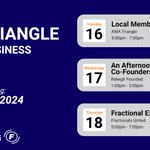
Mon 6/12: Marketing in 2023: @AMA Triangle
Wed 6/14: Medical, Biomed & Biodefense: Warfighter Symposium: @NCMBC
Thursday 6/15: Afternoon With @CofoundersCapVC: @RaleighFounded
Entire calendar: bit.ly/3KjsEKb

Chip Royce - Help B2B Tech Reach its Potential retweeted
EVERYONE chases promotions for money and status.
But YOU sought a leadership role that aligns with your purpose.
What if you or your company accidentally lose your purpose?
Tomorrow, I’ll share how to rediscover your purpose.
Get your growth insights: bit.ly/3P3acYV

Chip Royce - Help B2B Tech Reach its Potential retweeted
This week's top biz events in the #Raleigh #Durham #Triangle
Tues 6/6: Winning Strategies for E-Commerce Co's @LoadingDock_Co
Wed 6/7: Falling in Love With Coding @TweetTechTalent
Thurs 6/8: @ACGRaleighDurha Summer Member-Guest Networking
Entire calendar: bit.ly/3KjsEKb

Chip Royce - Help B2B Tech Reach its Potential retweeted
This week's top business/tech events in the #Raleigh #Durham #Triangle
Wed 5/24: Triangle Climatetech Hub Planning Workshop (Raleigh)
Thurs 5/25: Manufacturing Meet-Up (Virtual) (@NCStateIES), @tiecarolinas May Social
Entire calendar: bit.ly/3KjsEKb

Chip Royce - Help B2B Tech Reach its Potential retweeted
Struggling to hold your teams accountable?
Yesterday, my subscribers learned how to grow as a tech leader AND positively impact their company’s revenues.
Miss the issue?
Grab it here: bit.ly/3M1JPzb

Chip Royce - Help B2B Tech Reach its Potential retweeted
This week's top business/tech events in #RDU #Triangle:
@innovateunc: Competitive Landscape and Using Data for Business Decisions
bit.ly/41RU2ob
@NCCleanTech: 2023 State Energy Conference
bit.ly/3L46YjY
@NDeftech: Weekly Coffee Call
bit.ly/3oBAmqk

Chip Royce - Help B2B Tech Reach its Potential retweeted

The Restrict Act not only bans Americans from using TikTok, it is a Patriot Act 2.0 for the Internet. It would give the govt unfettered access to all the data on our computers, phones, security cameras, internet browsing history, payment applications and more. It throws the Freedom of Information Act out the window, cannot be challenged in court, and criminalizes the use of a VPN with up to 20 years in jail and $1M fine.
Chip Royce - Help B2B Tech Reach its Potential retweeted
Product-market fit is essential for high-growth companies, driving growth, customer satisfaction, and brand loyalty. It's a key factor for success! Read more at: bit.ly/3xFqo8J #ProductMarketFit #Growth #CustomerSatisfaction #BrandLoyalty

