








S&P thinks data center construction insurance alone could be ~$10b of premium this year, about 2x the entire global aviation insurance market.
Swiss Re has data center premiums going from ~$10.6b today to ~$24b, about 2.3x.
Data centers are on track to be one of the biggest commercial property and construction books in insurance.
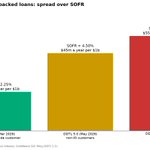
CoreWeave borrowed against GPUs at SOFR + 2.25% in March, when the contract behind them was with an investment grade customer. In May it paid SOFR + 4.50% on GPUs for two non investment grade customers, and SOFR + 5.50% in August.
On $1b that's $22.5m a year in spread vs $45-$55m.
Lenders are pricing these loans off who's renting the GPUs much more than the GPUs themselves.

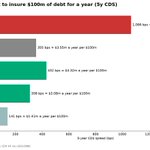
Default insurance on CoreWeave's debt (5y CDS) was 1,066 bps on Oct 21. The CDX high yield index, basically the average junk-rated US company, was at 355. So CoreWeave is priced at ~3x a typical junk borrower.
Oracle went from 141 in January to 308, after S&P cut it to the lowest investment grade rating in July.
The borrowing behind this is huge. The five largest hyperscalers issued $222b of bonds this year through September per the BIS, plus another $75 to 100b through off balance sheet vehicles.
A lot of it ends up with life insurers. Moody's counts $85.2b of AI-linked holdings at US life insurers at the end of Q2, up 24% since December, and about $10b of that is Oracle debt. The below investment grade share of their data center debt went from 4.7% to 6.1%, and Moody's says its number probably undercounts.
Annuity and life policyholders are funding a big part of the AI buildout, and the CDS market is pricing more risk into it every month.

Sources:
CNBC/FactSet cnbc.com/2026/10/22/ai-debt-…
BIS bis.org/publications/bulleti…
Moody's via Reinsurance News reinsurancene.ws/us-life-ins…
A single hyperscale data center campus can carry $20-$30b of insurable value. One of the biggest reinsurers writes about $250m net on a single data center construction project, so getting $10b of cover on one site means stacking 40+ carriers.
The largest dedicated data center program in the market is $5b.
Whatever can't be insured goes back on the developer's balance sheet or a captive, and it shows up in the rating on the data center's debt.


Default insurance on Oracle's debt (5y CDS) cost 308 bps on Oct 21, up from 141 bps in January, or ~$3.1m/yr to insure $100m of Oracle bonds, up from ~$1.4m.
SoftBank went 284 to 432 and CoreWeave is over 1,000.
The AI buildout runs on debt (pulling forward future value), so the speed of the buildout will come down to what it costs to insure that debt.

Anthropic's S-1 says even the whole insurance industry may not have the capacity or expertise to cover a catastrophic AI incident. They also say some AI liabilities may not be insurable "on commercially reasonable terms, or at all."
It's a risk factor so lawyers wrote it broadly, and it doesn't say they've been turned down for insurance; however, it's still a frontier lab telling the SEC that insurers might not be able to cover them and they anticipate headwinds.
Big companies want the downside insured before they put something new in production. If AI risk can't be insured it's likely that agent rollouts slow down as focus is directed towards safety and alignment.
AI risk will be one of the biggest new lines in insurance. Most carriers don't have the data or the people to price it yet, and the models and methods of interacting with them change every few months. A big part of why we're building @UseCorgi as an AI-native insurer.

Government spending exceeds 57% of French GDP.
Communist Poland and the Soviet Union never exceeded 55%.

.9^100=0.0000266
.99^100=0.366
.999^100=0.905



Our strategic projects team at Corgi is expanding.
You could be a fit if you:
• launch 0 to 1
• like building/leading teams
• execute (rather than plan forever)
• have a background in underwriting or specialty insurance
We're one of the fastest growing companies in the world right now and our team is growing fast. We have offices all over the world.
Comment your email or DM me and our team will reach out.

Self-driving trucks will save tens of thousands of lives annually.
With higher uptime, lower fuel costs, and fewer crashes, we should see adoption naturally driven by the market.


Superhuman forecasting

AIs cracking short-term superforecasting is such an important (and, still, under-discussed) trend.
Via a new piece from @nikostro economist.com/science-and-te…


