

Passion for Digital Marketing, PR & Enhancing Customer Experience. Profound love of Mexican delicacies 🌮 and a cup of joe ☕
Ireland
Joined March 2010
- Tweets2.3K
- Following626
- Followers445
- Likes1.9K


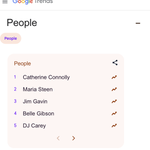




Finally some click data from an LLM. ChatGPT are going to have click data available for companies to understand how their businesses are going to perform in ChatGPT.
Join the waitlist.
#digitalmarketing #seoagencyireland #chatgpt #seo
1
17
Cian Murphy retweeted

We found Google's list of twiddlers, the programs that rework search results after ranking: 120 of them!
111 names are exclusive, among them AI Mode's fan-out plan, a filter still named after Bard or an Expertise twiddler
think.resoneo.com/twiddlers/

Cian Murphy retweeted

Query Fan Outs really started changing how I thought about what KPIs matter most in Generative Engine Optimization, here's 5 new KPIs to consider adding to your stack.
seerinteractive.com/insights…

Cian Murphy retweeted

Google has confirmed the rollout of the goto URL parameters and told me "We have a long history of deploying technical measures against evolving forms of abuse, and we regularly take steps to protect our services and users." Story updated at seroundtable.com/google-sear…


Google's new goto URL redirect parameters, that will hurt scrapers and tools, seems to be more fully rolling out seroundtable.com/google-sear… via @Derek_Perkins


Cian Murphy retweeted

There is no such thing as "prompt search volume." If you're paying for it, you're wasting your money.
I've actually looked at a bunch of data samples from clickstream providers who track what people type into ChatGPT.
Can you guess what I saw?
Multi-sentence paragraphs spanning multiple topics, dictated rambles with assignments, rather than searches and follow-up questions that make no sense without previous messages.
…and then there’s personalization, which further messes up the input that AI chatbot actually gets.
Bottomline:
Deriving any meaningful “search volumes” out of that mess is no better than guessing.
But is that data even important for tracking your AI visibility?
That’s the question I asked Dan Petrovic @dejanseo on the latest episode of @Ahrefs Podcast. Dan runs the reputable “AI Influence” agency called DEJAN AI and he is one of the most respected (and positively nerdy) figures in SEO, who’s been at the forefront of the industry for more than 15 years.
Here's what else we covered with Dan:
🔸 Why LLMs.txt is mostly pointless.
🔸 Why LLMs reject Reddit content over 90% of the time
🔸 What is “primary bias” and “secondary bias” of AI models
🔸 Which search indexes do ChatGPT, Claude, and Gemini rely on
🔸 The "Trojan horse method" for getting into LLM citations fast.
🔸 How Dan tests on-page changes with an agentic loop
🔸 What to actually track instead of prompt volumes.
🔸 How to generate the right prompts for AI visibility measurement.
Watch full episode here 👇
YouTube: youtu.be/roTPZBj4JSc
(also on Apple podcasts & Spotify)
Cian Murphy retweeted

Today we released the August 2026 spam update. We'll update our ranking release history page when the rollout is complete: status.search.google.com/inc…
Cian Murphy retweeted

Every SEO/GEO has the same advice for showing up in ChatGPT. Good content, listicles, post on Reddit.
I wanted to know if any of it actually works, so I spent a few days reading ChatGPT's raw network traffic instead of taking it on trust.
It tags every source as 1 of 4 pipelines, never touches the web on some questions, and on a pricing comparison it gave up on a vendor's JS loaded pricing page and cited a competitor instead.
Full writeup, with the traffic 👇
suganthan.com/blog/how-chatg…

Cian Murphy retweeted
So deeply sad to report Bruce Clay has passed away, he's the Father of SEO and has helped shape this industry into what it is today - you will be so so deeply missed @BruceClayInc seroundtable.com/bruce-clay-…

How to cut wasted ad spend on Google ads. This works well for professional services businesses. Always check the data
2
57
Cian Murphy retweeted

1/ You will absolutely continue to see blue web links in search results, and our AI features include prominent links to the web directly within responses. AI Mode is not the default experience in Search. Our new search box helps you describe exactly what you’re looking for, but using it does not mean that you will only get AI features — you'll continue to get a range of results on Search.
Cian Murphy retweeted
Today we released the May 2026 core update. We'll update our ranking release history page when the rollout is complete: status.search.google.com/inc…
Cian Murphy retweeted

Introducing Google Pics, our new image generation and editing tool 🖼️
Built on our latest Nano Banana model 🍌 Pics takes the hassle out of complex image generation.
Rolling out to trusted testers today, and in preview to business customers this summer.
Learn more about Pics → goo.gle/4diuCsz
Cian Murphy retweeted

Reddit sued Perplexity and a group of major scraping providers including SerpApi, Oxylabs and AWMProxy.
In the process, they revealed how Perplexity, ChatGPT and Google actually work.
The lawsuit also reveals how SEO Stuff has been getting traffic and sales for customers from Google, ChatGPT and Perplexity.
seo-stuff.com
Now that the secret is out, let’s talk about it.
Reddit’s lawsuit claims that Perplexity and its partners have been scraping Google’s search results to capture Reddit content indirectly, bypassing robots.txt restrictions.
One part of the complaint really stuck out.
Reddit reportedly created a test post that only Google could crawl.
Within hours, Perplexity showed the content of that post.
According to Reddit, the only way Perplexity could have retrieved that content was by scraping Google’s SERPs or by getting the data from a partner that scraped it.
This tells us something important.
Perplexity and similar AI search engines are not crawling the full internet on their own.
They are relying heavily on:
Google’s top results
Authority domains
Recency signals
Structured content
This also lines up cleanly with what Perplexity’s head of comms recently explained publicly.
Many AI search systems still rely on page-level discovery signals before passing those results into an LLM, which then synthesizes answers using sub-document or snippet-level context.
(If you want to see where your site stands across Google and AI search, start here:
seo-stuff.com/free-audit)
AI engines don’t start from “the web.”
They start from a filtered, ranked, authority-weighted version of the web.
When you break it down, here is what appears to be happening under the hood:
Perplexity monitors and ingests Google’s top results as a discovery feed.
This is why visibility in Google translates directly into visibility in AI search.
This also explains why brands that “rank fine” but lack authority or structure often never show up in AI answers.
They’re visible to humans, but not that useful to machines.
Perplexity has actually offered an interesting window into AI search dating back to last August when their “ranking factors” leaked courtesy of Metehan Yesilyurt.
Retrieved content is broken into chunks and converted into vector embeddings.
At search time, the system compares your content’s vectors against the user’s query to find semantically relevant matches.
Clean structure, clear subheadings, short answer blocks and semantic clarity win out.
This is exactly what snippet-first systems optimize for: reusable fragments.
Authority domains also receive a ranking boost, and legitimate, strong backlinks still matter.
Recent studies on AI Overviews and Common Crawl back this up:
Authority builds on itself inside AI systems because high-authority domains are crawled more often, retrieved more often and cited more often.
Also, a strict recency filter is applied.
Perplexity uses a time decay system.
New content and recently updated content are weighted more heavily.
Everything we have learned lines up perfectly with the system SEO Stuff (seo-stuff.com) has been building around long before this lawsuit surfaced.
Not because anyone was exploiting a one-off loophole, but because SEO Stuff was building for how AI systems actually retrieve, chunk and cite information.
Gold Plan:
seo-stuff.com/gold-plan-pack…
You get 10 AI search optimized articles plus three DR50+ backlinks per cycle.
The content is formatted with:
High semantic density
Clear HTML markup
TLDR summaries
Question-based H2s
Short answer blocks for extraction
Backlinks come from domains already appearing in AI results and already receiving real search traffic.
This builds both discovery authority (Google) and citation defensibility (AI).
Premium Content Bundle:
seo-stuff.com/premium-conten…
You get 60 targeted, high-similarity articles created and refreshed on rolling cycles to stay inside the visibility window that Perplexity, Gemini and AI Overviews rely on.
This content is designed to show up in both Google’s index and Perplexity’s derivative index.
Scale matters because AI confidence is built through repetition, not one perfect page.
Premium Backlink Bundle:
seo-stuff.com/premium-backli…
You get three DR50+ contextual backlinks from domains that are already being cited by AI answer engines.
This reinforces authority and entity alignment so your site is more likely to be selected by ChatGPT and Perplexity.
If you take away one thing today it should be this:
Perplexity and ChatGPT are not indexing the entire internet.
They are indexing Google’s version of the internet, filtered through authority, structure and freshness.
This is why SEO Stuff (seo-stuff.com) customers who:
Publish structured, factual content
Update their content regularly
Build DR50+ backlinks
Keep tight semantic alignment with their category
Are the ones earning citations, visibility and direct conversions from AI search.
If you want to show up in ChatGPT, Perplexity or Gemini, you have to build for Google and for AI ingestion at the same time.
That has been the SEO Stuff playbook from day one.
The Reddit lawsuit just confirmed it publicly.
#GoogleIO📷 #Google📷 #Gemini


Your how-to guides and beginner explainers used to be top traffic drivers.
AI is now answering those questions for buyers before they ever click through to your site.
The traffic is not coming back, but there is a way to make this work in your favor.
Let's discuss:
According to Siege Media's analysis of 7.2 million sessions across 500 top business blogs, top-of-funnel content like guides and how-to articles lost 7% and 8% of their traffic share respectively over the past two years.
At the same time, bottom-funnel content like pricing pages gained 12% in traffic share, and comparison content gained 2%.
According to the same research, the content that earned sustained AI citations shared a consistent profile: original data, expert voice, and clear structure that AI platforms could extract and attribute.
Your top-of-funnel content needs to get cited by AI platforms to drive awareness. Your bottom-funnel content needs to convert the buyers AI sends to you. The brands winning in 2026 are doing both.
And that is what SEO Stuff (seo-stuff.com) helps businesses build.
Here is what is happening.
When a buyer asks ChatGPT "how to choose a CRM for my business" or "what is the difference between ERP and MRP," the AI answers the question directly. The buyer gets a comprehensive response without clicking through to anyone's blog.
That said, the AI is still citing sources when it answers those questions. If your brand's content is one of the sources the AI cites, you get two things: brand visibility (the buyer sees your brand mentioned as a credible source) and click-through traffic from the small percentage of buyers who want to go deeper.
According to Semrush, the buyers who do click through from AI convert at 4.4x the rate of traditional organic visitors because the AI already qualified them before they arrived.
If you want to see where your content is being cited by AI platforms and where the gaps are, start here (it's free):
seo-stuff.com/free-audit
The old model was: write top-of-funnel content to drive traffic, then nurture that traffic down the funnel to conversion. The new model is: write top-of-funnel content that gets cited by AI platforms (driving awareness and authority), then build bottom-funnel content that converts the high-intent traffic AI sends your way.
Bottom-funnel content like pricing pages and calculators is gaining traffic because buyers are using AI for research and then visiting sites manually to convert. The AI handles the "what should I consider" phase. The buyer handles the "let me check pricing and specifics" phase. If your top-of-funnel content is getting cited by AI, the buyer already knows your brand by the time they arrive at your pricing page. That is why AI referral traffic converts 4.4x better.
The content that gets cited by AI shares specific characteristics:
It has original data (not rehashed statistics from other sources), expert voice (named authors with demonstrable expertise), and clear structure (headings, definitions, and self-contained passages AI can extract and attribute). Generic, anonymous how-to guides do not get cited. Expert-attributed content with original frameworks does.
Remember, if you want to see which of your content assets are getting cited by AI platforms and which are being ignored, start here (it's free):
seo-stuff.com/free-audit
Here is what all this looks like in practice:
Brand A has 40 pages of expert-attributed top-of-funnel content covering every question buyers ask in their category: comparison guides, framework explainers, specification breakdowns. AI platforms cite Brand A when buyers ask these questions. The buyers see Brand A mentioned, some click through, and those who do convert at 4.4x the organic rate. Brand A also has detailed pricing pages, case studies, and product specs that catch buyers at the bottom of the funnel.
Brand B has 40 pages of generic how-to guides with no named author and no original data. AI does not cite them. The guides still get some organic traffic, but it is declining every quarter as AI handles more of these queries directly. Brand B's bottom-funnel content exists but gets no traffic from AI because the buyer never encountered Brand B's name during their AI-assisted research phase.
Here is what to do with this:
Upgrade your top-of-funnel content from generic guides to expert-attributed content with original data and frameworks. Generic how-to posts do not get cited by AI. Expert content with named authors, original research, and clear structure does.
Build bottom-funnel content that converts AI referral traffic. Pricing pages, case studies, product comparisons, and specification sheets. When AI sends buyers to your site, they are already past the research phase and ready to evaluate specifics. Make sure you have the content to close them.
Invest in editorial authority that makes your top-of-funnel content citable. Backlinks from trusted publications signal to AI platforms that your content is worth citing. The same backlinks that boost your AI citation rate also drive the domain authority that keeps your bottom-funnel pages ranking in organic search.
This is the system SEO Stuff (seo-stuff.com) was built around.
Gold Plan
seo-stuff.com/gold-plan-pack…
Expert-attributed content backed by DR50+ backlinks: top-of-funnel content that AI platforms cite and bottom-funnel content that converts the traffic AI sends, backed by authority signals that make both layers work
Premium Content Bundle
seo-stuff.com/premium-conten…
60 pages of expert-attributed content covering both ends of the funnel: top-of-funnel content structured for AI citation and bottom-funnel content built to convert AI referral traffic at 4.4x the organic rate
Premium Backlink Bundle
seo-stuff.com/premium-backli…
Editorial authority from trusted publishers that makes your top-of-funnel content citable by AI platforms and keeps your bottom-funnel pages ranking in organic search
AI is answering your buyers' top-of-funnel questions. That traffic is not coming back. But the brands whose content gets cited in those AI answers are gaining something more valuable: brand visibility at the research phase and bottom-funnel traffic that converts at 4.4x the organic rate. The brands that are not getting cited are losing both.


Cian Murphy retweeted

Introducing Gemini Spark ✨
It’s your 24/7 personal AI agent that helps you navigate your digital life, taking action on your behalf, and under your direction.
🧠 It runs on Gemini 3.5 and is built on @Antigravity, so it can perform long-running tasks easily in the background.
⏱️ And because it runs on dedicated virtual machines on Google Cloud, you don’t even need to keep your laptop open.
🧰 Spark will integrate seamlessly with Google tools, and soon with third parties through MCP.
#GoogleIO
Cian Murphy retweeted
Today, we’re introducing Skills in @GoogleChrome, a new way to build one-click workflows for your most frequently used AI prompts — like asking for ingredient substitutions to make a recipe vegan, generating side-by-side shopping comparisons across multiple tabs, or scanning long docs to get the info you need quickly.
When you write a prompt that you want to use again, you can save it as a Skill directly from your chat history. The next time you need it, select your saved Skill in Gemini in Chrome by typing forward slash ( / ) or clicking the plus sign ( + ) button, and your Skill will run on the page you’re viewing, along with any other tabs you select.
Cian Murphy retweeted
Today, we're announcing an algorithmic change that enhances the quality of articles that appear on Discover. We're calling this the February 2026 Discover Core update.
Find out more in our blog post at developers.google.com/search…

Cian Murphy retweeted

Heads-up! I saw this live yesterday before the announcement today. It's super-alarming and should be for all publishers. When you click "Show more" in the AIO, you are TAKEN OUT OF SEARCH and into just the AIO (you cannot scroll past the AIO to the search results). Then if you type a question in the "Ask anything" field, you are taken directly to AI Mode. This is not a great feature for any publisher ranking in the 10-blue links below the AIO. I'll provide some examples soon, but you can see the video below and in Barry's post.
Google AI Overviews follow up questions jump you directly to AI Mode (plus Gemini 3 is the default now) - this will send less traffic to you and more traffic to Google's AI Mode searchengineland.com/google-…

Cian Murphy retweeted
ICYMI: Google's Danny Sullivan and John Mueller on AI for SEO seroundtable.com/google-dann…

Cian Murphy retweeted
Google says don't use a noindex tag in the original page code searchengineland.com/google-…
