

One API for the world’s leading AI models.
Singapore
Joined November 2021
- Tweets51
- Following41
- Followers19.8K
- Likes1.8K








🚀 Smart Routing v2 is now live on CLOUDSOME.
🧠 Auto model selection based on task requirements and cost preference.
Balanced · Higher Capability · Cost Saving
⚡ Five channel strategies:
Balanced · Price Priority · Throughput Priority · Low Latency Priority · Round Robin
Keep a fixed model and choose the channel strategy, or use Auto to delegate model selection as well.
Also featuring a refreshed UI and upgraded Playground.
Explore: cloudsome.ai/
#CLOUDSOME #AI #LLM

35
This is exactly the shift we’re seeing once agents leave the demo stage.
Most long-running failures aren’t about the model not being smart enough. They’re classic system problems: rate limits, timeouts, partial failures, context overflow.
Having clean failover and resumable paths at the infrastructure layer ends up mattering a lot more than people expect.
Fundamentals still win.

System design is not important anymore - if you believe this, just wait until your 2-hour agent run fails at step 95 of 100 :) I hope it does not happen, but it actually might.
Agentic apps have two classes: short-running and long-running. When you are building short agents, a simple retry loop is enough. Each LLM call is isolated, cheap, and stateless. Fail, retry, done.
But retrying a long-running agent spanning hours is expensive in API costs, tool calls, and wall clock time, and retries can also have side effects like resending notifications. Some failures that a long-running agent might hit in production are:
- LLM provider rate limiting
- Network timeouts for downstream calls
- Pod eviction due to OOM kills mid-run
- Pod rotation during deployment
- Context window overflow
- Human-in-the-loop pauses for days
Notice how most of these are not AI problems. They are classic software engineering problems that are showing up in a new system.
This is where we need checkpointing, idempotency, durable event logs, and resumable workflows. These are backend engineering fundamentals where we built robust, fault-tolerant systems by applying hundreds of patterns.
Good software engineering practices do not go out of fashion. Because someday, you will ship your "tutorial" to production. That is when system design suddenly matters again.
Fundamentals remain fundamentals, even when the abstraction layer changes.
49
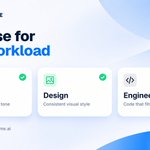
Gemini 4 Argon and Gemini 4 Hydrogen are now available on CLOUDSOME!
Argon for complex, long-horizon work across software engineering, finance, legal analysis, and cybersecurity.
Hydrogen for fast coding, debugging, web development, and everyday agentic workflows.
Two models. Different strengths.
Choose what fits your workload.
#Gemini #LLM

1
76
Model selection isn't just about benchmark scores or API prices.
Context length, task requirements, input/output pricing, and billing units all affect which model makes sense for a given workload.
CLOUDSOME's model catalog lets developers search, filter, and compare supported models.
#LLM #CLOUDSOME

89
SDK compatibility can simplify the integration layer, while model choice remains workload-specific.
CLOUDSOME supports OpenAI-compatible workflows for Python and Node.js, with one API key for multiple supported models.
In many cases, connecting an existing application only requires updating the base_url and API key.
cloudsome.ai
#LLM #CLOUDSOME

72
Choosing the right AI model is important. How you route requests matters just as much.
Different workloads have different priorities: cost, latency, throughput, or balanced performance.
At CLOUDSOME, we support multiple routing strategies to accommodate different workloads.
What's your top priority when routing AI requests?
#AI #LLM #APIRouting

1
85
Using more AI models gives teams more options, but it can also mean more APIs, contracts, invoices, and expenses to manage.
More models shouldn't mean more administrative work.
Cloudsome brings it together:
One API. One Contract. One Invoice.
Less admin. More time putting AI to work.
cloudsome.ai
#AI #Cloudsome

103
An AI provider timeout can become a failed request in your application.
CloudSome’s automatic failover gives that request another route. When the primary provider times out, the gateway can switch to a healthy fallback provider and return the response through the same unified API.
Less fallback logic to manage in your application. Fewer disruptions when an upstream provider fails.
How does your application handle provider timeouts today?
#Cloudsome #AIInfrastructure #AutomaticFailover #LLM #AIDevelopment
🤖 Made with AI

2
112
Meta just acquired Conductor, a multi-agent parallel coding workspace. Its cloud service shuts down Nov 20, and cloud data will be deleted.
Tools in the AI stack change fast. Your model access shouldn't depend on any single one.
CloudSome provides a unified API for supported models, with centralized billing and usage controls, so teams can switch models without rewriting their integrations.
How portable is your AI workflow today?

I am very excited to share that Conductor is joining Meta!
We have some big, crazy plans for the next interface. If you liked Conductor, you’re gonna love what’s coming.
We’re super excited to work with @natfriedman and @alexandr_wang at MSL to build it. They’ve been on an absolute tear, and I’m convinced MSL has the highest talent density of all the labs.
A huge thank you to our earliest believers @aaron_epstein, @ilyasu, and @nabeel. And to everyone here who tried Conductor, sent us feedback, and prompt requests - you made this so much fun. Thank you ❤️🚂
Choo choo!
2
167
GitHub’s Copilot Fusion puts multi-model orchestration in the spotlight.
One model can draft. Another can review. A more capable model can handle the difficult steps.
For teams building these workflows, consistent model access matters.
CloudSome provides a unified API for supported models, with centralized billing and usage controls—helping teams build and manage their own multi-model workflows.
How many models are part of your workflow today?

98
The release of llm-d 1.0 puts production-scale inference in focus.
For application teams, scaling AI also means preparing for traffic spikes, upstream limits, and service interruptions.
CloudSome helps teams manage model access with request limits, usage controls, and automatic failover—through one unified API.
What’s your biggest challenge moving AI from prototype to production?

96
OpenAI models are coming to Google Cloud.
Our takeaway: enterprise AI is increasingly about bringing model choice and operational control together.
Teams need flexibility to choose models—and clear oversight of access, usage, and costs.
That’s the focus behind CloudSome: unified model access, billing, API key controls, and usage management.
How is your team managing models across providers?

91
Google’s Gemini 4 Argon and Meta’s Muse Wonder bring fresh options to the AI ecosystem.
For developers, every release raises a practical question: how much integration work will it take to evaluate another model?
CloudSome simplifies access to supported models through one OpenAI-compatible API—helping teams spend more time testing and less time maintaining separate integrations.
Which new model is on your evaluation list?

95
Anthropic’s new Claude Haiku 5.5 puts high-volume, cost-sensitive AI workloads in focus.
For teams building agents, model selection is a practical decision: which tasks need deeper reasoning, and which prioritize speed and cost?
🔹CloudSome helps teams explore that balance through unified multi-model access, billing, and usage controls.
What matters most for your agent today — quality, latency, or cost?

75
We’re here at TOKEN2049 Singapore! 👋
Come say hi at the CloudSome booth—meet the team, explore our unified AI API, and tell us what you’re building.
Whether you’re working on AI agents, adding AI to your product, or just curious, we’d love to chat.
📍 Marina Bay Sands Expo & Convention, Level4 B4-41
👀 DM us if you need help finding the booth.


1
271
3 days to TOKEN2049 Singapore.
Building with multiple AI models shouldn’t mean managing multiple APIs, billing systems, or points of failure.
At TOKEN2049, we’ll be sharing how CloudSome helps developers and businesses simplify multi-model access—with one API, unified billing, automatic failover, and usage controls.
📅 7–8 October
📍 Marina Bay Sands, Singapore
Want to meet the CloudSome team?
DM us or email [email protected].

1
289
TOKEN2049 returns to Singapore🇸🇬—and CloudSome will be there.
Meet us on home ground to explore how one API can simplify multi-model access, with unified billing, automatic failover, and usage controls.
📅 7–8 October
📍 Marina Bay Sands, Singapore
Want to meet the team?
✉️DM us or email [email protected].

1
142
New models are now live on CloudSome:
🔹 GPT-6 Sol & Luna
🔹 Claude Opus 5.5
🔹 Gemini 3.8 Flash TTS
More choice across reasoning, cost and voice—available from one platform with transparent usage-based pricing.
🔹Explore: cloudsome.ai/models
🤖 Made with AI

1
166
👋Builders, quick question:
When AI traffic spikes, what becomes the first bottleneck in production?
We’re building CloudSome around real operational pain—vote below or reply with what your team has seen.
0%Provider rate limits
0%Latency
0%Cost visibility
0%Failover readiness
0 votes • Final results 127
AI agents don’t make one model call. They plan, retry, use tools and run multi-step workflows.
That means more tokens, more failure points and less predictable costs.
CloudSome brings model access, billing, failover and usage controls behind one API.
cloudsome.ai
🤖 Made with AI

65