

Elite Athlete Development Dad to CJ, Daniel & Ryan Founder: @_po_nation @barrelfinders @a.r.escape
Mt. Laurel, NJ
Joined February 2014
- Tweets2.6K
- Following1.2K
- Followers1.4K
- Likes2.8K




christian lee retweeted

Learning a lot about the game this fall; here is a home run that helped the team win one of the two games on the day.
I’m genuinely curious why more people don’t train to actually MOVE and PERFORM better.
We stand in one spot doing bicep curls and shoulder presses, then wonder why our joints hurt and our bodies feel stiff. 😂
Nothing wrong with building muscle, but shouldn’t the goal be to move better, feel better, and perform better?
Really asking for a friend. 😂
Tough times don’t last. Tough people do.
Tonight, one of our coaches challenged a young player after he took a tipped ball to the face.
The coach kept pushing him, not because he didn’t care, but because he wanted him to learn how to respond to adversity.
The player was frustrated at first, but eventually collected himself, controlled his emotions and began to understand the lesson behind it.
And that’s where the real growth happened.
We talk so much about how mentally challenging baseball is, yet how much time do we actually spend preparing our kids for it?
We spend countless hours developing their physical skills, but mental toughness, accountability and emotional control are just as important.
Today’s baseball world is filled with rankings, highlights, social media praise and coaches recruiting talented players.
But who’s willing to have the difficult conversations? Who’s willing to challenge these kids and prepare them for life beyond baseball?
Sometimes the most valuable lessons come from uncomfortable moments, with coaches who care enough to guide kids through them.
We’re not here just to develop baseball players. We’re here to help develop young men who can handle adversity, take accountability and become good human beings.
Accountability. Effort. Character.
That’s what we believe in.
Because baseball eventually ends. The lessons shouldn’t.

Choosing the Right Travel Baseball Team for Next Season…
Every year around this time, I see parents stressing over which travel baseball team their son should play for next year.
Do we stay with our current organization? Do we try out somewhere else? Are we falling behind? Are we making the right decision?
After spending most of my life around this game, coaching kids from youth baseball all the way to the professional level, I think too many parents are asking the wrong questions.
What you should be looking for at 11 years old is completely different from what you need at 16.
Here’s my advice.
12U and Younger — LEARN THE SKILLS
Find a team that actually TEACHES baseball.
At this age, kids should be learning the fundamentals of every position. They should experience playing different positions, making mistakes, and understanding the game from different perspectives.
Unfortunately, this is becoming harder to find because so many teams are focused on winning.
I get it. Everyone wants to win. But winning a tournament at 10 years old means a lot less than you think.
Learning how to play baseball properly at 10 can make a difference for years to come.
13U–14U — LEARN THE GAME
This is such an important age.
For the first time, these kids are learning to play on a big field. The game changes dramatically.
The distances, speed, decision-making, and responsibilities are completely different.
This is also when physical development needs to become part of the equation.
But don’t lose sight of the fundamentals.
Find coaches who actually teach the game. Not just hitting ground balls and taking batting practice, but teaching WHY we do certain things, how to read situations, and how to think through the game.
Continue developing skills at different positions while learning how to become a complete baseball player.
15U–16U — OPPORTUNITY
Now the questions start to change.
Where does my son fit on this team?
Is he getting meaningful opportunities to compete and develop?
Is he being challenged? Is he improving? Or is he simply filling a roster spot?
Opportunity doesn’t mean guaranteed playing time. You still have to earn it.
But you need to be in an environment where you have a legitimate opportunity to compete, make mistakes, learn, and grow.
At this age, sitting on a talented team just to say you’re part of that team doesn’t necessarily make you a better player.
16U and Older — DIRECTION & RECRUITING
Now it’s time to really think about where you want baseball to take you.
Are you playing because you love the game and want to enjoy your high school years?
Do you want to play college baseball?
Are you serious about pursuing baseball beyond college?
There is absolutely nothing wrong with any of those paths.
But your goals should dictate the environment you choose.
If college baseball is your goal, find coaches who understand the recruiting process, have relationships with college programs, and most importantly, know how to develop you into a player colleges actually want.
Just because your team plays in big tournaments and showcases doesn’t mean you’re going to get recruited.
You still have to be good enough to play at that level.
⸻
One last thing for parents…
Stop worrying so much about the name on the uniform, the rankings, the trophies, or how many tournaments an organization wins.
Start paying attention to who’s actually coaching your child and what he’s learning.
I’ve seen plenty of kids win a lot of games at 11 and 12 who never developed the skills they needed when the field got bigger.
And I’ve seen kids who weren’t the best players at 12 turn into really good baseball players at 16 and 17.
Don’t automatically assume the grass is greener somewhere else, either. Sometimes the best thing for your child is to stay where he is, build relationships, work through adversity, and continue developing.
And sometimes a change is exactly what he needs

There’s a moment in youth sports that we don’t talk about enough.
Before the pressure.
Before the rankings.
Before the showcases, the lessons, the private coaches and the constant chase to get better.
There was just joy.
As a coach, I spend my life trying to help athletes improve.
But as a dad, I’m realizing that sometimes the best thing I can do for my own kids is stop coaching them.
She doesn’t always need me telling her what she did wrong.
She doesn’t need an evaluation after the game.
She doesn’t need the car ride home to become another lesson.
Sometimes she just needs to know that when she turns around, looks through that fence and waves at me with a huge smile…
Dad is there.
And maybe my biggest responsibility isn’t making sure she becomes the best player she can be.
Maybe it’s making sure that while she’s becoming that player, she never loses the little girl who simply loved playing.
I work with high school, college and pro athletes every day. I see how quickly sports can become a job.
Everything becomes the grind.
More competition.
More pressure.
More expectations.
More comparison.
We become so obsessed with preparing our kids for where they’re going that we forget to let them love where they are.
They’re only this age once.
There will be plenty of time for standards, discipline, failure, competition and hard work.
But you can’t manufacture joy once it’s gone.
So when she turns around and waves…
I’m going to wave back.
Not as her coach.
As her dad.
Because someday I’d give anything to stand behind that fence one more time and have her turn around looking for me.
If you love it, it’s not a grind.
It’s a gift.
How I Decide Who Plays and Who Gets Cut
Here’s a question a fellow coach posed to me, and it’s one of the most common I received on a recent reader survey I sent out:
“How do you decide who plays, who sits, who gets cut?”
Here is the answer.
I don’t. They do.
The head coach should deliver the program’s standards and expectations with crystal clarity on day one. And day two. And day three. You get the point. This makes the decision moot. Really, it does.
You see, our message must be crystal clear. We carefully assess, evaluate, and calculate our standards and expectations on the field, off the field, on campus, in this classroom, in the community, and as a member of this program. Daily. Weigh these criteria as you see fit, but if the expectations are crystal clear, you will never have to decide who plays, who sits, or who gets cut. They will.
-dr. Barry davis
When did training or practicing become “the grind”?
To me, training and practicing is a privilege.
Every early workout, extra rep, bullpen, lift, or late-night practice isn’t something our kids have to do. It’s something they get to do.
Teach them to be grateful for that opportunity.
Teach them to be humble.
Teach them to be respectful.
Teach them that hard work doesn’t require an audience.
“The grind don’t stop.”
Please stop.
I’ve coached thousands of athletes, and social media has introduced me to a lot more “hard workers” than I’ve actually met in real life.
I see parents constantly telling the world how hard their son or daughter works. Sometimes I know the kid personally and the social media version and reality aren’t even close.
That’s not helping them.
There’s a difference between building a reputation for working hard and actually building a work ethic.
Parents, be proud of your kids. You should be.
But we don’t need to glaze them every time they do something difficult. Not every workout deserves a post. Not every extra rep deserves applause.
Let some of it belong to them.
Let them work when nobody is watching.
Let them become confident without constantly being told how great they are.
Let them stay humble enough to know there’s always more work to do.
And eventually, let their results and other people tell their story.
Work ethic isn’t content.
It’s character.
Loyalty is simple.
I’m loyal to those who are loyal to me.
I don’t chase people. I don’t force relationships. I match energy and remember who stood with me when it mattered.
My circle may get smaller, but it gets stronger.
I never forget who showed up and I never forget who didn’t.

Parents,
Please make sure you update your player’s availability for this weekend ASAP. Coaches are working on rotations, positions and lineups now.
A few reminders as we head into our first tournament:
During pool play, we will use a rolling batting order, and players will rotate through different positions. We are absolutely going to compete and play to win, but never at the expense of development.
Something I want everyone to understand about our program: the games and tournaments probably matter less than you think.
So why do we play them?
Because we need pressure. It’s difficult to teach players how to execute, compete, communicate and make decisions under pressure if nothing is on the line. Games give us an environment that practice simply cannot recreate.
But a huge portion of the value you are paying for comes from our practices and development.
You almost never truly learn how to play every position just by playing games. At practice, we can stop things, teach positioning, explain situations, work on communication, repeat mistakes and actually teach kids how to play the game of baseball. You are seeing that at our practice rt now.
That is why we have 3–4 coaches at practices. We believe that is where some of the most important development happens.
Our coaches are human. We aren’t going to be perfect, and you aren’t going to agree with every lineup, position or decision. But I can promise you our coaches will work hard and make decisions based on what we believe is best for the development of every kid in the program.
One important rule going forward: please do not text or call coaches with complaints during tournaments or on game days. Give it 24 hours. If you still have a concern after that, please address it directly with me, not the coaches.
And please don’t start the conversation with, “I played baseball…” or “I never complain, but…” 😂 We’ve heard them all.
Let’s be respectful, let the coaches coach, let the kids compete, and most importantly let the kids enjoy playing baseball.
Our job is to keep teaching them, challenging them and helping them get better.
Excited to get started tonight. Let’s have a great weekend.
One of the most overlooked factors in youth player development isn’t the facility, the instructor, the team or the program.
It’s parenting.
You can put a kid in the best environment with the best coaches, but if every failure is excused, every struggle is rescued, every uncomfortable moment is avoided and every coach is questioned when the kid is challenged… development becomes almost impossible.
Talent needs coaching.
Development needs accountability.
I can give you the blueprint.
I can show you the path.
I can even warn you where the wrong road ends.
But I can’t make you listen.
I can’t make you choose it.
Some people just have to learn the hard way.
I see it every day how people just don’t prepare and waste time. Life is meaningless without purpose. We are all meant to shine… start living and stop pretending
Our goal is bigger than baseball.
We want to nurture young boys into good men.
Good humans before great baseball players.
Good sons before rankings.
Character before attention.
We will teach them to set standards, be accountable, respect others, and do things the right way.
While others chase rankings, clicks and hype, we’ll keep building PEOPLE.
No drama. No egos. No shortcuts.
We are a family.
Baseball is what we do.
Building young men is WHY we do it.
christian lee retweeted

Last workout before football camp starts next Monday
@CoachChristianL
@CHW_Baseball
christian lee retweeted

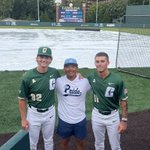
Jon Young Jr (@JonYoungJr1) and the River Turtles are rolling! His second home run of the #AppyLeague season inches Pulaski closer to home field advantage!
365 FT | 27° LA | 95 MPH

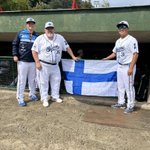
Our goal is to develop this young team for the future and prepare them to proudly represent their country. Team always comes before the individual. The message is clear, and we’re taking the right steps to build something that will last.
#teamfinland
#eurobaseball
#wbsc

I wasn’t planning on writing this, but after spending the last few days in Finland, I can’t stop thinking about it.
This trip has been the reset I didn’t know I needed.
Somewhere over the last few years, I slowly started falling out of love with coaching. Not because I stopped loving baseball, but because I was getting buried by everything surrounding it.
The rankings.
The showcases.
The politics.
The transfer portal.
The constant chase for the next thing.
Somewhere along the way, the game started feeling more like a business than baseball.
Then I came to Finland to coach the Finnish National Team.
These players are between 16 and 24 years old. Most of them have jobs, so we don’t even start practice until 6:00 p.m. A few of them take a half day off work and drive four hours each way just to be at practice.
Think about that for a second.
Four hours.
Not because someone promised them a scholarship.
Not because scouts are watching.
Not because they’ll improve a ranking.
Because they simply love the game.
They don’t have the fanciest facilities. They aren’t worried about Perfect Game, PBR rankings, social media, or who’s watching.
They just want to learn.
They ask questions.
They stay engaged.
They compete.
They appreciate being coached.
It reminded me what baseball is supposed to feel like.
Back home, I think we’ve made youth baseball far more complicated than it needs to be. Too often, adults chase exposure before development. We worry about rankings before learning how to play. We play game after game without giving kids enough time to actually practice.
I know there are incredible parents and coaches back home. I’ve been fortunate to work with many of them.
But I also think we have to ask ourselves an honest question.
Are we helping kids fall in love with baseball, or are we making them fall in love with the business of baseball?
I’ve seen parents yell at umpires over youth games. I’ve seen coaches poach players. I’ve watched adults forget that the game belongs to the kids.
Then I look at these players.
There is a quiet respect here—for the game, for each other, and for the opportunity to represent their country.
Next week we’ll compete in the European Championship in Bulgaria. We’re one of the youngest teams in the tournament, and baseball isn’t Finland’s biggest sport.
Maybe we’ll surprise some people.
Maybe we won’t.
But in my mind, these players have already won.
They reminded me why I became a coach.
I didn’t come here for money. I didn’t come here to build my résumé.
I came because I said yes to an opportunity.
I never imagined it would help me fall in love with baseball again.
Thank you, Finland, for reminding me what this game is really about.


