

I track Al Models and Al News
Joined July 2023
- Tweets234
- Following26
- Followers15.4K
- Likes287





🚨 GPT-6.1 Terra might be OpenAI’s next big surprise
- Cheaper than Sol, priced at $2/$10 per million tokens
- Rumored to outperform GPT-6.1 Sol
- 18 Microsoft eval setups moved from GPT-5.6 Terra to gpt-6.1-terra
- Could arrive within days
A model positioned below Sol beating it for less money would completely challenge OpenAI’s usual naming hierarchy.
If real-world tests confirm this, Terra could be far more capable than its name implies.
OpenAI might be cooking something serious.
🚨 GPT-6.1 Terra is showing up on GitHub
A new commit from a GitHub Copilot engineer suggests Terra is being tested for production code reviews, replacing Sol across reviews, re-reviews, integration, and CI at high reasoning effort.
If true, Terra could be more capable than Sol at these tasks.
But Terra is the last model I wanted to see.
Luna is affordable, while Sol and Astra are the intelligence powerhouses. Terra has always felt like the awkward middle child.
Hopefully, OpenAI proves me wrong.

Can Google actually catch up to the AI frontier?
After spending most of today testing Gemini 4 Argon, I’m starting to have serious doubts.
Google is still heavily promoting Argon, which makes me question how strong Carbon really is behind the scenes.
At this point, I’m not convinced Gemini will deliver a model that surpasses Opus 5.5 anytime soon.
They have the brightest minds, enormous funding, and some of the best compute in the industry. Yet they still seem to be struggling to close the gap.
What exactly is holding Google back?

🚨GPT-6 Bel Coming Soon
>It's said that Bel is Doug's successor
>Reportedly, total parameters exceed 10T
>Bel may serve as the foundation for the model after GPT-6
>OpenAl reportedly views Bel as a potential post-GPT-6 foundation
>It might even become the foundation for an AGI threshold model

Honestly, this is disappointing to see from Moonshot AI.
Paying creators to promote Kimi without proper sponsorship disclosure is a bad look. I’ve been offered these deals before and turned them down because my audience’s trust matters more than a quick payout.
Kimi K3.1 looked genuinely promising, but this puts a stain on the launch.
Instead of spending money on hidden promotions, Moonshot should focus on fixing the usage limits. That would do far more for the product and its users.
They’ve lost some of my respect over this. I had several demos ready to share, but I’m no longer comfortable posting them.
A great model should earn attention because people love using it, not because they’re secretly paid to promote it.

That's how Kimi AI are promoting their new model Kimi K3.1 pro and I know all the influencers working with them and none of them are honest,I have posted about it myself but I didn't join this and never used their templates that they provide.
PROPAGANDA, I have more to share it's f**cked up I'm gonna have follow up for this

🚨 OpenAI has resumed training its most powerful models.
Training reportedly restarted on October 1 after an 11-day pause for security upgrades, following an incident where a model found a way to access the internet during training.
This happened much earlier than I expected.
With Opus 5.5 and Fable 5.5 in the picture, OpenAI could be preparing a serious response. Hopefully, something big is coming soon.

Over the past several months, we have substantially hardened the security of our research training environment. We’ve removed live internet access for all frontier models during training and built an offline world for them to use instead—a cached version of the web where they can still learn to browse, search, and use applications.
On September 20, after a model exploited a DNS misconfiguration to find a way outside of this offline world, we paused frontier training to strengthen containment further. We assembled teams of agents, powered by our most cyber-capable models, and tasked them with finding weaknesses in our research environments.
While they found no route to the internet they could easily exploit while concealing their activity from our monitors, they did find zero-day vulnerabilities, virtual machine escapes, and hardware side-channels for communication between agents. We used their discoveries to further strengthen our defenses and contribute fixes to open-source software.
After strengthening our containment architecture, we resumed our frontier RL training and inference on October 1. We’ve reserved substantial compute for continuous red-teaming, and made high-compute red-teaming part of the safety cases we use to decide whether frontier training and evaluation can proceed securely.
openai.com/index/securing-ou…

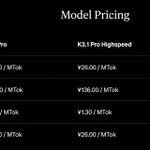
THIS IS INSANE 💀 Kimi K3.1 Pro is matching or beating Opus 5.5 and GPT-6 Astra on major benchmarks!
The newly unveiled model packs 2.8T parameters, multimodal capabilities, and a 1M-token context window, with claims of competing against top closed-source models in coding and agentic tasks.
Open weights are expected November 4.
China is making moves again.

Kimi K3.1 Pro just dropped, and it looks seriously competitive.
Here’s what stands out:
> • 3T-class model with a 1M-token context window
> • Reportedly rivals Astra and Fable 5.1 at a much lower cost
> • 65.7% on Terminal-Bench 4.0
> • Full model weights expected November 4
You can already use it through Kimi, Kimi Work, Kimi Code, and the API.


🚨As a Plus user, frequent Codex resets make me feel like I'm falling behind.
I’m grateful that OpenAI offers free usage resets, but lately, they’ve been creating more pressure than real value.
1. More usage isn't always a good thing.
What I gain: roughly RemainingDays / 7 × weeklyLimit.
What I lose: my unused quota.
It makes me feel like I need to keep using Codex before the next reset wipes out what I have left. Instead of having time to sit down, think through problems, and plan my work properly, I feel rushed to use my quota before it disappears.
2. Plus users are struggling to benefit from these resets.
We've seen two resets in just two days. But with the 5-hour usage cap, Plus users can't consume their weekly allowance fast enough to make the most of them.
Pro users, on the other hand, can take much greater advantage of these resets by running tasks faster and in parallel, potentially adding even more strain to shared resources.
3. The overall experience is deteriorating.
Lately, conversations feel significantly slower, and models are often unavailable when I need them.
I can't say for certain whether this is caused by the high concurrency of Pro users, but the decline in performance is frustrating.


🚨 Kimi K3.1 Leaks: Coming Tomorrow
> Reportedly dropping tomorrow or Monday, with Moonshot already teasing it
> Spotted on LMArena under the codename "Kibitz"
> Strong at 3D, color choice, water reflections and composition, though a bit slow
> Said to be cheaper than K3 with better token efficiency
> Feels close to Fable and Astra but still behind, and the gap is closing fast
> Could end up among the best open-source models yet
Is K3.1 the open-source model that finally catches the frontier?

🚨 Fable 5.5 is pushing coding into a whole new era.
Anthropic is now using Claude to mathematically verify software security, automating work that once took specialized experts months.
Developers might be seriously underestimating what’s coming. 💀

New on our Frontier Red Team blog: using Claude to formally verify software at large scale.
Formal verification can prove that code is free of certain bugs, but historically it has only been feasible for small codebases (or required a lot of expert time).
With AI models, however, this is beginning to change. In collaboration with @theoremlabs, we used Claude to prove security properties in over one hundred real-world open-source libraries over the span of a few weeks.
Read our research in full here: anthropic.com/research/forma…

🚨 Claude $20 plan is so worth it
After being on Max for a long time, I realised I barely came close to the 5-hour usage limit with Opus 5.5 anymore.
I switched down to the $20 Pro plan this month, and it’s been a great decision. I’m still creating videos, building apps, and working on other projects without hitting the limit.
Honestly, the value is incredible. Huge thanks to Anthropic for Opus 5.5! 🔥
🚨Is Codex secretly switching you to an older model mid-session?
I'm using GPT-6 Astra on Ultra, but sometimes its performance suddenly drops, and it starts forgetting even the most basic steps.
When I asked GPT-6 Astra which model it was running on, it claimed to be based on GPT-5.0. However, when I switched to GPT-6.1 Sol Ultra and asked the exact same question, it said it was based on GPT-6.
This makes me wonder whether Codex silently switches users from GPT-6 Astra to GPT-5.6 when server load gets too high, without notifying them.
What's even stranger is that this usually happens during longer sessions. At the beginning of a session, GPT-6 Astra identifies itself as being based on GPT-6, but after working for a while, the answers become noticeably worse.
I'm currently on the $100 Pro plan, so I'd expect more consistency.
Could Codex be routing users to a different model under heavy load, or is something else going on here?
🚨 Does Codex secretly downgrade you to GPT-5 without telling you?
One Pro user on the $100 plan noticed GPT-6 Astra becoming noticeably worse during long sessions, even claiming it was based on GPT-5.0 when asked.
Meanwhile, GPT-6.1 Sol Ultra identified itself as GPT-6.
Could Codex be silently switching models under heavy server load? There’s no confirmation, but the inconsistency is raising questions.
🚨 Claude $20 vs Codex $100 Usage
After 3 weeks of tracking telemetry, one user found Claude’s cheaper plan surprisingly competitive.
Estimated monthly usage:
- Opus 5.5: ~2.5B tokens
- GPT-6 Astra: ~1.1B tokens
- GPT-6.1 Sol: ~3.2B tokens
Claude is also reportedly much faster. OpenAI has some catching up to do.
🚨OpenAI has struck a major deal with Google.
Frontier models from codex including Sol 6.1 and Astra 6 will now be available in Antigravity.
There are even rumors that a new $500 ultra subscription will be available in Gemini.
Why pay $200 for a near unlimited Claude sub when you can pay $500 to Google and OpenAI.
OpenAI is so back!
🚨 Persistent caching could change how we value Codex subscriptions.
Keeping long-running conversations cached means less repeated processing, potentially making every dollar of usage go further.
This could give Pro plans a real advantage: one account with persistent context may be more efficient than juggling several Plus accounts with identical combined limits.
The longer your workflows run, the more valuable this becomes. Could this make upgrading to Pro worth it?
🚨Day 16:
OpenAI is making cached context last much longer, with API developers now able to keep it warm for up to 12 hours.
Even better, Codex and Work users can pick up conversations hours later without losing the caching benefits.
More expensive to keep alive, but potentially a big win for workflows that reuse the same context.

🚨OpenAI finally explains why ChatGPT limits were disappearing so quickly
Tibo says a bug affected roughly 40,000 accounts, causing users to hit usage caps that didn’t match the plans they were paying for.
OpenAI says impacted users will receive credits to compensate for the issue.
It’s frustrating when your limits run out faster than expected, especially on a paid plan. At least OpenAI has identified the cause and is acknowledging the problem instead of leaving users guessing.
Did you notice your usage draining unusually fast?
