

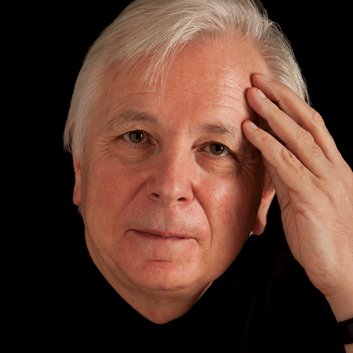
Proud dual Nationality NHS Neurologist. Dad, environmentalist. The Economist for bedtime reading
Guildford, England
Joined December 2015
- Tweets352
- Following266
- Followers320
- Likes958





Coebergh retweeted

🎙️ New FNDS Podcast Episode!
Dr. Jan Coebergh joins us to discuss FND rule-in signs, functional tremor, the “broken escalator” phenomenon, migraines, and more.
🎧 Listen to Season 3, Episode 5: Jan Coebergh: Rule In Signs, Migraines, and More
🔗loom.ly/OAROYqk

5/5 These experiences can be poorly tolerated. Over 65% found them burdensome, most had little control, and behavioural strategies (listening to music, distraction, humming) usually provided only temporary relief. rdcu.be/fsgXq
4/5 Phenomenology matters. Most patients experienced the music inside the head, but external localisation more common with familiar music and (especially asymmetric) hearing loss. Religious music most common, but ranged from childhood songs to jingles—and even "melodic zombies."
3/5 One of the striking findings: multimodal hallucinations were common. Nearly 44% experienced hallucinations or perceptual disturbances in other sensory modalities, and tinnitus present in 40%. This suggests distributed network dysfunction and not a purely auditory phenomenon.
2/5 Mixed aetiology was the rule rather than the exception. Psychiatric illness (50%), hearing loss (50%) and structural neurological disease (28%) frequently co-existed. Musical hallucinations rarely fit neatly into a single diagnostic box—they are a symptom, not a diagnosis.
1/5 🎵 New article out: Detailed clinical characteristics of musical hallucinations in 81 patients in Journal of Neurology: Musical hallucinations are often portrayed as a rare phenomenon in elderly women with hearing loss. We found a much broader clinical spectrum. Here's a 🧵
Coebergh retweeted

2026 1 day multidisciplinary symposium in functional disorders. Friday 11th September. Amazing line up of topics & speakers. Book now! Tickets available for in-person or online citystgeorges.ac.uk/prospect…
Online option available. 40£ for AHP and 65£ for consultants. Welcoming and wide ranging discussion @jonstoneneuro @drjprogers @CNicholsonOT @GNielsen_Physio @kateoholt @FNDAction @FNDHopeUK @BibaStanton
Coebergh retweeted

In collaborate with the @anpadirect #FND Significant Interest Group, #JNCN has published a curated collection of 10 articles in Functional Neurological Disorder - spanning 1994-2025. Check them out! @FNDSociety @FNDHope
psychiatryonline.org/doi/10.…


Coebergh retweeted

What do moths, chameleons, & Dutch Elm disease have to do with neurology? @ajlees reviews Nature Within by James Bashford, examining how 'nature deficit disorder' may impact cognitive health & why doctors should look beyond the clinic walls. Read it here: acnr.co.uk/book-review/natur…

Coebergh retweeted

The “Hallett Sign” - in honour of Mark Hallett (1943-2025)
movementdisorders.onlinelibr…
@AlanCarson15 @JankovicJoseph

Coebergh retweeted
We have waited a long time for a robust clinical study of functional sensory symptoms and signs.
Congrats to @RoryHigginsPT and @GNielsen_Physio for leading this excellent study - detailed thread below
academic.oup.com/braincomms/…


Delighted to report our study on sensory symptoms has been published in @BrainComms - @jonstoneneuro, Prof. Edwards, @CoeberghJan, @RoryHigginsPT, @GNielsen_Physio
academic.oup.com/braincomms/…

Coebergh retweeted

Delighted to report our study on sensory symptoms has been published in @BrainComms - @jonstoneneuro, Prof. Edwards, @CoeberghJan, @RoryHigginsPT, @GNielsen_Physio
academic.oup.com/braincomms/…
Coebergh retweeted
Management of Acute Dizziness & Vertigo
This 1-day masterclass from @CityStG_Health will equip you with practical, evidence-based knowledge & skills that will allow you to confidently diagnose & treat patients with acute vertigo.
Find out more here: citystgeorges.ac.uk/prospect…

Coebergh retweeted
My book review of Nature Within by @wrenandbee. A clarion call for all physicians to embrace Erasmus Darwin’s romantic science and sustainability
@jonstoneneuro @ACNR @PracticalNeurol @Brain @UCLIoN acnr.co.uk/book-review/natur…
Coebergh retweeted
@BBCNews I’m puzzled why you wrote this story as if there was scientific equipoise about whether there is a mystery brain disease ?
The headline is especially misleading.
Could it be that amplifying uncertainty gets you more readers than - “there was no mystery”?

The battle over Canada's mystery brain disease - BBC News. Poor bordering on irresponsible from @BBC bbc.co.uk/news/articles/c623…

These findings suggest exploring dreams, nightmares, sleep paralysis, sleep and its disorders are a way to improve symptoms, care and understanding 5/5
Among those who experienced functional seizures, 74% reported that they arose during sleep, which might be influenced also by difficulty recognising sleep/wake and their transition. Very few participants had discussed dream with a healthcare professional 4/n