

Better care through better data
Calgary, Alberta
Joined August 2016
- Tweets910
- Following281
- Followers260
- Likes662


What makes digital health effective?
This systematic review suggests it's technology paired with clinician-led care.
Across 9 randomized controlled trials, nurse-led, technology-based interventions for patients with heart failure after hospital discharge improved:
• Self-maintenance
• Self-management
• Self-confidence
The takeaway? Technology is most powerful when it strengthens the connection between patients and their care teams.
🔗 loom.ly/7UDeHgw
#HeartFailure #DigitalHealth #PatientEngagement #Cardiology

📊 High-quality research and quality improvement begin with high-quality data.
A new @EuropeanHeartJ review explores how shared patient definitions, core datasets, and standardized outcomes could strengthen collaboration and registry-based cardiovascular research.
🔗 loom.ly/FQKzg4s
#Cardiology #ClinicalResearch #QualityImprovement #ClinicalRegistries #HealthInformatics

🫀 Nearly half of people with type 2 diabetes without cardiovascular disease had detectable aortic valve calcification on CT in the Steno INTEN-CT substudy.
Higher calcification was linked to age and comorbidities- but not diabetes severity.
Read more in EHJ Cardiovascular Imaging.
🔗 loom.ly/qospS7k
#CVimaging #CardiacCT #Diabetes

Myocardial mapping values are field-strength specific.
🔑 This new JCMR study sought to establish normal reference ranges at 5.0T CMR in 181 healthy adults and reported the following key findings:
🫀 Native T1: 1496 ± 37 ms
🫀 T2: 35 ± 3 ms
🫀 ECV: 27 ± 2%
Additional findings are detailed in the paper 👉 loom.ly/XoDyklA
#CMR #CardiacMRI #CVimaging

Intracoronary imaging in PCI is on the rise — IVUS and OCT use has increased substantially over the last 5 years.
Hear a summary of current guidelines and recent study findings in this ESC365 episode!
🔗 loom.ly/LFGx-zo
▶️ Starts at 12:00
⏱️ 7 min 30 sec
#CVimaging #IntracoronaryImaging #IVUS #OCT #PCI

🤰 Bridging maternal & newborn health with placental MR imaging - two perspectives on improving fetal outcomes.
🗓️ Register for the SCMR Fetal CMR SIG webinar on June 25 with Dr. Mehreen Zaigham & Prof. Penny Gowland, plus panel discussion.
🔗 loom.ly/sK3597w
#CVimaging #CMR #FetalCMR #MaternalHealth

In this ACCEL Lite episode, the CI discusses the unique placebo-controlled RCT evidence from the ORBITA-CTO trial, showing that CTO PCI can significantly reduce angina burden and improve quality of life in carefully selected patients.
Worth a listen for anyone managing complex coronary disease.
🎧 loom.ly/6tXzR1M ⏰ 12 min
#CTO #PCI #Angina #CoronaryArteryDisease

One of healthcare's greatest opportunities is turning routine care into a continuous source of evidence and learning.
A new European Heart Journal viewpoint outlines a blueprint for learning health systems built on automated screening, proportionate consent, embedded randomization, and automated outcome capture.
An important enabler: digitally mature, patient-facing infrastructure.
🔗 Read more: loom.ly/HHJP8bY
#Cardiology #ClinicalResearch #DigitalHealth #LearningHealthSystems

🫀 New ATTR-CM trial data are reshaping treatment decisions.
Hear experts break down the latest ACC.26 findings and what they mean for therapy selection, patient care, and clinical practice.
🎧 Listen now: loom.ly/jPWusvs
⏰ 17 min
#ATTRCM #CardiacAmyloidosis #ACC26 #PrecisionMedicine

🫀 In ICI myocarditis, many patients had abnormal CMR strain despite preserved LVEF.
This prospective study found that serial CMR—including left atrial assessment—may help identify patients at higher risk of adverse cardiovascular outcomes.
🔗 Read the study: loom.ly/KU7qCl4
#CMR #CVimaging #CardioOncology #Myocarditis

🫀 “Your Heart, Your Rhythm, Your Story.”
World Heart Rhythm Week 2026 highlights the importance of recognising arrhythmias earlier, improving diagnosis, and supporting personalised heart rhythm care.
Every rhythm tells a different story, and awareness can save lives.
Learn more here: 🔗 loom.ly/XLf1JcQ
#WHRW2026 #YourHeartYourRhythmYourStory #CVimaging
World No Tobacco Day (May 31), led by World Health Organization, highlights the global impact of tobacco and nicotine use, which remains a major contributor to cardiovascular disease worldwide. 🚭
New data are concerning: 40 million children aged 13–15 use tobacco products globally, including 15 million using e-cigarettes, and in some regions youth are 9× more likely than adults to vape. Tobacco companies continue to market flavoured and “innovative” nicotine products in ways that may appeal to younger populations.
Learn more about this year’s theme and global resources here: loom.ly/2btwNc4
#WorldNoTobaccoDay #HeartHealth #TobaccoFree #PublicHealth

New ACC/JACC Poster Contribution highlights a systems-based approach to improving cardiac MRI efficiency and access 🫀
Using pathology-driven protocols, structured pre-scan review, and remote scanning support, the team reported a ~38% reduction in scan time alongside expanded service capacity.
An exciting example of how imaging workflows and digital infrastructure intersect in modern cardiovascular care.
Read more here🔗 loom.ly/QZGIGpo
#CVImaging #CMR #CardiacMRI #HealthcareInnovation #HealthSystems

Post-CABG NSTE-ACS remains one of the most challenging groups in the cath lab, and practice variation reflects that uncertainty.
In the latest Heart podcast, Prof. James Rudd and Dr Matthew Kelham discuss how CTCA may help reduce unnecessary angiography and better identify patients most likely to benefit from PCI.
🔗 Listen and find the link to the paper here: loom.ly/kWfQAgs
#CTCA #PCI #CABG

Can one MRI scan assess both high-speed arterial jets and slow venous flow more effectively in complex congenital heart disease? 🫀
This study explores accelerated dual-VENC 4D-flow MRI and suggests it may offer the best of both worlds.
🔗 Access the accepted manuscript via EHJ-IMP here: loom.ly/EHNle7A
#CVimaging #4DFlow #CardiacMRI #CongenitalHeartDisease #CHD
🫀 What happens when AI and clinicians work together in cardiovascular research? Tune into this JACC Author Interviews episode exploring the growing role of AI in supporting faster, scalable cardiovascular research.
🎧 loom.ly/pKRXpm0
⏰ 16 mins
#ArtificialIntelligence #HealthcareInnovation #CardiovascularResearch

Post hoc analysis of NEWTON-CABG CardioLink-5: lower achieved LDL-C at 3 months was associated with reduced saphenous vein graft occlusion at 2 years, regardless of treatment group. 🫀
Findings support “lower is better” LDL-C targets post-CABG.
Read more in European Journal of Preventive Cardiology.
🔗 loom.ly/fDzuis8
#CVimaging #Cardiology #CABG

Can OS-CMR reveal more than we can see?
A JCMR study shows deep learning can classify ischemic, non-ischemic, inflammatory, and healthy myocardium from contrast-free oxygenation-sensitive CMR, with activation maps aligning with LGE/T2 patterns.
Early work, but an intriguing signal for AI in #CVimaging 🫀
📄 loom.ly/0ic673Q
#CMR #CardiacMRI #AIinHealthcare #DeepLearning

As temps rise, so does cardiovascular risk. ☀️🫀
This article in the EHJ notes that each +1°C above local heat thresholds → +2.1% CV mortality, with higher risks for stroke & ACS.
Heat + air pollution can also trigger arrhythmias & cardiac arrest.
Take precautions, recognize the risks, and protect your heart health while you have fun this summer.
🔗 loom.ly/VwOBBm4
#HeartHealth #cvPrev #ClimateHealth

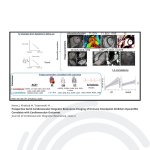
🔥 New EHJ Imaging Methods & Practice paper comparing echo, 2D flow CMR, and 4D flow CMR after PPVI.
Despite the small cohort, the study showed feasible post-PPVI 2D/4D flow assessment despite stent artefact, with useful insights for surveillance imaging workflows and CMR protocol planning in congenital heart disease. 🫀
🔗 loom.ly/GIAZSV0 #CVimaging #CMR #PPVI
