

Biostatistician, SAS-lover, R-learner, outcomes researcher, she/her. associate prof @harvardmed, biostatistician @BWHResearch @OrACORe_BWH
Boston, MA
Joined February 2016
- Tweets914
- Following324
- Followers516
- Likes5.5K




Jamie Collins retweeted

🔬 NIH’s new policy to cap indirect costs at 15% is a huge blow to research🧪
💰 Less funding for operations = fewer resources for science.
⚠️ Small institutions may struggle to sustain research.
🏛️ This could impact the future of NIH-funded projects.
🔗 grants.nih.gov/grants/guide/…


Jamie Collins retweeted

Universities aren’t “siphoning” research funds—overhead (indirect costs) covers essential expenses like lab space, utilities, admin support, & compliance with federal regulations. Without it, research wouldn’t happen.
Federal agencies negotiate these rates, and they’re standard across institutions. Not a ripoff—just the cost of science. This move will weaken our biomedical prowess and many educational programs that create scientists you employ. #ResearchFunding #SciencePolicy #nih #science #stem #research #indirect
Jamie Collins retweeted

It seems few people know what an “indirect cost” is or why it has to be 40-60%.
The reason the government forced universities to raise their indirect costs up to (typically) 40-60% was to force a huge amount of regulations on the universities while also minimizing the bookkeeping to comply with those regulations. This includes the work by contract managers, compliance lawyers, accountants, safety management, etc., who are required by the government per the terms of the contract. If universities had to allocate all those categories of labor to each contract hour-by-hour it would require too much bookkeeping, which would waste money. (I’m setting aside for now the question of whether or how much the regulations are wasting money and only discussing how you bookkeep the effort to comply with the regulations.)
So to save money, while also requiring universities to do these types of work, the government requires universities to roll those categories of labor into “cost pools” that must be allocated as a percent of the technical work in each of the contracts. While the actual “overhead” might be only 15%, these pooled labor charges that are required by the government are typically much more.
Second, the government doesn’t allow the universities to figure out their own indirect rates. These rates are determined by the federal government through audits every couple of years. The government then sends a document telling the university what rate to use for its cost pools. For example, the University of Colorado was told by the DHHS to use 54% (colorado.edu/controller/site…) and U. Nebraska was told by DHHS to use 55.5% (uofnelincoln.sharepoint.com/…). 40-60% is not only reasonable to fulfill the terms of the contract, it is the rate that the government tells the university it can charge for all the work the government requires the university to do.
So if the government wants to reduce the indirect rate to 15%, then it needs to do one of these two things:
Either
(A) eliminate all the federal regulations that force the universities to do those categories of work (compliance, accounting, management, safety management, tracking harmful chemicals, etc.)
Or,
(B) stop requiring universities to pool those real costs into the “indirect cost” category and allow universities to include them in the “direct costs” of the contract.
If the government chooses (A), then the safety rails have been entirely removed. (Even if the government lowers the regulations without entirely eliminating them, the costs they impose will still be real costs that probably come out to more than 15%.)
Or, if it chooses (B), then the direct costs will go way up and research will actually be less efficient because all the bookkeeping, not more efficient.
But if the government caps the indirect rate at 15% without doing either (A) or (B), then it will be impossible to do research for the federal government without going bankrupt. That’s the worst possible choice. It will kill research in the US. Is that what we want?
I can explain it for you but I can’t understand it for you. It’s up to the reader not to be ignorant.
Jamie Collins retweeted

This study explored how #LLMs handle multiple clinical tasks at once, finding that performance decreases as the number of tasks and notes increases.
High-capacity models showed strong accuracy and efficiency, managing up to 50 tasks with significant cost savings, making them suitable for scaled healthcare applications.
nature.com/articles/s41746-0…

Jamie Collins retweeted

✈️We are thrilled to announce the introduction of the OARSI 2025 World Congress Travel Support Award for Early Career Investigators for #OARSI2025!
Apply during the abstract submission process (includes submission of 1 page letter and short CV). congress.oarsi.org/awards
Jamie Collins retweeted

July's #EditorsChoice Paper
🤔 What is the impact of depressive symptoms on cost 💰 in patients with knee osteoarthritis?
@oracore_bwh @colljamie
Read more at doi.org/m5f8 || @OARSInews @ProfDavidHunter

Jamie Collins retweeted
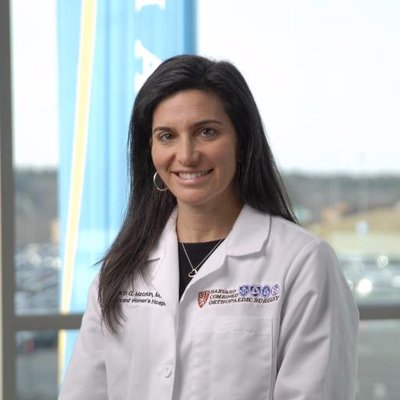
Arthroscopic Partial Meniscectomy in Patients With Kellgren-Lawrence Grade 3 Osteoarthritis Shows Clinically Meaningful Improvement in Outcomes - Arthroscopy, Sports Medicine, and Rehabilitation arthroscopysportsmedicineand…

Jamie Collins retweeted

The deadline is extended so don't miss your chance #early #career #osteoarthritis #investigators!
The @OARSInews @OARSI_ECI peer mentoring program is not just unique but also a great opportunity for professional development and building your network! – at Berlin, Germany

Early OA-career investigator alert!
Applications for the second edition of the @OARSInews @OARSI_ECI peer mentoring program is up an you can apply trough the QR code below.
A unique opportunity to receive constructive feedback to further develop your peer reviewing skills!

Jamie Collins retweeted
The statistical editors of OAC journal Aleksandra, Jamie, and Robin provide an update on biostatistical methods and practical examples on how to improve your submission ✅


Jamie Collins retweeted
Arthroscopic Partial Meniscectomy in Patients With Kellgren-Lawrence Grade 3 Osteoarthritis Shows Clinically Meaningful Improvement in Outcomes - arthroscopysportsmedicineand… @MGB_Sports @natlowenstein @CollJamie @OrACORe_BWH @ArthroscopyJ #orthotwitter #knee


Jamie Collins retweeted

Great working with @_TyWarner5 @CollJamie and @DocMatzkin to explore outcomes of APM for patients who are in the “grey zone”! @MGB_Sports – at Philadelphia, PA

Arthroscopic partial meniscectomy in patients with Kellgren-Lawrence grade 3 osteoarthritis shows clinically meaningful improvement in outcomes - Arthroscopy, Sports Medicine, and Rehabilitation arthroscopysportsmedicineand…
Jamie Collins retweeted
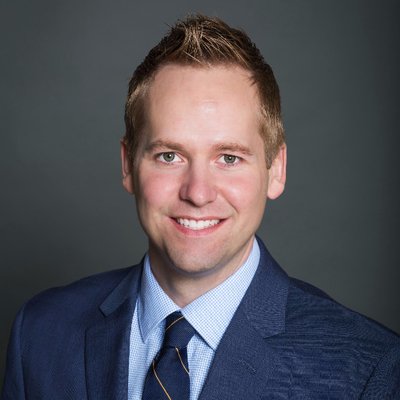
A few more days to sign up for the VERITY @BrighamResearch Course virtual talks
Keynotes by @NIH_NIAMS Director Dr Criswell and @RheumResearch President Dr Fraenkel
Apply here by March 29: verityresearch.org/2024-veri…


ATTENTION early investigators: FREE 2024 VERITY/
@BrighamResearch Course
We are opening the didactic lectures to virtual participation!
See below for schedule: editors of @ACR_Journals @ARD_BMJ, leaders of @NIH_NIAMS @RheumResearch
Apply by March 29: verityresearch.org/2024-veri…

Jamie Collins retweeted
OAC journal is looking for two Communications Editors (one clinical, one basic/translational) to assist @ProfDavidHunter and @AM_Malf disseminate the work of the journal.
This is a paid role and you will be remunerated for you time.
Fill out the EOI ➡️ redcap.sydney.edu.au/surveys…

Jamie Collins retweeted
ATTENTION all early investigators: FREE 2024 VERITY/@BrighamResearch Course in Clinical Research will be held in Boston, MA on April 2-5, 2024
Hone your research/grant/career with BWH and @harvardmed faculty. Funded by @NIH_NIAMS.
Apply here by Jan 15: verityresearch.org/verity-co…

Jamie Collins retweeted

Come join us at 8:30am in Room 24A-C to hear about phenotyping and precision medicine at #ACR23. Added bonus that I get to be onstage with wonderful friends & colleagues @kat_liao, @CollJamie & Amanda Nelson

#ACR23 will host can't-miss talks from UNC CCCR members Amanda Nelson, Katherine Liao, and @Tuhina_Neogi on 11/14 for the session: Phenotyping and Precision Medicine: The Interface of Research Methodology and Clinical Practice in NIAMS-funded Core Centers for Clinical Research


Jamie Collins retweeted
Out now in Osteoarthritis and Cartilage: our new paper presents a graphical causal model for treatment of pain in knee osteoarthritis.
Open access link: oarsijournal.com/article/S10…

Jamie Collins retweeted
Increased Patient Resilience Scores are Related to Positive Postoperat... sciencedirect.com/science/ar… @natlowenstein @CollJamie @OrACORe_BWH
Jamie Collins retweeted

Want to bring your clinical research skills to new heights? Join us tonight at 8PM ET to learn more about the Program in Clinical Effectiveness! Register on our homepage. Hope to see you! hsph.harvard.edu/clinical-ef…