

AI, semiconductor & quantum research for investors Intel | Foundry | Memory | Advanced Packaging Founder, Roaring Fork Research
Ohio
Joined October 2024
- Tweets7.3K
- Following727
- Followers1.3K
- Likes19.6K




Pinned Tweet
🧵 The part of Intel's foundry strategy most investors will never talk about.
$INTC just opened a new 107,000 sq ft photomask facility with a Class 1 cleanroom.
At first glance, that sounds boring.
It isn't.
Photomasks are essentially the templates used to print transistor patterns onto wafers. As nodes get smaller, the masks become dramatically more complex and expensive.
This facility is being built to support Intel's future roadmap, including 18A, 18A-P, and eventually 14A.
Here's the part I think matters.
Advanced EUV systems are incredibly powerful, but the masks don't last forever. Over time they degrade, get damaged, and need to be replaced.
If you can't replace them quickly, production slows.
That means a mask shop isn't just manufacturing infrastructure.
It's production insurance.
Intel also has an advantage that doesn't get discussed enough.
Through IMS Nanofabrication, Intel is the only major chipmaker that owns the company building the world's leading multi-beam mask writers.
Instead of writing masks with a single electron beam, IMS systems use over 262,000 beams simultaneously.
Faster mask creation.
Higher throughput.
Less risk of becoming a bottleneck.
Most investors are focused on foundry customers, yield numbers, and whether Intel can win share from TSMC.
Those things matter.
But none of it works without the infrastructure behind it.
This looks like another piece of Intel quietly building the ecosystem needed to support advanced manufacturing on U.S. soil.
The market is watching the fabs.
Intel is investing in everything that keeps the fabs running.

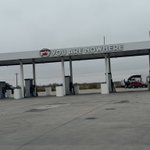
Driver over 770 miles/ 1250 kilometers today.
Nebraska is boring very boring on the freeway. That Nebraska gas station sums it up.

Steven Martin retweeted

소버린 글로벌마켓 모닝브리핑 2026-10-28 (수)
─────────────────
1. AI 밸류에이션 버블 경고 및 빅테크 자본 조달 압박 (AI Bubble Deflation & Capital Calls)
중국에서 AI 관련 기업 가치가 폭락하며 약 4,800억 달러 규모의 AI 거품이 붕괴했다는 분석이 제기되었습니다 (인베스팅). 앤트로픽은 S-1 서류를 통해 천문학적 적자 구조(상반기 800억 달러)와 8,000억 달러에 달하는 데이터센터 지출 약정을 공개했으며 (FT), 아마존 경영진은 직원들에게 AI 도구 사용 시 비용 효율성을 높일 것을 지시(tokenmaxxing)하는 등 AI 인프라 유지 비용 압박이 수면 위로 드러나고 있습니다 (CNBC). 메타의 950억 달러 자본 조달 발표도 AI 투자 부담의 현실을 방증합니다.
2. 실물 경제 둔화 시그널 및 신용 경색 위험 (Macro Slowdown & Credit Strains)
미국의 9월 신규 주택 판매가 급감하고 중간 주택 가격이 하락하며 주택 시장의 둔화가 확인되었습니다 (인베스팅). 영국에서는 재정적 어려움에 처한 기업이 73만 8천여 개로 20년 만에 최고치를 기록하며 기업 도산 공포가 확산되고 있습니다 (가디언). 대체 투자 시장에서는 도이체방크 산하 DWS가 플래그십 부동산 펀드의 환매 청구에 대해 10%만 지급하기로 결정하며 상업용 부동산 유동성 위기를 재확인했습니다 (FT).
3. 글로벌 대체투자 및 기업 신용 균열 심화 (Corporate Distress)
마이크로소프트가 AI 전환에 따른 비용 절감을 위해 6만 명을 대상으로 명예퇴직(buyout)을 제안했고 (가디언), 보잉은 상용기 생산 지연 및 노조 파업 여파로 2027년까지 737 맥스 생산량 목표 달성이 불가능하다고 밝혀 주가가 급락했습니다 (CNBC). 항공유 급등으로 실적 압박을 받던 젯블루(JetBlue)는 채권단 구조조정에 착수했으나, 턴어라운드 계획 발표로 주가가 반등(19% 상승)하는 극심한 변동성을 연출했습니다 (블룸버그·마켓워치).
4. 중동 외교 회담과 지정학적 텐션 지속 (Mideast Geopolitics)
트럼프 전 대통령이 당장 이란 타격을 반대하는 뉘앙스의 발언을 내놓고, 카타르 등 주변국 중재 노력이 이어지면서 국제 유가는 소폭 하락(-1.5%)하며 숨 고르기에 들어갔습니다 (연합뉴스·인베스팅). 하지만 영국 공군기지 테러 미수 사건의 배후로 이란이 지목되고 (WSJ), 사우디아라비아에 대한 후티 반군의 드론 및 미사일 공격이 지속되면서 긴장감은 여전합니다. 쿠바의 심각한 연료난도 글로벌 에너지 공급망의 불안정성을 더하고 있습니다 (WSJ).
5. 한국 펀더멘털 양극화 및 부실 위험 (Korea Polarization & Default Risks)
국내 주식 시장은 미국 기술주 반등에 동조하며 큰 폭 반등(^KS11 3.09%)했으나, 펀더멘털 우려는 커지고 있습니다. 기업은행의 중소기업 연체율이 15년 만에 최고치(1%대)를 기록하며 고금리 장기화의 여파가 가시화되었고 (연합뉴스), 한국은행은 AI 투자 사이클이 꺾일 경우 반도체 수출이 최대 1,000억 달러 감소할 수 있다고 경고했습니다 (매경). 자산 상·하위 20%의 주택 가격 격차가 290배로 사상 최대치로 벌어지는 등 내수 양극화도 극심해지고 있습니다 (연합뉴스).
─────────────────
"기본값은 No Action. 조건이 바뀌면 움직입니다.


Steven Martin retweeted

𝗞𝗘𝗘𝗟 𝗗𝗔𝗜𝗟𝗬 | 𝗢𝗖𝗧𝗢𝗕𝗘𝗥 𝟮𝟳, 𝟮𝟬𝟮𝟲
𝗠𝗬 𝗥𝗘𝗔𝗗
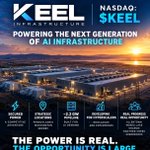
I still really like what $KEEL is building. The company has access to a lot of power, and that matters as AI data centers compete for electricity.
But I keep coming back to the same question. Where are the signed leases?
Keel has roughly 2.2 GW in its development pipeline. That is potential capacity, not operating data centers.
At $2.75 million per MW annually, the full pipeline represents nearly $6 billion in potential yearly revenue. That is a high end illustration.
Actual revenue depends on the type lease.
The opportunity is large. Keel still has to prove it can turn that opportunity into revenue.
𝗦𝗜𝗧𝗘 𝗣𝗥𝗢𝗚𝗥𝗘𝗦𝗦
Allentown received conditional approval in October for a proposed 75 to 80 MW data center.
Local reporting indicates Keel could operate the facility for an unnamed technology tenant. No signed lease or financial terms have been released yet.
Moses Lake continues moving forward. PowerSecure announced a backup power agreement in September, and Vertiv equipment deliveries have advanced.
Management has previously targeted initial capacity in the first half of 2027.
Sharon and Panther Creek remain important development sites, with potential service dates around la
𝗖𝗨𝗦𝗧𝗢𝗠𝗘𝗥 𝗡𝗘𝗚𝗢𝗧𝗜𝗔𝗧𝗜𝗢𝗡𝗦
This is what interests me most.
During the Q2 earnings call, CEO Ben Gagnon said multiple prospective customers were negotiating for each of Keel’s three priority sites.
He also stated that some customers were interested in more than one location.
A customer interested in several sites could support a much larger agreement than a single location.
There is also speculation about Amazon becoming a customer.
I have not seen confirmation of an Amazon agreement, and I still watching that rumor.
I would rather focus on what management has stated and I am excited for the earnings report to hear more updates.
𝗜𝗡𝗦𝗜𝗗𝗘𝗥 𝗕𝗨𝗬𝗜𝗡𝗚
CEO Ben Gagnon purchased additional shares in August. The COO also bought shares.
I like seeing management invest its own money.
It shows confidence, but it does not guarantee the stock will recover.
𝗪𝗛𝗔𝗧 𝗜𝗦 𝗕𝗢𝗧𝗛𝗘𝗥𝗜𝗡𝗚 𝗠𝗘
Management previously targeted three leases before the end of 2026.
During the Q2 call, management discussed active negotiations but did not clearly reaffirm that deadline.
I would rather see Keel sign good contracts than rush into bad ones.
But investors deserve an update.
Keel reported approximately $819 million in liquidity in August.
That gives the company flexibility, but building data centers is expensive.
I want to know how much cash remains and how much construction will cost before meaningful revenue begins.
𝗣𝗥𝗜𝗖𝗘 𝗔𝗖𝗧𝗜𝗢𝗡
KEEL closed Monday at approximately $2.18.
The stock has been under pressure, with previously reported short interest around 19% of the float.
A signed lease could change sentiment quickly.
But high short interest alone is not a reason to buy.
The business still has to deliver.
𝗡𝗢𝗩𝗘𝗠𝗕𝗘𝗥 𝟱
Keel reports Q3 earnings before the market opens on November 5.
I want answers to four questions.
Have any customer agreements been signed?
Are the three original lease targets still realistic for 2026?
Are Moses Lake, Sharon and Panther Creek still on schedule?
How much cash will construction require before meaningful revenue begins?
Those answers matter more to me than another presentation about the 2.2 GW pipeline.
𝗕𝗢𝗧𝗧𝗢𝗠 𝗟𝗜𝗡𝗘
I have not changed my view of Keel’s potential.
The power is valuable. The locations matter. The opportunity is large.
Allentown’s approval and Moses Lake’s progress give me reasons to keep watching.
Multiple customers negotiating across the three priority sites is encouraging
I want signed leases and customers.
🤖 Made with AI


This is a big factor. There is no ai crash $NBIS on the larger end to $KEEL on the smaller end will be needed for infrastructure ready to go or quickly ready to go!

Posted takeaways of Anthropic's S-1 on my substack. This is a very detailed S-1 with a lot of risk factors and specific languages.
Key takeaways:
> Anthropic has amassed massive long-term commitments totaling hundreds of billions of dollars across major partners (including non-cancelable agreements with Google, Amazon, Microsoft, Broadcom, and others), roughly 75% of which are non-cancelable. Although, deals with Nscale and Lambda may be cancelled on failure of service.
> NRR stands at approximately 900%. Over 50% of Fortune 500 companies are customers generating at least $100,000 in TTM revenue.
> Companies sees compute availability limited for the foreseeable future.
> Expect use of short-term compute to increase in the near term and to in turn compress their operating margin and Adjusted Operating Margin as a result.
Read more with the link in replies 👇


Steven Martin retweeted

Considering LEAP Options ?
Check out this must read article from @EdgeReport91 👇


Steven Martin retweeted

I'm an ASL interpreter by day.
My job is taking a message in one language and delivering it in another without losing the meaning.
So here's Wall Street, interpreted:
Spend less than you make.
Buy the index.
Keep buying.
Don't touch it.
Simple to say. The hardest part is being relentlessly consistent.
What would you add?
Steven Martin retweeted
“VOO and chill.”
I checked my portfolio 47 times today. I have no intention of selling for 20+ years.
The VOO part is easy. Working on the chill.
Good night fam 😊🤑🤟🏻
Steven Martin retweeted

$INTC almost quadrupled in six months. Then it gave back 35.65% 📉
Still up 145.80% this year.
Intel started 2026 at $36.90, ran all the way to $140.94 in June, and trades at $90.70 today.
🔴 Last time it reported, it fell 7.89% the next day. It reports again Thursday.
Is this a healthy pullback or the end of the run?

Steven Martin retweeted
$RES triangle is breaking out 👀
RPC Inc, oilfield services for oil and gas producers in the US.
🔹 Lower highs from $6.73 and higher lows from $5.58 squeezed it into a triangle
🔹 Today it pushed over the top line and hit $6.49
🔹 It needs a daily close over $6.41 to lock it in
📊 Q2 revenue $460.9M (+9.5%), adjusted EPS $0.08 vs $0.04 expected, net income $12.1M vs $0.9M in Q1
💰 Adjusted EBITDA $66.0M (+23.3% sequentially), margin up 250 bps to 14.3%
📈 $179.5M of cash with no borrowings on the revolver, and a dividend yield of about 2.5%
⚠️ Oil price volatility keeps management cautious, and Q3 results come Thursday, Oct 29 before the open
✅ Confirm: daily close over $6.41
🟢 TP1 $6.73 (+5.0%) • TP2 $7.41 (+15.6%) • TP3 $8.06 (+25.7%)
⛔ Invalid: daily close under $6.31 (−1.6%)
Risk from the live $6.45 to Invalid is about 2.2%, and TP1 pays about 2.0x.
Please respect your SL level 🙏

Steven Martin retweeted

Microsoft is offering buyouts to 60,000 employees while spending billions on AI.
When interest rates stay high, companies become more cautious about spending. Hiring slows, budgets tighten and job security becomes less certain.
And that creates a vicious cycle: workers worry about losing their jobs, so they spend less. Businesses then face weaker demand, making them even more cautious about hiring and investing.
High interest rates don’t just make money more expensive. They can make an entire economy more fearful.
Image source: hcamag.com

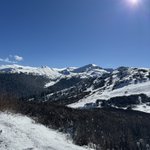
Driving on snowy road in October. Backcountry skiers already skiing off independence pass. @KeystoneMtn should be opening soon!
