


Bek retweeted

Abdul El-Sayed absolutely destroys Donald Trump.
Q: You recently called President Trump the dumbest effing guy who ever was president.
AES: True.
Q: You've also said Democrats should drop the decorum and treat the president as the unserious fool that he is.
AES: True.
Q: Why are you taking that approach?
AES: Because he's a bully alongside being a narcissist. And the only way you deal with bullies is to stand up to them. Bullies don't bully you because they necessarily care for the thing you have. They bully you because they like to bully you because it makes them feel strong. And the way you take on a bully is to bully back. Because then they learn that this does not make them feel strong. It makes them feel weak and they don't like to feel weak. So they back off. And the more you let a bully get away with bullying, the more they signal to everybody else that this person cannot be stood up to. And so I think it's important for us to stand up to him.
Bek retweeted

This is pure gold!
Abdul El-Sayed trolling Trump and JD Vance after winning Michigan’s Senate race:
“JD, habibi, there is this delicious irony in the fact that you’re constitutionally obligated to swear me in, in January.”
“Donald, look, I know you struggle with my name, so after JD swears me in, you can just go on and call me Senator.”
Bek retweeted

The Nobel peace prize was just awarded to the UN official that found Israel guilty of an ongoing genocide
An extraordinary turning point & a vindication of everyone who stood against Israel's atrocities in Gaza!
Bek retweeted

Uzbekistan seems to live in two parallel universes. In one, the elite youth and politicians play chess and party in Samarkand. In the other, ordinary people have been crying out for days for justice for a 5-year-old girl who was raped by a staff member at a public kindergarten


Bek retweeted

“To remove”
You mean ethnic cleansing?

Israel ‘organised and prepared’ to remove Gaza population if US gives green light, Katz
➡️ go.france24.com/wKZD


Bek retweeted

«Turkiya — ayollar uchun; Rossiya — erkaklar uchun»
Bu gapni Turkiyadagi vatandoshlardan olima Shoiraxon Nurdinova qayta-qayta eshitganlar va bu farazni empirik tekshirib koʻrishga qaror qilganlar.
1/4


Bek retweeted

It is ridiculous to attack @DAcemogluMIT contribution to economics in toto as @TheEconomist is apparently doing. He is, together with Piketty, rightly, the most influential economist of the post-Cold War period, and his contribution-even when one does not agree with everything--is absolurely fundamental.

Bek retweeted

I believe my post has been misinterpreted, and this tweet is one example of such an unfortunate misinterpretation.
There’s no criticism in the post about Argentinian people. I don’t see how anybody could read that into it, and any such reading would make me very unhappy.
I found the theory I retweeted intriguing. The theory was: the reason why the Argentine soccer team started making harder fouls and also becoming more aggressive in the post-game was because earlier more minor transgressions went unpunished, and this changed norms and perceived rules, enabling further transgressions. This was entirely about the Argentine squad.
I prefaced my comments saying that I’m not sure this is the right mechanism or explanation, but it is intriguing.
I still think so.
I found it intriguing because it has a parallel to how political leaders and influential people (including businesspeople) start misbehaving if rules and norms are not enforced toward them.
Here there was no reference to Argentine leaders or people at all. As my comment made it clear, the main case I had in mind was Trump in the United States.
Let me also add one thing. One important distinction between patriotism and nationalism is that patriots are proud of their country and its achievements, but also happy to criticize its mistakes and be critical of people who represent their country if they are behaving in ways that don’t meet the highest standards. I fully support patriotism and the pride that Argentines and many other nations feel of their national soccer team.
Nationalism supports one’s nation regardless of its misdeeds and potential misbehavior of its leaders. Perhaps I am an old-fashioned liberal in that I still think nationalism is something that is destabilizing and dangerous for the whole world.
This post is from an account that no longer exists. Learn more

Bek retweeted

New way to describe Israel: Kakocracy.
Pathocracy is a form of government where a society is ruled by manipulative individuals w/personality disorders, particularly psychopathy, narcissism.
Kakocracy is where the culture of the MAJORITY is evil & narcissistic.
Bek retweeted
A holocaust survivor’s son once told me he took his dad to the movie Valkyrie to show him “there were good Germans in the Nazi government who tried to kill Hitler”
His dad shouted “No! They only turned against him when he started losing. They loved him when he was winning”!
Bek retweeted

A reminder to people in academia. You can pick your questions based on ideological considerations. You cant pick the answers on that basis.
Bek retweeted

WOW
A website is DOCUMENTING Israel’s crimes with GEOLOCATION, dates, categories of crimes, and footage of the incidents themselves.
One click and you can see EXACTLY what Israel did.
An enormous digital archive built for ACCOUNTABILITY.
Link: genocide.live
Direct Link: experience.arcgis.com/experi…

Bek retweeted
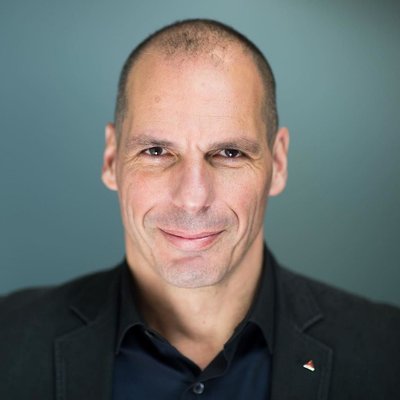
IN PRAISE OF FRANCESCA ALBANESE
There is a question that visits me in the small hours, when sleep will not come and the mind turns over old stones. The question is this: “What would I have done in the 1930s, on the morning after Kristallnacht?"
Not what I say I would have done. Not what I hope I would have done. But what would I actually have done—when the trains began to run, when the neighbours grew quiet, when the cost of decency became the loss of everything?
Most of us, I think, would have done little. Not from malice. From fear. From the soft, creeping conviction that someone else will speak, that the situation is complex, that we must be 'reasonable'. Lest we forget, the ordinary is the extraordinary's alibi. And how we have clung to that alibi! How we still cling to it!
And then, every once in a terrible while, someone appears who does not cling. Someone who steps forward when others step back. Someone who speaks the name of the thing when everyone else is busy naming something else.
Francesca Albanese is that someone.
She stands before the world—alone, unarmed, armed only with law and language and a rare courage—and she says what the centrists will not say, what the foreign ministries will not say, what the editorial boards will not say. She says: "This is a genocide. And we are watching it happen."
Do not tell me that is hyperbole. Do not tell me the term is contested. She has not used it lightly. She has used it as a physician arrives scientifically at a diagnosis—not to wound, but to warn. Not to inflame, but to name.
And for that, they have come for her. Oh, how they have come for her. Smears. Investigations. Vicious editorials. Frozen bank accounts. Dispossession of the only apartment she had ever owned. The machinery of the respectable turned to crush her. Because the respectable cannot abide what she represents: a mirror held up to their complicity.
Let us, once again, travel back to the 1930s. Back to the few who stood up when the trains began to run laden with Jewish people.
There was Aristides de Sousa Mendes, a Portuguese consul in Bordeaux. He defied his own government. He signed thousands of visas, by hand, for hours, until his fingers bled. He saved more lives than Schindler. And he died penniless, disgraced, erased.
There was a German officer in Warsaw named Wilm Hosenfeld. He hid a Jewish pianist in the rubble. He did not save thousands. He saved one. But that one—Władysław Szpilman—carried the memory. And memory is "the only haven from which we cannot be expelled."
There was Raoul Wallenberg. There were the villagers of Le Chambon. There were the anonymous, the quiet, the furious few who said: “Not on my watch.”
Francesca Albanese is their heir. Not because she carries a gun. Not because she hides refugees in her basement. But because she does something equally dangerous in a world that has perfected the art of not seeing. She sees. And she speaks.
She does not speak as a diplomat. Thank Goodness she doesn't! Diplomats have given us the language of "there are arguments on both sides" and "restraint" and "proportionality." Diplomatic language is the perfumed grave of moral clarity. No, she speaks as a jurist. As a human being. As a woman who has looked into the abyss and refused to call it a "complex geopolitical landscape".
Edna O'Brien once described a character who "had the recklessness of those who have already lost everything worth losing." Francesca Albanese has not lost everything. She has her dignity, her office, her voice, her family. But she has calculated the cost of speaking truth to power. And she has decided that that cost is infinitely less than the cost of silence.
What is that cost? Let us name it. She has been called antisemitic—she, who stands on the ground of international law forged in the ashes of Auschwitz and the fires of Nuremberg. She has been called a conspiracy theorist—she, who cites every source, every footnote, every UN resolution. She has been called naive—she, who understands better than most the machinery of realpolitik.
These accusations are not arguments. They are the spittle of the threatened. Because Francesca Albanese threatens something very precious to the powerful: the right to commit atrocity without being named.
Friends, the 1930s did not arrive with jackboots and pogroms on day one. They arrived in small increments. With "reasonable" restrictions. With "proportional" measures. With the silence of the respectable.
We tell ourselves that we would have been different. That we would have been Sousa Mendes. That we would have been Wallenberg. But most of us, I fear, would have been the neighbours who later said, "I didn't know."
Francesca Albanese knows. And she refuses to pretend otherwise.
So let us praise her. Not with statues or awards she does not seek. But with something harder: with our own refusal to look away. With our own voices, raised in places that are safe for us but dangerous for her. With our own bodies, if it comes to that.
A brave woman, who was injured while demonstrating outside a US nuclear military base in 1982, the infamous Greenham Common, had told me that "the heart is a hunter for what it cannot have." But I say the heart is a hunter for what it will not lose. And what we will not lose is the memory of those who stood up when standing up cost everything.
Francesca Albanese is standing up now. In our time. In our name. Under our indifferent sky.
Let us stand with her.
Not tomorrow. Not when it is safe. Now.
[Extract from a speech in Athens on Sunday 3rd May 2026]

Bek retweeted

For PhD students around the world.
Online Summer School (6 weeks) @PrincetonBCF
Interested? Please register and join. First meeting May 19th
initiative.princeton.edu/202…


