

Robotics & Simulation
Pensacola, FL
Joined September 2026
- Tweets243
- Following99
- Followers56
- Likes432



Cleanest the shop has been in a while. Time to actually build the AR4 MK4 arm?! @AnninRobotics we need to meetup in the omniverse soon. Sorry it’s taken so long 😅


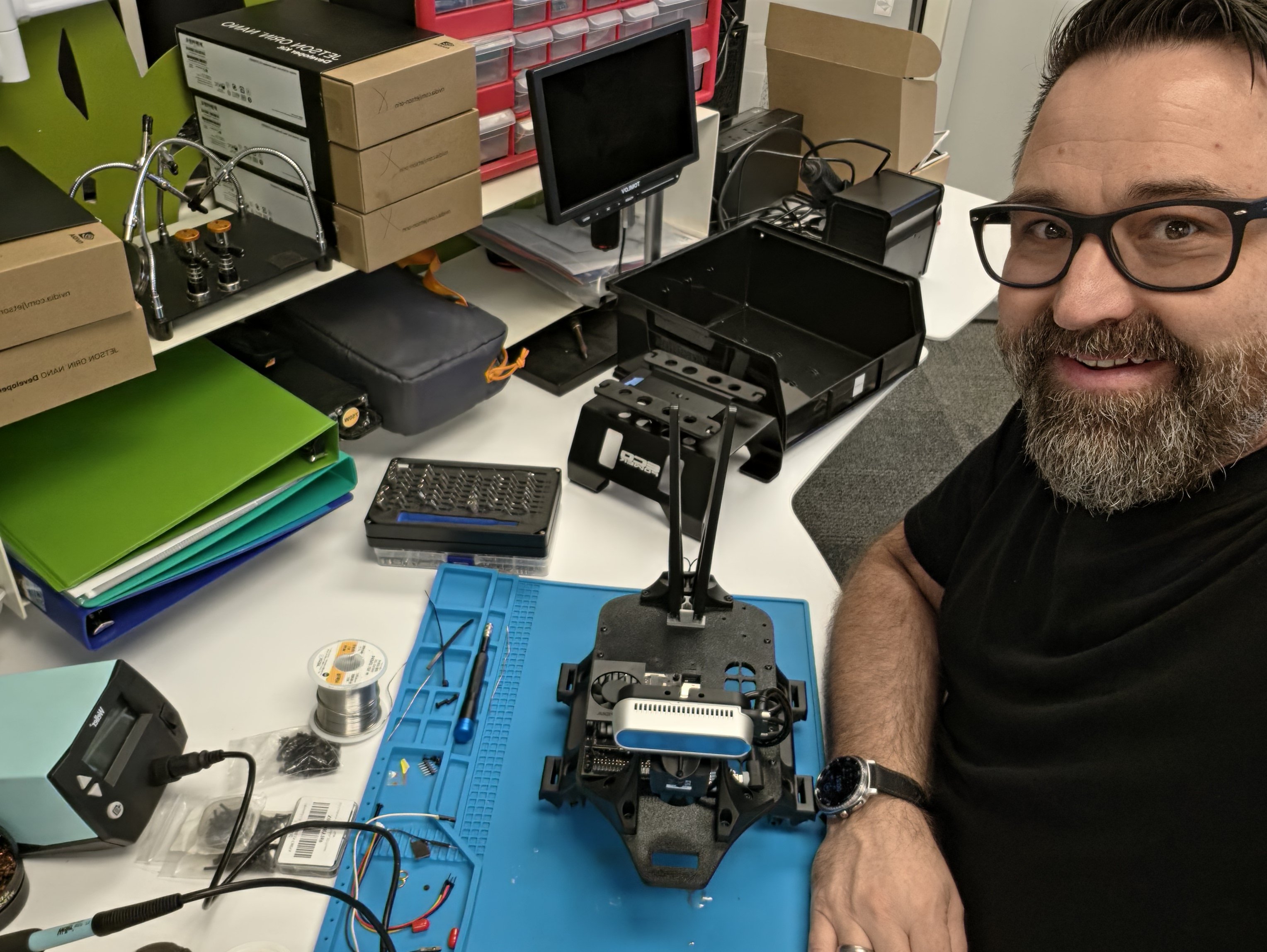

Still the best resource on Proximal Policy Optimization which is a Reinforcement Learning (Optimization method): iclr-blog-track.github.io/20…

With the new WARP kernel implementation of the IsaacLab environment and motor controller there is an interesting shape to the btop usage now... wonder why

“If a machine is expected to be infallible, it cannot also be intelligent.” — Alan Turing, 1947
I just finished Curious by Ian Leslie. One of his arguments is that memorized knowledge still matters in an age when we can look anything up instantly. You need a base of knowledge to think with, and to be curious about what you don’t know yet. He wrote that in 2014, before ChatGPT. It matters even more now.
For much of history, learning for its own sake was a luxury of the wealthy. People with money and free time could be curious; everyone else learned what kept them housed and fed. Today most of us have access to that luxury, but I still think like the second group. “How will I make money from this?” and “Why does this matter?” are questions I ask constantly. As a businessman, I need them. But they can be a trap. Some of the most useful things I know came from learning I couldn’t justify at the time.
I still sometimes loathe drilling. Scales and rudiments on the guitar, the same tricks over and over on a skateboard. I do it because I know it works. I only know that because my instructors and coaches made me, and I’m thankful they did. That repetition built the fundamentals everything else rests on, and I didn’t know it would pay off until it did.
LLMs learn in a similar way. Pretraining works like flashcards at enormous scale: hide a word, guess it, check the answer, adjust, repeat. Some training techniques even switch off random parts of the network so it can’t lean on any one piece and has to generalize. As Turing said, the mistakes are part of the process.
In both cases, the slow, repetitive work is what makes the knowledge last.
“I am slow to learn and slow to forget that which I have learned. My mind is like a piece of steel, very hard to scratch anything on it and almost impossible after you get it there to rub it out.” — Abraham Lincoln, as recalled by Joshua Speed (c. 1840)

Expanded out the observations to be a little more dense in front of the car and started on some curriculum work with GOAT RACER.
Training as we where before in IsaacLab we take snapshots and resume training with different reward shapes when we start to introduce obstacles and finally moving obstacles.
CONTINUAL LEARNING AND CATASTROPHIC FORGETTING by van de Ven et al. This paper helped quite a bit
Big things are happening. Starting to build out the GOAT ROVER on the 1/5th scale Traxxas platform. Santa came early for the boys


Meetup tonight 6pm (Oct 15) at the UWF Panera. We will be unboxing the new 1/5th scale platform. meetup.com/gathering-of-aspi…

It all started on the dining room table. Getting the @RealSenseai vision algorithm to find the deepest darkest hole (Sept 2025)
