


The Mystery of Forgotten Dreams
1/6 🧵
Ever woken up from a dream that felt incredibly real, only to watch it slip away within minutes?
You remember being there. You remember how it felt. Then the details disappear.
Why is something that you dreamt vividly so hard to recall?
🤖 Made with AI

1
12
5/6
Why do some people remember dreams regularly while others rarely do?
A 2025 study of 217 adults linked dream recall to factors including attitudes towards dreaming, mind-wandering tendencies and sleep patterns.
It's not simply a matter of having a better memory.
1
6
6/6
Want to remember more of your dreams?
Write down what you recall ASAP you wake up, even if it's a feeling or a fleeting image. Maybe not the whole dream, but you might save a fragment before it fades.
Let us know your dream recall experience.
#LookWhatIFound #DreamsRecall
5
The Secret Behind Airplane Windows
1/6 🧵
Ever wondered why airplane windows are round, not square? No, it isn't just a design choice.
There’s a surprisingly serious engineering reason why aviation moved away from square windows.
And it revolves around Stress Concentration.
🤖 Made with AI

1
9
5/6
Investigators found that repeated pressurization cycles were causing metal fatigue around the window openings.
The sharp corners were acting as points where stress could build up.
The answer was simple: Round off the corners.
1
3
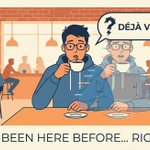
The Mystery of Déjà Vu
1/6 🧵
Ever been somewhere for the first time and suddenly thought:
“Wait… I’ve been here before.”
Maybe it’s a place. A conversation. A situation.
You know it’s new. But somehow, it feels like a rerun.
That strange feeling has a name: déjà vu.
🤖 Made with AI

1
11
5/6
And here's the really interesting part:
Researchers have created déjà-vu-like experiences using virtual environments. People saw new scenes similar to ones they'd seen before.
Even without remembering the earlier scene, the new one could still feel strangely familiar.
1
6
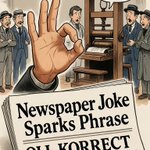
WHY DO WE SAY “OK”?
𝟭/𝟲 🧵
We use “OK” almost every day.
But have you ever wondered where those two letters came from?
The story involves a newspaper joke, a deliberately misspelled phrase, and a US presidential election.
And yes, it really starts with a spelling mistake!
🤖 Made with AI

1
13
𝟱/𝟲
The campaign helped spread “OK” far beyond its original newspaper joke.
People started seeing it in political writing and using it in everyday conversation.
Over time, most people forgot about “oll korrect” and “Old Kinderhook.”
But 𝗢𝗞 stuck around.
1
5
𝟲/𝟲
One of the most common words in English began as a joke about bad spelling.
“all correct” → “oll korrect” → O.K. → OK / okay
A silly newspaper joke that somehow stuck.
Do you know another word with a weird origin story? Tell us below!
#LookWhatIFound #TheStoryOfOK
5