

Nuclear impressionistic imagery and objects artisan, archeologist of mid-twentieth century nuclear culture. Nuclear technology, history and weapons provocateur.
Naperville, IL
Joined September 2016
- Tweets20.4K
- Following522
- Followers776
- Likes24.4K






Dr. Dieter Gruen at 104 — The Last Manhattan Project Scientist?
When I met Dieter Gruen in August 2016, he was 93. We both served on the advisory board of the Atomic Heritage Foundation, and I was eager to hear about his wartime work at Oak Ridge. Ten years later, we’re still talking about the Manhattan Project, nuclear weapons, and materials science, including his research on solar cells. Somewhere along the way, those conversations made us scientific colleagues and close friends.
As Dieter turns 104, I look back on a career that took him from wartime Oak Ridge to decades of research at Argonne National Laboratory. I also revisit a question posed by historian Alex Wellerstein in 2012: How many Manhattan Project veterans are still alive? When I repeated his Wikipedia-based search in August 2026, it returned a single name. That result leaves a question open: Could Dieter be the last surviving Manhattan Project scientist?
Happy 104th birthday, Dieter. I look forward to our next conversation.
Please read the complete article on my LinkedIn account.

Dr. Dieter Gruen, Manhattan Project Veteran Scientist turns 104 today.
Born on November 21, 1922, Dr. Gruen is an internationally esteemed German-American chemist, material scientist, inventor, leader, and innovator who immigrated to the United States from Nazi Germany in 1937. Upon receiving his B.S. cum laude from Northwestern University in 1944, he was invited to join the Manhattan Project and was assigned to Oak Ridge, Tennessee from 1944 to 1946. During his Manhattan Project tenure, Dr. Gruen made several key contributions in the large-scale electromagnetic separation processing of uranium feedstock that ultimately resulted in delivering the necessary quantity of “bomb grade” uranium used to create the “Little Boy” atomic bomb that was dropped on Hiroshima.
For a more detailed account of Dieter Gruen’s accomplishments and timeline, please open the following links:
atomicheritage.org/profile/d…
anl.gov/profile/dieter-m-gru…

Why the United States Tested Ivy King after the Hydrogen Bomb
by David A. Wargowski
Fifteen days after the United States detonated the world’s first full-scale hydrogen bomb, it carried out its most powerful all-fission test. Why go ahead with Ivy King when Ivy Mike had already yielded more than 20 times as much explosive energy?
Ivy Mike proved that a full-scale thermonuclear explosion was possible. Its 82-ton test device required refrigeration and was detonated on the ground. Ivy King demonstrated that a B-36 already in service could carry and drop a bomb with a yield of half a megaton.
In my article, Why the United States Tested Ivy King after the Hydrogen Bomb, I look at why both tests were planned, what Ivy King gave the US nuclear arsenal while a deliverable hydrogen bomb was still in development, and what testing both designs meant for Enewetak, whose residents had already been displaced.
Please read this article on my LinkedIn account.
1
32
Why the United States Tested Ivy King after the Hydrogen Bomb
by David A. Wargowski
Fifteen days after the United States detonated the world’s first full-scale hydrogen bomb, it carried out its most powerful all-fission test. Why go ahead with Ivy King when Ivy Mike had already yielded more than 20 times as much explosive energy?
Ivy Mike proved that a full-scale thermonuclear explosion was possible. Its 82-ton test device required refrigeration and was detonated on the ground. Ivy King demonstrated that a B-36 already in service could carry and drop a bomb with a yield of half a megaton.
In my article, Why the United States Tested Ivy King after the Hydrogen Bomb, I look at why both tests were planned, what Ivy King gave the US nuclear arsenal while a deliverable hydrogen bomb was still in development, and what testing both designs meant for Enewetak, whose residents had already been displaced.
Please read this article on my LinkedIn account.

33
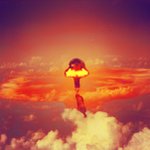
"IVY KING" by David A. Wargowski, November 20, 2019.
A mushroom cloud rises through a field of orange and scarlet. Its brilliant yellow underside lights up the rim of a dark violet cap, while a narrow, twisted column descends into pale clouds below. A broad band of red-orange light stretches across the image, carrying the eye outward from the detonation toward the deep purple at the edges of the sky.
The image takes its name from the U.S. nuclear test conducted on November 16, 1952, at Enewetak Atoll in the Marshall Islands. Fifteen days after Ivy Mike produced the first full-scale thermonuclear detonation, a B-36 bomber dropped Ivy King, a modified fission bomb that yielded 500 kilotons. The test demonstrated that an existing bomber could deliver a weapon with half a megaton of explosive force.
In the language of Nuclear Impressionism, the saturated colors give visible form to the intensity of the energy released in an instant. The luminous cloud holds the eye, while the aerial view leaves the atoll and the people of the Marshall Islands beyond the frame. That distance is part of the image’s unease. The explosion is spectacularly visible, while the consequences of atmospheric testing extend far beyond what can be seen.

67
David A. Wargowski retweeted

Ukraine peace talks have restarted with a striking omission: nuclear weapons, the elephant in the room.
"If Washington wants to talk about European security, Europe should answer with concrete nuclear demands."
An op-ed by @FloEblenkamp
euobserver.com/248713/nuclea…

David A. Wargowski retweeted

'Paul Halpern’s The Great Atom Debate is a dual biography that should be of interest even to people who don’t care a whit about physics but love a good story, especially one showcasing two fascinating, driven characters.'
-Forbes
Preorder now:
amazon.com/Great-Atom-Debate…
greatatomdebate.com

David A. Wargowski retweeted
... the leaders of nuclear-armed countries should finish what Presidents Gorbachev and Reagan started 40 years ago: the abolition of all nuclear weapons. The three countries are welcomed to participate and advance these discussions at the forthcoming #TPNW Review Conference.”

David A. Wargowski retweeted
🧵 Xi Jinping, Putin and Trump will meet in China later this week. This would be the first trilateral meeting between the leaders of the world's three largest nuclear arsenals.
The White House said the agenda will include nuclear weapons, although China has yet to confirm this.
David A. Wargowski retweeted
Five brilliant scientists captured in a single photo:
Albert Einstein Paul Ehrenfest Willem de Sitter
Arthur Eddington Hendrik Lorentz

David A. Wargowski retweeted

In 1895, at the age of 16, Einstein failed the entrance exam for the Swiss Federal Polytechnic in Zurich. He excelled in mathematics and physics but did poorly in other subjects such as language and history.

On Nov. 16, 1952, a U.S. B-36 dropped Ivy King over Enewetak Atoll in the Marshall Islands. At 500 kilotons, it was the most powerful pure-fission bomb the United States ever tested. Today marks 74 years since the detonation.

28
David A. Wargowski retweeted
Publishers Weekly praises THE GREAT ATOM DEBATE:
"Halpern... delivers a solid account of two Austrian physicists who famously debated the existence of atoms in the late 19th century. [I]ntriguing intellectual history... [and] an accessible look at a critical scientific era."
publishersweekly.com/9781541…



David A. Wargowski retweeted
[L-R] Heisenberg's mother, Schrodinger's wife, Dirac's mother, Dirac, Heisenberg and Schrodinger at Stockholm train station, 1933.
Credit : Max-Planck Institute.

David A. Wargowski retweeted

1/13 When an LLM refuses a chemistry question, is it failing to recognize the molecule, misidentifying it, missing relevant facts, or withholding information for safety reasons? How can we tell which explanation fits?
Ivy Mike at 74: The Island that Vanished and the Fallout that Remained
By David A. Wargowski
November 1st marks the 74th anniversary of Ivy Mike, the first full-scale thermonuclear test. At approximately 7:15 a.m. local time on November 1, 1952, the United States detonated an experimental hydrogen device on Elugelab, an island in Enewetak Atoll in the Marshall Islands. Its explosive yield was 10.4 megatons, 10.4 million tons of TNT, or roughly 700 times the commonly estimated yield of the Hiroshima bomb. Where an island had stood, there was now an underwater crater. [1, 2]
The anniversary commemorates more than a scientific breakthrough. It marks a dramatic expansion of humanity’s capacity to destroy landscapes instantly while leaving radioactive material to circulate through air, water, sediments, and food. The fireball disappeared within moments; the environmental and political consequences became part of a much longer history.
A New Threshold of Destruction
Mike demonstrated the feasibility of a staged thermonuclear device, the approach associated with Edward Teller and Stanislaw Ulam. Its fuel included liquid deuterium, a heavy isotope of hydrogen, maintained at extremely low temperature by an elaborate cryogenic system. This was an experimental installation rather than a practical bomb ready for delivery by aircraft. Its importance lay in proving a principle that subsequent weapons development could turn into deployable arsenals. [3, 4]
Calling Mike the first full-scale hydrogen test is more accurate than suggesting that no fusion reactions had previously been achieved in weapons experiments. The decisive step was a successful thermonuclear explosion on the multi-megaton scale. It opened a path toward weapons whose destructive power could far exceed the atomic bombs that had destroyed Hiroshima and Nagasaki. [1, 3]
The distinction between a scientific demonstration and a usable weapon should not obscure what had changed. Mike established that the enormous increase in explosive power sought by the hydrogen-bomb program was attainable. A test conducted on a small Pacific island therefore carried implications for cities and populations far beyond the proving ground.
Fallout did not Begin with the Hydrogen Bomb
One historical correction is essential: Ivy Mike was not the first nuclear explosion to scatter radioactive contamination. Trinity, the first atomic test in July 1945, had already deposited fallout across inhabited areas of New Mexico. Radioactive material contaminated food and water, exposing people who had received no advance warning of the test. Fallout was an established consequence of nuclear explosions before Mike. [5]
Mike’s distinction was the combination of unprecedented explosive yield and a surface detonation on a coral island. The explosion excavated and lofted island and seabed material into the radioactive cloud. As that material mixed with radioactive debris and returned to the surface, the test spread contamination beyond the place where the device had stood. Fusion did not make this a “clean” explosion: the device also involved fission, with its production of radioactive fragments. [1, 2]
This distinction strengthens the case for remembering Mike accurately. The thermonuclear era did not introduce radioactive fallout into an otherwise uncontaminated world. It greatly expanded the destructive potential of a technology whose contamination hazards were already evident.
The Immediate Aftermath
The most conspicuous physical effect was the destruction of Elugelab. A Defense Department compilation gives the resulting crater as approximately 6,240 feet across and 164 feet deep, about 1.9 kilometers wide and 50 meters deep. The island’s removal and the excavation of its surrounding environment were permanent geographical changes, not temporary damage that could be repaired after the instruments were recovered. [2]
Much of Mike’s fallout traveled over the open ocean. That reduced deposition on some inhabited areas, but it also limited measurement: the Defense Department’s fallout compilation explicitly notes that documentation was largely confined to Enewetak’s islands and lagoon. Its estimates for lagoon radiation levels were approximate. The surviving record therefore supports a clear conclusion that contamination spread, while leaving uncertainty about its complete distribution. [2]
Personnel exposure provides another immediate measure of the hazard. The official Operation Ivy history records the loss of a cloud-sampling aircraft and its pilot. A seven-man aircraft crew assisting the downed plane crossed fallout and received exposures reported at 10 to 17.8 roentgens, above the operation’s maximum permissible exposure of 3.9 roentgens. A separate photographic flight also encountered fallout, with the highest reported crew exposure reaching 11.6 roentgens. These figures document failures to remain within the operation’s own limits; they should not be converted into an unsupported claim that those crews developed acute radiation sickness. [1]
These incidents make the fallout more than an abstraction surrounding a famous mushroom-cloud photograph. It was material that aircraft could encounter, that equipment could carry, and that could expose people after the explosion itself had ended. Test success and radiological safety were separate questions.
Contamination on a Longer Clock
Radioactive contamination persists unevenly because different radionuclides decay at different rates and behave differently in the environment. In the Marshall Islands, cesium-137 has been a major contributor to residual radiation exposure. It can irradiate people externally from contaminated ground and internally when it enters locally grown food. Coral soils are often poor in potassium, allowing plants to take up cesium as a chemical substitute. [6]
This is why the consequences of fallout cannot be assessed by looking only at the blast zone. A landscape may support vegetation again while still requiring soil surveys, food testing, or measures to reduce radionuclide uptake. Lawrence Livermore researchers have shown that potassium treatment can substantially reduce cesium-137 concentrations in food crops, illustrating both the persistence of the problem and the possibility of reducing exposure. [6]
Lagoon sediments provide another long-term reservoir. Research at Enewetak identifies deposited radioactive debris as a continuing source for redistribution of contaminants, particularly plutonium and other transuranium elements, through the marine environment. The presence of those materials does not establish that every seafood item is dangerous; evaluating human risk requires measurements of concentrations, exposure pathways, and consumption. It does establish that the environmental history did not end when the cloud dispersed. [7]
The modern contamination of Enewetak cannot, however, be assigned entirely to Ivy Mike. The atoll experienced dozens of tests between 1948 and 1958, producing overlapping deposits of radioactive material. Its environmental legacy is cumulative, even though Mike’s destruction of Elugelab remains uniquely identifiable. [7]
Health Effects and the Limits of Attribution
Fallout exposure can increase cancer risk through external irradiation and the intake of radioactive material. National Cancer Institute researchers reconstructed doses and projected cancer risks for Marshallese populations exposed during the testing program. Their analysis includes Mike among the tests that deposited measurable fallout, but its broader cancer estimates concern exposure from multiple tests rather than a separately established Mike death toll. [8, 9]
The investigators found substantial geographical differences in risk, with northern populations generally receiving higher doses. Such findings require careful interpretation: projected radiation-related cancers are population estimates, not a means of identifying the cause of every individual cancer. They also cannot be used to attribute all Marshallese illness to nuclear testing, or all testing-related disease to one explosion. [8, 9]
Ivy Mike should also be distinguished from Castle Bravo, the 15-megaton test conducted at Bikini on March 1, 1954. Bravo produced the especially severe, well-documented fallout exposures of Marshallese communities that feature prominently in accounts of radiation injury. Transferring those events to Mike would blur two distinct episodes and weaken an otherwise compelling history. [8]
A Homeland, not an Empty Proving Ground
Enewetak’s inhabitants had been relocated to Ujelang before the atoll’s nuclear testing began. Mike therefore took place in a homeland whose people had already been displaced, rather than on an island without a human history. The costs of testing included the loss of access to land and resources as well as the radiological conditions that later complicated resettlement. [7]
Cleanup decades later became another chapter in that history. Contaminated soil and debris from the broader Enewetak testing program were placed in the Cactus Crater on Runit Island and covered by a concrete dome. Runit Dome is consequently part of the cumulative testing legacy; it is not a cap over Mike’s crater or a repository attributable solely to its fallout. [10]
The need for cleanup, environmental monitoring, and continuing assessment demonstrates the mismatch between the duration of nuclear testing and the duration of its consequences. Decisions made for weapons development left obligations that extended far beyond the careers of those who authorized and conducted the experiments.
What the Anniversary Should Commemorate
Ivy Mike is often remembered as a technical milestone: the moment the hydrogen bomb became a demonstrated reality. Its anniversary also calls for remembering the island destroyed to establish that fact, the personnel exposed during the operation, and the displaced community whose cultural homeland became a laboratory for nuclear weapons.
Seventy-four years later, the lesson is larger than the achievement of a particular yield. Nuclear tests produce consequences that extend beyond their instruments, boundaries, and official schedules. Elugelab disappeared in a single morning; understanding and addressing the fallout became the work of generations.
References
1. Defense Nuclear Agency. 1982. Operation Ivy, 1952. DNA 6036F. govinfo.gov/app/details/GOVP…. Full report: dtra.mil/Portals/61/Document….
2. Defense Threat Reduction Agency. Compilation of Local Fallout Data from Test Detonations 1945–1962, Extracted from DASA 1251, Volume II—Oceanic U.S. Tests. “Operation Ivy—Mike.” dtra.mil/Portals/61/Document….
3. U.S. Department of Energy. “October 31, 1952: Mike Test.” energy.gov/management/octobe…. November 1 at the test site was October 31 in the continental United States.
4. National Institute of Standards and Technology.
“The Hydrogen Liquefaction Program,” in A Century of Excellence in Measurements, Standards, and Technology, 107–110. nvlpubs.nist.gov/nistpubs/sp….
5. National Park Service. “Trinity Test Downwinders.” home.nps.gov/articles/000/tr….
6. Lawrence Livermore National Laboratory. “Whole Body Counting” and “Bikini Atoll,” Marshall Islands Program. marshallislands.llnl.gov/mon… and marshallislands.llnl.gov/aff….
7. Lawrence Livermore National Laboratory. “Enewetak Atoll,” Marshall Islands Program. marshallislands.llnl.gov/aff….
8. Simon, Steven L., André Bouville, Charles E. Land, and Harold L. Beck. 2010. “Radiation Doses and Cancer Risks in the Marshall Islands Associated with Exposure to Radioactive Fallout from Bikini and Enewetak Nuclear Weapons Tests: Summary.” Health Physics 99 (2): 105–123. doi.org/10.1097/HP.0b013e318….
9. National Cancer Institute. “Dose Estimation and Predicted Risk for Marshall Islands Residents.” dceg.cancer.gov/research/how….
10. U.S. Department of Energy. 2020. Report on the Status of the Runit Dome in the Marshall Islands. energy.gov/ehss/articles/rep….

1
148
David A. Wargowski retweeted

نشرت روسيا عام 2020 مقاطع فيديو كانت سرية، لأضخم انفجار نووي شهدته الأرض، حين فجّر الاتحاد السوفيتي قنبلة "القيصر" في تجربة أجراها في أكتوبر 1961.
بلغت قوتها التفجيرية 50 مليون طن، على ارتفاع نحو أربعة آلاف متر فوق أرخبيل "نوفايا زيمليا"
قبل 66 عام ، فكيف اليوم !!!
