
Assistant Professor, Sociology, Yonsei University. Sociology of Knowledge and Science; Science of Science; Computational Social Science
Joined March 2020
- Tweets640
- Following654
- Followers359
- Likes1.4K


Big AI-Based Mathematics and the Redistribution of Epistemic Labor - Michael Friedman, Kati Kish Bar-On, 2026 journals.sagepub.com/doi/10.…

Donghyun Kang retweeted

An AI revolution is sweeping through education. But teachers who can convey the excitement of thinking and learning are irreplaceable
go.nature.com/3VbVDHw
Donghyun Kang retweeted
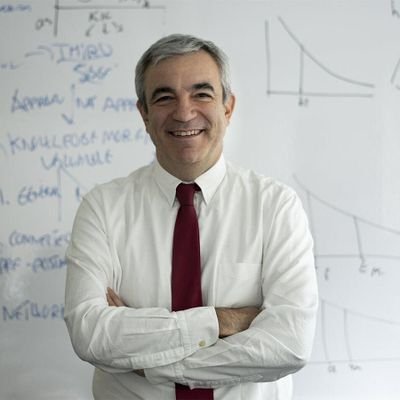
I just presented a new paper at @BrookingsInst on the "Vanishing Advantage of Specialization (new paper)". It explains why this will be the age of the generalist.
We all understand that the key determinant of the economics of airlines is the utilization of the aircraft. The fuller the plane, the lower the cost per seat.
The same mechanism explains the value of specialization. Acquiring a piece of knowledge is very expensive in terms of our cognitive effort. A specialist is a person who uses this knowledge sufficiently often to spread that cost over many uses.
This explains outsourcing of "non core" capabilities in firms. A firm handles frequent problems internally and buys expertise outside for problems it encounters too rarely to justify maintaining the knowledge in-house.
For instance, Microsoft has a large legal department, but it hired a corporate law firm to advise it in its purchase of Activision Blizzard. It is not because Microsoft lacks lawyers that it relies on outside service providers, but because it does not use sufficiently often the specialized knowledge of mergers to justify an entire department.
Artificial intelligence reduces this fixed cost of acquiring knowledge and therefore also reduces the advantage of specialization.
Suppose a capability (such as merger law) costs $100,000 a year to maintain, a firm faces the problem 10 times a year while the specialist sees it 1000 times, and suppose that briefing an outsider costs $2,000 per case. Since the specialist's advantage due to utilization is $9,900 per case, the firm buys the service from the specialist.
Now suppose AI reduces the annual cost of maintaining the capability to $10,000 for both. The utilization advantage of the specialist is reduced to $990, less than the cost of asking for help across the boundary, so the firm prefers to acquire the capability itself.
The specialist still spreads the cost over more uses; the saving from doing so is now less likely to cover the cost of crossing the boundary because the fixed cost is lower.
Recent evidence shows workers using AI to cross their occupational boundaries. Chin and Richmond (2026) classify more than 800,000 work-related ChatGPT messages from users whose occupations are known. Each message is assigned to the occupation whose historical tasks look most similar. Most of the usage is generic, including what one would expect: help in writing, editing and planning represents 61.5 percent of all messages. But 16.8 percent of all work messages, and 43.5 percent of the ones which are specific to one occupation, concern tasks usually undertaken by a different occupation. Among the ones that cross occupational boundaries are calculating financial data, troubleshooting software, drafting promotional messages, and writing to government agencies.
Note that the fall in the cost of acquiring a given capability did not begin with generative AI. Google and databases had already lowered these costs. Generative AI greatly accelerates this process.
Consider lawyers, accountants, consultants and software workers: of the 337,000 jobs created between 2022 and 2025 by the four professions, 335,000 were outside their main specialist industries-- law is still being done, but you need less of a specialist law firm to do it.
Professional-service firms can be squeezed in the middle between model producers and their clients. The experts can be squeezed from above, by model makers or labs who supply the general knowledge at scale, and from below, by their clients who can apply this cheaper knowledge themselves. The specialist's comparative advantage lies in expertise that clients use too rarely to maintain internally and that remains costly to acquire even with AI, including the expertise required to check and verify a solution.
Thanks to Jan Ebberly and @JonSteinsson for inviting me to do this:
Summary and links to paper and slides here: brookings.edu/articles/the-v…
Paper: brookings.edu/wp-content/upl…

Donghyun Kang retweeted
Artificial-intelligence systems can generate hypotheses, design experiments and analyse data — but humans still need to decide what makes sense
go.nature.com/4rPJHYl

Donghyun Kang retweeted

P-values are often misunderstood, so should we use confidence intervals instead? Probably not.

Donghyun Kang retweeted

Very important, careful analysis of how AI has been impacting labor market reallocation.

Food for thought!
"Artificial Intelligence and Labor Market Reallocation" by Hie Joo Ahn and Nicholas A. Carollo.
"This paper documents how artificial intelligence has affected stocks and flows in the U.S. labor market. ...The natural rate of unemployment—recovered from the trend components of unemployment inflows and outflows by AI exposure and adoption, as well as from a theoretical model of structural unemployment—is estimated to have risen by about 0.1-0.2 percentage point since the introduction of LLMs, albeit with considerable uncertainty"
conference.nber.org/conf_pap…

Donghyun Kang retweeted

David Autor é o economista do trabalho mais citado do mundo. MIT. Ele e o Google fizeram algo raro: um experimento científico controlado (RCT) sobre IA no trabalho.
O que é RCT: você sorteia quem recebe o tratamento e quem não, compara os dois grupos, e mede a diferença. Padrão-ouro da ciência. Aqui o "tratamento" era uma IA pra redigir patentes.
133 advogados de 11 escritórios americanos, divididos por sorteio. 2/3 usaram IA por 3 meses, 1/3 não. Produção avaliada às cegas por outros advogados especializados.
Com IA ligada, todo mundo melhorou. Qualidade dos juniors subiu quase o triplo da dos seniors.
Aí tiraram a IA e pediram pra todos revisarem um documento sem nenhuma assistência. Seniors que tinham usado IA ficaram melhores que quem nunca usou (p = 0,02). Juniors? Ganho médio zero. As notas deles se bifurcaram: menos medíocres, mas mais ruins E mais bons ao mesmo tempo. Pra uns a IA acelerou aprendizado, pra outros substituiu.
O senior já tinha construído julgamento crítico ao longo de anos. Quando usava IA, conseguia avaliar as sugestões e internalizar padrões. O junior pulou essa construção. Delegou o raciocínio pra máquina. Enquanto tava ligada, funcionava. Desligou, ficou sem base.
Tipo calculadora: se você já sabe aritmética, ela te acelera. Se não sabe, você não funciona sem ela.
Expertise prévia é pré-requisito pra extrair aprendizado durável de IA. Quem mais se beneficiou foi quem menos aprendeu.
fonte: NBER Working Paper 35720, Autor et al. (set/2026)


Donghyun Kang retweeted

This paper by @davidautor & co-authors is one of the most important papers to date in the space of what AI does to learning.
It's highly credible. And very much consistent with my own experience with use of agentic AI in research and teaching.
nber.org/papers/w35720

Donghyun Kang retweeted

A beautiful demonstration of symbiogenesis in action in the world of artificial life from one of our student researchers in Pi, @kjha02. Evolving agents on a shared memory tape, he and his co-authors show that when compute is a budgeted resource, cooperation emerges organically. Parasitic behavior simply exhausts the energy required to copy code and replicate.
Read the preprint here: arxiv.org/abs/2609.10817


Can self-interested, self-improving, self-replicating agents learn to cooperate?
Our new paper, Tapes Together Strong, shows they can: when social behavior, computation, and reproduction share one energy budget, cooperation evolves from scratch.
arxiv.org/abs/2609.10817 🧵
Donghyun Kang retweeted

We have a new paper showing that when LLM agents interact, collective outcomes can diverge sharply from individual behaviour, and that the form and strength of these effects can change with group size.
pnas.org/doi/10.1073/pnas.25…
Different setting, but very much the same problem.

Donghyun Kang retweeted

This might be the next big paradigm shift in AI.
Chinese researchers published a paper that completely kills the “next-token” paradigm.
Every LLM you use today, ChatGPT, Claude, Gemini, is fundamentally crippled by a bottleneck. They write text the exact same way a human types on a phone: one single discrete token at a time.
Word by word. Step by step.
It’s slow, it’s compute-heavy, and it hits a hard scaling wall.
Researchers from Tencent and Tsinghua university published a paper introducing CALM (Continuous Autoregressive Language Models).
Instead of predicting the next token, the model predicts the next continuous vector.
Here is how it works:
They built a high-fidelity autoencoder that takes an entire chunk of tokens and compresses them into a single continuous latent vector.
The AI can reconstruct those original tokens back with over 99.9% accuracy.
Instead of generating text symbol by symbol, the transformer now generates language in continuous, high-bandwidth chunks.
It reduces the number of generative steps by a massive factor.
The results rewrite the performance-compute trade-off:
• Drastically lower computational cost and FLOPs compared to standard transformers.
• Matches the performance of strong discrete models at a fraction of the hardware strain.
• Establishes a brand-new likelihood-free framework for training and evaluation in the continuous domain.
We’ve spent years assuming language generation has to be a game of "guess the next word
This paper proves it doesn't.
Language isn't just a sequence of discrete symbols anymore.
It's a continuous stream.

Donghyun Kang retweeted

I am so happy to see this out, and I hope you will read and enjoy the paper!
It took a while, but I am proud of how it turned out!
We have been working on a package to implement it all: bcallaway11.github.io/contdi…
And I can tell you that much more is coming!
So stay tuned!

Forthcoming in the AER: "Difference-in-Differences with a Continuous Treatment" by Brantly Callaway, Andrew Goodman-Bacon, and Pedro H. C. Sant'Anna. aeaweb.org/articles?id=10.12…

Donghyun Kang retweeted

Forthcoming in the AER: "Difference-in-Differences with a Continuous Treatment" by Brantly Callaway, Andrew Goodman-Bacon, and Pedro H. C. Sant'Anna. aeaweb.org/articles?id=10.12…
Donghyun Kang retweeted

Our new research: Americans are using AI to learn about politics---not to get recommendations or take actions---and they're using it quite a lot more when an election is close.
We use @AnthropicAI 's AEI data to offer the first landscape assessment of how Americans are using AI for politics.
We find four main things:
(1) Political AI use remains modest, but it’s still meaningful. Politics makes up about half a percent of Claude conversations in the U.S.—ranking 66 out of 189 topics, right next to home furnishing.
(2) People are not yet getting political advice from AI. Political conversations overwhelmingly produce explanations and analysis, and only 3% end in advice or a recommendation which is markedly lower than other categories of conversation on Claude.
(3) Elections drive a meaningful uptick in political usage. States holding May primaries saw their share of political conversations jump about 20% compared to other states in a difference-in-differences design.
(4) November could set a record. If primaries can lift political AI use this much, November’s midterm elections will likely bring the biggest wave of political AI use on record.
Lots more to read in the full post here:
freesystems.substack.com/p/m…
Joint work with @danmthomp

Donghyun Kang retweeted

🚨🚨New paper in @Nature with @AshuAshok, @lukebeehewitt & @ghezae_isaias 🚨🚨
Can LLMs predict results of social science experiments?
Across 70 preregistered studies, we find strong correspondence (r=.85) between LLM-predicted and observed effects.
doi.org/10.1038/s41586-026-1… 🧵

Donghyun Kang retweeted

"If the scientific community fails to address the influence of AI, then authentic research and validated findings will slow down to an expensive trickle into established knowledge …," writes H. Holden Thorp in a new #ScienceEditorial. scim.ag/4ytn3Yw

ALT A quote from H. Holden Thorp, Editor-in-Chief of Science journals, reads: "... flawed or fabricated information ... will grow—all while AI profiteers cash in."
Donghyun Kang retweeted

Our new essay out in @NoemaMag today!
We know how to make AI more capable. We have barely begun on the harder problem of preparing society to absorb it.
Alignment is two-sided. We call the neglected side reverse alignment. noemamag.com/what-humanity-n…
Neglect it and you get three failures:
1. Productivity without prosperity.
2. Execution without verification.
3. Capacity without constraint.
Each is a consequence of institutional neglect, not of the technology.
History says this is solvable. The Progressive Era, Bretton Woods, ARPANET, India Stack, Taiwan's digital democracy. Every one paired technical change with institutional invention.
None of them happened by default.
The essay names the work required: personhood credentials, privacy past the anonymity binary, provenance, real markets for training data, trust between agents, democratic capacity, workplace redesign, research evaluation, labor transition.
It is time to build as ambitiously for our social systems as we have for our algorithms.
A 23-member coalition shaped this. Join us: reversealignment.ai/
Including: @glenweyl, @audreyt, @jakehirschallen, @vilasdhar, @stanfordmav, David Patterson (Berkeley), @TionaZuzul, @jessaroo, @deanwball, Romain Vakilitabar (Pathos/PopShift), @AndrewSorota, @Allinallnotbad, Chris White (Microsoft), @TomicahTD, Galen Hines-Pierce (Minerva), @BuchananBen, @ProfDavidDeming, @blaiseaguera, @divyasiddarth, @timoreilly, @kensuzuki, @annotakahiro24, @dsallentess, @zweinberg, @zhitzig

Advancing science by designing for surprise | Science science.org/doi/10.1126/scie…

Donghyun Kang retweeted

This work has been accepted to #COLM2026 🎉
I’ll also be presenting it at the ICML GenAI Creativity Workshop poster session @creativeai_ws
📍 Room 401
⏱️ July 11 3:45-5:00 PM
Feel free to stop by and let's chat !

When two researchers use an LLM, one for feedback and the other to formulate the central thesis, how can we distinguish AI’s contribution in these cases?
We introduce CoTrace, a framework for tracing how humans and AI shape goals behind collaborative work👇
📕 Paper: arxiv.org/pdf/2605.21363
💻 Code/Tool: github.com/rladmstn1714/CoTr…

Donghyun Kang retweeted

We are having our 7th AI for Science workshop at Hall C!!! #ICML Please join us and check out our schedule here: ai4sciencecommunity.github.i…
Hope to meet everyone today!