
Doctorate-IIMA, Honoured to be followed by Respected PM, CHRO, @ZingHR,Ex-Hd HR(Thomas Cook,Cipla), Advisory Board-Nasscom Community, Husband of a Doctor
Mumbai
Joined June 2009
- Tweets93K
- Following2.9K
- Followers19.4K
- Likes173K






D Prasanth Nair retweeted
Love Rowan Atkinson style . Not surpised he is a genius.
@OfficalMrBean

D Prasanth Nair retweeted
Interesting!
This post has gone viral. But no acknowledgement. That's fine.
But the folks are not correcting the small grammatical error.

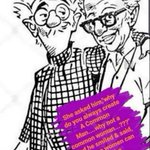
A student applied to JJ Institute. He was refused admission with the dean saying "his drawings lacked the kind of talent to qualify for enrolment in our institution as a student"
The student was R K Laxman - "The Common Man"
He finally graduated from the University of Mysore. He continued his freelance artistic activities and contributed cartoons to Swarajya.
In 1951, Laxman joined The Times of India, Mumbai, beginning a career that spanned over fifty years. His "Common Man" character, featured in his pocket cartoons, is portrayed as a witness to the making of democracy.
Today is his birth anniversary
24th Oct


D Prasanth Nair retweeted

The Ramayana distributes suffering without ranking it. Each sufferer in the epic carries a different, subjective sense of grief.
Bhagwan Rama's was the suffering of duty. He gave up the throne on the eve of coronation without a flicker of protest and accepted exile to honor his father's promise. Later, as king, he gave up Sita to preserve the legitimacy of the crown. Rama's suffering stems from his refusal to treat Dharma as a convenience. He is the one who always chooses the harder thing, and the epic never lets us forget what it costs him.
Devi Sita's suffering was that of endurance. Exile, abduction, captivity in Lanka, the fire ordeal, and then banishment while pregnant. Her suffering is the only one in the epic that is repeatedly inflicted by those who claimed to love her. And her final answer, returning to the Earth, is not surrender. It was a deliberate act that no one could overrule.
Bharata's was the suffering of guilt without crime. He did nothing wrong, yet spent fourteen years with a throne he never wanted, choosing to rule instead through Rama's sandals. He carried the shame of a mother's ambition.
Urmila's was the suffering of the unwitnessed. Lakshmana left with Rama and Sita, and she remained behind for all those years. She is barely mentioned in the epic, and that silence itself is the point. Her grief never got the stage it deserved.
Kaikeyi's is the suffering we least forgive. She is remembered as the villain, the orchestrator of the epic itself, so to speak, yet she lived to see her son reject her, her husband die of the grief she caused, and her name become a curse. She paid for her mistake for the rest of her life.
Dasaratha's was the suffering of a promise given in haste. It destroyed him. He died of separation, bound by the very word he gave.
Ravana's, perhaps, was the suffering of the self. Learned, devout (only to Shiva), a master of the Vedas, he was undone by one unchecked desire. His tragedy was that he probably knew better, but was blinded by ego and arrogance.
If I must name one, I would name Devi Sita, because her suffering is the most undeserved. But the epic's deeper teaching is that suffering in itself is not a verdict on who was wronged the most. It is a lens. Every character suffers in proportion to what they held sacred: Rama his duty, Sita her dignity, Bharata his loyalty, Dasaratha his word.
The real question is not who suffered the most, but who suffered knowingly and chose it anyway.


D Prasanth Nair retweeted
A student applied to JJ Institute. He was refused admission with the dean saying "his drawings lacked the kind of talent to qualify for enrolment in our institution as a student"
The student was R K Laxman - "The Common Man"
He finally graduated from the University of Mysore. He continued his freelance artistic activities and contributed cartoons to Swarajya.
In 1951, Laxman joined The Times of India, Mumbai, beginning a career that spanned over fifty years. His "Common Man" character, featured in his pocket cartoons, is portrayed as a witness to the making of democracy.
Today is his birth anniversary
24th Oct
D Prasanth Nair retweeted
Such a touching photo.
A little girl on a pilgrimage to Sabarimala with her little brother. She is feeding her brother.
Respect her devotion.
Swamiye Saranam Ayyappa

D Prasanth Nair retweeted
Saw this is Italy
Much needed in every lift !
Most folks with backpacks either forget they have a backpack or start assuming it is dimensionless.

