

Latest news from the fastest PoW chain and its growing ecosystem. Analytics available at https://xitter.cf/t.co/2YDXC8K7B9. Updates on CMC https://xitter.cf/t.co/BRXSWYLYaB
Joined February 2025
- Tweets4.4K
- Following751
- Followers7.3K
- Likes8.7K
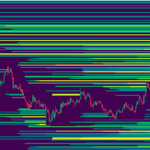




Kaspa remains caught between significant liquidity clusters on both sides of the market.
Sell-side liquidity is concentrated above the current price, particularly around $0.0365–$0.0385, while substantial buy-side liquidity sits below, near $0.0350–$0.0345.
With liquidity stacked in both directions, KAS remains range-bound at the moment.

ALT coinglass.com
KForge introduces buyback and burn. 10% of every trading fee on KForge goes directly into a permissionless buyback mechanism. Launch date to be announced soon.

10% of every trading fee on KForge goes directly into a permissionless buyback vault for each token.
When the vault accumulates enough KAS, anyone can trigger it, the KAS is used to buy tokens from the pool and burn them permanently. No admin key, no discretion, no rug. The covenant enforces it on-chain.
More trading = more fees = more buybacks = more burn.
Built entirely on Kaspa covenants. Trustless by design.
🚀 Launch details coming soon.

There's a new version of this post
Kaspa top 30 largest holders, excluding known exchange wallets, collectively control 4.75 billion KAS, representing 17.4% of circulating supply.
The top 10 alone account for 13.7%, highlighting concentration among the largest wallets.

Kaspa remains in a low volatility regime, with 30-day annualized volatility currently at 78.9%, placing it in the 27th percentile of its historical distribution.
Despite recent price fluctuations, volatility remains below its historical norm.
Historically, such periods of relatively subdued volatility have sometimes preceded significant price movements.

An initiative has been launched to fund and support the development of a decentralized stablecoin on the Kaspa network.

Today we are introducing KaspaDollar, an initiative led by core developer @asaefstroem to build the first decentralized stablecoin on the $KAS network.
The developments around @kccforum and the Toccata hardfork have considerably widened what Kaspa is capable of. Capability alone, however, does not make an ecosystem. Decentralized finance requires a unit of account that holds its value, and until Kaspa has a stablecoin of its own, every application built on it will remain dependent on assets issued elsewhere.
The design we intend to follow is the decentralized, overcollateralized stablecoin: a pattern whose security properties have been examined and tested across the industry for the better part of a decade. With the support of the core team, we consider the conditions right to bring it to Kaspa.
Realizing this requires development, an independent audit, further research, and the operational work of taking a protocol from specification to production. To fund it, we are opening a fundraiser with a target of 5,000,000 KAS.
Contributions are made directly to the fundraising address published on the website. Should the target not be reached by 1 January 2027, every contribution will be returned to the address from which it was sent.
Up until that point, this account will share the plans, details and progress of the work as it develops.
Entity X, Kaspa largest known holder, continues accumulating KAS.
Two new transfers totaling 8.11 million KAS have arrived from Kraken and Gate .io, bringing the wallet's balance to 1.54 billion KAS, worth approximately $58.2 million.
The latest inflows extend the recent accumulation trend, with Entity X steadily increasing its holdings throughout October.

ALT kaspa.stream
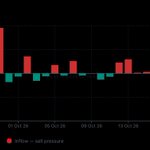
Kaspa exchange flows have shifted sharply toward net outflows over the past two days, with approximately 80 million KAS leaving exchanges.
This marks one of the largest two-day withdrawal periods in the past 30 days, following several weeks of mixed inflows and outflows.

KCC20 and other Kaspa L1 standards confirmed and are Final now

Greetings $KAS. KCC-1, KCC-2 and KCC-20 are now Final, meaning they are ready for full adoption across the ecosystem.
We invite Kaspa builders to join the public KCC channel to ask questions, get support, discuss implementations and share what you build.
Come build with us.
Entity X, Kaspa largest known holder, continues accumulating KAS, with inflows now occurring almost daily.
Over the last five days, the wallet has received approximately 6.12 million KAS from Gate. io, bringing its total balance to 1.532 billion KAS, worth around $58.3 million.

ALT kaspa.stream
Kaspa faces a key resistance zone around $0.04, where the psychological price level now coincides with the 30-day moving average.
Following the recent decline, KAS is trading near $0.037, with the 30-day MA increasingly acting as resistance.
A sustained move above $0.04 would be an important first step toward reversing the short-term downtrend, while failure to reclaim this level could keep selling pressure elevated

Kaspa KIP-22 is out and it proposes an important step toward quantum-resistant wallet security.
The proposal introduces a P2PKH wallet convention using P2SH, keeping public keys hidden until funds are spent and reducing exposure to potential future quantum attacks.
No hard fork or consensus changes are required, although wallet support will be necessary.
KIP-22 does not make Kaspa fully quantum-resistant, but could help lay the groundwork for a future transition to post-quantum cryptography.

Published KIP 22 to help Kaspa users better protect their funds from future quantum attackers by keeping public keys hidden until spending
github.com/kaspanet/kips/blo…

KForge is adding another covenant to the protocol. Graduated tokens already have a fixed supply, this one adds constant automatic buying pressure on top of that
As you know, KForge already runs 7 on-chain covenants, each one enforcing a specific rule with no admin key, no custody, and no trust required.
We're adding an 8th.
This one creates constant buying pressure for every graduated token. It is not a promise from the team, it will be programmed into the covenant at launch, running automatically forever for every token launched.
Combined with a fixed supply, this means every token that graduates from KForge has two deflation forces working simultaneously.

MARA continues moving KAS out of its main wallet on a daily basis.
Following the initial outflow of approximately 30 million KAS on September 28, the wallet's balance has steadily declined from around 58 million to just 10.27 million KAS.
The funds are initially transferred to external wallets, with much of the KAS subsequently reaching exchanges, suggesting potential ongoing selling activity.

Kaspa is currently trading around $0.036, below its 30-day moving average near $0.041, which now acts as a potential resistance level.
Immediate support sits around $0.035–$0.036, while the rising 90-day MA near $0.033 provides a deeper support zone.
The short-term trend remains under pressure, although price is still above its longer-term average.

Kaspa's network hashrate continues to recover, reaching approximately 0.38 EH/s, up from the August lows of around 0.27 EH/s.
Despite fluctuations, the broader trend has been upward since late July, suggesting renewed mining activity and growing computational power securing the network.
Hashrate remains below its April highs but is steadily closing the gap.

ALT kaspalytics.com
Kaspa's largest holders continue moving significant amounts of KAS.
The 30-day rolling net balance change for wallets holding 10M+ KAS remains negative at -81.3 million KAS, indicating continued distribution or redistribution of holdings.
While the negative balance change has eased from over 200 million KAS earlier this month, sustained outflows suggest large holders remain active. These movements could reflect wallet restructuring, but may also represent actual selling pressure.

Kaspa's largest wallet, Entity X, remains active with significant inflows and outflows.
On October 15, approximately 3.86 million KAS left the wallet, followed by an inflow of 2.36 million KAS from Gate. io on October 16.
The wallet's balance has trended higher over the past month, currently standing at 1.528 billion KAS, valued at approximately $58.8 million.
