

Global Growth & Strategy Leader | GenAI & Consumer Apps | Ex-Uber, Holla, Pixocial
Hong Kong
Joined October 2011
- Tweets263
- Following443
- Followers211
- Likes291







My hot take on what’s coming next:
Claude’s move that single-handedly tanked US SaaS stocks just wrote the playbook for the whole industry.
Every SaaS firm will pivot to build for AI Agents, not humans, to survive — no pivot, your stock tanks. Period.
With multi-agent systems amplifying this shift, AI Agents will take over routine roles faster than expected, and layoffs will accelerate sharply.
The "build everything for AI Agents" trend? It’s completely unstoppable.
#SaaS #AIAgent
48
Many founders are asking: Why did US customers suddenly start calculating every purchase in 2025?
I spent some time digging through the Official 2025 Financial Reports of McDonald's, Chipotle, Best Buy, Costco, P&G, Apple, Cartier, and Hermès. The data reveals a massive surge in price sensitivity:
🍔 The "Value" Comeback
McDonald's (Lower/Middle Income): Sales declined 3.6% in Q1, but they staged a V-shaped recovery to +2.4% in Q3. How? Solely by winning back hearts with the $5 meal deal.
🌯 The "Squeezed" Middle
Chipotle (Middle Class): Struggled with a 4% decline in Q2. Unlike McDonald's, they simply raised prices. Result? A tiny 0.3% bump in Q3 while margins shrank to 24.5%.
Best Buy (Middle Class): Reported a 2.8% drop in domestic sales. Families are putting non-essential gadget upgrades on ice.
🛒 The "Bulk" Shift
Costco (Upper-Middle Income): Bucked the trend with sales up 5.7%. Even wealthy households are rushing to buy essentials in bulk to save money.
Procter & Gamble: Gross margins decreased. Customers are actively trading down to cheaper value tiers within brands.
💎 The "Untouchable" Luxury
Apple: Record September revenue driven by the high-end iPhone 17.
Cartier & Hermès: Double-digit growth despite aggressive price hikes. Since this audience is price-insensitive, raising prices actually reinforces the "Investment Math" of the luxury asset.
The market has clearly split. If you aren't selling a "True Necessity" (like Costco) or "True Luxury" (like Hermès), you are in the danger zone.
Don't just survive, thrive.
🎧 Listen to the 7-Minute podcast 👇
#ConsumerInsights #Economy2025 #GrowthStrategy #FinancialAnalysis #Founder #Startup =#Growth #GlobalGrowth #StartupGrowth #McDonald #Chipotle #BestBuy #Costco #ProctorGamble #Apple #Cartier #Hermès
US Consumers Are 'Cheap' in 2025? Retail Financials Show Why linkedin.com/pulse/us-consum…

55
On November 18, 2025, Cloudflare suffered a 3-hour outage that disrupted 20% of global internet traffic. ChatGPT, X, Claude, Canva, IKEA, Spotify—all went down simultaneously.
For businesses relying on Cloudflare (which serves 20.4% of all websites globally), the impact was brutal:
E-commerce: Zero transactions for 3 hours. If you were processing GMV during peak hours, that revenue is gone forever.
SaaS: Users couldn't log in. Subscription cancellations surged as customers assumed your service was broken.
Marketing: If you were running paid ads, your acquisition budget was burned. New users hit error pages and never came back.
Sounds familiar? On October 20, 2025, AWS experienced a 15-hour outage affecting 70,000 businesses. Amazon itself lost roughly $72.8 million per hour.
But here is what I’m really focused on: Who is paying for the loss?
The answer: You are. The client absorbs at least 99% of the loss.
Unless you are a Fortune 500 company with a custom-negotiated contract, the best you’ll get are "service credits"—usually worth just 0.01%–1% of your actual losses. Both AWS and Cloudflare’s contracts explicitly exclude liability for "consequential damages." This means lost revenue, customer churn, reputational harm, and regulatory fines are your problem, not theirs.
This is what I call the "Accountability Gap."
When you put all your eggs in one basket, you are taking a calculated risk. That is acceptable if and only if the basket holder is accountable when they drop it. But they aren't. Their SLAs are designed to minimize their liability, not to make you whole.
As founders, we make high-stakes decisions every day. Startups are already vulnerable. We manage costs, revenue, and cash flow down to the penny to avoid burning through our runway. We can't afford to be blind to this risk.
This type of "single point of failure" can kill a small startup. So we need to lower our expectations of "safe and sound." We have to think through the downside. Whether it’s through insurance or multi-cloud redundancy, make sure you aren't leaving your survival in a basket that no one else is watching.
#cloudflare #aws #startup #founder
reuters.com/business/elon-mu…

351
The first time I interviewed someone overseas, I thought I was ready. I wasn’t.
Late-night Zooms, accents, time zones, different currencies — bring it on.
I was overcompensating, pretending total chill. “We’re relaxed here. No stress.” Which, of course, was a lie — I was sweating through my shirt.
Most first-time global founders fall into one of two traps:
The first: over-pleasing. You want to prove you’re not the arrogant foreign boss. So you nod at everything. Before they even have a laptop, you’ve handed them the keys to “culture.”
The second: over-controlling. You can’t trust what you don’t understand, so you micromanage. You second-guess every word. You override their calls on things you hired them to know better. What was supposed to be trust becomes interrogation.
I’ve seen both. I’ve been both.
Here’s the real trap: as a founder, you don’t know this new market. That’s why you hired someone. But you also can’t be sure they know it well enough yet. So you can’t guide them the way you guide a domestic hire. And you can’t just let go either — blind trust is no strategy.
That’s why the only working solution is accountability. Not because Uber or Apple did it, but because without KPIs, you have no compass. Metrics become the shared language between what you don’t know and what they claim to know.
Full version in today’s Global Growth Blog 👇
#GlobalExpansion #StartupGrowth #GrowthStrategy #InternationalBusiness #Entrepreneurship #Hiring #Leadership #CrossCulture #GoToMarket #GlobalHiring
linkedin.com/pulse/secret-dr…
30
My eyes were burning.
I’d reviewed 127 ad creatives that week — not because I loved nit-picking, but because something in our tone kept slipping.
At our Gen Z social video app with millions of users worldwide, I personally looked through every campaign before launch.
People thought I was micromanaging. But I wasn’t checking for perfection.
I was protecting the feeling — that subtle emotional rhythm that tells a user, “this feels like us.”
A friend once told me about an Apple event for developers who’d won App Store features.
Someone high-level — maybe the CMO, maybe higher — admitted he personally reviews every single image on Apple’s homepage every single day.
Because Apple’s power isn’t its pixels — it’s the consistency of its emotional signal.
And when I heard that, I laughed.
That’s exactly what I’d been doing — just at a startup scale.
Most people think B2C just means “bigger audiences” or “more emotional marketing.”
But the real difference between B2C and B2B sits much deeper:
it’s how each side defines value itself.
B2B sells consensus value — measurable, logical, reportable.
B2C sells perceived value — emotional, subjective, and contagious.
B2C founders aren’t selling features; they’re curating feelings.
Full version in today’s Global Growth Blog 👇
#GlobalExpansion #StartupGrowth #GrowthStrategy #InternationalBusiness #Entrepreneurship #B2C #B2B #2BStartups #2CStartups #BrandStrategy #ProductMarketing
linkedin.com/pulse/hidden-di…
32
Labubu didn’t just sell toys. It cracked something that every ToC founder can learn from:
How to go global without losing your soul.
Pop Mart, the Chinese company behind it, turned a tiny monster into a $40 billion cultural brand. Its blind boxes sell out in seconds. Lines form overnight in Bangkok and New York.
What’s funny is, Labubu doesn’t look Chinese at all. No pandas. No dragons. No “heritage” patterns. Just a small, cheeky grin wrapped in colors that feel straight out of a fashion runway. It’s cute but rebellious. Warm but untamed.
That’s the beauty of it. Labubu was born in Hong Kong, but it doesn’t belong to any culture. It belongs to emotion. That’s what makes it global. It taps into something we all share — playfulness, mischief, curiosity, comfort.
Most ToC startups think global expansion means localization. But Labubu shows another path — de-localized branding.
For founders building consumer products, that’s a quiet reminder: you don’t have to “translate” your brand for every market. Sometimes, the way to go global is to strip the local away.
Full version in today’s Global Growth Blog 👇 • Part of my Global Growth Blog Series.
#GlobalExpansion #StartupGrowth #GrowthStrategy #InternationalBusiness #Entrepreneurship #BrandStrategy #ConsumerPsychology #PopMart #Labubu
linkedin.com/pulse/every-2c-…

50
I was staring at a dashboard glowing like a city map.
Indonesia was lighting up faster than we could process. No one on the team had ever set foot there. Yet users were flooding in, laughing, flirting, spending hours inside our Gen Z social app.
We hadn’t hired a local team. We hadn’t even translated our copy perfectly.
Most founders think cracking a new market means research decks, surveys, and localization agencies. They picture a mini office, some paid influencers, and a launch budget.
That’s not speed. That’s theater.
When you’re a startup, you don’t have time to “scale responsibly.” You’re a firestarter looking for oxygen. The shortcut isn’t money. It’s intuition sharpened by observation.
Consumer (ToC) products don’t spread by logic. They spread by feeling.
Every region has collective instincts. You can read them without boarding a plane. If you can read that layer, you can design creatives, features, and community tones that click instantly.
Full version in today’s Global Growth Blog 👇
#GlobalExpansion #StartupGrowth #GrowthStrategy #InternationalBusiness #Entrepreneurship #ConsumerApps #GenZMarketing #CulturalIntelligence #B2CGrowth #EnterNewMarket
linkedin.com/pulse/shortcut-…
39
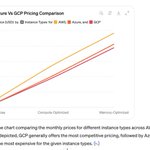
Not saying AWS is bad, but… Last year I asked AI to research cloud costs and it made this chart. That’s when I decided to move off AWS. I thought the higher price meant higher value… turns out, not really…


1
455
Ever “go global” by collecting time zones? On a map it looks legendary; in real life it’s me setting 3am alarms. 🙃
Maybe you’ve felt this too—full post below 👇 medium.com/p/am-i-building-a…
18
I just published Am I building a global company… or just escaping competition at home? medium.com/p/am-i-building-a…
20
I just published Where do I find my first 1,000 paying customers abroad? medium.com/p/where-do-i-find…
16


Just realized how online world is just like a mirrored version of the real world.
You pay for ad inventories online, same as offline.
You pay for storage spaces online, same as offline.
You pay for experiences online, same as offline.
1
Unblockability definition:
1. The ability to unblock things when doing something.
2. Very rare among human beings.
1
1

Daisy Deng retweeted

some industrial designers are up to (and enjoying) this challenge

All hands on deck. Our U.S. factories are working to develop, manufacture and deliver facial masks to the hospital community.
To learn more, visit: shop.newbal.co/mademedical
