

カラフルな昆虫と美しい鉱物、鉱石を撮影するのが好きな人。学術的な事には一切興味無く、広く浅く楽しんでます。時々レオパや多肉植物も。
Damaster's Sanctuary
Joined December 2018
- Tweets19.9K
- Following2.3K
- Followers8.8K
- Likes183K
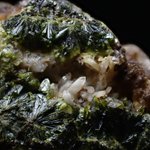


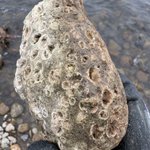
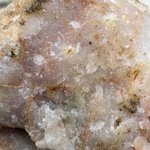




洗ったら意外と綺麗だったので再撮影
球顆粒紋岩?
UV照射したらでネオンブルー〜エメラルドグリーンの強い蛍光を放ちました
UVライトは可視光フィルター付きなので写っている青は対象の蛍光反応です
ただの変な石だと思ったので欠片しか持ってこなかったのが悔やまれる…
#鉱物


同じ河川敷
別な石からも水晶が出ました
ここの水晶はあまり錆が付いていなくて透明度が高い気がします
#鉱物
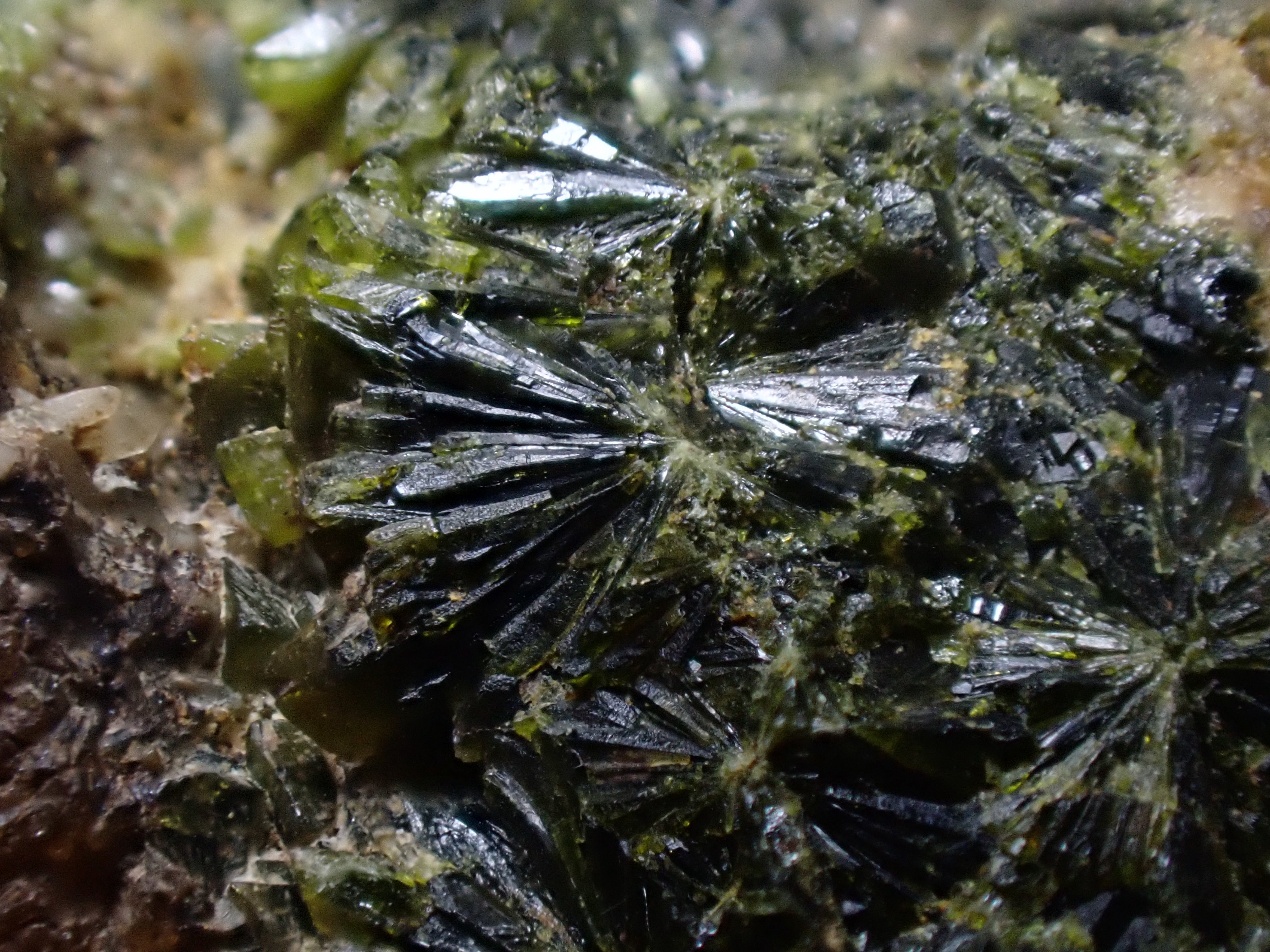
カタツムリ?貝?の殻の中で永い年月をかけて生まれたビビアナイト
凄い鉱物標本だ…
#鉱物

The chemistry on this one is so odd. A snail dies and ends up in mud with no oxygen. The soft body rots. Rotting organic matter gives off phosphate, and the sediment has plenty of iron around. In most places that iron gets grabbed by sulfide and turns into pyrite, which is how you get all those shiny fool's gold fossils. But there's a narrow layer in some immature sediments, roughly the boundary where sulfate reduction stops and methane production starts. Down there the sulfide has mostly run out, so ferrous iron and phosphate can both stay dissolved long enough to find each other. What you get is Fe3(PO4)2·8H2O. Vivianite. It grows as blue green blades in the exact hollow where the animal used to live.
So the soft tissue is long gone, but the phosphorus that was in it is now part of a crystal sitting inside the shell. I find that a little unsettling and also fantastic.
This one is a 3.1 cm snail, possibly a naticid, so a moon snail. It's from the Kerch iron ore deposits in Crimea. That's the classic spot for vivianite in fossil shells, but most Kerch material is bivalves, and the crystals are usually blue or dark because they've already oxidized badly. A snail with green crystals that still look this fresh is the less common version. Look at the photo. Half the opening is filled with black sediment and the other half is a messy jackstraw pile of glassy green prisms. The shell itself is chalky cream with little blue stains near the apex, which I'd guess is phosphate leaking out where it didn't belong.
Now the bad part. Vivianite darkens. The ferrous iron oxidizes to ferric iron and the crystals slowly go from pale green to deep blue and then close to black. The standard collector advice has always been to blame light. If I owned this I'd keep it in a dark drawer, take it out for maybe ten minutes when someone came over, and feel guilty every time I opened the drawer. Like I'd adopted a pet I'm not allowed to look at.
One nerdy footnote I came across, though. A 2024 paper in Geochimica et Cosmochimica Acta tested pure vivianite and found light had basically no measurable effect on oxidation. Oxygen was the problem, and a big one. The authors still said collections should keep protecting natural specimens from light, since impurities might matter in ways they couldn't rule out. So the dark drawer stays, but now I'd put it in an airtight box too. The fully oxidized end product is called metavivianite, also known as kertschenite, and as far as I know that name comes from Kerch. So this locality has its own mineral named after the way its vivianite falls apart. Kind of grim.
Link in 🧵


会社の壁にいたウスチャヤガ
宮城県は分布の太平洋側北限地域にあたるため個体数が少なく希少な存在。
最新の『宮城県レッドデータブック2026』でもウスチャヤガは準絶滅危惧(NT)に継続指定されてるとの事…
普通にその辺にいる気がするんだけど、この類いの蛾を意識して見た事ないからわからない
