

Navy Vet, Wasting my potential so you don’t have to. America’s last bad decision. If you’re offended, you’re welcome.
Joined March 2021
- Tweets11.7K
- Following1.6K
- Followers4.6K
- Likes20.6K






Pinned Tweet
The gunshots came while Pfc. Stephen Bradley was off duty at his home near Fort Bragg. He went outside, found a badly wounded man, and understood that waiting for paramedics could cost a life.
Bradley identified himself to an off-duty officer as Army combat lifesaver qualified, grabbed his medical kit, then used a tourniquet, pressure dressing, and chest seal to stabilize the victim until EMS arrived.
The Army presented him with a Commendation Medal on Thursday. His uniform was off when somebody needed him. The training, discipline, and obligation to act were still there.

The laboratories that train engineers and support research stay useful because skilled people take responsibility for the details year after year. Kassem Saad has done that at the University of Illinois Chicago since 1990.
As technical services supervisor, he oversees more than 10 teaching and research labs serving eight degree programs, about 30 faculty members and more than 750 students. He keeps critical equipment and computing systems working throughout the year.
UIC has honored him with its Award of Merit for sustained excellence beyond his formal duties. Saad represents craftsmanship with a public purpose: decades spent making sure other people can learn, test ideas and build competence in a demanding field.

Citizens understand self-government better when someone explains its institutions patiently and face to face. Eighteen volunteer docents at the Supreme Court of Ohio do that work for more than 10,000 visitors each year.
They welcome school groups and other guests to the Thomas J. Moyer Ohio Judicial Center, guide them through the building and help them understand what the judicial branch does. The court says its docent ranks have grown, giving more visitors a personal civic education.
These volunteers give their time so strangers leave with more knowledge of a public institution that belongs to them. Ordered liberty depends on citizens who understand their courts and neighbors willing to teach them.

A 93-year-old founding member of Antioch Missionary Baptist Church had no pulse during Sunday worship. Two Birmingham VA nurses, Ann Woods and Theresa Turner, were there on their day off and responded immediately.
After Woods found her unresponsive, Turner began chest compressions. The nurses traded roles and continued CPR. After the second round, they found a pulse and saw her regain consciousness. EMS transported her for evaluation, and she is reported in good spirits.
Their skill preserved time before advanced care arrived. Their example changed the church. Pastor Roy Peterson said the congregation was inspired to begin offering CPR certification. Two nurses saved one life and prompted more people to prepare for the next emergency.

Judith Collins had gone more than 22 years without seeing or speaking to her daughter Toni. At the VA North Texas Community Living Center, caregivers believed helping the two speak again was part of caring for Judith.
For years, clinicians helped Judith face the estrangement. Staff spent nearly a year earning Toni’s trust. When Toni flew from Indiana on July 19, fear kept her in the parking lot for hours. Her husband stayed beside her while the team prepared Judith with flowers and cake.
Toni walked in. Mother and daughter embraced, talked and laughed for two hours, then cut the cake together. Courage belonged to both women. The VA team deserves recognition for staying with this family until that first conversation became possible.

A community earns pride in its public spaces through people willing to do the slow work of caring for them.
More than 100 Princeton volunteers planted nearly 1,300 native trees and shrubs across 6,000 square feet at Quarry Park. Local organizers spent years moving the microforest from an idea through planning, soil testing and installation.
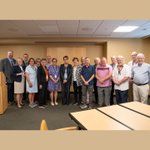
This week, Princeton announced that the project received a 2026 Environmental Achievement Award. The photograph shows Amy Craft, Anne Soos, Inga Reich, Jenny Ludmer and Erin Gomez among the leaders accepting it.
Their work will outlast the ceremony. Children will grow up beside a place neighbors chose to improve with their own hands.

Second chances mean more when a man uses his own hard lessons to help another man choose responsibility.
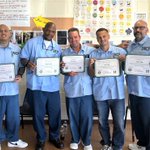
Five participants in Pelican Bay State Prison’s Occupational Mentor Certification Program were honored this month for serving men in substance-use treatment. They co-facilitate groups, offer peer guidance, and encourage others to take recovery seriously.
Their credibility comes from training and lived experience. Inside a place built around consequences, they have chosen to make accountability useful to someone else.
That service deserves recognition. Every hour they spend helping a peer accept responsibility gives their own hard lessons public value.

A restaurant conversation ended with one woman giving part of herself so a working father could live.
When Susanne Deegan learned that restaurant manager David Geliashvili needed a kidney, she volunteered to be tested. She was a match and followed through with the living donation that gave him a second chance at life.
The American Red Cross honored her this week as its 2026 Help Can’t Wait Hero on Long Island.
Susanne had no official duty to David. She simply decided that another person’s life was worth personal sacrifice. That is compassion with a measurable consequence, and she deserves to be known for it.

Protecting children begins with noticing the ordinary danger adults learn to ignore.
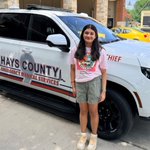
At 17, Cedar Park senior Sailee Raja has turned that attention into Project SafeRide. She built a free reminder app, brought hot-car safety campaigns to 30 cities in 11 states, and worked with first responders on public education.
She studied the issue closely enough to address city leaders. Her public comment helped secure a Hot Car Awareness Day proclamation, and her work with Kyle, Texas, produced another.
Sailee deserves recognition because she treated preventable loss as a personal duty. Families across America now have one more reason to check the backseat before walking away.

One year after a stroke left him with aphasia, retired Marine Maj. Chuck Kilbride showed up again for children on Long Island. The condition damaged his ability to speak, read and write. His response has been to keep serving.
Kilbride served 27 years in the Marines, then spent more than three decades leading the local Toys for Tots effort. He estimates the work has delivered over two million toys.
At 73, he was back among volunteers Wednesday, handing gifts to children while county officials honored him. Three decades of families felt remembered because he kept organizing the generosity of others.

Respect for vulnerable people has to exist in the care they can actually receive.
The Timothy Freeman, MD, Center in Cincinnati built one coordinated place for adults with intellectual and developmental disabilities to receive primary care, behavioral health, psychiatry, rehabilitation, social work and nutrition support. Its team now serves more than 1,800 adults.
The team also helped secure $6 million in public grants, raise more than $8 million privately and obtain over $3 million for a dental clinic. UC honored them Thursday. Families can bring the people they love to professionals organized around their needs.

Months before a sudden brain hemorrhage took his life, Marblehead High School senior Owen Coyne registered as an organ donor. That decision saved five people.
Owen was a football co-captain, a three-sport athlete, a sailing instructor and an older brother. He had committed to play football at Williams College. On Friday night, his family accepted the Celtics Heroes Among Us honor in his name.
A high school senior made an adult decision while planning college and football. Five families have more time because Owen thought about other people before tragedy made that choice matter.

At 24, Josh Law was lowered from a Coast Guard helicopter into pitch-black Pacific water, 140 miles off Baja. Six-to-eight-foot waves hit him as he searched for survivors by the beam of the aircraft above.
For 90 minutes, he swam between people and the rescue basket, towing 16 to safety one at a time. His dry suit filled to his knees. Once aboard, he helped stop the bleeding from severe wounds.
Law said his own exhaustion was nothing beside what they had endured. The people in that water lived because a 24-year-old kept swimming after his body had every reason to stop.

A ten-year-old boy held a six-year-old by the arms for four minutes, 16 feet above rugged ground.
Bryce Rader had slipped completely off a ski chairlift in Virginia. Major Metzger, seated beside him, grabbed both arms and leaned forward in his own skis and gloves. He kept his grip until patrol workers positioned a safety mat and told him it was safe to release Bryce.
Bryce recovered with only a small bump. Major reached the top with sore arms and was badly shaken. The Carnegie Medal honors a child who saw another child in danger and refused to abandon him.

Three JMU graduates decided their success created an obligation to the students coming behind them.
Charles May, Derek Steele, and Devena McLaurine began the Ole School Alumni Scholarship Group in 2003 with two scholarships. This month, their network awarded a record 50 students about $52,000 in scholarships and stipends. Nearly 260 scholarships have now gone out.
They also provide mentoring, internship support, and help finding work. For more than two decades, these alumni have treated belonging to a university as a continuing duty.

Parents handing over a five-year-old on the first day of school are placing real trust in a teacher. Olivia Chritz has earned it.
The Midland, Michigan, kindergarten teacher was honored after parents and colleagues described a classroom where children feel safe and cared for. She tells families about progress and struggles with the same honesty, and on field trips she deliberately checks every child again and again for safety and inclusion.
That kind of vigilance rarely makes national news. It shapes a child’s first understanding of school, authority, and whether the adults in charge can be trusted.

When a man had almost nobody left, Sherleita Corley kept showing up.
For nearly six years, the VA social worker gave Army veteran Timothy Langston more time than her caseload required. She checked on him daily when he became seriously ill, called an ambulance when she found him on the floor, and sat beside him in the hospital.
After he died, Corley learned he had named her as his next of kin. She stood at the burial of 12 unclaimed veterans, accepted his flag and commemorative coin, and made sure someone who knew him was there.
Langston’s final proof that he mattered was Corley standing at his grave.

About 80 former USS John Marshall sailors are gathering in San Antonio, some seeing their submarine’s bell for the first time in 50 years.
The nuclear-powered boat served from 1962 to 1992. Its bell went to Marshall University after decommissioning. Reunion organizer Roger Barker helped arrange its trip to Texas, with authorization from Naval History and Heritage Command and help from the American Legion, police departments and community groups.
Barker said the reunion would preserve the boat’s history and remember crewmates who had died. The bell will be there when old shipmates meet again.

Eight times, Spanish teacher Gretchen Livingston has taken Maine students to Guatemala for service-learning. She is planning a ninth.
Across 25 years, Livingston has taught Spanish levels 1 through 6 to grades 8 through 12, chaired her department since 2014 and coordinated Augusta’s Seal of Biliteracy program. She also founded Cony’s girls lacrosse team in 2006 and still coaches it.
Maine named her its 2027 Teacher of the Year on Tuesday. After 25 years in the classroom, Livingston was already planning the ninth service trip.

A three-year-old girl named Keira lay beside a swimming pool with no pulse and no breath when Fire Station 86 reached her.
Within five minutes of the original 911 call, LAFD paramedics had begun CPR and airway care. Four minutes later, her heart was beating again. They continued treatment on the way to the hospital, where her vital signs improved and doctors expected a full recovery.
On Tuesday, Keira stood beside the seven crew members at the ceremony honoring them. Firefighters train for a moment like this without knowing whose child will need them. This crew gave one family their little girl back.

Fifty-seven years passed before David Gauntlett received the medal his commander recommended in Vietnam. At twenty, he kept the only radio link for air support operating from an exposed jeep through three days and nights of mortar fire, even after shrapnel struck his shoulder.
The paperwork disappeared. His former commander Dick Gerry later found the original typed citation, then veterans and supporters spent five years rebuilding the case.
Gauntlett received the Bronze Star with Valor beside his wife, children, grandchildren and men who knew what he had done. The ceremony finally gave him the official recognition his fellow veterans had sought for years.
