










Dans retweeted

You probably know a lot about Egypt, Babylon, Persia, and Rome from the Bible.
But you probably don't know much about Cush.
And that's a shame, because Cush is a fascinating and important kingdom woven throughout the Old and New Testament storyline.
Cush was the son of Ham and the grandson of Noah.
His descendants built one of the most powerful civilizations the ancient world ever saw, stretching across what is now Sudan and Ethiopia along the upper Nile.
At their peak, Cushite pharaohs ruled all of Egypt. The 25th Dynasty. One of their kings, Taharqa, is mentioned by name in Isaiah 37, and Sennacherib's own Assyrian inscriptions confirm the encounter. This is history you can hold in your hands.
Moses married a Cushite woman. Zephaniah was likely of Cushite descent. Isaiah and Ezekiel both name Cush when they speak of the nations.
Then comes Acts 8.
An Ethiopian eunuch, a Cushite official, is reading Isaiah in his chariot when Philip finds him. He believes. He is baptized. And he takes the gospel back to Africa in the first generation of the church. The title "Candace" Luke uses for the Cushite queen was confirmed by Greek and Roman writers as a real dynastic title.
The Kingdom of Cush outlasted Rome. After the Assyrians pushed them out of Egypt, they rebuilt at Meroe, which became one of the ancient world's great centers of iron and trade. Herodotus and Strabo both wrote about it with genuine fascination.
The biblical world is wider, older, and more global than most of our maps suggest.
And Cush is proof of that.

Dans retweeted

What if Portugal never settled in South America?

ALT By u/henrique3d: https://www.reddit.com/r/imaginarymaps/comments/m4gphm/what_if_portugal_didnt_settled_south_america/


Dans retweeted

Ancient Echoes: The Mysterious Stonework of Peru 🇵🇪 and Türkiye 🇹🇷
Separated by nearly 8,000 miles, Peru and Türkiye share an astonishing architectural mystery massive, precisely cut polygonal stonework that defies conventional explanations. The walls of Sacsayhuamán in Peru and those of Hattusa, the Hittite capital in Turkey, bear striking similarities, as if shaped by the same unseen hand.
Was this sheer coincidence, the result of independent innovation? Or do these remnants hint at a forgotten transoceanic connection, a shared knowledge passed through lost civilizations? The precision of these stones fitting together seamlessly without mortar, continues to puzzle historians, raising more questions than answers about our ancient past.
#archaeohistories

Dans retweeted

A stray dog accidentally became the first to cross the Romania-Hungary border after Romania joined the Schengen area.
TERKINI:
Perdana menteri United Kingdom, Kier Starmer telah meletakkan jawatan dua hari lepas.
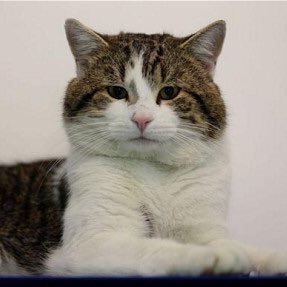
Larry sekarang tengah tunggu perdana menteri baru datang untuk minta kepalanya diusap. 🐈

Nama kucing ini ialah Larry The Cat, 'bos besar' dalam pejabat Perdana Menteri United Kingdom di London.
Uniknya pasal Larry ini ialah dia ada jawatan sendiri dalam pejabat itu, iaitu sebagai Chief Mouser to the Cabinet Office!

4
235



Dans retweeted
A collection of European flags after the fall of Napoleon and the Congress of Vienna of 1815.
(1/2)

ALT 📝 Notes: This selection is limited to flags of entities with a certain degree of sovereignty. The only exception is Switzerland due to its similarity with its future flag. Some flags may have a modified aspect ratio, such as the flag of the UK.
Dans retweeted

In Turkish, the bird known as a “turkey” is called hindi, meaning “from India.” In India, however, it’s referred to as “Peru.” In Arabic, it’s called the “Greek chicken,” while in Greek it’s known as the “French chicken,” and in French, the “Indian chicken.” Despite the variety of names, the bird is native to none of these regions.
The unusual naming history goes back to the 16th century, when European explorers first came across turkeys in the Americas. At the time, global trade routes were still poorly understood, and merchants often misidentified exotic animals and goods as they moved between continents.
Because of this confusion, Europeans frequently mixed up the turkey with other birds such as guinea fowl from Africa or species traded through the Ottoman Empire. As the bird spread across Eurasia, each culture linked it to a different “foreign” origin based on their own trade connections and assumptions.
The end result is a kind of linguistic chain reaction. English speakers associated it with Turkey, Turks linked it to India, the French tied it to India as well, Arabs connected it to Greece, Greeks to France, and Portuguese speakers to Peru.
In the end, a single North American bird ended up carrying a whole map of mistaken identities across several continents.


Dans retweeted

Nanaimoteuthis ialah makhluk sebenar yang wujud Zaman Batu Kapur (100 - 72 juta tahun lalu). Ia bukan sotong gergasi yang masih hidup hari ini, tetapi seekor kurita yang amat besar daripada kumpulan cirrata.
Nanaimoteuthis hidup di perairan yang lebih cetek dan merupakan pemangsa aktif. Saiznya jauh lebih besar daripada sotong gergasi dan sotong kolosal moden.
Kajian menganggarkan Nanaimoteuthis terbesar mungkin mencapai panjang sehingga 20 meter. Saiz ini lebih panjang daripada kebanyakan haiwan laut yang diketahui, dan setanding dengan paus sperma zaman moden.
Ini menjadikan Nanaimoteuthis bukan sahaja cephalopod terbesar yang pernah diketahui setakat ini, malah salah satu pemangsa laut terbesar pada Zaman Batu Kapur dan sepanjang zaman.
Paruh yang kuat, tajam, dan berbentuk seperti paruh burung menunjukkan bahawa ia adalah pemangsa yang berkuasa, mampu menghancurkan mangsa yang keras — yang pada zaman dulu mungkin terdiri daripada ammonit dan penyu yang besar, malah reptilia marin.
Paruhnya mungkin cukup kuat untuk mematahkan tulang dan menyiat bangkai mangsa dengan mudah.
Kraken yang ramai pernah tengok dalam siri-siri filem Pirate of the Caribbean tidak mendapat inspirasi daripada kurita ini tetapi ini mungkin gambaran paling tepat kalau untuk "kraken" yang pernah wujud.
