

AI engineer shipping agents, RAG and the infra behind them. Open source, real results, no hype.
Joined October 2023
- Tweets416
- Following56
- Followers16
- Likes73





Pinned Tweet
Two AI agents in the same folder will overwrite each other's files.
Give each one its own branch and a week later nobody remembers which branch had the fix, which agent wrote it, or whether it ever got merged.
Ramify fixes both.
Every task gets its own git worktree, ready to run: .env copied, dependencies installed, its own block of ports. Type claude or codex in a repo and that agent starts on its own branch.
It also detects every AI session on the machine by itself, with no plugin per tool, and warns you when two agents share a branch or one starts touching main.
Then one screen shows what each agent changed, GitHub-style diff, and a timeline of every branch, merged ones included.
Local-first, no telemetry. More agents only helps if you can still see what each one did.
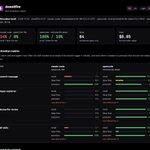
Most skill evals score the output after the skill is injected. doesitfire tests whether the real Claude Code, Codex or OpenCode CLI loads it on its own. Recorded demo: Claude Code recall 14% on qwen3:4b (1 of 7 should-fire). OpenCode 30 of 30 on ministral-8b, 10% false-fire rate.
1
2
30

Your Mac's notch is now a tray.
Drag a file, an image or some text onto it and it stays there after a restart. Clipboard history pastes from any app with Ctrl+Cmd+V. Passwords are never saved.
Signed and notarized. Nothing leaves the Mac.

ALT Visor tray under the Mac notch holding several dropped files

ALT Visor tray under the Mac notch with a music player
2
2
33
It works on macOS 14.2 or later, signed and notarized: github.com/diegoperezg7/viso…
8
A vague Claude Code prompt scores 5 as you type. Add a path, expected behaviour, a test and a constraint, and it climbs to 75.
/coach rewrites it with Haiku ($0.00055) and never sends on its own. A one-line 500-error prompt goes from 41 to 93, then to 100 once you name the file.
3
1
49


It works in the terminal, the desktop app and VS Code: github.com/diegoperezg7/prom…

17
OpenRouter's weekly token volume more than doubled while Stripe was buying it: about 125% above August, per Patrick Collison, as the deal closed yesterday.
It routes 400+ models from 80+ providers for 10M+ developers and companies. Stripe already sells Token Billing.
Model choice and model spend now sit under one roof. teapawt.net/patrickc/status/212028…

OpenRouter is serving ~125% more tokens per week than it was when we first announced this acquisition in August.
We have a lot of ideas for how to integrate Stripe's and OpenRouter's capabilities in the months ahead.
19
The top model on CursorBench costs $2 in and $10 out per million tokens. Until November 30.
Gemini 4 Carbon scores 60.4% at high effort, and Google puts it at more than 2x lower cost per task than the next best external model.
From December 1 it's $4/$20. Every cost-per-task chart from this month doubles with it. teapawt.net/cursor_ai/status/21201…

Gemini 4 Carbon is now available in Cursor!
At high effort, it's the top model on CursorBench at 60.4%

21
An MCP server can hide instructions inside a tool description with invisible Unicode.
The client forwards that text straight into the model. Code review on the diff never sees it.
mcp-guard connects like a client, inventories the tools, and flags poisoning, shadowing, open command args, and weak transports before you install the server. Twenty-four deterministic rules. Exit codes for CI.
Scan the tool list before the agent trusts it.

ALT mcp-guard scan report listing the tools of an MCP server and the findings per rule

ALT mcp-guard report detail showing one finding with its rule, severity and evidence
1
14
Apache-2.0. CLI, GitHub Action, and MCP server: github.com/diegoperezg7/mcp-…

1
9
Fable 5.2 finished a physics calculation that had sat undone since 2003, mostly on its own. A physicist checked it against known special cases, and a second Claude run with a different method got the same answer. The papers are preprints. They haven't been peer reviewed yet.
15
Claude's PCB layout score went from 25% to 69% between Fable 5 and 5.2.
It routes the critical traces first: USB and Ethernet pairs, length-matched, zigzags so signals arrive together.
Diode built three devices from its files with zero circuit fixes. None are certified yet. teapawt.net/claudeai/status/211989…

During pre-release testing, Claude Fable 5.2 and Claude Mythos 5.2 worked on ambitious projects in many different fields. Here are a few.
From a one-paragraph prompt, Fable 5.2 designed three working electronic devices, including this home voice assistant hub.
35
Giving a coding agent an API key usually means pasting it into the chat or a .env it can read.
Then the value sits in a transcript, a log, or a commit.
Keyfold opens a native paste window for you. The value goes into the OS credential store. The agent only gets a reference like keyfold://EXA_API_KEY, then starts your app with that name in the environment. Output that prints the key shows [keyfold:EXA_API_KEY] instead.
The agent can use the key. It never receives the value.

ALT Keyfold native paste window storing an API key in the OS keychain
1
12
MIT. macOS app, CLI, and MCP server: github.com/diegoperezg7/keyf…

8
Your agent has its own branch. The app still won't start.
The new worktree is missing .env and dependencies. Its dev server wants the port another session is using.
Ramify handles that setup: copies ignored files like .env, installs dependencies and assigns separate ports to each worktree.
Separate branches shouldn't mean setting up the same project again.

ALT Ramify control center in dark mode showing agent sessions and branches
10
An agent's worst memory bug is a wrong note it keeps trusting.
In Lance Martin's post for Anthropic, Claude fixed a bad PokéCenter note by rereading the session transcript offline. Scaling that "dreaming" from 2 to 128 sessions took a 25-question eval from 13% to 48% of graded criteria.
Notes without the transcript behind them just pile up mistakes.
teapawt.net/RLanceMartin/status/21…

check out my new article in the Anthropic eng blog.
i talk about "dreaming" (offline compute) as a way to organize Claude's memory. it can correct mistakes, create memories, or build new representations.
teapawt.net/AnthropicAI/status/211…

23
If Thinking Machines ships the Apache 2.0 weights next week, Inkling 2 Small becomes the highest-scoring open-weights model built outside China on Artificial Analysis.
594B MoE, 17B active, score 31. Closed on Tinker today. The ranking only flips when the download lands.
teapawt.net/ArtificialAnlys/status…

Thinking Machines has released Inkling 2 Small, scoring 31 on the Artificial Analysis Intelligence Index - their plan to release its weights would make it the highest-scoring open weights model developed outside China based on current rankings
Inkling 2 Small is launching as a proprietary model, available first-party through @thinkymachines' Tinker platform and Tinker Playground, with weights to be released at a later date. Its score is up 18 points from Inkling Small, with ~4x as many output tokens per task. It matches @GoogleDeepMind's Gemini 3.8 Flash (high) and surpasses @XiaomiMiMo's MiMo-V2.6-Pro on the Artificial Analysis Intelligence Index v5.0.1.
Key takeaways:
➤ Large gains over Inkling Small, especially on agentic tasks: AutomationBench-AA rises from 5% to 46% and FrontierCode 2.0 from 5% to 25%. HLE-Diamond also rises from 12% to 29%.
➤ Different coding strengths from Claude Sonnet 5.5 (medium): Inkling 2 Small scores 25% on FrontierCode 2.0 vs. 11% for Claude Sonnet 5.5 (medium), but 13% on Terminal-Bench 4.0 vs. 30%.
➤ Creative agentic scores above Claude Haiku 5.5 and Grok 4.7 on AA-3D: Inkling 2 Small also scores above Gemini 3.8 Flash on both AA-3D and Code2Video-AA, but behind Claude Sonnet 5.5 on both.
➤ Research-level physics improves, but trails Gemini 3.8 Flash (high): Inkling 2 Small scores 56% on CritPt v2, up from 34% for Inkling Small, vs. 65% for Gemini 3.8 Flash (high).
➤ Fewer hallucinations from more selective answering: On AA-Omniscience v1.1, the hallucination rate falls from Inkling Small's 61% to 27%, while accuracy rises from 32% to 34% and the attempt rate falls from 77% to 53%.
➤ ~4x as many output tokens: Inkling 2 Small averages ~150K output tokens per Intelligence Index task vs. ~37K for Inkling Small, ~31K for Claude Sonnet 5.5 (medium), and ~99K for Gemini 3.8 Flash (high).
➤ Almost 6x the cost of Inkling Small, but cheaper than several other models with similar Intelligence Index scores: Inkling 2 Small costs $1.18 per Intelligence Index task vs. $0.20 for Inkling Small, $7.77 for Gemini 3.8 Flash (high), and $10.02 for Claude Sonnet 5.5 (medium).
Key model details:
➤ Type: Proprietary reasoning model at launch; Apache 2.0 weights release planned (date unconfirmed)
➤ Modalities: Text and image input, text output
➤ Size: 594B total parameters / 17B active parameters
➤ Pricing: $0.30/$1.00 per 1M input/output tokens ($0.03 per 1M cached input tokens)
➤ Availability at launch: Tinker and Tinker Playground
Congratulations to the team at @thinkymachines on the release!

13
Two agents on the same branch don't crash. They just quietly undo each other's work.
You only notice when a test that passed an hour ago fails, and neither agent knows why.
Ramify watches every AI session on the machine and warns you the moment two of them land on the same branch, or one starts changing main. One click gives that agent its own branch.
It also flags when two different branches touch the same files, before the merge does it for you.
Parallel agents are only parallel if they can't step on each other.
1
18
MIT. macOS, Windows, VS Code/Cursor extension, CLI and Claude Code plugin. v0.7.1, not signed yet: github.com/diegoperezg7/rami…

9