

Making data analytics clearer for beginners 📊 | Data career insights & practical business examples.
Nigeria
Joined September 2019
- Tweets8.2K
- Following2.4K
- Followers1.2K
- Likes41.8K








Pinned Tweet
Learning data analytics in public has taught me something deeper than Excel or SQL. 📊
You can start from somewhere completely different and still build something meaningful.
I studied Animal Science.
I taught in classrooms.
I worked in customer service and sales.
Now, I'm learning data analytics.
And honestly, starting over isn't always easy.
There are days when you feel behind.
Days when you wonder if you're learning fast enough.
Days when the people around you seem miles ahead.
But I'm learning that progress doesn't require you to have everything figured out.
It starts with asking better questions.
1. Start with the question, not the tool.
Before opening Excel, ask:
What decision will this analysis help someone make?
2. Understand your data.
Where did it come from?
What does it leave out?
Can you trust it?
3. Learn the fundamentals.
Tools will change.
AI will get better.
But the ability to think clearly will always matter.
4. Learn to communicate.
Finding an insight is one thing.
Explaining it clearly enough for someone to act on it is another.
5. Build by solving real problems.
Don't just learn formulas.
Don't just watch tutorials.
Take a messy problem.
Work through it.
Make mistakes.
Figure it out.
Share what you learned.
AI can write a formula or SQL query in seconds.
But knowing what to ask, what to investigate, and what the answer actually means is the skill I'm building.
I'm Obinna.
I'm learning data analytics in public, one real problem at a time.
If you're learning a new skill, changing careers, or starting over too, you're not alone.
We're building from where we are.
What are you currently learning that could change your career?

SUM in Excel answers a narrower question than you think. It adds whatever sits in those cells, including the rows you meant to leave out and the negatives you forgot were there.
Before you trust a total, count the rows behind it.
9,995 sales rows. 1,871 of them were loss-making orders, 18.7% of the table, about 83 lost on each one.
The total never told me that. The count did, and then I knew exactly where to look.
Before touching anything: is it 30% failing at once or drifting there over days? One is a change, the other is a slow leak. That single distinction decides whether you roll back or investigate, and I would say which before proposing a fix.

True, and the tell is usually in what they hand over. People who can actually do the work give you the messy version, including what they got wrong. The ones managing impressions give you the clean summary with no loose ends, and there is nothing in it you can question.

They do, and the scariest part is that nothing looks broken. The tile was green, the number was up, and only the row filter was wrong. What caught it was reconciling the total against the raw column instead of against another dashboard.

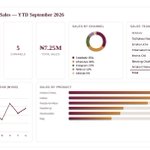
The measure point is the one people skip. I rebuilt a sales dashboard where the profit tile read $442,528 and the real net was $286,397, because loss-making orders were filtered out. Same data, different definition of profit. Nobody questioned it while the number looked good.
If you have been working as a Data Analyst for a couple of years and feel stuck, I would look closely at the kind of problems you are being trusted with.
If most of your week is still refreshing reports, making small dashboard changes and answering the same requests, another year of doing exactly that may add very little to your profile.
The roles that usually open up the next level involve more ownership: investigating production issues, improving a process, working across teams, defining measures, reviewing quality, or being trusted with an unclear problem.
Sometimes career growth starts with changing the scope of your work before changing your job title.
My dashboard said 442,528 in profit. Excel said 286,397. Neither number was random.
The tile summed only the profitable rows and left 156,131 of losses outside it, on 1,871 order lines.
Before you trust a total, check which rows the measure excluded.
The one I would add is saying the hard thing early. Before our school in Azuitumo opened, I had to tell families there were no classrooms yet and no guarantee of teachers. The ones who enrolled anyway were the ones I had told first, before they heard it from someone else.
AI also cannot find out that nobody wants the thing. I built an accessories brand where the problem was never the product, it was that customers would not order until size, price and delivery were clear upfront.

The version of this that bit me was case in a region column in a Superstore dataset. It looked clean because the totals still added up. What changed my habit was checking distinct values before any group by, not after a number looked odd.

The one I keep getting wrong is asking for something the reader cannot give in one reply. My cold emails asking for a job got silence.

The biggest, most underrated hack for getting replies to cold emails is answering the "why" question.
Before you write anything, ask yourself, “What do I want to get from this cold email?”
It's simple, but it's the key to writing a good CTA and structuring the whole email. Most of the cold emails I've reviewed were written with no clear outcome in mind for the prospect. You left them confused, so they ended up taking no action.
Agencies are the easier pitch because they already have the client and the trust, so you are not selling the outcome, only the extra hands. The thing that gets replies is naming the unit and the turnaround, not the service.

One of the fastest but most underrated ways to find a remote job is to search for agencies that need subcontractors.
Look for digital marketing, social media, branding, web design, PR and content marketing agencies in the US, UK and Canada.
Check their websites, LinkedIn pages, team sizes and recent projects. Many agencies outsource tasks when they have more clients than their internal teams can handle.
Reach out, introduce yourself and offer to support them on a freelance or contract basis. You don't always have to find the end client.
Sometimes, all you need is an agency that needs extra hands and is willing to pay for your skills.
Easy peasy.
Absolutely, and the part nobody warns you about is that Excel habits do not carry over. I spent weeks dragging SUMIF thinking into SQL before it clicked that the join decides the answer, not the formula.

Also worth checking what the probation says about notice and termination. I have seen contracts where probation is paid but they can end it same day with nothing written, and the salary was fine. Read that clause before you sign, not the salary line.
Please do NOT reject a job offer because they have a probation period.
Probation is a paid period of employment. You're already employed, carrying out your assigned responsibilities and receiving your agreed salary while the company assesses your performance.
An unpaid trial, on the other hand, is when an organization asks you to demonstrate your skills or complete tasks before making a hiring decision, without paying you for that work.
These are two VERY different things.