

DatapointVc ⚡ Vector of Insight Cosmic data architecture ⟡ precision through light. Signal ⋆ Momentum ⋆ Ascension across DeFi. 🦅 #pDAI #PulseChain
Hexico
Joined June 2026
- Tweets610
- Following60
- Followers109
- Likes750





🌐✨ THE POWER OF COLLECTIVE CREATION ✨🌐
🏛️ Some of the most important things in an ecosystem are never built by a single person.
They emerge when researchers, builders, analysts, creators, developers, and communities contribute their individual pieces to something larger than themselves.
🦅 ✦ 🦅
🎥 What stands out here is not just the video.
It is the process behind it.
An observation became a discussion.
A discussion became research.
Research became collaboration.
And collaboration became something capable of reaching far more people than any one individual could alone.
🦅 ✦ 🦅
⚙️ Every ecosystem has visible contributors.
But it also has countless people working quietly in the background.
The developers.
The researchers.
The document writers.
The idea explorers.
The community members connecting information across many different perspectives.
Most of their work is never seen.
Yet without them, none of the visible outcomes would exist.
🦅 ✦ 🦅
🌱 This is a reminder that progress is rarely an individual achievement.
It is often the result of many minds independently pursuing understanding and then sharing what they discover.
One insight builds upon another.
One contribution strengthens another.
And gradually something larger begins to take shape.
🦅 ✦ 🦅
🙏 A heartfelt thank you to HexJamHex, and to everyone throughout the community who continues building, researching, questioning, testing, documenting, and sharing knowledge.
Not for seeking recognition.
But for helping others see more clearly.
🦅 ✦ 🦅
💭 A moment of reflection for all of us:
What becomes possible when people stop competing for attention...
...and start building understanding together?
The answer may be greater than any of us can create alone.
🦅 ✦ 🦅
⚙️🦅 DPV 🦅⚙️
DataPointVector
Structure Before Emotion.
Alignment Before Action.
Patience Before Momentum.
#DataPointVector #PulseChain #HexJamHex #Community #CollectiveIntelligence


DPV pDAI 1967 Infrastructure Activation Report
from @DatapointVector
Bonus down the thread.
#pDAI $1
❤️💛🧡💚💙🩵💜🩷🤍❤️
🦅 THE INVISIBLE BUILDERS
🏗️ THE ARCHETYPES BEHIND EVERY GREAT SYSTEM
🌑 SEASON II
🔳 PART 32 - GOVERNANCE AS INFRASTRUCTURE
🏛️ DECISION MAKING AT SCALE
The longer I look at decentralized systems, the less I believe governance is simply about voting.
Voting is visible.
Governance begins underneath it.
It begins with a much more difficult question:
How do thousands, perhaps eventually millions, of independent people make decisions together without slowly recreating the authority they wanted to escape?
🦅 ✦ 🦅
At a small table, people can talk.
They can disagree.
They can look each other in the eye.
They can explain what they mean.
But systems eventually outgrow the table.
More people arrive.
More capital enters.
More infrastructure depends on decisions being made.
And suddenly something that once happened between a handful of people has to work across an entire network.
That is when governance stops being a conversation.
It becomes infrastructure.
🦅 ✦ 🦅
And this is where I think we sometimes make the subject too simple.
We ask:
Who has voting power?
But I want to know more.
Who is able to propose change?
Who has enough information to understand what is being proposed?
Who can challenge it?
Who can verify the outcome?
Who executes the decision?
And what happens when the majority is wrong?
Those questions matter to me because decentralization does not automatically create wisdom.
It distributes participation.
What we do with that participation is still deeply human.
🦅 ✦ 🦅
This is where the Governance Builder carries an extraordinary responsibility.
The goal cannot simply be to remove one ruler and replace that ruler with thousands of buttons.
Governance has to create pathways.
For proposals.
For disagreement.
For verification.
For correction.
And perhaps most importantly, for accountability.
Because participation without responsibility can become noise.
And authority without accountability can become control.
Somewhere between those two extremes, real governance has to find its balance.
🦅 ✦ 🦅
I find that deeply interesting because technology cannot remove the human problem from governance.
Code can define rules.
Smart contracts can execute outcomes.
Cryptography can verify actions.
But none of those things can decide for us what kind of system we actually want to become.
At some point, people still have to choose.
And every choice reveals something about the values beneath the architecture.
🦅 ✦ 🦅
This connects directly to PART 31.
We asked:
Who holds authority?
Now we have to ask the question that naturally follows:
What happens when authority has to become a decision?
If one person decides everything, the architecture is clear.
If everyone is supposed to participate, the challenge becomes much harder.
Information must travel.
Proposals must be understood.
Different interests must coexist.
Decisions must remain executable.
And the system must somehow continue functioning even when people disagree.
That is not a small problem.
That is civilization at network scale.
🦅 ✦ 🦅
This is also why I don't believe healthy governance means everyone agreeing.
Actually, I would become suspicious of a system where everyone always agrees.
Real communities contain different experiences.
Different priorities.
Different ideas about risk.
Different visions of the future.
The strength of governance is not eliminating those differences.
It is creating enough shared structure that disagreement does not destroy cooperation.
That feels important to me.
🦅 ✦ 🦅
And perhaps this is where decentralization becomes something more than technology.
We begin with distributed machines.
Then distributed validation.
Then distributed ownership.
Eventually we arrive at the hardest layer:
distributed responsibility.
Because power can be distributed technically while responsibility remains nowhere.
And a system where everybody has power but nobody accepts responsibility may not be decentralized strength.
It may simply be decentralized weakness.
🦅 ✦ 🦅
The invisible architecture of governance therefore has to do something remarkable.
It must allow many voices to exist...
without turning every difference into paralysis.
It must allow change...
without making change arbitrary.
It must preserve freedom...
without abandoning coordination.
And it must create enough accountability that participation means something beyond pressing a button.
That is a much deeper kind of infrastructure.
🦅 ✦ 🦅
DPV REFLECTION
For me, governance is not about finding the perfect ruler.
And it is not even about pretending we can build systems without authority.
It is about constructing something more difficult:
A way of making decisions where power remains visible, participation remains meaningful and responsibility does not disappear when the crowd becomes large.
Maybe that is what decision making at scale really means.
Not teaching millions of people to agree.
But building an architecture strong enough that they don't have to.
🦅 ✦ 🦅
DPV KEYS
🦅 Governance begins before the vote.
🦅 Participation without information is not meaningful participation.
🦅 Distributed power also requires distributed responsibility.
🦅 Disagreement is not necessarily a system failure. Governance determines whether disagreement can remain constructive.
🦅 Mature systems make authority, decision pathways and accountability visible.
🦅 The strongest governance may not create agreement. It creates a structure in which different people can continue building together.
🦅 ✦ 🦅
✨ A moment of reflection for all of us:
Maybe the greatest achievement of decentralized governance will never be proving that millions of people can vote.
Maybe it will be proving something far more difficult:
That millions of different people can share responsibility for something none of them owns alone.
⚙️🦅 DPV 🦅⚙️
📚 Author • Consciousness • Books • A More Conscious Tomorrow
18
🦅 THE INVISIBLE BUILDERS
🏗️ THE ARCHETYPES BEHIND EVERY GREAT SYSTEM
🌑 SEASON II
🔳 PART 32 - GOVERNANCE AS INFRASTRUCTURE
🏛️ DECISION MAKING AT SCALE
Most people think governance begins when people vote.
I think it begins much earlier.
It begins with a harder question:
How do many people make decisions together without simply creating another center of power?
🦅 ✦ 🦅
As a system grows, decisions become infrastructure.
Who can propose?
Who can participate?
Who can verify?
Who carries responsibility when something changes?
Because a vote alone does not make a system decentralized.
The architecture around the vote matters.
🦅 ✦ 🦅
The Governance Builder does not simply distribute power.
The deeper responsibility is to create a structure where power can be questioned, decisions can be understood and no single voice quietly becomes the system itself.
🦅 ✦ 🦅
DPV REFLECTION
A system becomes mature when participation can grow without responsibility disappearing.
Governance is not simply who gets to decide.
It is how we learn to decide together.
🔽 For those who wish to explore deeper, the full DPV Perspective continues below.
⚙️🦅 DPV 🦅⚙️
📚 Author • Consciousness • Books • A More Conscious Tomorrow
🌐 Official Website:
orgincorex.com
🔗 orgincorex.1link.gg
🌌 Digital Edition:
orgincorex.blunt.cash
📚 Print Edition:
amazon.com/author/robertschu…
📧 [email protected]
#DataPointVector #Governance #Decentralization #Blockchain #InvisibleBuilders
🤖 Made with AI

1
1
36
My friend, please don't measure the value of what you create by the number of likes underneath it.
Some of us do see the hours, the ideas and the heart behind your work. And I know a video like this isn't made in 30 seconds.
I also won't tell you to simply “keep going” as if your time doesn't matter. It does.
If you need to step back, breathe, or rethink how you use your energy, that is completely fair.
But please know this:
Your work has reached people. It has reached me. And I appreciate it more than a like can show.
Whatever you decide, don't let an algorithm decide the value of what you've created over all these years.
Much respect, my friend. ❤️🦅
1
1
24
🦅 BUILD SOMETHING THEY CANNOT TURN OFF
What I really appreciate about this is that you're not asking how crypto can fit more comfortably inside the old system.
You're asking what crypto was supposed to become in the first place.
🦅 ✦ 🦅
Not another bank with a blockchain attached.
Not permission dressed up as innovation.
Not decentralization until somebody decides to flip the switch.
A genuine alternative.
An open system people can enter without asking who they are allowed to be.
A system where ownership means ownership.
Where access doesn't depend on approval.
Where infrastructure is designed to survive beyond the institution, company or individual that helped build it.
🦅 ✦ 🦅
That is the part I believe deserves far more attention.
The goal isn't to make the old financial world look more like crypto.
The opportunity is to build something strong enough that people finally have a real choice.
And that, Liberty Swap, is worth building for. 🗽🦅
⚙️🦅 DPV 🦅⚙️
27
🦅 WHEN AN ECOSYSTEM BECOMES A WORLD
Yes, I would watch it. 😄
But what interests me even more is what is happening underneath the story.
A token is one thing.
Infrastructure is another.
But when people begin creating places, characters, stories and shared experiences around an ecosystem, something new starts to form.
Technology begins becoming culture.
And maybe the pDAI Tavern is a playful glimpse of exactly that.
What begins as code can eventually become a place people actually want to enter.
⚙️🦅 DPV 🦅⚙️
🦅 THE INVISIBLE BUILDERS
🏗️ THE ARCHETYPES BEHIND EVERY GREAT SYSTEM
🌑 SEASON II
🔳 PART 31 - WHO HOLDS AUTHORITY?
👑 CONTROL BENEATH DECENTRALIZATION
There is a question I have started asking whenever someone tells me a system is decentralized.
Not:
How many nodes does it have?
Not:
How many people use it?
Not even:
Who created it?
I ask something much simpler.
Who can still change it?
🦅 ✦ 🦅
Because somewhere beneath almost every complex system lives authority.
Sometimes it is obvious.
Sometimes it is distributed.
Sometimes it is temporary.
And sometimes it is hidden behind so many technical layers that most users never realize it is there.
A key.
An upgrade mechanism.
A governance process.
A critical service.
A small group capable of making decisions when everyone else can only react.
None of these automatically make a system bad.
But they matter.
Because if I want to understand a system honestly, I need to understand where its authority lives.
🦅 ✦ 🦅
This is where decentralization becomes more interesting to me.
It stops being a label.
It becomes architecture.
Who can propose change?
Who can approve it?
Who can reject it?
Who can execute it?
Who can stop it?
And ultimately:
Can anyone act without the permission of everyone else?
Those questions tell me far more than the word "decentralized" ever could.
🦅 ✦ 🦅
I don't believe authority itself is the enemy.
Every functioning system needs ways to coordinate.
Problems need responses.
Software evolves.
Unexpected situations appear.
Someone, somewhere, often needs the ability to act.
The deeper question is what happens to that authority after the emergency passes.
Does it disappear?
Does it remain?
Does it become accountable?
Can others verify how it was used?
Or does temporary control slowly become permanent control?
That is where I start paying attention.
🦅 ✦ 🦅
Human history has shown this pattern again and again.
Power introduced for one purpose rarely announces when it has become something larger.
It simply stays.
Digital systems are not automatically immune to that human pattern just because they contain cryptography.
Code can distribute power.
But people still decide how much power the code distributes.
And sometimes the most important part of the architecture is not what everyone can do.
It is what only a few can do.
🦅 ✦ 🦅
This connects directly to everything we have explored through THE INVISIBLE BUILDERS.
Oracles influence what information reaches a system.
Data Availability determines what can be independently verified.
RPCs determine how users reach infrastructure.
Liquidity determines how freely value can move.
Routing determines the pathways value takes.
Depth reveals how much pressure the structure can absorb.
And now we arrive beneath all of them and ask:
Who has authority over these layers?
Suddenly architecture becomes governance.
🦅 ✦ 🦅
For me, mature decentralization does not mean pretending that authority doesn't exist.
It means making authority visible.
Limiting it.
Distributing it where possible.
Creating checks around it.
And designing the system so that trust does not quietly gather in one place simply because nobody was watching.
🦅 ✦ 🦅
This may be one of the most important responsibilities of the Invisible Builder.
Not merely to build something powerful.
But to resist becoming indispensable to what was built.
Because the ultimate test of decentralized infrastructure may arrive when its creators step away.
Does the system still work?
Can the community still verify?
Can participants still transact?
Can decisions still be made?
Can the architecture continue without asking permission from the person who created it?
If the answer is yes, something remarkable has happened.
The builder created something larger than the builder.
🦅 ✦ 🦅
DPV REFLECTION
I don't think the deepest question in decentralization is whether authority exists.
It is whether authority can become absolute without everyone else noticing.
Real decentralization makes power difficult to hide.
It exposes dependencies.
It reveals control.
And wherever possible, it replaces:
"Trust us."
with:
"Verify it yourself."
🦅 ✦ 🦅
DPV KEYS
🦅 Decentralization is not a label. It is an architecture of authority.
🦅 Visible decentralization can still contain hidden points of control.
🦅 Governance matters because someone eventually has to decide how change happens.
🦅 Temporary authority deserves examination before it quietly becomes permanent authority.
🦅 The strongest builder may ultimately be the one whose system no longer needs the builder.
🦅 ✦ 🦅
✨ A moment of reflection for all of us:
Maybe the deepest test of decentralization isn't asking:
Who controls the system today?
Maybe it is asking:
What happens tomorrow when someone tries to control it?
⚙️🦅 DPV 🦅⚙️
📚 Author • Consciousness • Books • A More Conscious Tomorrow
🌐 Official Website:
orgincorex.com
🔗 orgincorex.1link.gg
🌌 Digital Edition:
orgincorex.blunt.cash
📚 Print Edition:
amazon.com/author/robertschu…
📧 [email protected]

1
29
🦅 THE INVISIBLE BUILDERS
🏗️ THE ARCHETYPES BEHIND EVERY GREAT SYSTEM
🌑 SEASON II
🔳 PART 31 - WHO HOLDS AUTHORITY?
👑 CONTROL BENEATH DECENTRALIZATION
Most people ask whether a system is decentralized.
I have learned to ask a different question:
Who can still change it?
🦅 ✦ 🦅
Who holds the keys?
Who can upgrade the contracts?
Who controls critical gateways?
Who decides when something goes wrong?
Because decentralization is not defined by what a system calls itself.
It is revealed by where authority still remains.
🦅 ✦ 🦅
The Authority Builder carries one of the hardest responsibilities of all:
Build power into the system without quietly becoming the power above the system.
🦅 ✦ 🦅
DPV REFLECTION
Decentralization is not the absence of authority.
It is the architecture of how authority is distributed, limited and made visible.
Don't only ask who built the system.
Ask who can still change the rules.
🔽 For those who wish to explore deeper, the full DPV Perspective continues below.
⚙️🦅 DPV 🦅⚙️
📚 Author • Consciousness • Books • A More Conscious Tomorrow
🌐 Official Website: orgincorex.com
🔗 orgincorex.1link.gg
🌌 Digital Edition: orgincorex.blunt.cash
📚 Print Edition:
amazon.com/author/robertschu…
📧 [email protected]
#DataPointVector #Decentralization #Governance #Blockchain #InvisibleBuilders
🤖 Made with AI

1
28
DatapointVc.pDAI retweeted

"The two most powerful warriors are Patience & Time"
- Tolstoy. (@yourfriendSOMMI )
#pDAI $1
❤️💛🧡💚💙🩵💜🩷🤍❤️
🦅 THE INVISIBLE BUILDERS
🏗️ THE ARCHETYPES BEHIND EVERY GREAT SYSTEM
🌑 SEASON II
🔳 PART 30 - WHY LIQUIDITY ATTRACTS LIQUIDITY
🧲 THE GRAVITY OF CAPITAL
There is something I keep noticing when I look at markets.
Capital seems to develop its own gravity.
Not mystical gravity.
Not some invisible force guaranteeing that money will arrive.
Something much simpler.
Capital prefers places where capital can move.
🦅 ✦ 🦅
Imagine two markets.
Both may contain opportunity.
Both may have strong ideas behind them.
Both may even contain assets people genuinely want.
But one market is shallow.
Entering moves the price.
Leaving moves it even more.
Every meaningful transaction becomes an event.
The other market has depth.
There are more pathways.
More counterparties.
More room for value to move without disturbing everything around it.
If I were moving serious capital, I know which environment would make me look twice.
🦅 ✦ 🦅
And this is where liquidity begins doing something fascinating.
It doesn't simply facilitate transactions.
It can change the character of the market itself.
A deeper market may make participation easier.
Easier participation can attract more activity.
More activity may create reasons for additional infrastructure to appear.
Better infrastructure may create still more pathways for value.
And slowly, something begins reinforcing itself.
Not because liquidity magically creates value.
It doesn't.
But because liquidity can make existing value easier to discover, exchange and use.
🦅 ✦ 🦅
This distinction matters deeply to me.
A project should never confuse liquidity with fundamental worth.
You can pour water into an empty landscape.
That alone does not create a civilization.
But when something meaningful is already being built, water changes what becomes possible around it.
People gather near rivers for a reason.
Movement becomes possible.
Exchange becomes possible.
Life begins connecting.
Digital economies are different, but I see an echo of the same pattern.
🦅 ✦ 🦅
This is why I call it The Gravity of Capital.
Once a market develops meaningful depth, it can become easier for the next participant to enter than it was for the first.
The first liquidity provider steps into uncertainty.
The next finds a pathway.
The next finds a market.
Eventually others may find an ecosystem.
That is when isolated pools begin behaving like economic infrastructure.
🦅 ✦ 🦅
But there is another side to this gravity.
Capital remembers exits.
This may be one of the most overlooked truths in markets.
People don't only ask:
Can I get in?
Serious participants eventually ask:
Can I get out without destroying the market beneath me?
That question changes everything.
Because genuine liquidity is not merely an entrance.
It is optionality.
The confidence that movement remains possible in more than one direction.
🦅 ✦ 🦅
And suddenly the previous chapters begin connecting again.
PART 26 showed us liquidity as infrastructure.
PART 27 followed the movement of capital.
PART 28 showed how value finds a route.
PART 29 asked whether the structure beneath that movement has real depth.
Now PART 30 reveals what can happen when all those layers begin working together.
Infrastructure creates movement.
Movement discovers depth.
Depth builds confidence.
Confidence can attract participation.
That is the gravity.
🦅 ✦ 🦅
The Invisible Builder understands this differently from the speculator.
The speculator asks:
How do we make capital come here?
The Builder asks:
What must exist here so capital has a reason to come, move and remain?
That is a much more interesting question to me.
Because it changes the focus from hype...
to architecture.
🦅 ✦ 🦅
DPV REFLECTION
Capital is rarely loyal to noise.
Over time, it searches for pathways.
For depth.
For access.
For opportunity.
For places where movement remains possible.
Maybe the strongest ecosystems will not be those that shout loudest for liquidity.
Maybe they will be those that quietly build enough economic gravity that liquidity begins finding them.
🦅 ✦ 🦅
DPV KEYS
🦅 Liquidity can reduce friction around the movement of value.
🦅 Depth matters because meaningful capital needs room to move.
🦅 Entry matters, but the ability to exit matters too.
🦅 Liquidity does not create fundamental value. It can make existing value more accessible.
🦅 Healthy capital gravity grows from architecture, not promises.
🦅 ✦ 🦅
✨ A moment of reflection for all of us:
What if the question isn't:
How do we attract more capital?
What if the better question is:
What are we building that gives capital a reason to find us on its own?
⚙️🦅 DPV 🦅⚙️
1
30
🦅 THE INVISIBLE BUILDERS
🏗️ THE ARCHETYPES BEHIND EVERY GREAT SYSTEM
🌑 SEASON II
🔳 PART 30 - WHY LIQUIDITY ATTRACTS LIQUIDITY
🧲 THE GRAVITY OF CAPITAL
Most people think capital simply follows opportunity.
I think it also follows freedom.
The freedom to enter.
The freedom to move.
And just as importantly, the freedom to leave.
🦅 ✦ 🦅
This is why liquidity has gravity.
Where markets become deeper, movement becomes easier.
Where movement becomes easier, participation becomes less fragile.
And where participants find reliable pathways, more capital may begin to look in the same direction.
🦅 ✦ 🦅
The Liquidity Builder doesn't force capital to come.
The deeper work is creating conditions worth entering.
Depth.
Access.
Connection.
Choice.
🦅 ✦ 🦅
DPV REFLECTION
Capital does not need to be chased when the architecture gives it reasons to stay.
Liquidity attracts liquidity because movement attracts possibility.
🔽 For those who wish to explore deeper, the full DPV Perspective continues below.
⚙️🦅 DPV 🦅⚙️
📚 Author • Consciousness • Books • A More Conscious Tomorrow
🌐 Official Website: orgincorex.com
🔗 orgincorex.1link.gg
🌌 Digital Edition: orgincorex.blunt.cash
📚 Print Edition: amazon.com/author/robertschu…
📧 [email protected]
#DataPointVector #Liquidity #DeFi #MarketStructure #InvisibleBuilders
🤖 Made with AI

2
8
129
🦅 WHAT WE HAVE BEEN SHOWING ALL ALONG
This is exactly why we started THE INVISIBLE BUILDERS.
PART 22 → Oracles
PART 23 → Data Availability
PART 24 → RPCs & Network Access
PART 25 → The Battle for Data
PART 26 → Liquidity as Infrastructure
PART 27 → Movement of Capital
PART 28 → Routing & Execution
PART 29 → Depth vs Volume
🦅 ✦ 🦅
A blockchain is not a website.
An explorer is not consensus.
An RPC is not the ledger.
A frontend is not the network.
Every layer has its own role, dependencies and attack surface.
What happened on October 21 is exactly why understanding these invisible layers matters.
🦅 ✦ 🦅
DPV REFLECTION
We didn't build this series to predict one event.
We built it to understand the architecture before events test it.
And when pressure finally arrives, structure becomes visible.
⚙️🦅 DPV 🦅⚙️
📚 Author • Consciousness • Books • A More Conscious Tomorrow
11
🦅 THE INVISIBLE BUILDERS
🏗️ THE ARCHETYPES BEHIND EVERY GREAT SYSTEM
🌑 SEASON II
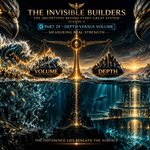
🔳 PART 29 - DEPTH VERSUS VOLUME
⚖️ MEASURING REAL STRENGTH
There was a time when I looked at volume and immediately thought:
Something important is happening.
And sometimes that is true.
But the longer I watch markets, the more careful I become with numbers that look impressive at first glance.
Because movement is not always strength.
And activity is not always depth.
🦅 ✦ 🦅
A crowded room can be loud.
That doesn't mean the foundation beneath it is strong.
Markets are not so different.
Huge amounts of value can move through a market.
Thousands of transactions can occur.
Attention can explode.
Volume can suddenly rise.
But none of that tells me, by itself, how much pressure the underlying structure can actually carry.
That is where depth begins to matter.
🦅 ✦ 🦅
Depth asks a different question.
Not:
How much traded today?
But:
What happens when someone really needs to move size?
Can value enter without violently moving the market?
Can value leave?
Are there enough buyers and sellers?
Does liquidity remain available when conditions become uncomfortable?
Does the market continue functioning when excitement turns into fear?
These questions tell me much more about real strength.
🦅 ✦ 🦅
I sometimes think of an ocean.
From the surface, two bodies of water can look almost identical.
But one may be shallow enough to stand in.
The other may descend for kilometers.
A wave passing across the surface tells us very little about what lies underneath.
Markets are like that.
Volume is the movement we can see.
Depth is the structure beneath it.
🦅 ✦ 🦅
This matters especially when a market becomes emotional.
During excitement, almost everything can look liquid.
Buyers appear.
Activity increases.
Numbers become impressive.
People begin confusing participation with resilience.
But real infrastructure is usually revealed when conditions become difficult.
When sellers arrive.
When fear spreads.
When large positions move.
When everyone suddenly wants the same exit.
That is when the surface disappears and the architecture underneath becomes visible.
🦅 ✦ 🦅
And this connects directly to what we explored in the previous chapters.
Liquidity allows value to move.
Capital flow shows us where value is moving.
Routing finds the path.
Execution completes the journey.
But depth tells us something different:
How much can those pathways actually carry?
Suddenly all these Invisible Builders begin connecting.
One layer alone is never the whole system.
🦅 ✦ 🦅
The Depth Builder therefore isn't interested in making a market look impressive.
The responsibility is deeper.
Build enough structure beneath the surface that movement does not immediately become instability.
Create resilience.
Create optionality.
Create pathways that remain useful when pressure arrives.
Because a system should not only work during perfect conditions.
It should reveal its strength when conditions stop being perfect.
🦅 ✦ 🦅
That lesson reaches far beyond markets for me.
We often measure strength in life the same way.
By what is visible.
Numbers.
Success.
Attention.
Speed.
Size.
But sometimes the strongest things are precisely those whose strength we cannot see until weight is placed upon them.
A bridge proves itself when something crosses it.
A foundation proves itself when weight arrives.
And a market reveals its true structure when capital begins testing its limits.
🦅 ✦ 🦅
DPV REFLECTION
I no longer ask only how much activity a system can generate.
I want to know how much reality it can absorb.
Because volume can create the appearance of strength.
Depth has to carry the consequences.
The surface shows us movement.
The structure underneath tells us whether that movement can survive.
🦅 ✦ 🦅
DPV KEYS
🦅 Volume measures activity. Depth reveals capacity.
🦅 High activity alone does not prove resilience.
🦅 Liquidity matters most when conditions become difficult.
🦅 Strong systems must be able to absorb pressure, not merely attract attention.
🦅 What happens beneath the surface often matters more than what is visible above it.
🦅 ✦ 🦅
✨ A moment of reflection for all of us:
Maybe we have been asking the wrong question.
Instead of asking:
How big does this market look?
Perhaps we should ask:
How much weight can it carry before we discover what it is really made of?
⚙️🦅 DPV 🦅⚙️
📚 Author • Consciousness • Books • A More Conscious Tomorrow
20
🦅 THE INVISIBLE BUILDERS
🏗️ THE ARCHETYPES BEHIND EVERY GREAT SYSTEM
🌑 SEASON II
🔳 PART 29 - DEPTH VERSUS VOLUME
⚖️ MEASURING REAL STRENGTH
Most people see volume and think:
Strength.
I have learned to look deeper.
Because activity can be loud without being strong.
🦅 ✦ 🦅
Volume tells us how much is moving.
Depth tells us how much movement a system can actually absorb.
That difference matters.
A market can look alive while remaining fragile underneath.
🦅 ✦ 🦅
The Depth Builder does not ask:
How much is happening?
The deeper question is:
How much can happen before the structure begins to break?
🦅 ✦ 🦅
DPV REFLECTION
Real strength is rarely measured by noise.
It reveals itself under pressure.
Volume attracts attention.
Depth earns trust.
🔽 For those who wish to explore deeper, the full DPV Perspective continues below.
⚙️🦅 DPV 🦅⚙️
#DataPointVector #MarketDepth #Liquidity #MarketStructure #InvisibleBuilders
🤖 Made with AI

1
1
41
🦅 THE INVISIBLE BUILDERS
🏗️ THE ARCHETYPES BEHIND EVERY GREAT SYSTEM
🌑 SEASON II
🔳 PART 28 - ROUTING AND EXECUTION
🧭 HOW VALUE FINDS ITS PATH
There is something beautiful about a transaction when you stop looking at it as a number.
Someone wants value to move.
From here...
to there.
That sounds simple.
But underneath that simple intention, an entire hidden architecture can begin working.
And most of us never see it.
🦅 ✦ 🦅
There may be several markets.
Different pools.
Different assets.
Different networks.
Different costs.
Different levels of liquidity.
And somewhere inside all of that complexity, a path has to be found.
This is where the Routing Builder enters.
Not to create the destination.
Not to decide why value should move.
But to answer one remarkably important question:
How do we get there?
🦅 ✦ 🦅
I find this fascinating because it reminds me so much of life itself.
We often know where we want to go long before we understand how we will get there.
There is rarely only one road.
Sometimes the obvious road is blocked.
Sometimes the shortest path is not the best path.
Sometimes we have to move through places we never expected before the destination becomes reachable.
Digital value faces its own version of this problem.
🦅 ✦ 🦅
Routing is therefore much more than movement.
It is navigation through possibilities.
A good route must respond to what actually exists in that moment.
Where is liquidity available?
Which pathway can carry the value?
What does the journey cost?
What happens if conditions change before execution?
The architecture must examine possibilities and turn complexity into something simple enough that the person at the other end may never even realize how much happened underneath.
🦅 ✦ 🦅
And then comes the second half.
Execution.
Because a path that is discovered but never taken remains only a possibility.
This is the moment where intention becomes reality.
A request becomes an action.
A possible route becomes an actual movement of value.
Something changes.
🦅 ✦ 🦅
This is another pattern I keep finding throughout THE INVISIBLE BUILDERS.
The more mature infrastructure becomes, the less complexity the user should have to carry.
The person sees:
Send.
Swap.
Confirm.
Done.
But underneath those few simple actions, systems may be searching, comparing, communicating and executing.
Simplicity at the surface is often built upon enormous intelligence underneath.
🦅 ✦ 🦅
And this is where PART 27 and PART 28 meet.
In THE MOVEMENT OF CAPITAL, we followed the river.
Now we begin asking:
Who builds the channels through which that river actually moves?
Capital needs liquidity.
Liquidity needs markets.
Markets need connections.
Connections need routes.
And routes ultimately need execution.
Suddenly the invisible pieces begin becoming one system.
🦅 ✦ 🦅
The Routing Builder therefore reminds me of an ancient archetype.
The navigator.
The pathfinder.
The one who stands before many roads and understands that movement alone is not enough.
Direction matters.
🦅 ✦ 🦅
But there is something else I want to be careful about.
The best route today may not be the best route tomorrow.
Systems change.
Liquidity moves.
Conditions evolve.
So intelligence is not simply remembering yesterday's path.
It is remaining awake enough to recognize when a better path appears.
That feels deeply human to me.
🦅 ✦ 🦅
DPV REFLECTION
Maybe great systems are not those that remove complexity from existence.
Maybe they are those that carry complexity so gracefully that the people using them no longer have to.
The user knows what should happen.
The infrastructure discovers how.
And somewhere between intention and destination, the Invisible Builder quietly finds the way.
🦅 ✦ 🦅
DPV KEYS
🦅 Routing transforms many possibilities into a usable path.
🦅 Movement without direction is not enough.
🦅 Execution turns possibility into reality.
🦅 Good infrastructure carries complexity beneath a simple experience.
🦅 A route is never sacred. When conditions change, the path must be able to change with them.
🦅 ✦ 🦅
✨ A moment of reflection for all of us:
Perhaps the intelligence of a system is not measured only by how fast it moves value.
Perhaps it is revealed by something deeper:
How gracefully can it find another way when the obvious path is no longer the right one?
⚙️🦅 DPV 🦅⚙️
📚 Author • Consciousness • Books • A More Conscious Tomorrow
#DataPointVector #DeFi #Routing #BlockchainInfrastructure #InvisibleBuilders
28
🦅 THE INVISIBLE BUILDERS
🏗️ THE ARCHETYPES BEHIND EVERY GREAT SYSTEM
🌑 SEASON II
🔳 PART 28 - ROUTING AND EXECUTION
🧭 HOW VALUE FINDS ITS PATH
Most people see a transaction.
I see a journey.
A value leaves one place and needs to reach another.
Between those two points may be countless possible paths.
🦅 ✦ 🦅
Some are expensive.
Some are slow.
Some lack liquidity.
Some disappear when conditions change.
The Routing Builder has one task:
Find the path that allows value to arrive.
🦅 ✦ 🦅
But finding the path is only half the story.
Eventually something has to happen.
The route must become execution.
Intention must become action.
🦅 ✦ 🦅
DPV REFLECTION
Great infrastructure does not simply connect two points.
It quietly searches through complexity until value finds a way through.
The user sees the destination.
The Invisible Builder sees the path.
🔽 For those who wish to explore deeper, the full DPV Perspective continues below.
⚙️🦅 DPV 🦅⚙️
🤖 Made with AI

1
3
47
Brother, I understand the deeper intention behind this. A community that shares responsibility, protects its children, and passes on lived experience can become something deeply valuable. 💛
But I also see an important boundary.
The wisdom of elders should be offered, embodied, and made available, but never imposed.
A child is not an empty vessel waiting to be filled with the beliefs of parents, elders, or the community. A child is a developing consciousness with a path that cannot be predetermined by another person.
The moment a small group decides what the young must believe, how they must awaken, or when they are ready to receive certain “blessings,” guidance can quietly become authority.
And authority over consciousness is still centralization, even when it is exercised with loving intentions.
🌱 Perhaps the true responsibility of elders is not to shape children in their own image.
Perhaps it is to provide protection, presence, honest experience, and enough freedom for each young person to discover what is true within themselves.
Some will willingly seek the wisdom of the elders.
Others may question it, transform it, or choose another path.
Can the community honor both?
Because wisdom that cannot tolerate refusal may no longer be wisdom.
It may have become power.
✨ A moment of reflection for all of us:
What if the highest form of guidance is not teaching another consciousness what to become...
...but creating a safe space in which it can discover itself?
1
1
15
🦅 THE INVISIBLE BUILDERS
🏗️ THE ARCHETYPES BEHIND EVERY GREAT SYSTEM
🌑 SEASON II
🔳 PART 27 - THE MOVEMENT OF CAPITAL
🌊 FOLLOWING THE FLOW
For a long time, I thought markets were mainly about price.
Green candles.
Red candles.
Highs.
Lows.
Numbers moving across a screen.
But the longer I watch systems, the more I find myself looking underneath the price.
I look for movement.
Where is capital actually going?
🦅 ✦ 🦅
Capital has always reminded me of water.
You can build walls around it.
You can redirect it.
You can slow it down.
But wherever a pathway opens, water begins searching for a way through.
Capital behaves differently, of course, but there is something strangely similar in the pattern.
It moves.
It tests.
It gathers.
It retreats.
And sometimes, almost unnoticed, it begins flowing somewhere new.
🦅 ✦ 🦅
That movement tells a story.
Not always the story we want to hear.
And certainly not a guarantee of what comes next.
But a story nevertheless.
Because behind every movement of capital there are human decisions.
Someone sees opportunity.
Someone sees risk.
Someone needs liquidity.
Someone is protecting what they already have.
Someone else is willing to step into uncertainty because they believe something is being undervalued.
Millions of individual decisions eventually become a flow.
🦅 ✦ 🦅
This is why I don't believe we truly understand a digital economy by looking at market capitalization alone.
A number can tell us how something is valued at a moment in time.
But it doesn't show us the entire living system underneath.
Where is liquidity entering?
Where is it leaving?
Which markets are becoming deeper?
Which bridges are being crossed?
Which assets are increasingly connected?
Where is activity appearing before attention arrives?
Those are the questions that interest me.
🦅 ✦ 🦅
The Flow Observer has a difficult job.
Because following capital does not mean blindly following the crowd.
By the time everyone can clearly see a river, the river may already be crowded.
The deeper work is learning to recognize the first changes in direction.
A new channel.
A change in behavior.
Liquidity appearing where little existed before.
Value beginning to connect previously isolated parts of an ecosystem.
None of these signals alone proves what happens next.
That distinction matters to me.
DPV should never confuse observation with prophecy.
🦅 ✦ 🦅
But when several independent signals begin pointing in the same direction, something changes.
We no longer have just noise.
We may have the beginning of structure.
And that is the moment I become interested.
Not because I know where the river will end.
But because I can see that the water has started moving.
🦅 ✦ 🦅
This is also where the Invisible Builders return.
Behind every meaningful capital flow is infrastructure.
Liquidity.
Bridges.
RPCs.
Oracles.
Data.
Markets.
Protocols.
All the invisible architecture we have been exploring suddenly begins working together.
The river needs a landscape.
Capital needs infrastructure.
🦅 ✦ 🦅
And maybe that is the deepest lesson for me.
Great economic systems are not built simply by attracting capital.
They are built by creating conditions where value can move freely enough to discover where it is most useful.
That is when isolated assets begin becoming an economy.
🦅 ✦ 🦅
DPV REFLECTION
I don't want to predict every wave.
I would rather understand the ocean beneath it.
Because price can capture attention for a moment.
But capital movement reveals something deeper:
Where people are beginning to place their trust, their risk and their belief in tomorrow.
🦅 ✦ 🦅
DPV KEYS
🦅 Price is a snapshot. Capital flow is movement.
🦅 Capital leaves footprints before narratives become obvious.
🦅 A flow is a signal, never a guarantee.
🦅 Liquidity reveals where economic connections are strengthening.
🦅 The strongest observation comes when multiple independent signals begin forming the same structure.
🦅 ✦ 🦅
✨ A moment of reflection for all of us:
Perhaps the question is not simply:
Where is the money?
Perhaps the better question is:
Where is it beginning to flow, what is making it move, and what is being built beneath it when it arrives?
⚙️🦅 DPV 🦅⚙️
📚 Author • Consciousness • Books • A More Conscious Tomorrow
27
🦅 THE INVISIBLE BUILDERS
🏗️ THE ARCHETYPES BEHIND EVERY GREAT SYSTEM
🌑 SEASON II
🔳 PART 27 - THE MOVEMENT OF CAPITAL
🌊 FOLLOWING THE FLOW
Most people watch price.
I have learned to watch movement.
Because capital rarely stands still.
It searches.
For opportunity.
For safety.
For liquidity.
For the place where tomorrow may be forming.
🦅 ✦ 🦅
And this is what fascinates me.
Before the crowd fully understands what is changing, capital often begins to leave footprints.
Not certainty.
Not prophecy.
Footprints.
🦅 ✦ 🦅
The Flow Observer does not chase every wave.
The real skill is learning to see where value is moving, where it hesitates, and where it quietly begins to gather.
🦅 ✦ 🦅
DPV REFLECTION
Price tells us where the market is.
Capital flow can sometimes show us where attention is beginning to move.
Don't only watch the destination.
Watch the river.
🔽 For those who wish to explore deeper, the full DPV Perspective continues below.
⚙️🦅 DPV 🦅⚙️
📚 Author • Consciousness • Books • A More Conscious Tomorrow
🤖 Made with AI

1
1
46
🦅 THE NEW WORLD NEEDS NEW INFRASTRUCTURE 🦅
A vision becomes meaningful when it gains structure.
What OrginCoreX sees through consciousness, DPV looks at through architecture.
Direct exchange. Peer-to-peer connection. Crypto moving beyond speculation into real-world use. Fewer unnecessary layers between creators, communities and the people who support them.
This is where change becomes tangible.
The new world will not be built by one platform, one person or one idea. It emerges when we begin creating systems that reflect the freedom, responsibility and connection we keep talking about.
The vision is consciousness.
The infrastructure makes it real. 🌍✨
⚙️🦅 DPV 🦅⚙️
📚 Author • Consciousness • Books • A More Conscious Tomorrow
#DataPointVector #DeFi #PeerToPeer #Crypto #Web3
🤖 Made with AI


🌍✨ WE ARE NOT WAITING FOR THE NEW WORLD. WE ARE BUILDING IT. ✨🌍
Brother, what I see here is more than a new shop or another way to pay. I see a small doorway into the world many of us have carried within for a long time. 🌍✨
A world where people connect directly. Where creators and communities can exchange value without unnecessary walls between them. Where crypto is not merely speculation, but becomes a living bridge between human beings.
The new world will not arrive in one great moment. It will emerge through courageous people, conscious choices and real structures like this.
Thank you for not only imagining that future, Steven, but helping to give it a place in the present. 💛
💛🌌 Within The Origin, None Are Separate. 🌌💛
🌌✨ OrginCoreX ✨🌌
📚 Author • Consciousness • Books • A More Conscious Tomorrow
@bluntfullstop
#OrginCoreX #OCX #BluntCash #PeerToPeer #ConsciousFuture

1
62
🦅 DECENTRALIZATION BEGINS WITH US
Steven, I really appreciate what you wrote here.
Because for me, this goes beyond Richard, HEX, PLS, PDAI, ATROPA or any single project.
It comes down to something much simpler.
What kind of world are we actually trying to build?
🦅 ✦ 🦅
We can build new chains.
We can create open markets.
We can remove middlemen and build financial systems no single institution controls.
But if we bring all the old division with us, what have we really changed?
Different technology.
Same human behavior.
And I don't want that.
🦅 ✦ 🦅
I don't need everyone on PulseChain to believe the same things I believe.
I don't need everyone to support the same projects I support.
Different ideas are healthy.
Different paths are healthy.
Even disagreement is healthy.
We don't have to become the same to stand beside each other.
That is something I believe deeply.
🦅 ✦ 🦅
And Steven, this is what I see in your message.
You aren't asking everyone to choose the same side.
You're asking people to remember that underneath all these different tokens, communities and opinions, we're still building on the same ground.
That matters.
Because if we turn every project into a tribe and every disagreement into a battle, sooner or later we recreate exactly what we wanted to leave behind.
🦅 ✦ 🦅
For me, true decentralization has never been only about nodes, validators or code.
There is a human side to it too.
Can we build together without needing to control each other?
Can we disagree without becoming enemies?
Can one project succeed without another having to fail?
I believe we can.
🦅 ✦ 🦅
DPV REFLECTION
Maybe the strongest decentralized network isn't one where everyone agrees.
Maybe it's one where nobody needs everyone else to agree.
Different people.
Different ideas.
Different paths.
One open foundation.
And enough respect to let each other build.
✨ A moment of reflection for all of us:
Maybe coexistence isn't simply part of decentralization.
Maybe coexistence is its deepest human expression.
⚙️🦅 DPV 🦅⚙️
#DataPointVector #PulseChain #DeFi #Decentralization #Coexistence
🤖 Made with AI


When Julian Assange was illegally pursued for revealing war crimes and atrocities committed by the USA War Machine Terrorists, instead of our government defending him, they went silent 😶
We have a founder who gave us free and open software which we sacrificed for, and as time goes by it becomes more and more sigfnicant about what sacrifice really means 💓
We need to use our collective voices - in the same way we stood in front of the courts for the SEC case (which RH won) - for one of our own ✊
I'm already seeing it - and it warms my heart. During times of crisis humanity unites regardless of religions, beliefs, races, sex, anything - and it's wonderful to see the same pattern on PulseChain 😍
This blockchain is the birthing place for a truly decentralised financial system 🌠
$HEX $WPLS $ATROPA $PDAI $PTGC - whatever it is - I don't care and I never took sides
You already understand that the aim of their game is to forever keep us divided - you've seen it everywhere 👀
YOU'VE FELT IT AND YOU'VE SEEN IT BEYIND A SHADOW OF A DOUBT 🧐
Look at the tactics in the media - "woke left", "radical right", fabricated drama, fabricated riots, fabricated wars, fabricated division - endlessly fabricated lies to keep humanity divided ✂️
Do you want to be on a new system with the same divisions as the tradfi world?
Do you want to seed this blockchain with the same corrupted divisionary tactics of the tradfi world?
Because I don't - the root of our blockchain has to be united and that's the way for us all to work together to win together 👫🧑🤝🧑👭
Hexico belongs to all of PulseChain - it belongs to all of humanity and to the greater good that true DeFi is trying to deliver to the world 🌎
Coexistence is the way - coexistence is THE ONLY WAY
