

UC College of Medicine MS4 | Emergency Medicine Bound
Joined June 2022
- Tweets21
- Following46
- Followers41
- Likes70




Prior to my #CincyAI I didn't even know you could ultrasound the eye. Below is an example of a vitreous hemorrhage on U/S, which can show the "washing machine sign"
Picked up so many great pearls and skills in the past month. I can't believe it almost over!

3
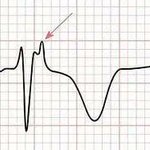
Ever heard of Naxos Syndrome? I just learned about it today on shift as a possible cause of Arrhythmogenic Right Ventricular Dysplasia. #CincyAI
Patient's classically have "woolly" hair and palmoplantar keratoderma. Something to consider if you see an epsilon wave on EKG
1
5
Another pearl about the eye exam #CincyAI
In a patient with unilateral eye pain that worsens when light is shown into the good eye, consider iritis. The pain is likely being stimulated by the consensual pupillary response
4
Encountered a patient with a history of corneal ulcers who presented with acute eye pain. If you have concern for corneal ulcer on slit lamp exam it is important that the patient be evaluated by ophthalmology ASAP #CincyAI
Example of a corneal ulcer below

2
When seeing a patient with vertigo, determining if a central or peripheral cause is more likely will help slim down your differential.
This table does a nice job comparing some of the clinical differences between central and peripheral vertigo! #CincyAI

1
3
Learned about a case of unintentional acetaminophen overdose today. A reminder of the importance of educating patients that OTC drugs are not benign treatments #CincyAI
A couple pearls about chest tube selection learned on #CincyAI
1. Signs of hemothorax require surgical thoracostomy tubes
2. Pigtail catheters utilizes a blind needle stick. So they may not be the best choice in smaller pneumothorax for concern of visceral lung puncture
1
When determining if a blood transfusion is needed for a trauma patient, the Shock Index can be a helpful clinical decision making tool.
A value greater than 1.3 is correlated with a higher mortality risk. However, many providers will transfuse at greater than 1.1. #CincyAI
Your patient has had persistent hiccups for greater than 48 hours? (aka "Prolonged Hiccups") It's time to broaden the differential #CincyAI
Pathologies to consider:
-GERD (most common)
-Vagus or Phrenic nerve irritation
-MI
-Pericarditis
-CVA
-Encephalitis
-Steroids
Another shift, another pearl learned about EKGs! #CincyAI
Q waves are often thought to be a sign of a previous MI. However, they can also indicate acute ischemia/infarct, especially if they differ from an old EKG.
In young patients with syncope, one finding to always look for on EKG is an epsilon wave. It is the most specific finding of Arrhythmogenic Right Ventricular Dysplasia (ARVD), the 2nd most common cause of sudden cardiac death in young people #CincyAI

Great practice guideline from @TamingtheSRU that incorporates high sensitivity troponin for patients with concern for ACS. It was very helpful for me on shift today! #CincyAI

1
4
If you are new to interpreting high sensitivity troponin like me, check out this great podcast from EM:RAP on the subject!
emrap.org/episode/emrap2020j…

Wondering about treatment for a boxer's fracture? (Most common hand fracture)
This study demonstrated the lowest rate of complications with conservative treatment compared to multiple surgical techniques. #CincyAI
ncbi.nlm.nih.gov/pmc/article…
2
Had a great time on my ultrasound shift with @Ultrasoundlady1!
We saw a Twinkling artifact at the ureterovesical junction, similar to the image below. It is seen on doppler ultrasound behind an irregular, reflective interface and is often indicative of a calculus. #CincyAI
