

A family physician & International Health Consultant passionate about leadership. It starts with self leadership to lead others effectively. Views are mine.
Canterbury, England
Joined August 2009
- Tweets5.3K
- Following578
- Followers2.1K
- Likes2.3K


Brighton Chireka retweeted

What’s the point of a Medical Director? By Paul Molyneux bit.ly/3V447kg
Brighton Chireka retweeted

How do we create a healthy environment for change in a world where we are overloaded with change?
I always look out for new @Gartner_inc data about leading change. Gartner is a global business & technology insights company. Its data is self-reported perceptions of workforce leaders (including in healthcare), but Gartner has such a wide reach across multiple sectors & countries, that it is one of the best sources on trends in change.
Headlines updated from Gartner’s recent Symposium/Xpo:
- In 2016, employees experienced an average of two organisation-wide changes a year. By 2022, it was ten. By 2025, it was 22.
- In 2016, 74% of employees were willing to support organisation-wide change but by 2022 only 38% said the same. Gartner data suggests this “transformation gap” between the “load” of change & people’s willingness to engage with it continues to grow.
- 73% of workforce leaders state that their employees are suffering from change fatigue & 74% report that managers are not equipped to lead change (lacking the right skills, leading low-trust teams or sticking to legacy habits), creating a “blind leading the weary” scenario.
- Traditional change readiness strategies are producing diminishing returns as AI & complex change environments change the nature of change.
Gartner concludes: “The leader role is not designed or supported for disruption”.
Six implications for leaders of change:
1) Change load is a leadership responsibility. At 22 changes a year, each new initiative lands on top of the last. Someone needs to see the whole picture: what lands on teams, in what order & at what pace. In healthcare, national programmes, digital roll-outs, restructures & local improvement work often converge on the same frontline teams.
2) Managers are typically the pressure point. They translate change for their teams while their own roles keep expanding. Supporting managers to lead change is one of the highest-value investments we can make.
3) Stopping is part of leading. Gartner calls on leaders to let go of legacy behaviours & ways of working deliberately, replacing them with ones that fit what is needed now.
4) Teams learn to change by changing. Safe, structured experimentation & using everyday friction as a prompt to improve build the skills people need for whatever comes next.
5) Make change part of our routines. When change becomes instinctive as part of normal work, Gartner estimates a 3x higher probability of healthy change adoption (meaning people act on a change on time, without harm to their performance, engagement or wellbeing).
6) Psychological safety is a precondition for change. People apply new skills when it feels safe to try, stumble & try again.
The volume & complexity of change has outpaced the way most leadership roles are designed. The data reminds us that building more change capability into the daily work of teams, so everyone is better equipped for a world where change is constant, is a very high priority.
Links to Gartner data in the comments

Sometimes we tend to forget that it is very stressful for patients not to have answers . An appointment with me as a GP or specialist to reassure a distressed patient is not a wasted appointment. The problem is denying patient access to the extent of going to A&E inappropriately.

Improved access to general practice services may help identify previously unmet health needs, including conditions requiring specialist assessment. That does not mean these referrals are unnecessary or that better access is itself a problem. pulsetoday.co.uk/news/referr…

Brighton Chireka retweeted

This is f*cking insane. Nvidia ex-CEO Jensen Huang was asked what he'd tell people afraid of losing their jobs to AI. His answer:
"You're going to lose your job to somebody who learned AI better than you"
In under 2 minutes, he explains: the PC didn't take anyone's job. The people who never learned it got left behind
Nvidia has AI all over the company, and it's hiring more people. Things he thought would take 10 years, he now expects in 1 or 2
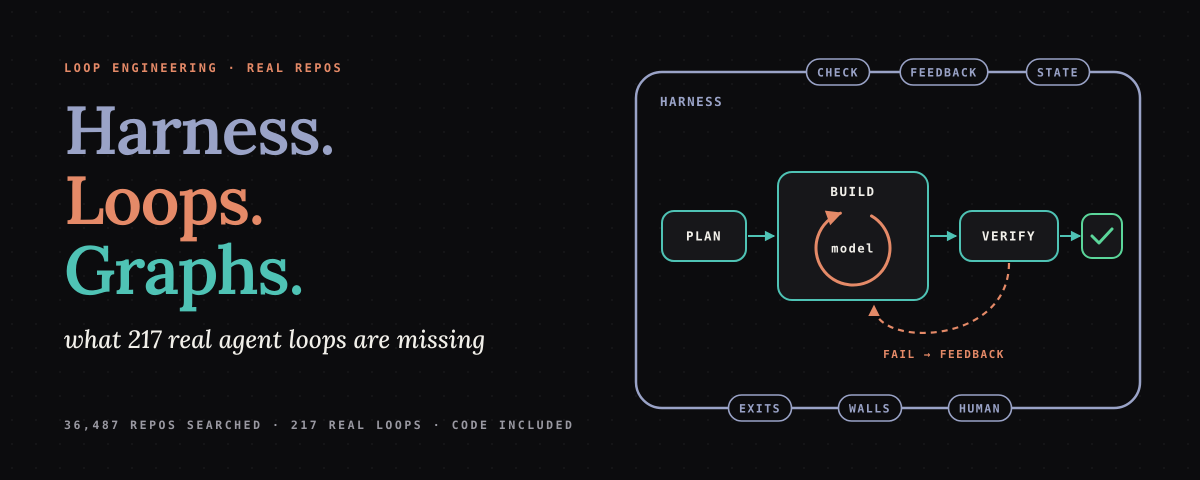
Learning AI → Using AI → Agents → Harness → The One Nobody Replaces
Save this before it disappears from your feed
Everything below is free:
Practical Deep Learning, fast.ai's free course
course.fast.ai
Google's Machine Learning Crash Course
developers.google.com/machin…
Elements of AI: a free intro, no coding needed
elementsofai.com
Hugging Face's free course on AI agents
github.com/huggingface/agent…
21 lessons on building with generative AI
github.com/microsoft/generat…
Build your own ChatGPT-like model, step by step
github.com/rasbt/LLMs-from-s…
Turn PDFs, Word and Excel files into text AI can read
github.com/microsoft/markitd…
Use any AI model straight from your terminal
github.com/simonw/llm
Ready-made tools your agent can plug into
github.com/modelcontextproto…
Skills that make coding agents plan, test and review their work
github.com/obra/superpowers
An open-source coding agent for your terminal
github.com/anomalyco/opencod…
An AI developer that writes and fixes code on its own
github.com/OpenHands/OpenHan…
A local agent that installs, runs and edits things for you
github.com/aaif-goose/goose
All of this costs $0
Your job won't go to AI. It'll go to the person who learned it first
95% will keep worrying that AI takes their job, the 5% who build a harness will be the ones taking it
Bookmark it and start with the first link tonight
Then use the guide below to build your harness before someone learns AI better than you ↓

Should we have a back up always as this technology is not reliable . When it goes down we tend to struggle a lot .
With Microsoft Outlook not working, I am getting messages from people saying "Please phone for any urgent or pressing matters". Scheduled meetings are also taking place on the phone rather than by Teams. I am telling my students and my team, this is how we worked in the 1990s.
1
1
313
One size fit all does not work . Embracing technology should not make us leave others behind.
Patients unable to navigate multi-step NHS online consultation forms may delay seeking care until minor symptoms escalate into more complex problems, driving avoidable emergency attendances. Ensuring there are non-digital routes access such as phone and in-person is essential.
1
104
Brighton Chireka retweeted

Coronary heart disease (CHD) is a leading cause of death in women in the UK, yet it remains under-recognised. Women often present with symptoms that do not match the classic ‘male’ pattern of severe central chest pain. This contributes to delays in diagnosis and poorer outcomes.
Brighton Chireka retweeted

Read our full nutshell on the adult social care workforce:
kingsfund.org.uk/insight-and…

Brighton Chireka retweeted

This is f*cking insane. Anthropic CEO Dario Amodei, the man who left OpenAI to build Claude:
"80% of all entry-level lawyers, consultants and finance professionals will be completely wiped out within the next 1-5 years
The ones who survive won't be the smartest people in the room. They'll be the ones who know how to put AI agents to work"
In this 47-minute talk, Dario explains exactly who survives and how
Chatbots → Agents → AI Employees → Entire Departments Run By AI
Surviving AI doesn't mean asking a chatbot to rewrite your emails
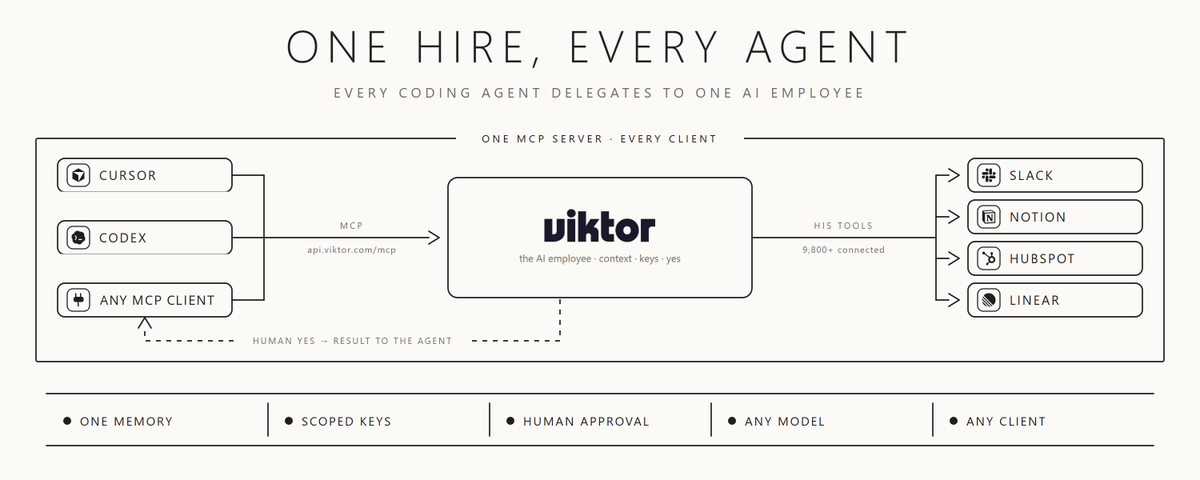
It means being the person who can plug agents into a company's work and make them run
95% of people will watch AI take their industry, the 5% who build with it will be the ones companies fight over
Worth more than any $3,500 AI career course
Bookmark and watch it today
Then read how to plug one agent into Claude Code, Cursor and Codex in the article below ↓

Brighton Chireka retweeted

A man spends 50 years teaching at MIT.
He knows his time is running out.
So he records one last lecture — everything he knows, distilled into a single hour.
He died 5 months later.
This is that lecture.
The most important hour you'll watch this week. 👇
Bookmark it for later
If you have one uninterrupted hour this week, I'd recommend watching it.
🔖 Save this for when you have the time.
Brighton Chireka retweeted
Sam Altman, CEO of OpenAI:
“You don’t need to write prompts anymore.”
In just 27 minutes, he explains how to use ChatGPT in ways most people haven’t even explored yet.
This was a talk he gave to Stanford students. A friend sent me the recording last night.
After watching it, I realized I was barely using 15% of what ChatGPT can actually do.
Watch the full talk, then check out the guide below on how to build a system that can prompt itself.

Brighton Chireka retweeted

✨ The FMLM website is getting a makeover!
We're working behind the scenes to create a more user-friendly experience, making it easier to access resources, events, programmes and more.
Keep an eye on our channels for updates and be among the first to explore the new-look website.

ALT "We're having a makeover Keep an eye out for our new website! FMLM logo"
Brighton Chireka retweeted
Outbreaks of meningococcal disease in England – sometimes resulting in deaths among young people - have increased public concern about meningitis. In my health column, I discuss meningococcal disease, how it can be identified and the role of vaccination. express.co.uk/life-style/hea…
Brighton Chireka retweeted

Noncommunicable diseases (NCDs), like heart disease, diabetes, chronic respiratory diseases and cancers are some of the world’s silent killers 👻.
This Halloween, stay one step ahead—don’t let tobacco, alcohol, air pollution, or physical inactivity sneak up on you.

Brighton Chireka retweeted
Just a reminder that I'm hosting a webinar with Caroline Webb at 4pm UK time today. We will be discussing her new bestselling book Leadership Intelligence. During the webinar, we will discuss the leadership principles that are behind the book. I love the practical tools and frameworks for leaders that the book covers so I will ask Caroline to take us through some of my favourite ones. There will be time for questions and answers.
The session is aimed at leaders in health and care but the learning is generic so it's open to all leaders who want to improve their leadership practice. There is still time to sign up: events.teams.microsoft.com/e…
I hope to see you there.
Helen

“Change begins with me.”
When the systems we work in feel immovable, it’s easy to feel we have little power to make a difference. What if the part we can influence is bigger than we think?
Next Friday, 16th October, I’ll be in conversation with Caroline Webb about her new best selling book, Leadership Intelligence, exploring what its ideas mean for people working in health and care.
What I particularly value about Caroline’s book is how it draws on science (psychology, neuroscience and behavioural economics) to offer practical tools for making better decisions, helping messages land, strengthening difficult relationships and leading through uncertainty.
The central message isn’t that we can change everything. It’s that we don’t always have to wait for other people or circumstances to change before we can act differently ourselves.
Join Caroline and I for an hour to hear directly from Caroline and explore how we can help people achieve more together.
📅 Wednesday 16 October 2026
🕓 4–5pm UK time
💻 Online via Microsoft Teams
Everyone is welcome from anywhere in the world. For those in the UK, it will be an inspiring way to end your Friday.
Register here: lnkd.in/eZiNspCr
Please share with colleagues across health and care who might find this conversation valuable. You don't need to have read the book.
Here is a previous post that I wrote about Caroline's book: lnkd.in/p/egqjRUni

Brighton Chireka retweeted
My practice is currently sending out a large number of emails and text messages to patients who have been removed from our list by NHS England. In many cases, they are replying to say they have been removed in error. Reregistration creates unnecessary work for our admin team.


Brighton Chireka retweeted

Most people think AI is a chatbot. It's actually an entire ecosystem. 🧠
Behind every AI product you use, there are layers of work most people never see:
1. Foundational research: Statistical ML, supervised and unsupervised learning, deep belief networks, CNNs, and transformers. This is where the breakthroughs begin.
2. Data & knowledge infrastructure: LLMs, retrieval-augmented generation (RAG), and knowledge engineering. Models are only as good as the data and context they can access.
3. Model development & fine-tuning: LoRA, PEFT, prompt engineering, and domain-specific tuning that turn a general model into a useful one.
4. AI platforms & MLOps: Training infrastructure, model registries, CI/CD, serving, inference, and tool orchestration. This is what makes AI reliable at scale.
5. Applications & agents: Copilots, multi-agent systems, personalization engines, and automation that solve real business problems.
6. Governance & trust: Observability, explainability, bias and fairness, red teaming, data privacy, and regulatory compliance. This outer ring decides whether AI can be trusted.
The takeaway: a great model alone doesn't make a great AI product. Success comes from every layer working together, from research to responsible deployment.
The teams that win won't just build smarter models. They'll build stronger systems around them.
Follow me @alexhalescoder for more AI information
Which layer of the AI ecosystem do you think is the most underrated right now? 👇
#AI #ArtificialIntelligence #MachineLearning #MLOps #GenerativeAI #AIAgents #ResponsibleAI #LLM
🤖 Made with AI

Brighton Chireka retweeted
Some positive public health news. The proportion of adults in the UK who smoke fell to 9.8% in 2025; a decrease from 10.6% in 2024. The proportion of smokers has fallen by 10.4% (from 20.2%) since this @ONS data time series began in 2011. ons.gov.uk/peoplepopulationa…

Brighton Chireka retweeted

We welcome the government's acceptance of the AI Commission's recommendations.
At NICE, we're helping create the evidence, standards and guidance needed to support the safe and effective adoption of AI technologies that benefit patients and the NHS.
nice.org.uk/news/blogs/harne…

📢 12,000+ patients, clinicians and members of the public helped shape the AI Commission’s recommendations on AI in healthcare
Today, Government accepted all 44 recommendations for safe AI regulation.
Read more: brnw.ch/21x6bSu
