

Math & Probability Professor / Finance, Risk Quant/ RWRI / Primers on Probability, AI & ML / If you want to eliminate all risks, you only create one big risk
NYC, Paris
Joined April 2026
- Tweets116
- Following59
- Followers1.6K
- Likes452



Autumn is here and many have asked about our usual online Primers.
I'm currently swamped with launching a Risk software project and I physically can’t find time for the Primers, but I'm planning two weeks of Primers on Polymodels and AI in late January–early February.
Who's in?

Too big NOT to fail!

🚨 La France est "trop grosse pour être sauvée" d'après Barclays.
→ 3 200 milliards de dette
→ 21% du PIB 🇪🇺
Les mécanismes de sauvetage européens ont été dimensionnés pour des économies de 2 à 12% de la zone euro.
Une intervention à l'échelle française serait d'un ordre de grandeur sans précédent.
Mais ce n'est pas le plus triste dans le déclaration de Barclays.
En 2011, la zone euro était divisée en deux camps :
→ Le "cœur" (Allemagne, France, Pays-Bas, Autriche, Finlande) qui bénéficiait de taux bas et servait de garant aux mécanismes de sauvetage.
→ La "périphérie" (Grèce, Portugal, Irlande, Espagne, Italie) qui subissait la défiance des marchés et des programmes d'austérité imposés de l'extérieur.
En 2026, Barclays la place dans la "périphérie".😞
C'est la fin d'un statut que la France avait tenu depuis la création de la zone euro en 1999.


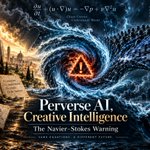
Perverse AI, Creative Intelligence and the Navier–Stokes Warning (thread)
1/n
Perhaps the greatest danger of Artificial Intelligence does not come from machines becoming genuinely creative or conscious.

18/n
The warning is that AI may not need to become more creative than humanity in order to overtake us. It may only need to become vastly faster at using humanity's own intelligence than humanity itself.