I'm a doctor who had #breastcancer. I hope my book #frombothendsofthestethoscope will help u deal with #cancer https://teapawt.net/t.co/Se2u4Pon5y https://teapawt.net/t.co/diSHiKJBbT
England, United Kingdom
Joined January 2016
- Tweets7.5K
- Following2.1K
- Followers1.6K
- Likes5.8K







Pinned Tweet
Getting fabulous feedback on my #breastcancerbook, so rewarding. Please check it out at amazon.co.uk/Both-Ends-Steth… … #breastcancer #amazon

Dr Kathleen Thompson retweeted

“Patients cannot afford to wait any longer.”
MP Siobhain McDonagh is absolutely right.
After decades of devastating outcomes for GBM patients, we have promising treatments like DCVax-L that deserve urgent attention.
Meet Brad Silver, a 23-year glioblastoma survivor who received DCVax.
His story represents the hope that patients and families are fighting for.
Yes, clinical research is important, but so is timely access to promising treatments. Patients deserve both. ❤️🙏

Dr Kathleen Thompson retweeted

Today at PMQs, I asked the Prime Minister why nobody appears to know how many brain tumour patients are taking part in clinical trials.
I fear fewer than 1% are accessing trials.
After 30 years without a breakthrough in treatment, patients cannot afford to wait any longer.
Dr Kathleen Thompson retweeted

$NWBO #DCVax #GBM #SFDA
𝗢𝗻𝗲 𝗣𝗿𝗼𝗱𝘂𝗰𝘁 𝗟𝗲𝗳𝘁 𝗦𝘁𝗮𝗻𝗱𝗶𝗻𝗴
London and Riyadh signed a regulatory agreement this week. It covers rare disease treatments and advanced therapies. It names no product.
It does not need to. Line up the evidence and one product is left.
𝟭. 𝗧𝗵𝗲 𝗯𝗿𝗶𝗱𝗴𝗲
Nov 16 and 17: the heads of the MHRA and the Saudi Food and Drug Authority sign a memorandum of understanding in London. Scope: rare disease treatments, advanced therapies, biotechnology products. Working clauses: product assessment, GMP, product testing, supply chain monitoring. Stated aim: patients with limited therapeutic options.
𝟮. 𝗪𝗵𝗼 𝗻𝗲𝗲𝗱𝘀 𝗮 𝗯𝗿𝗶𝗱𝗴𝗲
Saudi reliance pathways recognize the FDA and the EMA. Not the MHRA. They exclude advanced therapies outright. A product the FDA or EMA has approved does not need London to vouch for it. An MHRA-only cell therapy does.
𝟯. 𝗧𝗵𝗲 𝗲𝗹𝗶𝗺𝗶𝗻𝗮𝘁𝗶𝗼𝗻
Casgevy: approved in Saudi Arabia since January 2024.
Lyfgenia and Zynteglo: FDA-approved, licensed to SPIMACO. No UK leg.
Multikine: Saudi Breakthrough route plus a US trial. No UK filing announced.
Fayuvi: the FDA approved it before the MHRA took the file.
MeiraGTx's LCA4 gene therapy: MHRA-first by plan, no Saudi partner announced.
mRNA cancer vaccines: one Phase 3 win, in melanoma. Unproven in cold tumors, and the MHRA's own rare disease draft sets them apart.
𝟰. 𝗧𝗵𝗲 𝘀𝘂𝗿𝘃𝗶𝘃𝗼𝗿
DCVax-L. A rare cancer. A living cell therapy made one patient at a time. The MHRA its only regulator since December 2023. Phase 3 in JAMA Oncology: 13 percent of newly diagnosed patients alive at five years, against 5.7 percent in external controls.
𝟱. 𝗧𝗵𝗲 𝗰𝗹𝗮𝘂𝘀𝗲𝘀 𝗳𝗶𝘁
GMP: the Sawston plant has held an MHRA commercial manufacturing license since 2023, one that allows export worldwide.
Supply chain: NHS Blood and Transplant joined cell collection and processing in October.
Assessment: one dossier, one regulator, in London.
𝟲. 𝗧𝗵𝗲 𝗦𝗮𝘂𝗱𝗶 𝘀𝗶𝗱𝗲
Aug 5: the Saudi FDA issues a rare disease accelerator. It takes products through Phase 3 that are not yet registered in the Kingdom. It accepts natural history data as an external comparator when a concurrent control is not feasible. The UK is on its list of countries whose GMP certificates and inspection reports it accepts.
Aug 6: Northwest Bio and SPIMACO announce an MOU that would give SPIMACO the Saudi FDA filing.
SPIMACO has a dedicated unit for biological, gene and cell therapies.
Saudi Breakthrough status is open only to products not yet registered with any regulator. A request has to go in before London rules, not after.
At the London summit, the Saudi FDA chief called for faster access to innovative treatments "tailored to their needs," naming rare disease patients and specialized therapies.
𝟳. 𝗧𝗵𝗲 𝗨𝗞 𝘀𝗶𝗱𝗲
2014: DCVax-L receives the UK's first-ever Promising Innovative Medicine designation.
Nov 2025: the MHRA's rare therapies paper says large randomized trials in small populations can be "unfeasible and potentially unethical."
Feb 2026: England's National Cancer Plan gives rare cancers their own chapter and names brain tumours a priority.
March 2026: the Rare Cancers Act orders a review of orphan drug rules for cancer.
Oct 2026: after the Prime Minister meets a brain cancer patient, the government tells the MHRA to speed up its orphan drug review.
𝟴. 𝗧𝗵𝗲 𝗽𝗿𝗲𝗰𝗲𝗱𝗲𝗻𝘁
Casgevy. The MHRA approved it first, on Nov 16, 2023. Saudi approval was announced 54 days later.
𝟵. 𝗧𝗵𝗲 𝘄𝗲𝗲𝗸
Same week in London: the MHRA hosts the ICMRA conference on drug development for small patient populations, and the five Access Consortium regulators agree on a secure platform for work-sharing.
The MHRA has not ruled yet. But the plant is licensed, the Saudi filer is named, the Saudi door is open, and the two regulators now have a direct line.
Remove every product that does not need this agreement. One is left.

#dcvax $nwbo #gbm
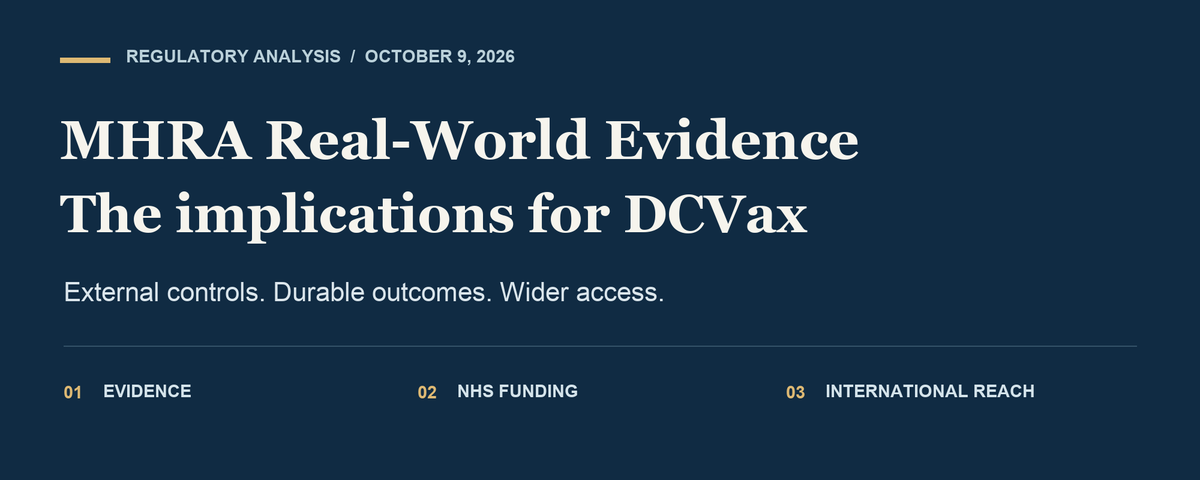
MHRA - A significant step forward for international Regulatory Collaboration..
linkedin.com/posts/medicines…
investorshub.advfn.com/board…


Dr Kathleen Thompson retweeted
$NWBO #DCVax #GBM #CancerImmunotherapy #AllSolidTumors #Flaskworks #EDEN #DCVaxForBraelyn #UCLA #ATLDC #Prop38 @FDA $MRK
𝗣𝗥𝗢𝗣 𝟯𝟴: 𝗨𝗖𝗟𝗔, 𝗗𝗖𝗩𝗮𝘅 𝗔𝗡𝗗 𝗔 𝗡𝗘𝗪 𝗥𝗢𝗨𝗧𝗘 𝗙𝗢𝗥 𝗖𝗟𝗜𝗡𝗜𝗖𝗔𝗟 𝗗𝗘𝗩𝗘𝗟𝗢𝗣𝗠𝗘𝗡𝗧.
The Associated Press has called California’s Proposition 38 for Yes. The measure authorizes $8.4 billion in bonds for immunology and immunotherapy research.
Approximately half is designated for a qualifying research institute. The UCLA-affiliated California Institute for Immunology and Immunotherapy is positioned to receive that share, roughly $4.2 billion before authorized costs. The other half supports competitive research grants.
The significance for UCLA and DCVax becomes clearer when you read how that money can be used.
For cancer, and for Dr. Linda Liau’s brain tumor program at UCLA in particular, it becomes clearer still when the law is read beside FDA’s new draft blueprint for early-phase solid tumor trials, released the same week.
calmatters.org/health/2026/1…
𝗧𝗛𝗘 𝗟𝗔𝗪 𝗣𝗥𝗜𝗢𝗥𝗜𝗧𝗜𝗭𝗘𝗦 𝗚𝗘𝗧𝗧𝗜𝗡𝗚 𝗧𝗛𝗘𝗥𝗔𝗣𝗜𝗘𝗦 𝗧𝗢 𝗣𝗔𝗧𝗜𝗘𝗡𝗧𝗦.
Section 130356(b)(2) directs the council to give its highest priority to projects with the greatest potential to deliver “immediate, accessible, and affordable therapies” and improve access to immunotherapy.
Section 130354 expressly permits clinical trials, biomarkers, tumor models and GMP facilities used to develop and evaluate cellular therapies.
That list is a floor. Funded activities “shall include, but not be limited to” those categories, and the act orders itself “liberally construed” to promote its purposes.
Cancer runs through the text. The act names tumor models, cancer subtyping to match therapies to individual patients, and testing therapies against tumors.
UCLA supplies the council’s first chair.
Then Section 130357(e) requires every competitive grant agreement to offer UCLA:
“the opportunity to substantially participate in and collaborate on any clinical trials conducted as part of the funded research.”
𝗧𝗵𝗮𝘁 𝗶𝗻𝗰𝗹𝘂𝗱𝗲𝘀 𝘁𝗿𝗶𝗮𝗹𝘀 𝗳𝘂𝗻𝗱𝗲𝗱 𝘁𝗵𝗿𝗼𝘂𝗴𝗵 𝗴𝗿𝗮𝗻𝘁𝘀 𝘄𝗼𝗻 𝗯𝘆 𝗼𝘁𝗵𝗲𝗿 𝗶𝗻𝘀𝘁𝗶𝘁𝘂𝘁𝗶𝗼𝗻𝘀.
vig.cdn.sos.ca.gov/2026/gene…
𝗨𝗖𝗟𝗔’𝗦 𝗥𝗘𝗔𝗖𝗛 𝗥𝗨𝗡𝗦 𝗧𝗛𝗥𝗢𝗨𝗚𝗛 𝗕𝗢𝗧𝗛 𝗛𝗔𝗟𝗩𝗘𝗦.
The institute half carries an eligibility test that CalMatters found only one institute in California can meet. It requires an affiliation with a University of California campus whose health system “conducts its own clinical trials of new experimental drugs and therapies,” and a commitment to run “multiinstitutional clinical trials.”
On the competitive half, three provisions point the same way:
• The council must confer with the institute before final grant decisions. Section 130356(e)(2).
• Every grant recipient must offer the institute the chance to substantially participate in the funded research. Section 130357(d).
• Every grant recipient must offer UCLA a place in its clinical trials. Section 130357(e).
CalMatters also reports that UCLA’s 2024 affiliation agreement gives the university 7.5% of net revenue from products created by the institute’s staff, and that four senior UCLA officials sit on the institute’s board.
UCLA is positioned as investigator, collaborator and stakeholder at once.
𝗧𝗛𝗘 𝗠𝗢𝗡𝗘𝗬 𝗜𝗦 𝗕𝗨𝗜𝗟𝗧 𝗧𝗢 𝗠𝗢𝗩𝗘.
• The state must select the institute and sign its funding agreement within 90 days of the law taking effect.
• $100 million in General Fund start-up loans is appropriated for the institute’s research program, so work can begin ahead of bond sales.
• A written request from the institute that funds are needed starts the bond issuance process.
• The fund is appropriated “without regard to fiscal years.”
• At least $4.2 billion must go to cancer, heart disease and Alzheimer’s disease.
• The Legislature cannot amend how the money is allocated or what it may be spent on.
• Collaborations between California researchers and out-of-state researchers are expressly permitted.
• Grants go only to California public and nonprofit universities and nonprofit research institutions. The act’s stated intent is that “no funds are awarded to for-profit organizations or pharmaceutical companies.”
𝗧𝗵𝗮𝘁 𝗹𝗮𝘀𝘁 𝗽𝗿𝗼𝘃𝗶𝘀𝗶𝗼𝗻 𝗶𝘀 𝘁𝗵𝗲 𝗼𝗻𝗲 𝘁𝗼 𝗿𝗲𝗺𝗲𝗺𝗯𝗲𝗿. 𝗧𝗵𝗶𝘀 𝗶𝘀 𝗰𝗹𝗶𝗻𝗶𝗰𝗮𝗹 𝘁𝗿𝗶𝗮𝗹 𝗰𝗮𝗽𝗶𝘁𝗮𝗹 𝘁𝗵𝗲 𝗽𝗵𝗮𝗿𝗺𝗮𝗰𝗲𝘂𝘁𝗶𝗰𝗮𝗹 𝗶𝗻𝗱𝘂𝘀𝘁𝗿𝘆 𝗱𝗼𝗲𝘀 𝗻𝗼𝘁 𝗿𝗲𝗰𝗲𝗶𝘃𝗲 𝗮𝗻𝗱 𝗱𝗼𝗲𝘀 𝗻𝗼𝘁 𝗮𝗹𝗹𝗼𝗰𝗮𝘁𝗲.
𝗡𝗢𝗪 𝗖𝗢𝗡𝗡𝗘𝗖𝗧 𝗧𝗛𝗔𝗧 𝗧𝗢 𝗗𝗖𝗩𝗮𝘅.
On November 9, UCLA Health described its vaccine as:
“an autologous tumor lysate-pulsed dendritic cell vaccination (ATL-DC) known as DCVax-L”
UCLA says the vaccine was initially developed there. It reports roughly two dozen long-term survivors among patients treated in its trials, including a man told at 32 that he had about 17 months to live. He is 46 now and practicing law.
UCLA explains the next stage: establish an immune response against the tumor, combine vaccination with checkpoint inhibition, and determine which treatments work best together and in what order.
The logic is specific. Checkpoint inhibitors have shown limited success against glioblastoma on their own, and UCLA’s explanation is that brain tumors often lack the T cells those drugs act on. Vaccination is designed to draw them in first. The checkpoint drug is then meant to keep them working.
UCLA neurosurgery chair Dr. Linda Liau put it plainly: “The future of glioblastoma treatments is going to be these combination approaches.”
uclahealth.org/news/article/…
That work has already produced a result. UCLA randomized 46 patients with recurrent glioblastoma to the same vaccine and the same Keytruda in a different order. As reported at EANO 2026, median survival was 555 days with the vaccine first and 271 days with Keytruda first, a hazard ratio of 0.32. The National Cancer Institute and Merck are listed as collaborators on the trial.
clinicaltrials.gov/study/NCT…
That result matters for $MRK. Merck reported $31.7 billion in Keytruda sales for 2025, and glioblastoma is one of the cancers that checkpoint inhibition has not solved alone. In UCLA’s trial, median survival was twice as long when the vaccine went first.
𝗗𝗥. 𝗟𝗜𝗔𝗨 𝗜𝗦 𝗧𝗛𝗘 𝗖𝗢𝗠𝗠𝗢𝗡 𝗧𝗛𝗥𝗘𝗔𝗗.
Dr. Linda Liau led NWBO’s phase 3 DCVax-L trial. In 2023, she joined the company’s Scientific Advisory Board, with NWBO expressly connecting that appointment to future clinical programs building on DCVax-L.
nwbio.com/northwest-biothera…
She also leads UCLA’s NCI-supported Brain Cancer SPORE. Together with Dr. Robert Prins, she co-leads its dendritic-cell vaccination and immune-modulation project, addressing combinations, treatment sequencing, biomarkers and resistance.
That project already describes a first-in-human trial adding a CSF-1R inhibitor to ATL-DC and pembrolizumab in newly diagnosed glioblastoma.
dctd.cancer.gov/research/spo…
She chairs UCLA’s Department of Neurosurgery and directs its Brain Tumor Program. Her team at the Jonsson Comprehensive Cancer Center has worked on glioblastoma for more than two decades, and the phase 3 trial she led put 331 patients and 2,151 vaccine doses into the medical literature.
doi.org/10.1001/jamaoncol.20…
Braelyn’s care illustrates the existing clinical relationship: Dr. Liau removed her tumor and coordinated with Northwest Biotherapeutics for access to DCVax. Braelyn subsequently received Keytruda.
Vaccine first, then Keytruda: the order UCLA’s randomized trial favored.
𝗛𝗲𝗿 𝗰𝗮𝘀𝗲 𝗮𝗹𝘀𝗼 𝘀𝗵𝗼𝘄𝘀 𝘄𝗵𝗮𝘁 𝗮 𝗰𝗹𝗼𝘀𝗲𝗱 𝘁𝗿𝗶𝗮𝗹 𝗰𝗼𝘀𝘁𝘀.
Braelyn was diagnosed at 16 with H3 G34-mutant diffuse hemispheric glioma, a rare brain cancer of adolescents and young adults. UCLA designed a first-in-human dendritic cell vaccine trial for exactly that tumor, led by the director of its Pediatric Brain Tumor Program with Dr. Liau and Dr. Prins.
It was a six-patient pilot limited to ages 18 to 50, and it had already closed to enrollment when she needed it. A second UCLA trial for the same tumor, pairing the vaccine with checkpoint inhibitors and open from age 13, was withdrawn before a single patient enrolled.
clinicaltrials.gov/study/NCT…
clinicaltrials.gov/study/NCT…
So her tumor was removed in Los Angeles, her vaccine was made in England, and her doses were given in London on a compassionate-use basis. On November 4, the House of Commons was told her scans show no evidence of disease.
𝗧𝗛𝗘 𝗦𝗔𝗠𝗘 𝗪𝗘𝗘𝗞, 𝗙𝗗𝗔 𝗥𝗘𝗟𝗘𝗔𝗦𝗘𝗗 𝗧𝗛𝗘 𝗕𝗟𝗨𝗘𝗣𝗥𝗜𝗡𝗧.
FDA’s Oncology Center of Excellence has released draft guidance titled “Early-Phase IND Protocol Recommendations for Solid Tumors,” scheduled for the Federal Register on November 12, with 60 days for public comment.
Four details matter for a program like UCLA’s.
It is addressed to “sponsors and clinical investigators.” An academic team holding its own IND is covered, not only a company.
It was prepared with CBER, the FDA center that reviews cell therapies, and it applies to solid tumors as a class. Glioblastoma is one of them.
It says restrictive eligibility criteria “may slow patient accrual, limit patient access to early-phase trials,” and much of what it recommends already rests on final FDA guidance issued in 2020, 2022 and July 2026.
It tells sponsors to meet FDA early if they intend early-phase and expansion-cohort data “to provide substantial evidence of effectiveness to support a future marketing approval application.”
federalregister.gov/public-i…
𝗣𝗿𝗼𝗽 𝟯𝟴 𝘀𝘂𝗽𝗽𝗹𝗶𝗲𝘀 𝘁𝗵𝗲 𝗺𝗼𝗻𝗲𝘆. 𝗧𝗵𝗲 𝗴𝘂𝗶𝗱𝗮𝗻𝗰𝗲 𝘀𝘂𝗽𝗽𝗹𝗶𝗲𝘀 𝘁𝗵𝗲 𝗽𝗿𝗼𝘁𝗼𝗰𝗼𝗹 𝗹𝗮𝗻𝗴𝘂𝗮𝗴𝗲.
𝗧𝗛𝗘 𝗕𝗜𝗚𝗚𝗘𝗥 𝗜𝗡𝗦𝗜𝗚𝗛𝗧 𝗜𝗦 𝗪𝗛𝗔𝗧 𝗧𝗛𝗜𝗦 𝗖𝗔𝗡 𝗙𝗨𝗡𝗗 𝗡𝗘𝗫𝗧.
Publicly funded academic trials can investigate DCVax as the immune-priming foundation of combination treatment: which partner therapies to use, when to administer them, which patients respond and how to improve cellular-therapy production.
That is the strategic opportunity for $NWBO. Academic grants and research partnerships offer a route to generate evidence relevant to DCVax development alongside company-funded work.
UCLA can pursue that research through its own proposals, institute partnerships and collaboration with other funded teams. Its established program gives those opportunities concrete scientific questions and experienced investigators.
UCLA’s own record shows the scale it has had to work at. Its randomized sequencing trial enrolled 46 patients. The trial for Braelyn’s tumor enrolled six. A companion trial never opened.
Here is what Dr. Liau’s program can build when capital and protocol language arrive together.
𝗧𝗛𝗘 𝗖𝗔𝗡𝗖𝗘𝗥 𝗧𝗥𝗜𝗔𝗟𝗦 𝗨𝗖𝗟𝗔 𝗖𝗔𝗡 𝗡𝗢𝗪 𝗕𝗨𝗜𝗟𝗗.
1. 𝗩𝗮𝗰𝗰𝗶𝗻𝗲 𝗳𝗶𝗿𝘀𝘁, 𝗰𝗵𝗲𝗰𝗸𝗽𝗼𝗶𝗻𝘁 𝘀𝗲𝗰𝗼𝗻𝗱, 𝗮𝘁 𝘀𝗰𝗮𝗹𝗲. UCLA’s 46-patient randomized trial gave the first answer: 555 days against 271. A multi-center confirmation needs a funder with no drug franchise to protect. Prop 38 obliges its institute to run multi-institutional trials and guarantees UCLA an invitation into every clinical trial funded on the competitive side.
2. 𝗧𝗵𝗲 𝘁𝗵𝗿𝗲𝗲-𝗽𝗮𝗿𝘁 𝗰𝗼𝗺𝗯𝗶𝗻𝗮𝘁𝗶𝗼𝗻 𝗶𝗻 𝗻𝗲𝘄𝗹𝘆 𝗱𝗶𝗮𝗴𝗻𝗼𝘀𝗲𝗱 𝗴𝗹𝗶𝗼𝗯𝗹𝗮𝘀𝘁𝗼𝗺𝗮. UCLA found that vaccine plus checkpoint therapy can also draw suppressive myeloid cells into the tumor. Its SPORE project pairs ATL-DC and pembrolizumab with a CSF-1R inhibitor to block them.
3. 𝗣𝗮𝘁𝗶𝗲𝗻𝘁𝘀 𝘁𝗿𝗲𝗮𝘁𝗲𝗱 𝗲𝗮𝗿𝗹𝗶𝗲𝗿, 𝘄𝗵𝗶𝗹𝗲 𝘁𝗵𝗲 𝗶𝗺𝗺𝘂𝗻𝗲 𝘀𝘆𝘀𝘁𝗲𝗺 𝗶𝘀 𝘀𝘁𝗶𝗹𝗹 𝗶𝗻𝘁𝗮𝗰𝘁. FDA’s draft allows add-on designs in curative settings and enrollment “regardless of whether they have received available therapy” in non-curative ones. FDA’s cancer vaccine guidance has said since 2011 that an anti-tumor immune response generally takes two to three months to build.
4. 𝗔𝗱𝗼𝗹𝗲𝘀𝗰𝗲𝗻𝘁𝘀 𝗮𝗻𝗱 𝗰𝗵𝗶𝗹𝗱𝗿𝗲𝗻. The trial designed for Braelyn’s tumor, a cancer of adolescents, enrolled adults only. UCLA said in 2024 that it planned to extend that trial to patients as young as 5. FDA’s draft says adolescents “may be enrolled concurrently with adult patients” once initial adult safety data exist, and that for drugs aimed mainly at pediatric cancers, substantive nonclinical evidence may, on its own, justify enrolling children.
uclahealth.org/news/release/…
5. 𝗧𝗿𝗲𝗮𝘁𝗺𝗲𝗻𝘁 𝘁𝗵𝗿𝗼𝘂𝗴𝗵 𝗮𝗽𝗽𝗮𝗿𝗲𝗻𝘁 𝗽𝗿𝗼𝗴𝗿𝗲𝘀𝘀𝗶𝗼𝗻. FDA’s vaccine guidance recognizes that vaccinated tumors can show early progression followed by response. The draft allows patients to continue “after radiographic progression if they are deriving clinical benefit.”
6. 𝗙𝗶𝗻𝗱𝗶𝗻𝗴 𝘄𝗵𝗼 𝗿𝗲𝘀𝗽𝗼𝗻𝗱𝘀. Dr. Liau has named the open question: which patients the vaccine works for. Prop 38 lists biomarkers, tissue banks and tumor models as fundable work, and her SPORE already runs biospecimen and imaging cores.
7. 𝗢𝘁𝗵𝗲𝗿 𝗰𝗮𝗻𝗰𝗲𝗿𝘀. UCLA has already carried the dendritic cell approach from glioblastoma into a second brain cancer. FDA’s draft covers solid tumors as a class and says patients with brain metastases “should be included in clinical trials.” By FDA’s own figure, about 70,000 Americans a year are diagnosed with them.
8. 𝗠𝗮𝗻𝘂𝗳𝗮𝗰𝘁𝘂𝗿𝗶𝗻𝗴 𝗮𝘁 𝗨𝗖𝗟𝗔. UCLA’s Human Gene and Cell Therapy Facility manufactures the vaccine for its H3 G34 trial. Prop 38 lists GMP facilities for cellular and gene therapies among its fundable uses.
9. 𝗧𝗿𝗶𝗮𝗹𝘀 𝘁𝗵𝗮𝘁 𝘀𝘁𝗮𝘆 𝗼𝗽𝗲𝗻. The pilot for Braelyn’s tumor had room for six patients. Prop 38 gives its highest priority to projects that “seek to enhance patient access to immunotherapy treatments.”
𝗧𝗵𝗲 𝗼𝗽𝗽𝗼𝗿𝘁𝘂𝗻𝗶𝘁𝘆 𝘀𝗽𝗮𝗻𝘀 𝗺𝘂𝗹𝘁𝗶𝗽𝗹𝗲 𝘁𝗿𝗶𝗮𝗹𝘀, 𝗰𝗼𝗺𝗯𝗶𝗻𝗮𝘁𝗶𝗼𝗻 𝗽𝗮𝗿𝘁𝗻𝗲𝗿𝘀 𝗮𝗻𝗱 𝗳𝘂𝘁𝘂𝗿𝗲 𝗰𝗮𝗻𝗰𝗲𝗿 𝗶𝗻𝗱𝗶𝗰𝗮𝘁𝗶𝗼𝗻𝘀.
𝗪𝗛𝗔𝗧 𝗧𝗛𝗜𝗦 𝗠𝗘𝗔𝗡𝗦 𝗙𝗢𝗥 𝗗𝗖𝗩𝗮𝘅-𝗟.
DCVax-L is a platform technology. NWBO describes DCVax as “a platform technology” and DCVax-L as “designed to treat solid tumor cancers in which the tumor can be surgically removed.” Glioblastoma is the first cancer in which it has completed phase 3.
UCLA describes how the vaccine is made: tumor tissue is collected at surgery, dendritic cells are generated from the patient’s own blood, and those cells are exposed to proteins from that patient’s tumor.
Nothing in that process belongs to one cancer. The tumor supplies its own targets.
𝗔 𝗽𝗹𝗮𝘁𝗳𝗼𝗿𝗺 𝗴𝗿𝗼𝘄𝘀 𝗼𝗻𝗲 𝘁𝗿𝗶𝗮𝗹 𝗮𝘁 𝗮 𝘁𝗶𝗺𝗲. Keytruda went from melanoma to $31.7 billion a year that way: one mechanism, tested in one cancer after another, on Merck’s capital. What a platform needs most is trial capital. Prop 38 is trial capital.
𝗔𝗻𝘆 𝘀𝗼𝗹𝗶𝗱 𝘁𝘂𝗺𝗼𝗿 𝗮 𝘀𝘂𝗿𝗴𝗲𝗼𝗻 𝗰𝗮𝗻 𝗿𝗲𝗺𝗼𝘃𝗲. No target has to be found first and no biomarker test has to be passed. FDA’s solid tumor blueprint lets one early-phase study include “exploratory cohorts across various tumor types.”
𝗔𝗻𝘆 𝗱𝗿𝘂𝗴 𝘁𝗵𝗮𝘁 𝗻𝗲𝗲𝗱𝘀 𝗧 𝗰𝗲𝗹𝗹𝘀 𝗶𝗻𝘀𝗶𝗱𝗲 𝘁𝗵𝗲 𝘁𝘂𝗺𝗼𝗿. The vaccine is the priming step. UCLA has paired it with Keytruda and poly-ICLC and plans to add a CSF-1R inhibitor. When the vaccine went first, median survival was twice as long. Each new partner is a new trial, and the platform is the constant in all of them.
𝗘𝗮𝗿𝗹𝗶𝗲𝗿 𝗱𝗶𝘀𝗲𝗮𝘀𝗲 𝗮𝗻𝗱 𝘆𝗼𝘂𝗻𝗴𝗲𝗿 𝗽𝗮𝘁𝗶𝗲𝗻𝘁𝘀. The phase 3 trial treated adults with newly diagnosed and recurrent glioblastoma. The trials above reach earlier in the disease and down to adolescents and children. Braelyn’s diagnosis is a rare glioma of adolescents and young adults. Her vaccine was still DCVax-L, made from her own tumor.
𝗠𝗼𝗿𝗲 𝗼𝗳 𝘁𝗵𝗲 𝘃𝗮𝗰𝗰𝗶𝗻𝗲 𝗶𝘁𝘀𝗲𝗹𝗳. UCLA’s sequencing trial gave at most three doses. The DCVax-L phase 3 schedule runs to ten doses over 30 months. Pairing the full schedule with a checkpoint inhibitor is a trial this money can fund.
𝗢𝗻𝗲 𝗺𝗮𝗻𝘂𝗳𝗮𝗰𝘁𝘂𝗿𝗶𝗻𝗴 𝗽𝗿𝗼𝗰𝗲𝘀𝘀 𝗯𝗲𝗵𝗶𝗻𝗱 𝗮𝗹𝗹 𝗼𝗳 𝗶𝘁. The steps stay the same from one cancer to the next, so every gain in production carries to every tumor type. Prop 38 lists GMP facilities for cellular and gene therapies among its fundable uses. UCLA already makes dendritic cell vaccines in its own facility, and NWBO reports that technology transfer for U.S. production of DCVax-L is complete. Trials in California put the vaccine within reach of American patients without a flight to London.
𝗔 𝗵𝗲𝗮𝗱 𝘀𝘁𝗮𝗿𝘁. Prop 38 gives its highest priority to projects with the greatest potential to yield “the most immediate, accessible, and affordable therapies.” DCVax-L has already completed a 331-patient phase 3 trial. Its next trials begin in the clinic.
𝗙𝗼𝗿 𝗮 𝗽𝗹𝗮𝘁𝗳𝗼𝗿𝗺, 𝘁𝗵𝗲 𝗹𝗶𝗺𝗶𝘁 𝗶𝘀 𝗵𝗼𝘄 𝗺𝗮𝗻𝘆 𝘁𝗿𝗶𝗮𝗹𝘀 𝗰𝗮𝗻 𝗯𝗲 𝗽𝗮𝗶𝗱 𝗳𝗼𝗿. 𝗣𝗿𝗼𝗽 𝟯𝟴 𝗽𝗮𝘆𝘀 𝗳𝗼𝗿 𝘁𝗿𝗶𝗮𝗹𝘀, 𝗮𝗻𝗱 𝘁𝗵𝗲 𝗶𝗻𝘃𝗲𝘀𝘁𝗶𝗴𝗮𝘁𝗼𝗿 𝘄𝗵𝗼 𝗹𝗲𝗱 𝘁𝗵𝗲 𝗽𝗵𝗮𝘀𝗲 𝟯 𝘁𝗿𝗶𝗮𝗹 𝘄𝗼𝗿𝗸𝘀 𝗮𝘁 𝘁𝗵𝗲 𝗶𝗻𝘀𝘁𝗶𝘁𝘂𝘁𝗶𝗼𝗻 𝘄𝗿𝗶𝘁𝘁𝗲𝗻 𝗶𝗻𝘁𝗼 𝘁𝗵𝗲 𝗹𝗮𝘄.
𝗪𝗛𝗔𝗧 𝗧𝗛𝗘 𝗧𝗛𝗥𝗘𝗘 𝗣𝗜𝗘𝗖𝗘𝗦 𝗔𝗗𝗗 𝗨𝗣 𝗧𝗢.
𝗧𝗵𝗲 𝗺𝗼𝗻𝗲𝘆. $8.4 billion in public research capital, allocated by universities and nonprofit institutes, with highest priority for therapies that are immediate, accessible and affordable.
𝗧𝗵𝗲 𝗿𝘂𝗹𝗲𝘀. An FDA blueprint for early-phase solid tumor trials that covers academic investigators, widens who can enroll and anticipates early-phase data supporting an approval filing.
𝗧𝗵𝗲 𝗽𝗿𝗼𝗴𝗿𝗮𝗺. Dr. Liau’s team at UCLA. It developed the vaccine, she led its phase 3 trial, it has randomized evidence that the order of treatment matters, and its next questions are already written down.
Until this month, the program was the only one of the three in place. Braelyn’s route ran from Los Angeles to London because the trial for her tumor had closed. The other two pieces exist so the next patient with her diagnosis finds one open.
California has authorized a substantial new research funding mechanism. UCLA is explicitly built into it. The next stage of its DCVax research is already defined.
𝗧𝗵𝗲 𝘁𝗿𝗶𝗮𝗹𝘀 𝘁𝗵𝗮𝘁 𝗰𝗼𝘂𝗹𝗱 𝗻𝗼𝘁 𝗯𝗲 𝗿𝘂𝗻 𝗯𝗲𝗳𝗼𝗿𝗲 𝗰𝗮𝗻 𝗻𝗼𝘄 𝗯𝗲 𝘄𝗿𝗶𝘁𝘁𝗲𝗻, 𝗳𝘂𝗻𝗱𝗲𝗱 𝗮𝗻𝗱 𝗲𝗻𝗿𝗼𝗹𝗹𝗲𝗱. 𝗧𝗵𝗲 𝗽𝗹𝗮𝘁𝗳𝗼𝗿𝗺 𝗮𝘁 𝘁𝗵𝗲𝗶𝗿 𝗰𝗲𝗻𝘁𝗲𝗿 𝗵𝗮𝘀 𝗮𝗹𝗿𝗲𝗮𝗱𝘆 𝗰𝗼𝗺𝗽𝗹𝗲𝘁𝗲𝗱 𝗮 𝗽𝗵𝗮𝘀𝗲 𝟯 𝘁𝗿𝗶𝗮𝗹.


Californians appear to have said yes to a plan authorizing up to $8.4 billion in state bonds to fund immunology and immunotherapy research.
But critics argue the proposal will end up funneling billions in taxpayer money to a single research institution—one founded by the same billionaire who funded the campaign to get Proposition 38 on the ballot. scim.ag/4eV78dg

Dr Kathleen Thompson retweeted
❤️🙏 ANOTHER MRI. ANOTHER ANSWERED PRAYER!
NO EVIDENCE OF DISEASE!!! 🎉❤️
Today, Braelyn had another brain MRI, and I am absolutely OVERJOYED to share that it once again showed NO EVIDENCE OF DISEASE!
NO CHANGE from her August MRI!
And just FOUR DAYS AGO, on Friday, November 6, Braelyn received her 5th DCVax-L treatment in London! 🇬🇧
I cannot begin to describe the emotions.
After more than three years of fighting this devastating brain cancer, three major brain tumor surgeries, radiation, countless treatments, and more fear than I ever imagined a mother could endure, we are now celebrating another MRI showing NO EVIDENCE OF DISEASE!
I wish I could tell you that the scanxiety gets easier. But it doesn’t. At least not for me.
Every MRI brings back the memories of devastating scans, heartbreaking news, and the terrifying uncertainty of what might come next.
I still find myself holding my breath, praying desperately for those words.
And today, we heard them again.
NO EVIDENCE OF DISEASE. ❤️🙏
My heart is overflowing with gratitude.
To every single person who has prayed for Braelyn, supported our family, donated to help make her treatments possible, shared her story, or simply sent us words of encouragement—THANK YOU!
You have helped carry us through the darkest days of our lives, and you are now helping us celebrate some of the brightest.
And to Northwest Biotherapeutics ($NWBO), the brilliant Dr. Linda Liau at UCLA, and the extraordinary Professor Keyoumars Ashkan at King’s College Hospital—there are simply no words adequate to express our gratitude.
Thank you for your dedication, your compassion, and your determination to bring new hope to patients facing this devastating disease.
Braelyn is 19 years old. She’s attending college. She’s dreaming about her future.
And today, once again, her MRI shows NO EVIDENCE OF DISEASE!
GOD IS GOOD! ❤️🙏
#DCVax #BrainCancer #BraelynsFight #NoEvidenceOfDisease
#DCvaxForBraelyn

Dr Kathleen Thompson retweeted
#SITC26 #SITC2026 #DCVaxForBraelyn
$NWBO $MRK $MRNA $BAYRY $VIRT
#DCVax #DCVaxDirect #DendriticCells #CancerVaccines #CancerImmunotherapy #Keytruda
@nytimes @parkerici
Opinion · What Big Pharma Is Really Afraid Of
𝗧𝗵𝗲 𝗳𝗶𝗿𝘀𝘁 𝗰𝗹𝘂𝗲 𝘄𝗮𝘀 𝗶𝗻 𝘁𝗵𝗲 𝘀𝘆𝗿𝗶𝗻𝗴𝗲.
An experimental cancer vaccine, made from a patient’s own cells, needs no preselected tumor target or genetic matching test. A decade after plans for further trials were announced, the strengthened cells still await a controlled test.
Forty people with advanced cancer entered the published phase 1 trial of an experimental treatment called DCVax-Direct. This vaccine was designed for treatment. It is built to teach the immune system to attack a cancer the patient already has.
The vaccine is the patient’s own cells. Researchers drew blood and grew dendritic cells, which tell the immune system what to attack. A radiologist injected them straight into one tumor. First the laboratory measured how much of a chemical signal called TNF they were putting out.
Eight weeks later came the scans. Rank the patients by that signal. In the lowest group, the cancer had grown in seven of nine. In the highest, it had grown in none of eight.
The vaccine’s maker, a small biotechnology company called Northwest Biotherapeutics, has since learned to turn that signal up ten to a hundred times in the laboratory. The stronger cells have never been tested in a patient. Merck’s Keytruda franchise averaged about $87 million a day in sales in 2025. What would one controlled trial of the strengthened cells actually cost?
Look at how the cancer drug business works. It is a business of targets. Find a protein that marks a tumor. Patent a drug that hits it. Sell a test that selects the patients. Defend the franchise.
Direct needs no preselected target. No one sequences the tumor or picks a mutation. The cells go into the tumor and find the targets themselves. That is what an industry built on targets has to fear. Not a better drug. A better drug can be bought or beaten. A treatment that can be made before anyone has to name the target.
Consider what 40 patients put on the record. They were heavily pre-treated, an average of three earlier treatments each. Every one came in with cancer that was growing, Northwest says. The cells were the only treatment the trial gave. Eight weeks later the disease was holding steady in about six of every 10.
In more than half the tumors sampled, T cells, the immune system’s killers, had moved in. That included pancreatic and colorectal tumors, where Keytruda rarely works. The tumors raised the very shield Keytruda was built to break. Seven patients were alive three to four years later. One had pancreatic cancer.
The researchers, at MD Anderson Cancer Center and Orlando Health, did not hedge. The cells’ signals, they wrote in the journal Clinical Cancer Research, “lead to stabilization of disease, resulting in prolonged survival.” On safety, Direct passed. Fever was common, five side effects were serious and no dose proved too toxic to give. The researchers’ verdict: “a safe treatment for solid tumors.”
MD Anderson has a formula that predicts how long such patients will live. Three of every four Direct patients assessed outlived the prediction, by an average of 14.3 months, according to figures presented at the New York Academy of Sciences last year.
Then there is what happened beyond the needle. Each patient had one tumor injected. The typical patient had three, and the scans judged them all. The researchers reported “decreased tumor size in distant lesions.” Northwest later showed one sarcoma patient’s chart: five tumors, one injected, four smaller at 24 weeks.
Doctors call this the abscopal effect: Treat one tumor, and others far from it respond. For decades it was a rare curiosity of radiation. Here it is the point. Cancer kills mostly by spreading. A treatment that needs only one tumor within a needle’s reach, and is built to send T cells after the rest, is aimed at what kills.
The syringe holds the other lesson. 𝗧𝗵𝗲 𝗶𝗻𝗱𝘂𝘀𝘁𝗿𝘆’𝘀 𝘁𝗲𝘀𝘁𝘀 𝗿𝗲𝗮𝗱 𝘁𝗵𝗲 𝘁𝘂𝗺𝗼𝗿. When the tumor lacks the right mutation, the patient goes home. By one estimate, fewer than one in seven Americans with advanced cancer qualifies for a gene-matched drug. 𝗗𝗶𝗿𝗲𝗰𝘁’𝘀 𝘁𝗲𝘀𝘁 𝗿𝗲𝗮𝗱𝘀 𝘁𝗵𝗲 𝗺𝗲𝗱𝗶𝗰𝗶𝗻𝗲. Of 14 patients whose cancer grew by week eight, 12 had cells in the bottom half for TNF. That points at the dose, not the idea.
And the dose can be fixed. With the right booster compounds, Northwest reported, low producers became high producers. Its word is “rescue.” The best boosters differed from person to person. This is what personalized medicine was supposed to mean. 𝗧𝗵𝗲 𝗰𝗲𝗹𝗹𝘀 𝗮𝗿𝗲 𝘁𝗵𝗲 𝗽𝗮𝘁𝗶𝗲𝗻𝘁’𝘀. 𝗧𝗵𝗲 𝘁𝗮𝗿𝗴𝗲𝘁𝘀 𝗮𝗿𝗲 𝘁𝗵𝗲 𝗽𝗮𝘁𝗶𝗲𝗻𝘁’𝘀. Now the recipe can be too.
Compare what the industry celebrates. In October Merck and Moderna reported on a vaccine built for each patient after melanoma surgery. It takes a piece of the tumor, a gene sequencer, a selection of as many as 34 mutations and a custom strand of mRNA. Merck paid $250 million for a share of it. Added to Keytruda, it cut recurrences.
It also produced a number regulators are paid to ask about. Eight of 755 patients in the combination arm died of adverse events, compared with none of 380 on Keytruda alone. Five of the eight deaths preceded the first vaccine dose. Investigators attributed none to the vaccine. Direct puts no mRNA into anyone.
So what became of the follow-up? In 2018 Northwest registered a study for brain metastases. Mayo Clinic helped design it. In 2019 Northwest said the FDA had cleared it to proceed. The registry still lists its status as unknown and gives no results. By the end of 2021, the Cancer Research Institute had counted 5,683 trials involving the checkpoint targeted by Keytruda and related drugs. Patients have every right to ask why they can find thousands of trials of one approach and still no controlled answer about the other.
Consider the scale. Tripling the highest historical average in a federal study of mid-stage trials gives about $60 million. That is an illustration. A budget for Direct would give funders an actual price to weigh against $87 million in average daily Keytruda sales. Northwest is a small company that pays for trials by selling pieces of itself.
Washington is arguing this month about a louder kind of influence. Calley Means, a former adviser to Health Secretary Robert F. Kennedy Jr., says Susie Wiles, replaced as White House chief of staff on Nov. 6, and lobbyists around her bent health policy toward drugmakers and other industries whose money they wanted. She and others he named deny it. That kind of power leaves a trail. This kind does not.
So here are three questions.
To the chief executive of Merck: A study written with your own scientists found that Keytruda shrinks tumors only where T cells are already waiting. Direct’s biopsies show them arriving, and the tumors raising the shield your drug removes. Why has Merck not paid for the trial?
To the director of the National Cancer Institute: Trials no company wants are what public money is for. Why has the institute not run this one?
To the health secretary: You say industry has captured the health agencies. You call the new White House chief of staff the strongest supporter of your agenda in the administration. That is an opening. Here is a cancer vaccine with no mRNA in it. Testing it takes no investigation and no enemy, only a trial. The cancer institute answers to you. Why not order it?
The trial writes itself. Strengthen the weak doses. Assign patients by chance to the old recipe or the new. 𝗠𝗲𝗮𝘀𝘂𝗿𝗲 𝘁𝗵𝗲 𝘁𝘂𝗺𝗼𝗿𝘀 𝘁𝗵𝗲 𝗻𝗲𝗲𝗱𝗹𝗲 𝗻𝗲𝘃𝗲𝗿 𝘁𝗼𝘂𝗰𝗵𝗲𝗱.
Big Pharma has nothing to fear from a trial that is never run. What it is really afraid of is the answer. A yes means that a company that spent years hunting the right target must compete with a treatment that never asked its name.
Read the full essay on LinkedIn
linkedin.com/pulse/what-big-…


Dr Kathleen Thompson retweeted
$NWBO #DCVax #DCVaxForBraelyn #RareCancer #RareDisease
#PatientAdvocacy #PatientAccess #CancerVaccines #Immunotherapy #DendriticCells #CancerResearch
@FDA
🧬 𝗔 𝗩𝗼𝗶𝗰𝗲 𝗳𝗼𝗿 𝗘𝘃𝗲𝗿𝘆 𝗥𝗮𝗿𝗲 𝗖𝗮𝗻𝗰𝗲𝗿
Amanda has put her family's experience before the FDA. Every rare-cancer community deserves the same chance to be heard.
A diagnosis should help organize care. It should never make a patient disappear from the conversation.
FDA is inviting patients, caregivers and advocates to shape its 𝗥𝗮𝗿𝗲 𝗗𝗶𝘀𝗲𝗮𝘀𝗲 𝗙𝗿𝗮𝗺𝗲𝘄𝗼𝗿𝗸 now. The comment period closes December 11, 2026.
Operable or inoperable. Adult or childhood cancer. A named subtype or a diagnosis still being worked out. Every rare-solid-cancer community belongs in this conversation.
𝗧𝗵𝗲 𝗰𝗮𝗻𝗰𝗲𝗿 𝘀𝘂𝗽𝗽𝗹𝗶𝗲𝘀 𝘁𝗵𝗲 𝗶𝗻𝗳𝗼𝗿𝗺𝗮𝘁𝗶𝗼𝗻.
“Dendritic cells do bioinformatics for a living.” Dr. Pawel Kalinski
DCVax-L loads a patient's dendritic cells with collected cancer material outside the body. DCVax-Direct places prepared dendritic cells into a safely injectable cancerous lesion to encounter that information inside the patient.
That is the tissue-agnostic argument: the patient's own cancer supplies the starting information. It does not require patients to share a mutation, a marker or an organ. Dendritic cells process that material, present it and deliver the signals that tell other immune cells how to respond.
When a cancer supplies a weak antigenic signal, the quality of presentation and instruction matters even more. Effective recognition combines cancer information with the signals that distinguish danger from healthy tissue. CD4 helper cells license dendritic cells, including the body's own cDC1 presenters, to strengthen killer-T-cell responses. Cancer killing releases further material for presentation. Recognition can widen beyond its starting targets, and memory can carry the lesson forward.
The task is to keep recognizing a cancer that changes under treatment while protecting the person. For families, durability means more birthdays and more ordinary mornings together.
𝗧𝗵𝗲 𝗲𝘃𝗶𝗱𝗲𝗻𝗰𝗲 𝗯𝗲𝗹𝗼𝗻𝗴𝘀 𝗶𝗻 𝘁𝗵𝗲 𝗰𝗼𝗻𝘃𝗲𝗿𝘀𝗮𝘁𝗶𝗼𝗻.
The full article carries each finding with the product and population it came from.
• DCVax-L's published survival findings in glioblastoma, reported against external controls.
• The 2026 propensity-score matching and weighting analyses, which re-examine that same treated cohort.
• The independent INSIGhT external-control benchmark, tested against a known randomized answer.
• The UCLA vaccination-before-checkpoint sequencing report, a different regimen and study, with delayed checkpoint treatment added by amendment.
• DCVax-Direct's phase 1 safety and biological findings in 39 evaluable adults.
The article connects these findings to low-antigenicity signaling, the CD4 and cDC1 licensing loop, and immune memory. Its safety account stays tied to the product, dose, population and delivery route studied.
𝗪𝗵𝗮𝘁 𝗜 𝗮𝘀𝗸𝗲𝗱 𝗙𝗗𝗔 𝘁𝗼 𝗱𝗼
Use DCVax-L and DCVax-Direct as a public example connecting three practical plans:
• Evidence: identify what already counts, what transfers and what each proposed use must establish.
• Tissue and manufacturing: preserve suitable cancer material and make responsibility clear before surgery closes that opportunity.
• Continuing care: connect a qualified treatment site with supply, travel and coverage so a patient can begin and continue treatment.
Measure an instructing cell by what it does. Antigen uptake, presentation and the signals that travel with them are the therapeutic work, and a framework that measures only cell identity will not see it.
Name a coordinating office. Publish a workplan within 90 days after the comment period closes. Include patients before the important requirements are fixed.
Mechanistic reasoning, suitable real-world evidence, external controls and prespecified Bayesian methods belong in one coherent evidence plan. Shared manufacturing knowledge should travel across diseases. A small rare-cancer community should not have to rebuild the same foundation from the beginning.
I submitted the proposal on October 29. FDA's Rare Disease Innovation Hub confirmed receipt and said it would be routed to the appropriate centers. These are the actions I asked FDA to take. This comment period gives every family a chance to put its own needs into the same policy process.
𝗪𝗮𝘁𝗰𝗵. 𝗥𝗲𝗮𝗱. 𝗔𝗱𝗱 𝘆𝗼𝘂𝗿 𝗼𝘄𝗻 𝘃𝗼𝗶𝗰𝗲.
🎥 The companion video introduces the biology and the case for patient participation.
📖 The X article carries the complete essay and sources.
💼 The LinkedIn article connects the biology to the practical policy decisions.
📄 The Diagnosis Companion organizes 507 overlapping profiles of diagnoses and source categories, including historical and related labels. Find the wording on your pathology report, its biological context and language for your own FDA comment.
Full X article: teapawt.net/andrewcaravello/articl…
LinkedIn article: linkedin.com/pulse/voice-eve…
Video:
drive.google.com/file/d/1ps8…
Diagnosis Companion:
drive.google.com/file/d/1Hvi…
My FDA proposal:
drive.google.com/file/d/1qvB…
𝗦𝘂𝗯𝗺𝗶𝘁 𝘆𝗼𝘂𝗿 𝗼𝘄𝗻 𝗰𝗼𝗺𝗺𝗲𝗻𝘁
Use the proposal and companion to help write your own request. Name your connection to the cancer, one obstacle, the outcome that matters and the change you want FDA to make. An unsettled diagnosis can still be described in your own words.
“I am a [patient, parent, caregiver or advocate] affected by [cancer]. Our obstacle is [problem]. The outcome that matters is [outcome]. I ask FDA to include DCVax-L and DCVax-Direct in a public Framework example connecting evidence, cancer-tissue handling, manufacturing and continued access to care. Include our community before key requirements are fixed. This comment addresses FDA topic areas 1, 2, 3 and 4.”
FDA asks commenters to name the relevant topics in the comment text: 1 attainable evidence, 2 consistent requirements, 3 patient and expert engagement, 4 manufacturing and product quality. They are separate from the category dropdown.
For a personal submission, choose “Individual Consumer” under “What is your comment about?”, then “An Individual”. Enter your own first and last name. A parent or legal guardian writes about their child's cancer in their own name.
The comment box accepts 5,000 characters. Each optional attachment must be 10 MB or smaller. Complete verification, select “Submit Comment” and save the receipt. Attaching a file alone does not submit it.
FDA form:
regulations.gov/commenton/FD…
𝗗𝗲𝗮𝗱𝗹𝗶𝗻𝗲: 𝗗𝗲𝗰𝗲𝗺𝗯𝗲𝗿 𝟭𝟭, 𝟮𝟬𝟮𝟲, 𝟭𝟭:𝟱𝟵 𝗽.𝗺. 𝗘𝗮𝘀𝘁𝗲𝗿𝗻.
Comments and attachments are public. This is policy participation, separate from treatment enrollment. I write independently as a physician and patient advocate, not for Northwest Biotherapeutics.
𝗔 𝗰𝗮𝗻𝗰𝗲𝗿 𝗰𝗮𝗻 𝗯𝗲 𝗼𝗻𝗲 𝗶𝗻 𝗮 𝗺𝗶𝗹𝗹𝗶𝗼𝗻. 𝗧𝗵𝗲 𝗽𝗲𝗿𝘀𝗼𝗻 𝗹𝗶𝘃𝗶𝗻𝗴 𝘄𝗶𝘁𝗵 𝗶𝘁 𝗶𝘀 𝘀𝗼𝗺𝗲𝗼𝗻𝗲'𝘀 𝘄𝗵𝗼𝗹𝗲 𝘄𝗼𝗿𝗹𝗱.


🚨 TODAY, I submitted my public comment to the FDA regarding its proposed Rare Disease Framework.
As the mother of a 19-year-old fighting an aggressive, deadly brain cancer, I have one urgent message:
Patients don’t just need faster drug approvals. They need ACCESS to promising treatments while they’re still alive to benefit from them.
My comment shares Braelyn’s extraordinary journey, the clinical evidence and long-term survivors associated with DCVax-L, and the enormous barriers American families face trying to access investigational treatments.
I also outline Braelyn’s Bill, built around four fundamental patient rights:
❤️ The Right to Know
❤️ The Right to Preserve
❤️ The Right to Choose
❤️ The Right to Access
My most urgent request is Braelyn’s Rule: Patients facing life-threatening diseases should be able to access investigational treatments through their physicians, with informed consent and manufacturer participation, without unnecessary regulatory obstacles.
We should not have to fly across an ocean to access a promising cancer treatment developed right here in America.
The FDA’s new framework must measure success not just by how quickly treatments are evaluated, but by whether patients can actually access them while there’s still time.
I’m sharing my full four-page public comment because this fight is about far more than my daughter.
It’s about every family who deserves the opportunity to fight for their loved one’s life.
Please read and share. ❤️🙏
#BraelynsBill #DCVaxForBraelyn #RareDiseases


Dr Kathleen Thompson retweeted
🇺🇸❤️ BIG NEWS & A LITTLE EXTRA HOPE! 🙏
We’re headed back to London for Braelyn’s next DCVax treatment, but this trip feels different!
This past week, I had the incredible opportunity to speak personally with @DrOz!
He’s been discussing Braelyn’s case with the FDA, and we’re exploring possible pathways to bring her ongoing DCVax treatments HOME to America!
Could Braelyn’s next treatment in MARCH actually happen right here in the USA?! 🇺🇸
Nothing is finalized, but some very important doors may be opening!
Please watch, share, and keep praying! ❤️🙏
#DCvaxForBraelyn
#BraelynsFight
@DrOzCMS
Dr Kathleen Thompson retweeted

This is some of the phenomenal work people are doing to bring the story of DCVax /NWBO to cancer patients and regulators. Well done DR. C !
$NWBO #DCVax #DCVaxForBraelyn #RareDisease #RareCancer #Immunotherapy #PatientAdvocacy #CancerResearch
🧬 𝗧𝗵𝗶𝘀 𝗺𝗼𝗿𝗻𝗶𝗻𝗴 𝗜 𝘁𝗼𝗼𝗸 𝘁𝗵𝗲 𝗰𝗮𝘀𝗲 𝗳𝗼𝗿 𝗗𝗖𝗩𝗮𝘅 𝘁𝗼 𝘁𝗵𝗲 𝗙𝗗𝗔.
A 21-page proposal with 52 cited sources, filed to the public docket for FDA’s 𝗥𝗮𝗿𝗲 𝗗𝗶𝘀𝗲𝗮𝘀𝗲 𝗙𝗿𝗮𝗺𝗲𝘄𝗼𝗿𝗸 and sent to the Rare Disease Innovation Hub with a one-page summary. Both are in the images.
My advocacy is specific: 𝗗𝗖𝗩𝗮𝘅-𝗟 𝗮𝗻𝗱 𝗗𝗖𝗩𝗮𝘅-𝗗𝗶𝗿𝗲𝗰𝘁, beginning with rare cancers. I submitted this in my personal capacity as a physician and patient advocate. I am not affiliated with Northwest Biotherapeutics and do not speak for the company.
The ask: one published development example connecting three plans, the evidence, the tissue and manufacturing, and the patient’s route to care, so that a patient can begin treatment 𝗮𝗻𝗱 𝗰𝗼𝗻𝘁𝗶𝗻𝘂𝗲 𝗶𝘁. I asked FDA to name a coordinating office, publish a workplan within 90 days of the comment period closing, and include patients before key decisions are fixed.
One distinction runs through the whole proposal: more analyses of the same patients are not independent evidence.
FDA is inviting patients and advocates to shape this framework now, while it is still being designed. Behind every question about evidence, tissue or access is a family trying to keep someone alive.
𝗥𝗮𝗿𝗲 𝘀𝗵𝗼𝘂𝗹𝗱 𝗱𝗲𝘀𝗰𝗿𝗶𝗯𝗲 𝘁𝗵𝗲 𝗱𝗶𝘀𝗲𝗮𝘀𝗲. 𝗜𝘁 𝘀𝗵𝗼𝘂𝗹𝗱 𝗻𝗲𝘃𝗲𝗿 𝗱𝗲𝘀𝗰𝗿𝗶𝗯𝗲 𝘁𝗵𝗲 𝗮𝘁𝘁𝗲𝗻𝘁𝗶𝗼𝗻 𝗶𝘁𝘀 𝗽𝗮𝘁𝗶𝗲𝗻𝘁𝘀 𝗿𝗲𝗰𝗲𝗶𝘃𝗲.
📄 Docket: FDA-2026-N-12214
✅ Comment tracking: mvt-lzyl-zjmn
🔗 drive.google.com/file/d/1qvB…


Dr Kathleen Thompson retweeted
$NWBO #DCVax #DCVaxForBraelyn #RareDisease #RareCancer #Immunotherapy #PatientAdvocacy #CancerResearch
🧬 𝗧𝗵𝗶𝘀 𝗺𝗼𝗿𝗻𝗶𝗻𝗴 𝗜 𝘁𝗼𝗼𝗸 𝘁𝗵𝗲 𝗰𝗮𝘀𝗲 𝗳𝗼𝗿 𝗗𝗖𝗩𝗮𝘅 𝘁𝗼 𝘁𝗵𝗲 𝗙𝗗𝗔.
A 21-page proposal with 52 cited sources, filed to the public docket for FDA’s 𝗥𝗮𝗿𝗲 𝗗𝗶𝘀𝗲𝗮𝘀𝗲 𝗙𝗿𝗮𝗺𝗲𝘄𝗼𝗿𝗸 and sent to the Rare Disease Innovation Hub with a one-page summary. Both are in the images.
My advocacy is specific: 𝗗𝗖𝗩𝗮𝘅-𝗟 𝗮𝗻𝗱 𝗗𝗖𝗩𝗮𝘅-𝗗𝗶𝗿𝗲𝗰𝘁, beginning with rare cancers. I submitted this in my personal capacity as a physician and patient advocate. I am not affiliated with Northwest Biotherapeutics and do not speak for the company.
The ask: one published development example connecting three plans, the evidence, the tissue and manufacturing, and the patient’s route to care, so that a patient can begin treatment 𝗮𝗻𝗱 𝗰𝗼𝗻𝘁𝗶𝗻𝘂𝗲 𝗶𝘁. I asked FDA to name a coordinating office, publish a workplan within 90 days of the comment period closing, and include patients before key decisions are fixed.
One distinction runs through the whole proposal: more analyses of the same patients are not independent evidence.
FDA is inviting patients and advocates to shape this framework now, while it is still being designed. Behind every question about evidence, tissue or access is a family trying to keep someone alive.
𝗥𝗮𝗿𝗲 𝘀𝗵𝗼𝘂𝗹𝗱 𝗱𝗲𝘀𝗰𝗿𝗶𝗯𝗲 𝘁𝗵𝗲 𝗱𝗶𝘀𝗲𝗮𝘀𝗲. 𝗜𝘁 𝘀𝗵𝗼𝘂𝗹𝗱 𝗻𝗲𝘃𝗲𝗿 𝗱𝗲𝘀𝗰𝗿𝗶𝗯𝗲 𝘁𝗵𝗲 𝗮𝘁𝘁𝗲𝗻𝘁𝗶𝗼𝗻 𝗶𝘁𝘀 𝗽𝗮𝘁𝗶𝗲𝗻𝘁𝘀 𝗿𝗲𝗰𝗲𝗶𝘃𝗲.
📄 Docket: FDA-2026-N-12214
✅ Comment tracking: mvt-lzyl-zjmn
🔗 drive.google.com/file/d/1qvB…
Dr Kathleen Thompson retweeted
$NWBO $MRNA $MRK $BNTX $RHHBY
#ESMO26 #DCVax #CancerVaccines #RareCancers #GBM #DendriticCells
@NorthwestBio @parkerici @FDA @FDA_KyleD @DrOzCMS @SecKennedy @MHRAgovuk @ReaganUdall
𝗧𝗵𝗲 𝗡𝗮𝗺𝗲 𝗖𝗮𝗺𝗲 𝗙𝗶𝗿𝘀𝘁
Braelyn Hollensbe was 16 when her family was told she had a brain cancer almost nobody gets: diffuse hemispheric glioma, H3 G34-mutant. The World Health Organization gave that tumor a name of its own in 2021. No proven treatment has ever been built for it.
𝗧𝗵𝗲 𝗻𝗮𝗺𝗲 𝗰𝗮𝗺𝗲 𝗳𝗶𝗿𝘀𝘁, 𝗮𝗻𝗱 𝗶𝘁 𝗰𝗮𝗺𝗲 𝗮𝗹𝗼𝗻𝗲.
Three years of surgery, infection and radiation. Then, in March, a UCLA surgeon removed most of the tumor and preserved the tissue. The names had never given her family a plan. The tissue did.
Her tumor went to England before she did. A laboratory there broke it down and used it to teach dendritic cells grown from her own blood. In July, at King's College Hospital in London, she received a vaccine that existed for exactly one person. In August came the checkpoint drug: vaccine first, then the brakes released.
On September 15 her mother posted the sentence she had waited almost three years to write: 𝗡𝗼 𝗲𝘃𝗶𝗱𝗲𝗻𝗰𝗲 𝗼𝗳 𝗱𝗶𝘀𝗲𝗮𝘀𝗲.
Braelyn is 19 and in college. She still flies to London for boosters, because no route yet exists to give her her own cells at home.
One case proves nothing on its own. The record behind her vaccine is not one case.
Dendritic cells are the immune system's teachers. They take up tumor material, cut it into fragments, select what the patient's own T cells can see and deliver the order to attack. A tumor's sequence can list its antigens. It cannot teach them. Antigen information and a prepared instructor are different contributions, and in a patient whose cancer and treatment have depleted the immune system, the missing piece is the instructor.
DCVax-L brings the removed tumor to those cells and returns them loaded. DCVax-Direct brings prepared cells into a tumor a needle can reach, where they learn from the tumor as it is that day. Both are made for a population of one. This platform has practiced rare-disease medicine, one patient at a time, since its first trial.
Glioblastoma: no new drug has extended survival in newly diagnosed disease since 2005. Three large checkpoint trials, 1,645 patients, no survival benefit. On that ground, the Phase 3 program's published analyses reported 13% of vaccinated newly diagnosed patients alive at five years against 5.7% in the external comparison group. This year, matching vaccinated patients one by one to patient-level records from other trials strengthened the median-survival finding.
Across 2,151 doses: five serious events judged possibly related. No autoimmune reactions. And a UCLA series reported this fall found that giving the vaccine before a checkpoint inhibitor, not after, more than doubled median survival in a small cohort. 𝗜𝗻𝘀𝘁𝗿𝘂𝗰𝘁𝗶𝗼𝗻, 𝘁𝗵𝗲𝗻 𝗮𝗺𝗽𝗹𝗶𝗳𝗶𝗰𝗮𝘁𝗶𝗼𝗻.
One of the earliest trial participants, diagnosed in 2003 as he was about to become a father, was described this year as a 23-year survivor. That is what durable survival means. 𝗬𝗲𝗮𝗿𝘀 𝘄𝗶𝘁𝗵 𝗽𝗲𝗼𝗽𝗹𝗲 𝗶𝗻 𝘁𝗵𝗲𝗺.
On 𝗪𝗲𝗱𝗻𝗲𝘀𝗱𝗮𝘆, 𝗢𝗰𝘁𝗼𝗯𝗲𝗿 𝟮𝟴, FDA holds its public meeting on the Rare Disease Framework. Written comments close 𝗗𝗲𝗰𝗲𝗺𝗯𝗲𝗿 𝟭𝟭. The meeting approves nothing. It helps shape what the agency will ask for. That is exactly why it matters.
The evidence exists: survival analyses that held under patient-level comparison, a measured safety record, product function tied to patient outcomes, manufacturing already built, and 2,151 doses of human experience. What must come next is a written answer to three questions. What evidence is still required? Who will produce it? When will it be judged?
@FDA @FDA_KyleD: name the evidence, name the producer, name the date. A treatment made from one person's cells deserves a review built for it: safety, manufacturing, endpoints that measure a life, and a route to access, in one conversation.
Braelyn's family answered the access question by crossing an ocean. The next family should not have to.
Rarity is a fact about how often a label is applied. It must never become an excuse for how little a life is allowed to matter.
𝗢𝗻𝗲 𝗶𝗻 𝗮 𝗺𝗶𝗹𝗹𝗶𝗼𝗻 𝗶𝘀 𝘀𝘁𝗶𝗹𝗹 𝘀𝗼𝗺𝗲𝗼𝗻𝗲'𝘀 𝘄𝗵𝗼𝗹𝗲 𝘄𝗼𝗿𝗹𝗱.
Read the full article: teapawt.net/andrewcaravello/articl…

Dr Kathleen Thompson retweeted
❤️😭 MONDAY MORNING UPDATE — THE LOVE JUST KEEPS POURING IN!!! ❤️🙏
I woke up this morning absolutely overwhelmed all over again.
Last night, I shared the incredible news that, thanks to the generosity of hundreds of wonderful people, Braelyn’s November 6 cancer vaccine treatment in London is FULLY FUNDED!
And then something extraordinary happened.
YOU KEPT GIVING!!! ❤️
Another incredibly generous $1,000 donation came in overnight, along with so many other gifts from people who simply want to help give my daughter every possible chance at a future.
Some of you have never met Braelyn. You’ve never met our family. Yet you’ve opened your hearts and reached into your pockets to help a young woman you know only through her story.
I cannot begin to describe what that means to this mother.
❤️ Here’s where we stand this morning:
🎯 November treatment goal: $30,600
❤️ Total donations accounted for: $32,840.69
🙌 $2,240.69 ABOVE OUR NOVEMBER GOAL!
And every dollar beyond November’s treatment expenses will go toward Braelyn’s next DCVax-L treatment in March 2027.
What moves me most is that you aren’t just helping Braelyn get through her next treatment. You’re helping her continue building the future she’s dreamed of—a future where she hopes to become a Child Life Specialist and devote her life to helping other children facing serious illnesses.
You are helping make it possible for her to someday give back the same love, compassion, and hope that so many of you have shown her.
Braelyn and I will also continue advocating for cancer patients and their families. We believe this is part of our calling, and we intend to honor the extraordinary gift of your support by fighting to help others.
How do you ever adequately thank strangers who are helping give your daughter a future?
I don’t know that I ever can.
But I promise you this: We will never take a single dollar, a single prayer, or a single act of kindness for granted.
From the very bottom of our hearts, THANK YOU for loving Braelyn and believing in her future.
God bless you all. ❤️🙏
#DCVaxForBraelyn #BraelynsFight

Dr Kathleen Thompson retweeted

OMG, was just scrolling through Stylist and found out my book is named as one of the top 39 books of 2026 to get you back in love with reading. I’m in shock and so happy. Thank you for choosing me @cathufton #book #booksof2026 #authorcommunity #writingcommunity #bookstagram


Dr Kathleen Thompson retweeted
❤️ SUNDAY MORNING UPDATE — WE’RE GETTING SO CLOSE! ❤️
In just 12 days, Braelyn will receive her next DCVax-L treatment in London!
Since my last fundraising update, more generous people have stepped forward to help us continue her treatment. We are overwhelmed by your kindness and generosity!
I’ve carefully reconciled our treatment fund, GoFundMe, GiveSendGo, and private donations to share where we stand.
🎯 Estimated November 6 treatment cost: $30,844
❤️ TOTAL FUNDS ACCOUNTED FOR: $26,308.02
🎯 ESTIMATED AMOUNT STILL NEEDED: $4,535.98
That’s more than 85% of November’s treatment covered!
These figures include donations already deposited, contributions still processing through our fundraising platforms, and private gifts received but not yet deposited.
Because treatment is billed in British pounds, the final dollar amount may vary slightly depending on exchange rates and fees.
When I look at Braelyn today—cancer-free, attending college, and looking forward to her future—I am reminded why we continue fighting so hard for access to DCVax-L.
Thank you to everyone who has donated, shared her story, prayed for her, or encouraged our family. Your generosity has helped make this journey possible.
We’re getting so close to covering her November treatment!
If you’re able to help us close the remaining gap, we would be incredibly grateful. Every donation, regardless of size, and every share makes a difference.
Thank you for helping give Braelyn hope and a future. ❤️🙏
#DCVaxForBraelyn #DCVax #BrainCancer


Dr Kathleen Thompson retweeted
❤️ BRAELYN’S NOVEMBER TREATMENT FUNDRAISER — FULL FINANCIAL UPDATE ❤️
First, THANK YOU to every single person who has donated, shared our story, prayed for Braelyn, or helped us in any way. Your kindness and generosity mean more than words can express.
As many of you know, Braelyn was diagnosed with an aggressive, grade 4 brain tumor at just 16 years old. Today, at 19, she is in college and her most recent MRIs show NO EVIDENCE OF CANCER! 🙏❤️
She is receiving DCVax-L, a personalized cancer vaccine developed here in America, but we must travel to London for her treatments because it is not yet available to her in the United States.
Her next treatment is November 6, and the cost is approximately $30,600.
I want to provide a complete breakdown of our November funding because honesty, transparency, and accountability to everyone who supports Braelyn are extremely important to me.
📊 FINANCIAL UPDATE — OCTOBER 22, 2026
NOVEMBER TREATMENT COST: $30,600
Here is where every dollar currently accounted for stands:
🏦 $20,806.87 — Balance in our dedicated cancer treatment bank account. This includes donations previously transferred from GoFundMe and GiveSendGo, as well as private donations already deposited.
❤️ $865.00 — GiveSendGo donations still held by the platform and not yet transferred to our account.
❤️ $688.34 — GoFundMe donations still processing and not yet transferred.
❤️ $500.00 — Private donation received by check but not yet deposited.
TOTAL FUNDS ACCOUNTED FOR: $22,860.21
🎯 STILL NEEDED FOR NOVEMBER 6: $7,739.79
I also want to clarify something about the totals displayed on our fundraising platforms.
Both GoFundMe and GiveSendGo show cumulative donations, including money raised for earlier treatments. Those totals are NOT the same as the amount currently available for November.
Some of those funds have already been used for previous cancer treatments, and other donations have been transferred into our dedicated treatment account.
We count each donation only ONCE, regardless of whether it is still processing, sitting on a fundraising platform, or already deposited in the bank.
Our fundraising figures sometimes change quickly as new donations arrive and transfers are processed. I will continue updating everyone as accurately as possible.
We are now approximately 75% of the way toward funding Braelyn’s November treatment!
❤️ Just $7,739.79 to go! ❤️
Every donation, regardless of size, brings us closer to getting Braelyn to London for her next DCVax treatment.
Our family has been fighting for Braelyn’s hope and future for more than three years. We are incredibly grateful to everyone who continues standing beside her.
Please consider donating or sharing this post. Even a repost can help us reach someone who might be able to help.
🙏 Thank you for loving our girl and helping us keep her treatment going!
🔗 DONATE HERE:
gofundme.com/f/help-braelyn-…
#DCVaxForBraelyn #BrainCancerAwareness

Dr Kathleen Thompson retweeted
$NWBO #DCVax #Glioblastoma #GBM #CancerImmunotherapy #DCVaxForBraelyn
I sent Professor Chalmers the new glioblastoma study and a referenced analysis explaining its relevance to DCVax-L and combination treatment, alongside the published safety evidence.
The correspondence was respectful and focused on evidence. My purpose was constructive: contribute relevant research to the UK brain cancer review and encourage a fair scientific assessment on behalf of patients.


Dr Kathleen Thompson retweeted

$NWBO
All those researchers who wrote critical pieces against the p3 trial deliberately avoided mentioning the breakthrough made by the company: DCVAX-L systematically got t-cells into tumor site for high percentage of enrolled patients. That is all it matters!
How could the majority of those researchers come from the UK? Did they hear many successful stories about the patients who received DCVax-L through the UK Specials Program?
$NWBO #DCVax #Glioblastoma #GBM #CancerImmunotherapy #DCVaxForBraelyn
I sent Professor Chalmers the new glioblastoma study and a referenced analysis explaining its relevance to DCVax-L and combination treatment, alongside the published safety evidence.
The correspondence was respectful and focused on evidence. My purpose was constructive: contribute relevant research to the UK brain cancer review and encourage a fair scientific assessment on behalf of patients.
Dr Kathleen Thompson retweeted
$NWBO | ACCOUNTABILITY REQUIRES A VOICE
I sent Professor Anthony Chalmers, who is leading the UK’s brain cancer review, a detailed, evidence-based letter urging a comprehensive assessment of DCVax-L, including the latest clinical findings and developments.
I’m sharing that letter publicly for a reason.
Decision-makers need to know we are paying attention. We follow the science, understand the evidence, ask informed questions, and are willing to speak up.
Silence gives those in authority too much latitude to make decisions without meaningful scrutiny. It also leaves room for outside influences and unchallenged assumptions to shape outcomes.
Speaking up isn’t interference. It’s accountability.
We are not asking anyone to abandon scientific standards. We are insisting that those standards be applied fairly, consistently, and transparently.
Scrutiny cannot stop at the treatment. It must extend to the decisions that determine whether patients ever gain access to it.
For Braelyn. For every patient and family waiting for better options.
Our voices deserve to be heard. The evidence deserves to be examined. And every decision deserves accountability.
$NWBO #DCVax #DCVaxForBraelyn #GBM #Glioblastoma #BrainCancer #BTSM #Immunotherapy #PatientAccess