

Cardiologist, Essex Cardiothoracic centre, Professor of Cardiology ARU School of medicine. Passionate about improving cardiac arrest care, & coronary physiology
London
Joined July 2019
- Tweets1.7K
- Following258
- Followers1.8K
- Likes7.3K





Dr Thomas Keeble retweeted

Registration is now open for the #BCIS Research Symposium – 3 December, Royal College of Physicians, London.
Practice-changing British trials, the 2027 YIA semifinal, global trialist plenaries and the launch of the BCIS Associate PI scheme.
Register: millbrook-events.co.uk/BCISR…

Dr Thomas Keeble retweeted

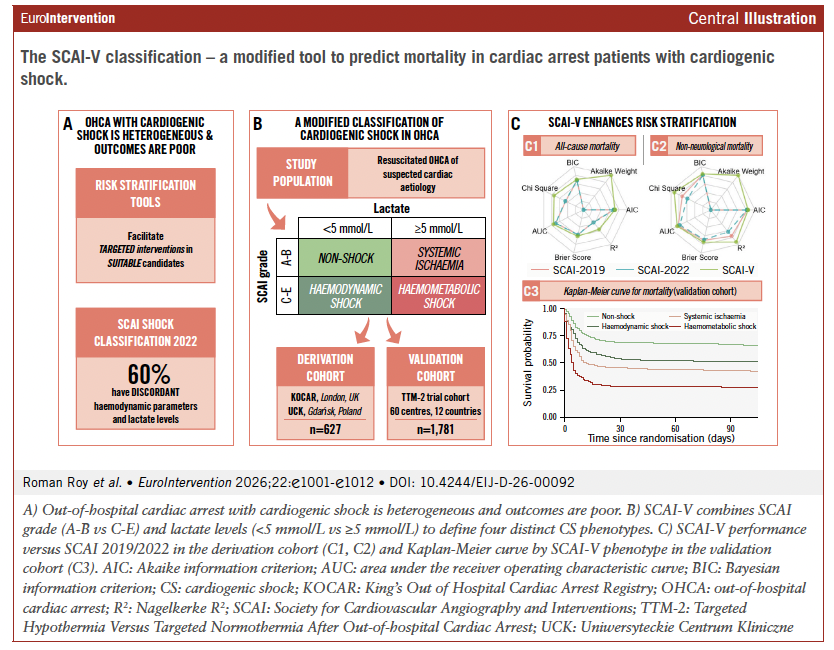
Following resuscitated out-of-hospital cardiac arrest, cardiogenic shock represents a heterogeneous clinical entity.
The novel SCAI-V classification combines haemodynamic status with lactate to identify four distinct phenotypes associated with mortality and mode of death, potentially refining risk stratification and patient selection for invasive therapies.
eurointervention.pcronline.c…
#CardiogenicShock
@Pjey90 @drdworakowski @jan_belohlavek @DrNileshPareek @DrKeeble @Jdankiewicz
@MJaguszewski
Dr Thomas Keeble retweeted

Breaking 🚨: Essex Cardiothoracic Centre have randomised their second participant - bringing the study total to 133! 🥳 Great teamwork 🎊#BCIS4 #ClinicalTrials @MSEHospitals
Dr Thomas Keeble retweeted

Very nice analysis 👇🏾

🧵 New @JACCJournals study from #CHIP-BCIS3 provides an important physiologic look at #Impella-supported high-risk #PCI—and challenges how we think about “protected PCI.”
The key message: hemodynamic support ≠ myocardial protection.
1/6
Dr Thomas Keeble retweeted

Also, based on clinical features, the trial eligibility criteria identified a #SCAI A (at RISK of cardiogenic shock) cohort… v low cardiac output, limited reserve, frequent procedural hypotension.
➡️ @CHIP_BCIS3 criteria can be used to define High-Risk PCI

Dr Thomas Keeble retweeted

🫀It was a pleasure to write this @CircIntv editorial with @DrKeeble & @Dizzledavies73 on important work by @ColletCarlos et al
#PPG + #IVI in diffuse vs focal CAD: another step toward precision #PCI
✍️: ahajournals.org/doi/10.1161/…
📄: ahajournals.org/doi/10.1161/…
@crfheart @PCRonline

Dr Thomas Keeble retweeted

ORBITA-FIRE suggests universal Ischemia-based thresholds for FFR and non-hyperemic pressure ratio should be interpreted with caution: Integrating symptom-linked physiology may refine PCI selection and improve symptomatic response.ahajrnls.org/3R6AzQD

Dr Thomas Keeble retweeted

This should be quite helpful for those few cases when we have to do pci when the cardiac arrest patient is on a mechanic chest compression device… which angles give a view of the coronaries?

📚 New #ICRJournal Article: "Optimal PCI Angle During Mechanical Cardiopulmonary Resuscitation"
📚 Just Published!
🔓Access it here 👉 ow.ly/gTsk106xZiI
@ncurzen #CVImaging #MedEd

Dr Thomas Keeble retweeted
Breaking 🚨: Essex Cardiothoracic Centre have randomised their first participant - bringing the study total to 96! 🎉 Great teamwork 🥳🥳 #BCIS4 #ClinicalTrials @MSEHospitals
Dr Thomas Keeble retweeted

TPC (The Physiology Course) for the first time at EuroPCR
🫀 Following the renowned applied coronary physiology courses at the ESC Heart House in Sophia Antipolis, TPC has become the reference in applied coronary physiology
🚀 For the first time, TPC arrives at EuroPCR.

Dr Thomas Keeble retweeted

🧵 ORBITA-CTO
Seeing a study like ORBITA-CTO being published — regardless of its results — is a beautiful thing.
This level of commitment to producing high-quality, as-unbiased-as-possible evidence in interventional cardiology should be praised. It took 4 years to randomize 50 patients. That's dedication.
Think about what this team had to do:
Noise-cancelling headphones, deep sedation, clocks removed from every room, scripted handovers, overnight admission for both arms, dual-operator procedures lasting 3+ hours — all to protect the blinding.
Bang blinding index ≈ 0. It worked.
Design: 50 patients, single-vessel CTO, confirmed ischemia + viability, J-CTO ≤3, no bystander disease.
1:1 to CTO PCI or placebo after dual-injection angiography.
All anti-anginals stopped at randomization. Daily symptom tracking via ORBITA-app for 6 months. Patient-initiated re-titration only.
Primary endpoint: angina symptom score (Bayesian ordinal MOST model, daily repeated measures).
CTO PCI vs placebo: OR 4.38 (95% CrI 1.57–12.69) Pr(Benefit) = 0.996
Driven by angina frequency: OR 4.38 (95% CrI 1.55–11.78) Pr(Benefit) = 0.997
In patient-centered terms: CTO PCI yielded ~31 additional angina-free days over 6 months vs placebo.
95% CrI: 11.1–50.7 Pr(Benefit) > 0.999
That's roughly 5 extra angina-free days per month.
SAQ domains were consistent:
Angina frequency: +10.7 (CrI 1.4–20.2)
Physical limitation: +13.5 (CrI 4.5–22.3)
Quality of life: +18.2 (CrI 5.4–30.5)
Summary score: +13.7 (CrI 4.2–23.2)
All Pr(Benefit) ≥ 0.988. CCS class also improved.
Dyspnea and EQ-5D did not separate.
Procedural quality was outstanding: 96% technical success, 92% IVUS-guided, experienced dual-operator teams.
One failed PCI case — averaging 6 angina episodes/day — was included in ITT. This biased against the PCI arm.
But the treatment effect survived it.
Why does this matter so much?
EuroCTO (Werner et al.) showed CTO PCI improved symptoms vs OMT at 1 year, sustained at 3 years. But it was open-label, with 17.5% crossover from OMT to PCI.
Without blinding, the placebo contribution to symptom relief was unknown.
ORBITA-CTO quantified it.
Both arms improved — so yes, the placebo response was substantial.
But the PCI effect was immediate and sustained. The placebo group progressively needed more anti-anginals.
Now, what ORBITA-CTO does NOT prove:
1. Benefit in multivessel disease or high-complexity CTOs (J-CTO 4–5)
2. Prognostic benefit (not designed for hard endpoints)
3. Generalizability beyond expert centers with 96% success rates
4. Benefit on dyspnea or generic quality of life
I know. N=50 is small. Credible intervals are wide. This was an expert-center study with carefully selected lesions. Noted.
But 8,631 follow-up days of daily symptom data, a Bayesian framework designed for this exact scenario, and verified blinding give it far more inferential weight than sample size alone suggests.
For years, CTO PCI skeptics had a legitimate point: no blinded evidence.
That point is now addressed. CTO PCI relieves angina beyond placebo — in well-selected patients, at experienced centers. Agreed.
Hats off to the ORBITA-CTO team for doing this the hard way. Our field is better for it. And by the way, this is not me celebrating the results. I don't do CTO. But it makes me happy to see good medical science being made.
#ORBITACTO #CardiologyX #InterventionalCardiology #ACC26 @JACCJournals
Dr Thomas Keeble retweeted

Finally, a sham-controlled CTO PCI trial—and it delivers. ORBITA-CTO: small (n=50), but rigor where it matters—blinding, placebo control, symptom-level data. CTO PCI improves angina beyond placebo, with a clear reduction in episodes and more angina-free days. Not prognosis, not hard endpoints, but real symptom benefit—properly measured. #acc26
jacc.org/doi/10.1016/j.jacc.…

Dr Thomas Keeble retweeted

#ACCC26
👇
ORBITA-CTO
doi.org/10.1016/j.jacc.2026.…
EDITORIAL
👇
doi.org/10.1016/j.jacc.2026.…
👋
@rallamee
@ziadalinyc
@DrKeeble
@DrOzanDemir
@esbrilakis


Finally, a sham-controlled CTO PCI trial—and it delivers. ORBITA-CTO: small (n=50), but rigor where it matters—blinding, placebo control, symptom-level data. CTO PCI improves angina beyond placebo, with a clear reduction in episodes and more angina-free days. Not prognosis, not hard endpoints, but real symptom benefit—properly measured. #acc26
jacc.org/doi/10.1016/j.jacc.…
Dr Thomas Keeble retweeted

16/16
🏷️ Tagging the CTO community for discussion 👇
✍️ Authors: @dr_skhan1 @rallamee @DrKeeble @EssexCTC
@esbrilakis @DFCapodanno @DrMarthaGulati @CtoDemon @CtoEuro @ctoessentials @cto_chip_japan @tobicongress @realarainmd @SaadGhummanMD @DrOzanDemir @DrAsifQasim @Hragy @mmamas1973 @DrBIqbal @ACCinTouch
What are your thoughts? 🧵👆
Dr Thomas Keeble retweeted
Really important validation of the MIRACLE2 score…. We use it routinely to add objective depth to bespoke decision making
In OHCA cases

How should we guide selection of invasive therapies following an out-of-hospital cardiac arrest? Prospective validation of the MIRACLE2 Score @ncurzen @krishnaraj82 @garryhamilton6 @drR_Simpson @Sam_mc35 @zaidiskandar85 @DrPaulRees
ahajrnls.org/4saBexX

Dr Thomas Keeble retweeted
This editorial highlights Marin et al.’s study showing how PCI reshapes coronary flow dynamics in humans, reinforcing key concepts of coronary autoregulation and the physiological basis of FFR.
#CoronaryPhysiology #PCI #FFR #InterventionalCardiology
@JEscaned @Guusdewaard
Original paper : eurointervention.pcronline.c…

Dr Thomas Keeble retweeted

Probably the most important talk at @CRT_meeting #CRT2026 with Jeff Moses and Antonio Colombo in audience , Gregg Stone on Podium @rallamee and her group’s brilliant science again!


Dr Thomas Keeble retweeted
Invasive physiological assessment using continuous thermodilution showed that PCI reduces epicardial resistance and increased hyperaemic coronary flow, while resting flow remained unchanged due to microvascular autoregulation.
eurointervention.pcronline.c…
#PCI #FFR #CoronaryPhysiology
@GiovanniLuigiD1 @ColletCarlos

Dr Thomas Keeble retweeted

We have a new publication in JAMA Neurology: Long-Term Outcomes and Recovery Trajectories in Out-of-Hospital Cardiac ArrestA 2-Year Follow-Up of the Randomized Clinical TTM2 Trial
jamanetwork.com/journals/jam…


Dr Thomas Keeble retweeted

2 yrs follow-up of the TTM2 trial. 1 month too early to assess outcome. At a group level not much change >6 months. However, individual results showed both improvements and declines. Important information for both researchers and for guidning information in clinical practice.

Following out-of-hospital cardiac arrest, targeted hypothermia did not affect societal participation or cognitive function at 24 months compared with normothermia; most recovery occurred within 6 months.
ja.ma/4aBg7xu
