

Chair, Radiation Oncology, University of Vermont Health
Burlington, VT
Joined January 2014
- Tweets7K
- Following1.4K
- Followers4.6K
- Likes42.2K





Nat Lester-Coll, MD retweeted

At #ASTRO26, we are proud to welcome so many Yale attendees, including our current residents and the alumni of our Radiation Oncology Residency Program @YaleRadOnc, all representing @YaleMed @SmilowCancer @YNHH and advancing the field of radiation oncology. @ASTRO_org @OncoAlert

Nat Lester-Coll, MD retweeted

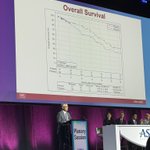
Back in 🇬🇧 but still able to listen to @nickva1 presenting @ASTRO_org #ASTRO26 @royalmarsdenNHS @EmmaHall71 No surprises here, patients have better sexual outcomes after SBRT compared to prostatectomy


Nat Lester-Coll, MD retweeted

I’ve been saying this for years…
Now we have randomized data.
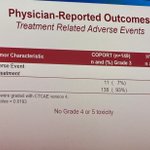
GETUG P05: brachytherapy boost vs dose-escalated EBRT in intermediate-risk prostate cancer.
Oncologic outcomes similar but far more toxicity with brachy.
#ASTRO26 #ProstateCancer
@ASTRO_org @NehaVapiwala @AmarUKishan @DrAndrewLoblaw @seanmmcbride @HimanshuNagarMD @TylerSbrt @seanmmcbride @alison_tree @Soum_Roy_RadOnc @NicholasZaorsky @angela_jia_

Nat Lester-Coll, MD retweeted

Boston-bound for #ASTRO26 — “When Disaster Strikes” is feeling particularly timely. Join us Sunday for a conversation on safeguarding radiotherapy continuity through catastrophic events @fumikochino @MDAnderson_ES @DrNogueiraL @AmericanCancer @DartmouthCancer @SpeedofLightFdn

Nat Lester-Coll, MD retweeted

Radiotherapy after surgery halves risk of recurrence in a type of brain tumour that can often grow back, trial shows.
Find out more in The Lancet: spkl.io/60137TUFS #EANO2026

ALT Kaplan\u2013Meier estimates of disease-free survival by treatment group in the intention-to-treat population. Median follow-up was 64 months (IQR 50\u201375). HR=hazard ratio. Copyright: 2026 The Author(s). Published by Elsevier Ltd. CC BY 4.0.
Nat Lester-Coll, MD retweeted

Happening in 2 wks! Join us Sun 9/27, 4:45P #ASTRO26:
Making Sense of Trials in Community Rad Onc: From Headlines to High-Value Care
3 talks on Ph II trials, omission studies & novel RT technologies - practical frameworks for interpreting new data & translating into practice.

Nat Lester-Coll, MD retweeted

Landmark, practice changing study at #WCLC26. The phase III MAVERICK study shows no improvement in OS with PCI for SCLC, across limited and extensive stages, with worse cognitive failure free survival and increased toxicity in PCI arm.
The end of the PCI era.

Nat Lester-Coll, MD retweeted

📊 Research Summary: In localized intermediate-risk #ProstateCancer, stereotactic body #Radiotherapy and moderately hypofractionated intensity-modulated radiation therapy had similar urinary quality-of-life outcomes, while bowel outcomes favored stereotactic body radiotherapy.
ja.ma/4fSjyDM

Nat Lester-Coll, MD retweeted

Continuing on with added context:
The reason this one paper matters so much is its recency. EviCore has, for many years now, deemed LDRT for OA as medically necessary.
To reverse course means new information must have become available between their last version and this one.
This Hammadeh paper was published in September 2025, which means it technically predates the guidelines from February 2026 covering LDRT, but...we'll just say EviCore didn't find it in time for those guidelines.
Unfortunately, it's not "new" data to justify this reversal, it's just a meta-analysis. But it has a convenient conclusion (if you're an insurance company).
Alright, we can skip over the publishing Round Robin AI Ring the authors have going and just head right to the first graphic. Table 1.
So, Table 1, second column. Several of the study design labels are incorrect - RCTs listed as cohort, retrospectives listed as RCTs, etc.
Ultimately, not SUPER problematic.
But uh, the next column is. The number of patients for each study in the third column.
Those are not anywhere close to the patient populations actually used in those studies. The difference is severe (Hermann 2021 is listed as 160, actual is 25; Keller 2013 is actually over a thousand, listed as 120, etc).
Well that's not good.
And then we get to "Duration of Complaints". Somehow, mysteriously, all of these studies enrolled patients with 9.5-11.1 years of symptoms prior to treatment.
Obviously...wildly incorrect as well.
But the best are the final two columns which are outcomes. Second to last is pain, last is function.
It sure is weird that, for a meta-analysis claiming LDRT has no effect, that each and every study allegedly used in their analysis ALL show an improvement in pain and functional status.
Now, normally I would expect a meta-analysis to conclude positive treatment effect if, you know, each and every included study showed a benefit in multiple domains.
Obviously...those results aren't what the original manuscripts themselves concluded (because, for example, they might have measured outcomes completely differently...).
Oh and I totally forgot the column that somehow claims each included study miraculously enrolled 38-44% males. All of them.
Crazy!
The one outlier is the final study, Fazilat-Panah et al, 2025.
If you look at the history of this Hammadeh paper, it was submitted originally in March 2025 and accepted in July 2025.
The Fazilat-Panah paper was published online in March 2025.
Obviously, Hammadeh and friends couldn't have included the Fazilat-Panah paper with their original submission - they wouldn't have known about it.
So one of the reviewers (hard to imagine this paper had reviewers, but whatever) must have asked them to include this newly published paper as a revision.
But that Fazilat-Panah paper is excellent: it's a double-blind sham-controlled RCT showing a tremendous benefit of LDRT.
Thus, when Hammadeh plugged that paper in and re-ran his AI tool...that's what caused the the calculated I² to be a massive 96%.
My assumption is the AI tool hallucinated much of the original data towards "no benefit". But when this Fazilat-Panah paper data was included after the fact with the real results - the heterogeneity went off the rails.
No paper should be published with an I² of 96%.
So, I assume no reviewer actually read this paper after it was re-submitted as a revision. Then the editors rubber-stamped the AI trash, and boom!
@evicorehc and their AI scraping algorithm programmed to find any and every reason for denial uncovered this gem and here we are today.
Who doesn't love science and medicine in 2026?
(probably the suffering patients getting treatments denied don't love it, but EviCore hasn't ever cared about that before, and neither has @SpringerNature)


Some additional context:
In these new guidelines where EviCore abruptly decides to change course, they cite 3 publications (one being DEGRO, which seems contradictory, but whatever).
Hammadeh et al 2025, I know this paper! It's the turbo trash paper I dunked on last year because of basic math errors.
Well, good news: the basic math errors are just the tip of the iceberg. Let's see what the titans over at EviCore are using to make policy.
We can start with...well, we can just start with the authors.
Weird. A lot of them are using Gmail accounts. Also, the format of some of these email addresses - Hammadeh included - seems to follow a "first name-last name-date" format.
When people do this, it's often their birth year.
Which means several of these authors were like...20 years old? In America, a 20-year-old is usually an undergrad, but these authors are predominantly Jordanian.
Let's go to Hammadeh's OCRID profile.
Neat. He's a med student in Jordan. He won't graduate till 2028.
He currently has...81 publications. As a 21 or 22-year old med student.
And many of those papers were published in 2025. And wouldn't you know: many of the co-authors on this paper also have dozens of papers as med students! They're on lots of these papers together!
I wish I could be as productive as Bara Hammadeh...oh wait! He founded a company on how to do this!
clever-academy.com/
Fortunately, we can subscribe to his tool to also churn out systemic reviews/meta-analyses! Score!
There's one drawback, though. If there's a group of students publishing 30+ systemic reviews/meta-analyses together on a wide variety of topics, using an AI tool that will essentially write a paper if you just feed it an Excel sheet....hmmm.
I think there's a term for this kind of behavior.
Does anyone know what this is called?


Nat Lester-Coll, MD retweeted

One of #radonc oldest dogmas:
No full bladder, no treatment.
Countless patients have spent years anxiously drinking water, waiting, and hoping they got it "just right."
We asked a simple question: Do we really need a full bladder for prostate SBRT?

Nat Lester-Coll, MD retweeted

1/
New in Radiotherapy & Oncology:
ESTRO consensus recommendations on how to focal boost the intraprostatic tumour in prostate cancer.
The practical question: now that FLAME is positive, who gets a boost, how do we contour it, and what dose do we prescribe?
Why it matters: focal boosting is about to become a lot more common.
🤖 Made with AI

Nat Lester-Coll, MD retweeted

Delighted that our STAMPEDE paper on abiraterone therapy selection with MMAI in high risk M0 HSPC now out. kwnsfk27.r.eu-west-1.awstrac…
Nat Lester-Coll, MD retweeted

Kidney SABR on the front cover of @TheLancetOncol. A well-deserved recognition for @_ShankarSiva for his work and efforts over the past 10+ years.
thelancet.com/journals/lanon…

Nat Lester-Coll, MD retweeted
#ASCO26
Talk about real-time updates. NEJM paper now online and my predictions and inferences appear true.
Majority of MFS events were by PET not conventional imaging. "Most distant metastases were identified by PSMA PET (53.0% of those in the apalutamide group and 60.7% in the placebo group)"
VERY IMPORTANTLY: "No significant between-group difference was observed in metastasis-free survival assessed with conventional imaging alone (hazard ratio, 0.84; 95% CI, 0.67 to 1.07)"
Not only does MFS cross 1, but the HR also crosses the surrogate threshold effect (0.81).
@urotoday @PCF_select @US_FDA

#ASCO26
The PROTEUS trial results are now online...buckle up as we wait to see the full presentation. This is going to be a trial that is likely highly controversial until the full results are published.
Some may call this a homerun, others may call this the largest negative trial @ASCO 2026. Up to you to interpret!
@urotoday @EricTopol @DrChoueiri @neerajaiims @ASCO @US_FDA @NCCN @myESMO @ASTRO_org @PCF_Science @declangmurphy @mcuban
Nat Lester-Coll, MD retweeted

Trials in localized prostate cancer are incredibly difficult to pull off, especially given the rapidly changing imaging and therapeutic landscape, so major congrats to the investigators.
For me, top line results: small MFS benefit when MFS is defined by either conventional imaging or PSMA PET. No MFS benefit by conventional imaging.
Critically, there were significant differences in PSMA PET utilization. Post hoc analysis showed that 686 patients (64.9%) in the apalutamide group and 755 patients (71.8%) in the placebo group underwent PSMA PET at least once.
That difference is greater than the absolute MFS benefit (when MFS is defined by either conventional or PSMA imaging) and may mean that the MFS benefit is confounded by the differential use of PSMA PET at biochemical recurrence. The extent of that confounding will depend on the comparative probability of detecting Mets at BCR using PET vs conventional imaging in the trial cohort. Would be interested in that data.
Does PROTEUS change practice? Given the above, I'm not sure the argument is there to go from RP alone (the current standard) to RP+ADT+ARPI. Will be interested in the substudy results.
#ASCO26 #radonc #medtwitter #pcsm
nejm.org/doi/full/10.1056/NE…

Nat Lester-Coll, MD retweeted
JUST In: TALAPRO-3 published in @NEJM
Adding #talazoparib to enzalutamide/ADT
=>3-year rPFS: 77% vs 56% in HRR-deficient metastatic prostate cancer !
Looking forward to full presentation by @neerajaiims who keeps changing SOC, one trial at a time.
@ASCO #ASCO26 @OncoAlert


Nat Lester-Coll, MD retweeted
Bladder-preserving IO-CRT strategy shows encouraging early results in RAD-IO presented by #NicholasJames: durvalumab + chemoradiotherapy achieved 1yDFS 79%, 12-mo PFS 83%, and OS 96% with manageable toxicity in MIBC.
#ASCO26 #BladderCancer
@OncoAlert @ASCO @OncBrothers


Nat Lester-Coll, MD retweeted
This trial represents a decade of work—hypothesis → design → accrual → follow-up → data lock → Presented at @ASTRO_org 2025 plenary →publication in @JCO_ASCO
ascopubs.org/doi/10.1200/JCO…
🙏 To the patients, families, clinicians, and my team: A BIG thank you.

Nat Lester-Coll, MD retweeted

👏🏽👏🏽👏🏽@neildwallaceie at #ESTRO26 - 1687 patients receiving single fraction SABR for #lungcancer and pulmonary oligomets, @PeterMacRadOnc / @ClevelandClinic / @RoswellPark. Fantastic local control, and low adverse rates. Should we be using “one stop” SABR more often #radonc ?


