

The apparition of these faces in the crowd
Durban
Joined August 2011
- Tweets8.5K
- Following1.1K
- Followers172
- Likes4.2K






8thRouteArmy retweeted

Europe is finished. The “colony” that could save them is South Africa. The Minister of Transport is putting Transnet under a lot of pressure, dismantling our network industries and handing rail and ports over to foreigners, all these under the guise of “Structural Reforms.


8thRouteArmy retweeted

Stop whatever you're doing and listen carefully:
AFRICOM has announced the launch of a new psychological operation meant to influence Africans towards US interests by deploying a US army cyber unit to impersonate Africans online.
Its name "Drongo" comes from the African bird that mimics other animals so that it can steal their food.
That account trying to gaslight you on Twitter with "Traoré is a brutal dictator", "The worst democracy is better than the best dictatorship", and "Stop blaming white people and hold your leaders accountable" may just be an American soldier carrying out his mission.
Use your discernment on the internet!

Michael Langley Failed, So AFRICOM’s Launched a Psyop Against Africa
On 15 July, the U.S. Africa Command (AFRICOM) launched a new psychological operation called Drongo Company. Its stated goal is to influence Africans to act in ways that favour US interests by impersonating Africans and using social media thought leadership to shape African public opinion.
This incidentally, is the exact kind of Foreign Information Manipulation & Interference (FIMI) operation that the US government regularly accuses other actors of in Africa and around the world. Whether every accusation is indeed a confession, the one thing we know for certain is that this cannot be good news for Africa.
What suspicious anti-Africa messaging have you spotted lately on social media? Drop us a comment.
For more like this, follow The Spearhead.
8thRouteArmy retweeted

Cyril Ramaphosa, Nelson Mandela and Oliver Tambo march through Soweto and unveil memorial to Hector Peterson, Soweto, June 16 1992. Credit: Sue Kramer

8thRouteArmy retweeted

When Saddam invaded Kuwait, Iran welcomed thousands of Kuwaitis who sought refuge in Iran from the war.
Kuwait repaid this hospitality by inviting Americans to their lands, giving their country to become a military base, and allow yankees to launch attacks on Iran’s water desalination plants & innocent children.
If you can’t do anything about this, then at least be ashamed and stay quiet.


Iran claims it’s pursuing an ‘eye-for-an-eye’ strategy when it comes to infrastructure but the reality is far more cynical: only about 2–3% of Iran’s water comes from desalination, while Kuwait depends on it for around 90% of its drinking water. In other words, Iran is threatening a lifeline it barely needs, against nations that are highly dependent on it. This is why they are comfortable to escalate in this realm.
8thRouteArmy retweeted

He is Joe "Cognitive Infiltrator" Kent proposing killing Iranians for defending themselves against US aggression launched against them inside their own borders by the US whose troops and bases are closer to Iran than America's own shores...
The US has no business in West Asia at all - let alone "negotiating" with Iran regarding ANYTHING.
Cognitive infiltration involves people repeating popular opposition narratives to win over people who otherwise reject official narratives - then they slowly re-inject establishment talking points to get otherwise awake people to go back to sleep.
Joe Kent pretends to be against war on Iran, but here he is reinforcing the notion the US has some sort of right to strike back. to dictate matters in West Asia, and "negotiate" with Iran.
Cognitive infiltration in its current form is an institutionalized form of public perception management introduced at least as early as the Obama administration - specifically targeting what is considered "alternative media" and its audience.

8thRouteArmy retweeted
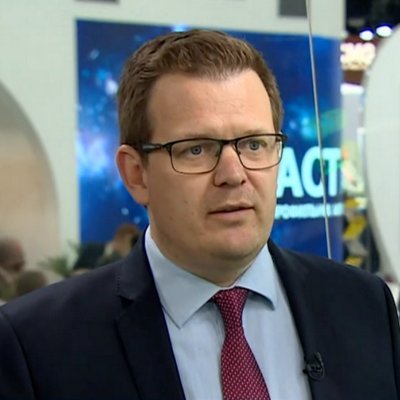
Germany and Britain are evacuating their diplomats from Kuwait, Bahrain, Qatar and Saudi Arabia. The US has advised its citizens to leave the Middle East region. A lot of indications that massive escalations are being prepared.
8thRouteArmy retweeted

The funeral of a Martyr - Tehran on standstill 🇮🇷
Readers added context they thought people might want to know
It’s AI.
en.wikipedia.org/wiki/Grand_Mos…
8thRouteArmy retweeted

The primary cause of SA’s astronomical unemployment is the lack of an industrial policy.
The more manufacturing shrank, the higher unemployment rose.
The government gave corporations carte blanche to build world-class malls instead of factories, now they’re all acting surprised.

8thRouteArmy retweeted

Out of respect and diplomatic protocol, we don’t make comments on South Africa’s relations with other countries. Likewise, we oppose envoys of other countries publicly commenting on relations between China and South Africa.
8thRouteArmy retweeted
The entire country of South Africa is being systematically framed by social media bots. I've never seen anything like this before.
I've seen astroturfing of online discourse by bot farms, but I've never seen someone attempt to use AI bots to outnumber and drown out an entire country of 60 million people.
These accounts spewing the same "go beck and fix ya kantri" talking points with "🇿🇦" in their username are not real people! Open each account that you see posting that stuff. Check the signup date, open the media tab and check the replies tab so see what they interact with. They're all bots!
Some crazy person somewhere with more money than God is trying to set up an entire country using Twitter bots!
8thRouteArmy retweeted
When you lack political education and awareness, what this man says here makes a lot of sense.
This argument sounds like “common sense”as it appeals to an individualist mindset that says, if you just keep your money and work hard, you’ll succeed and can lift others up later.
Mark Pollard, the man in the video, who is a guru of some sort, is presenting African economic coping mechanisms as individual failings. He treats economic survival strategies that result in “Black tax” and “sending money“ as laziness and “toxic manipulation”, completely ignoring the systemic inequalities that birthed them.
While he pretends to acknowledge that Africa has been pillaged, by saying “I know Africa has been pillaged from all coasts, but...”, that “but” treats the “pillaging” as a past event that people need to simply move away from. He completely fails to acknowledge that people have to financially support their families through “Black tax”, because, for instance, unlike in the West, African countries either have no formal state welfare, unemployment benefits, or robust pension systems, or where they exist, are generally inadequate.
Unsurprisingly, Pollard completely glosses over the fact that the economic architecture left behind by colonialism was never designed for widespread local wealth creation and that he lack of robust state infrastructure, weak social safety nets, and hyper-unemployment are the direct, ONGOING structural consequences of that history, exacerbated by modern global economic policies, like IMF/World Bank structural adjustment programmes that force developing nations to cut public spending on healthcare, welfare and education.
By labelling these survival mechanisms as a “toxic give me money culture”, he shifts the blame from the system to the people.
If, as he argues, poverty and stagnation are caused by a “lazy culture”, then the solution is simply for people to change their behaviour. He says this explicitly.
This completely absolves the state, corporations and global economic structures from their failure to provide jobs, living wages and social security, and transforms a political and economic crisis into a crisis of personal failures.
It completely ignores that when an African person secures a good job, they become the financial anchor for an extended family. The Black Tax pays for siblings’ schooling, elderly parents’ healthcare, and basic survival. These are not expendable luxuries that you can opt out of.
Unlike Pollard’s suggestion that this arrangement breeds laziness, it actually prevents absolute destitution, and framing it as a barrier to individual wealth accumulation ignores the fact that without this communal support, far more people would fall into extreme poverty.
To condescendingly call the African condition “toxic” is to demand that people let their families starve in the name of “individual wealth accumulation”.
What Pollard calls a “barrier to getting ahead” is actually the only reason millions of people are surviving at all. You cannot build a stable middle class by asking individuals to abandon their communities to the wolves of structural poverty. True progress comes from building the institutional safety nets that allow individuals and communities to thrive together, not by lecturing the victims of a broken system on their “money culture”.


8thRouteArmy retweeted

In my lifetime, China lifted 850 million people out of poverty, while the US created one trillionaire. It is clear as day that socialism is the key to our future.


8thRouteArmy retweeted

This is a really fascinating paper that everyone interested in China's industrial policy should read.
It destroys so many myths (see below), and is written by deeply credible people who conducted over three years of fieldwork in China and interviewed 60+ Chinese officials, entrepreneurs, and engineers. When it comes to China studies, it literally doesn't get more rigorous than this.
First myth it destroys: contrary to popular belief, Beijing's industrial policy didn't build the companies that became China's EV champions. They rose largely **despite** it, through its cracks.
For sure, Beijing did favor EVs as an industry and pushed hard for it but their big bet was SOEs (State Owned Enterprises): research grants, pilot programs, licenses, cheap credit - virtually all of it flowed to state firms.
The result? China's actual EV champions - BYD, Geely, NIO, XPeng, Li Auto, etc. - are overwhelmingly private firms that succeeded despite Beijing favoring their SOE competitors.
How so? Because, when favoring SOEs, the central government didn't just pick winning companies, it picked winning cities, each SOE being anchored in a specific city: Shanghai (SAIC), Changchun (FAW), Wuhan-Shiyan (Dongfeng), etc.
Which means that every city not on the list, that wanted a piece of the auto boom, had only one option left: team up with private entrepreneurs who were equally excluded from central government favor.
That's what truly fueled China's EV miracle: an alliance of the excluded, between local private entrepreneurs and local mayors.
This is the biggest misconception this paper destroys: the reality is that the "Chinese state capitalism" that many in the West think powered the EV boom actually tried to block many of these companies from existing. In effect, it was closer to an obstacle course that local actors (mayors and provinces) learned to game.
Geely - now the third largest automaker in China - is a fantastic example of this.
First of all, it started off illegal since, to build passenger cars, you had to have a central government license and they couldn't get one. Zhejiang Province told them to go ahead regardless because the province had hundreds of auto parts suppliers but no carmaker of its own.
It's only a couple of years later, recognizing the fait-accompli that Geely was producing cars and was competitive, that the central government admitted them to the National Sedan Catalog - effectively legalizing them retroactively because there were facts on the ground.
Then there was the Volvo acquisition in 2010, which is fair to say - looking back - proved to be the most strategically valuable acquisition in Chinese automotive history. Despite it being presented at the time (and still described this way today) as "China buying Volvo", all 3 major state-backed banks in China (Export-Import Bank, China Development Bank, Bank of China) refused to finance the deal. The only state-bank money Geely managed to get was a $200 million loan from a provincial branch of China Construction Bank - a tiny fraction of what the deal required.
Geely actually did the deal with Goldman Sachs money via Hong Kong plus loans and equity from four local governments (Chengdu, Zhangjiakou, Daqing, Shanghai's Jiading district), each of which bought in by securing a Volvo plant or headquarters for itself.
In effect, the doors that Beijing controlled were largely closed to Geely, but it made it because the doors subnational actors controlled were opened.
Which all means this paper destroys another very common myth: the big merit of the central government in all this was to be relatively chill about it, to NOT be dictatorial.
I just imagine if that had happened in France and you had - say - the mayor of Lyon or Marseilles open, fund and promote an unlicensed carmaker against Renault: the préfet would shut it down within weeks, and the mayor would be lucky to escape prosecution.
That's the irony: on industrial policy, the supposedly "totalitarian" Chinese state proved more tolerant of local defiance than most Western liberal democracies would be. Beijing's greatest contribution to the EV miracle wasn't the plan - it was looking the other way while the plan was being violated.
To be sure, the paper doesn't hide the costs of this system: ferocious local competition also produced what's known today in China as "involution" (内卷-Neijuan, basically a hypercompetitive price war), as well as some spectacular failures. For instance one county lost 6.6 billion yuan on a carmaker that never really made cars.
But that's precisely the point: this is a high-risk, high-reward model of decentralized experimentation, the very opposite of the careful central planning Westerners imagine.
I've repeated this countless times but it bears repeating again: the single greatest misconception people have about China is - probably because we wrongly associate communism with centralized control - that it is a monolith run from Beijing. Some even say it's run by "one man."
The reality is the exact opposite: China is, in practice, one of the most decentralized countries on earth. Roughly 85% of government spending in China happens at the subnational level - against about 30% in the average OECD country (and even less in France, which is actually one of the most centrally controlled countries on earth). A Chinese mayor commands fiscal resources, land, investment funds and policy latitude that virtually no Western mayor could dream of.
Last but not least, I'd be remiss not to mention what the paper has to say on the positive legacy of Mao and its role in the rise of EVs (given I myself wrote an article titled "Mao's economic record wasn't bad, actually": arnaudbertrand.substack.com/…).
When it comes to China myths, none is more entrenched than the idea that Mao left behind nothing but ruins.
This paper confirms a key argument of my article: Mao's deliberate dispersal of industry across China (during the Great Leap Forward and Cultural Revolution decentralizations) left dozens of cities with their own small auto works. Inefficient, yes - but these scattered factories survived into the 1990s and became the seed stock of everything that followed: the industrial base, the engineers, and the production licenses that EV startups would use to enter the market.
The paper even says it outright: the fragmentation that industrial policy "sought to eradicate" is "precisely" what "ironically enabled" the EV sector's rapid rise.
This is exactly the mechanism I described in my Mao article: structures built in the Mao era - communes becoming township governments, commune enterprises becoming TVEs, Third Front factories seeding interior industrialization - became load-bearing foundations of the reform miracle.
Fittingly, the spark for China's first municipal carmaker adventure was literally a TVE (Township and Village Enterprise), the institutional descendants of Mao's commune enterprises: Tongbao, a kit-car maker in Wuhu whose success stunned local officials into building what became Chery (one of China's biggest carmakers today). You can't tell the story of China's EV miracle without crediting the legacy of Mao.
What's the biggest lesson in all this for Western policymakers?
The obvious one is that the part of industrial policy that most people assume China does and that they sometimes want to copy - i.e. the state picking winners - is actually the part that failed.
The part that did succeed is the China nobody in the West believes exists: a radically decentralized system with a high degree of tolerance for disobedience and experimentation.
We imagine China as a country where nothing happens without Beijing's approval when the reality is closer to the opposite: China's EV miracle happened precisely because localities asked for forgiveness rather than permission.
All in all, and this is the lesson I often come back to, this is yet another illustration of the importance of understanding China for what it is as opposed to the caricature we've built of it. This matters whichever "camp" you're in. If you see China as a rival, you can't compete with someone you don't understand. If you see them as a source of lessons, you can't emulate what you've misunderstood. Whatever you want from China - to compete with it or learn from it - the entry fee is the same: genuinely understanding it.

Why did private firms, not state-owned enterprises (SOEs), come to dominate China’s EV sector?
My new @ChinaJournal article (co-authored with Xiao Ma @maxiaoalex) challenge the "top-down industrial policy" narrative.
The real engine? Strategic alliances between local governments and private capital. 🧵
Based on 3+ years of fieldwork, 60+ interviews (with officials, entrepreneurs, and engineers), and rich first-hand accounts, we show how strict central regulations inadvertently drove local states to bet big on private EV players.
Here is the story: (1/15)

8thRouteArmy retweeted

الانتقال من خطاب "تدمير إيران" إلى "اتفاق على الطاولة" أمريكياً لم يأتِ من فراغ.
الشروط الإيرانية التي تم الاتفاق عليها مبدئياً في السابق لم تتح لترامب الخروج بصورة نصر، لذلك وبعد الاتفاق المبدئي، تراجع عنها وأرسل تعديلاته إلى طهران عبر الوسطاء.
ولم تردَّ عليه إيران، بل أبقته في حالة تريُّث وانتظار طيلة الأيام الماضية، بل وأظهرت له الجهوزية لاستئناف الحرب بضرب إسرائيل أولاً وإسقاط الأباجي ثانياً—لتقول له في إشاراتها: إنك لا تستطيع تغيير واقع فشلك العسكري بالمراوحة.
لذلك، حاول الضغط عليها عسكرياً بالتزامن مع وجود الوسطاء في طهران، فردت عليه طهران في ليلتَي التصعيد بضرب ضعف الأهداف التي ضربها في إيران. وبهذا فقد الأمل في حمل طهران على القبول بما يريد.
أما الإعلان عن اتفاق بعد كل ذلك، فهو إعلان عن التراجع إلى ما اتُّفِق عليه سابقاً، وهو ترجمة دبلوماسية لفشله العسكري قبل كل شيء. إن وُقِّع الاتفاق الإطاري بالفعل—فنحن إزاء بداية حقبة جديدة في إيران والمنطقة. وهذا يُخيف البعض ويُفرح آخرين في المنطقة، إذ يُبدي الخاسر والرابح بوضوح. وللحديث تتمّة في الأيام القادمة.
8thRouteArmy retweeted
Armenian authorities arrested candidates for the political opposition a day before the election.
* The EU likely supports the subversion of democracy as it attempts to pull Armenia into its orbit and the opposition is considered to be friendly to Russia.

8thRouteArmy retweeted

mRNA ‘VACCINES’ IN YOUR MEAT AND DAIRY? Livestock are now being injected or fed experimental gene tech — and it’s hitting your dinner plate UNLABELED.
For years, Big Food and Big Pharma have been quietly rolling out mRNA platforms in cattle, pigs, poultry, and even farmed salmon. Companies like **Tyson, JBS, Cargill, Smithfield, Zoetis (Pfizer spin-off), Merck Animal Health**, and major dairy co-ops are either already using or trialing these experimental gene therapies under the guise of “disease prevention” or “sustainability.”
No mandatory labeling. No consumer warning. Your steak, milk, cheese, eggs, or bacon could contain proteins produced by this tech — and you’d never know.
This isn’t traditional vaccination. It’s experimental mRNA that instructs animal cells to produce foreign proteins. Long-term human health effects? Unknown. Potential for unintended spike-like protein expression, immune disruption, or transfer through the food chain? The science is still catching up — while the rollout moves fast.
They market it as “progress.” We call it what it is: turning your food into an unapproved pharma experiment.
This isn’t about the planet or animal welfare. It’s Big Food + Big Pharma bypassing your consent and turning dinner into a delivery system.
Take back control RIGHT NOW:
- Source ONLY from regenerative farms and ranchers that publicly guarantee NO mRNA, NO gene tech.
- Ask your butcher, farmer, or local co-op directly.
- Avoid unlabeled conventional meat and dairy from the big industrial players.
- Demand full transparency and labeling laws before it’s too late.
Your plate. Your choice. Food is medicine — don’t let them turn it into medicine without your permission.

8thRouteArmy retweeted

La “República de los Derechos Humanos” le niega el himno a una niña que solo jugó al tenis.
Este sábado, mientras Mirra Andreeva, una prodigiosa tenista rusa de 18 años, destrozaba a la polaca Maja Chwalińska y levantaba la Copa Suzanne-Lenglen en Roland-Garros, los organizadores del torneo y el gobierno francés decidieron que su victoria no merecía su himno. Porque, claro, en la tierra de la Libertad, Igualdad y Fraternidad, ahora se castiga a las deportistas por el pasaporte que les tocó al nacer.
Qué gran idea: convertir el tenis en un tribunal geopolítico. Mientras Macron y su élite parisina dan lecciones morales al mundo, le arrebatan a una adolescente el momento más dulce de su carrera para demostrar que ellos, los refinados franceses, están del lado correcto de la historia.
Olvidan, eso sí, que el deporte no es una extensión de la OTAN ni un arma de sanciones. Al final, con su ridícula censura, solo consiguen una cosa: que el mundo vea lo pequeño y lo hipócrita que se ha vuelto también lo grande torneos deportivos como el “gran” Roland-Garros.
El talento ganó dentro de la cancha.
Afuera, la mediocridad política volvió a perder.

8thRouteArmy retweeted

A stunned Jimmy Dore asks Prof. Marandi to explain why Lebanese leaders are seemingly colluding with Israel against their own people during wartime?
US comedian & political commentator Jimmy Dore (@jimmy_dore) recently asked Iranian Professor Muhammad Marandi (@s_m_marandi) to explain why the current Lebanese government was seemingly colluding with Israel against its own people'?
Transcript (below):
- Jimmy Dore: Um, why would Lebanon be…why would the government of Lebanon...so it's almost like they're, they're in collusion with the people attacking them? Is that, is that what I'm...is that what I'm hearing you say?
- Prof. Marandi: Yes. That's exactly what they’re doing…
- Jimmy Dore: I don't understand ...I... can you explain that? Why would they, why would they be in collusion with people attacking their own country? I don't understand this.
- Prof. Marandi: Well, there's a lot of that going on in our region because almost all of the countries in our region are in the US camp, and they are mostly proxies of the United States. Some may have a bit more independence, like in Türkiye, some less independence, but they're all in the American camp.
And the Americans, and with the help of Saudi Arabia and others, installed the current president and the prime minister, and they've been carrying out peace negotiations with the Israeli regime, which is against the constitution of the country, and which is a huge concession to the regime as it's killing people in southern Lebanon. And, they're basically obedient to the United States. They were put in place, put in power by the Americans, and they will pursue American policies.
And so Western NGOs in Lebanon, which have a lot of funding, they promote, and the Western embassies, they promote these positions... and the same is true with those who are funded by Saudi Arabia and Qatar and the others in the Persian Gulf, these despots that are in the American camp. They're all against the people who support the resistance. So they're preventing aid from getting in, they're preventing (displace Lebanese citizens) from moving to different parts of Lebanon as refugees...and they're preventing us from sending aid. Why? Because they want to crush the resistance. They want to humiliate them. They want to bring them to their knees because that's what empire wants. That's what the empire demands.
- Jimmy Dore: Wow. Um, so it's, it's…
- Prof. Marandi: I mean, Jimmy, let's just go back to Yemen. Remember when the Saudis and the Emiratis waged that genocidal war in Yemen?
- Jimmy Dore: Yes…
- Prof. Marandi: What they were doing to Yemen is not all that different to what was going on in Gaza and in Lebanon. All these regimes in our region were supporting this. They all supported the Saudis and Emiratis. The West were giving—they sent advisors. They were giving weapons, ammunition, so that the Saudis could wipe them out.
I remember a former US official—someone who became critical—he said that he was actually on the ship in the Red Sea, an American naval ship, and they stopped a boat that was taking medicine, (that was) smuggling medicine into Yemen, and they went and dumped all that medicine into the sea. That was during the genocidal war against Yemen. All these countries were supporting the Saudis and the Emiratis, including Qatar and Türkiye. But later on, Qatar and Türkiye split from the Saudis when the Saudis and Emiratis imposed that siege on Qatar.
So this is not new. None of these countries helped the people of Gaza. None of them gave a single bullet to the people of Gaza to defend themselves. Türkiye…(and) the regime in Azerbaijan, (which) sells cheap oil Israel. Türkiye, under Erdogan, transports that oil to Israel. Even now, when there's global shortage, they are sending their oil (to Israel). Sisi (and) the Egyptian government, (they) buy gas from the Israeli regime. The Jordanian government does trade and collaborates with intelligence. Syria, a huge part of their country is now occupied. They won't lift a finger to end the occupation, and they're actually collaborating against the resistance in Lebanon. And in the Persian Gulf, we saw how they assisted the United States in invading Iran. They are part of the aggression against the country. So, you know, the empire is on the decline, but its power has always been very quite immense.
- Jimmy Dore: so, I mean, I'm sure you've heard people from Naftali Bennett to, you know, everybody's saying that the next war for Israel and the Greater Israel project is going to be with Türkiye. And so isn't Türkiye aware of this? Why, why would they still be…
- Prof. Marandi: You know, Jimmy, there are many questions in this world that I'd love to have the real answers to. I have my own views, but, you know—Tucker Carlson, you saw his interview with the US ambassador (to Israel)—
- Jimmy Dore: Yes ... to Israel.
- Prof. Marandi: And in that interview, the ambassador said if the Israelis take the entire region, that's fine. That includes parts of Türkiye, that includes all of Syria, that includes Lebanon, that includes Jordan, that includes part of Iraq, that includes major parts of Saudi Arabia, that includes parts of Egypt. What did these governments do? What did they say? Nothing. Nothing. They just wrote a, a joint communique saying this, you know, they condemn this. That's it?! That is the real policy of the United States. That is the policy of European governments, the unofficial policy, Greater Israel, and that's why they're allowing for the slaughter in Gaza, the ethnic cleansing in the West Bank.
I mean, European diplomats just today, they've been tweeting about—(I mean) European diplomats in Israel—they have been tweeting about participating, I think, in the, uh, pride, what's it called?
- Jimmy Dore: Pride parade. The gay pride…
- Prof. Marandi: Yeah, the gay pride parade. But they don't tweet about Gaza. They don't tweet about ethnic cleansing in the West Bank. You know? So this is the world that we live in…