

Creative Technologist building Archive Signal — rights-cleared, outcome-linked physical data. The answer keys AI trains against.
British Columbia
Joined July 2009
- Tweets1.1K
- Following663
- Followers297
- Likes3.4K









Drew Clement-Archive Signal retweeted

if you’re an employee of any corporation, in the medium & long term you are effectively generating training data for an ai that will likely replace you.
even if the company fails, your work will still create value as training data.
i know a lot of ppl find this bleak & possibly unpleasant but it’s the truth. & it’s kinda cool to think about. humans were never meant to do jobs that could be automated (we don’t use plow’s anymore). eventually we should all be creating our ai replacements in some sense so that we could live the way we were meant to.
Let the tide go out a little. Let the air clear.
The doom is just affiliate promises coming due: referral-fee fairy tales dressed up as a market. Underneath it, the real market never blinked. Capital is arriving in size, buyers are getting serious, and the records of dead companies are getting bid on.
Tides don't lie. They just show you who was swimming without shorts
An 11-person UK robotics startup just raised $40m claiming it can teach robots new tasks from a single demonstration.
The model was trained entirely in simulation.
I'm building a business around real-world data, so this is exactly the sort of thing I need to pay attention to. If it scales, the economics of collecting millions of ordinary demonstrations change considerably.
Every lens here is long something perishable against a fixed obligation. The GPU-hour expires, the seat flies empty, the cargo reprices. The one input that doesn't decay while the commitments compound is the record of real work.
Data is the only shelf-stable asset in the stack

The durable position may not be owning a static pile of data. It may be the relationships, rights and consent behind a continuing supply of useful records.
archivesignal.ca/insights/co…

Tasks are the part you can generate. Traces are the part you had to be there for.
The rejection-rate test is what keeps this market honest. An environment built on thin traces can't fake lift, so the premium migrates to whoever captured the real thing, with the outcome still attached.
Capture is the moat because time only runs one direction.

Forget the ransom demands. What happens when the data itself is worth more than the ransom?
Years of proprietary operational records, customer interactions, and real-world outcomes sitting on vulnerable systems.
AI is making that data more valuable. And a much bigger target.
Data ownership is becoming an asset protection problem.
#Cybersecurity #AI #DataOwnership #ArchiveSignal
The number underneath the number: 81 minutes a second is roughly 800,000 hours a week, and at $8.1M that's about $10 an hour, right where wholesale data clears. The open question is the mix. How much of that is robots watching robots, and how much is human work with an outcome attached?
The second kind is the kind you can't print.

Drew Clement-Archive Signal retweeted

The next frontier of robotics is tactile.
Models need to be able to develop proprioception and an internal representation of the world around them from touch alone.
The part that rings true isn't the retreat, it's the repricing. When anything can be generated, the scarce thing becomes proof a human made it. The records that were never on the open web, the ones sitting inside businesses and archives, quietly become the most trusted data left.
Closed web or open web, verified human history survives both.

As the internet dies the inevitable future I see is a closed web…
Imagine social media reverts to 2005 era Facebook/AIM…closed loop networks of friends/family only…in person, human verified connections
Websites become outbound info only again rather than places you typically input your personal data.
People rely on human verified information…think 1999 Encarta Encyclopedia cirucilating on hard disks
Paywalls everywhere to keep bots & AI scraping at bay
Cloud data storage dies…data hosting becomes hyper localized on home/business storage.
Laws get put in place preventing companies from storing any data on external facing servers…people will own their own data and choose what to push outbound.
Undersea cables & data centers will be attack vectors in future wars. Networks will become a lot smaller and regionalized
Some will give up and revert to physical media (or digital copies completely cut off from connected networks)
Schneider, NVIDIA and HPE announced industrial AI agents yesterday, including applications built around operational monitoring in pulp-and-paper facilities.
This is much closer to the physical AI I'm interested in than another humanoid doing backflips.
Actual equipment, actual production systems and decisions that have consequences.
"The data doesn't exist yet" from the CEO of Lilly is the tell. The models are ready before the evidence is.
Robotic labs help, but every experiment still runs at physical speed, and the backlog compounds daily.

Well said Vas. AI will help us conquer disease, but this will take time, effort and lots and lots of data that doesn’t exist, yet. I would add that robotic labs will begin to make scaling data more tractable. lnkd.in/p/g8qvP5qX

Encord released a fascinating robotics dataset yesterday.
More than 300 hours of video synchronized with muscle sensors worn on the wrists.
Turns out cameras can miss a surprising amount of what our hands are actually doing.
Makes me wonder how much supposedly useful robotics training footage is missing the important part.
Motive just expanded its AI agents for physical operations. One example turns vehicle fault codes into maintenance work orders.
Great, but opening a ticket isn't fixing a truck.
I'm curious how these systems verify the actual repair rather than just celebrating another successful API call.
Strong piece — and the saturation point is the tell. If pre-training ego data saturates in 2–5 years, the only data that can't saturate is the past: it's already finite.
The archives nobody collected on purpose are the one supply that never dilutes.


Drew Clement-Archive Signal retweeted

This is why data brokers like micro1 are growing like wild fire:
"The internet was a one-time subsidy on data. We got it for free."
"Models have seen the entire internet many times over at this point, and there is not a whole lot more to be done on human data from the internet."
"The next phase of data, in my mind, is model self-improvement through RL environment gyms."
"You want expert human preference at this point."
"We can just give the agent a computer essentially and have it act like it's a human worker and just give it feedback on whether it's making progress towards the target outcome. That environment becomes the data."

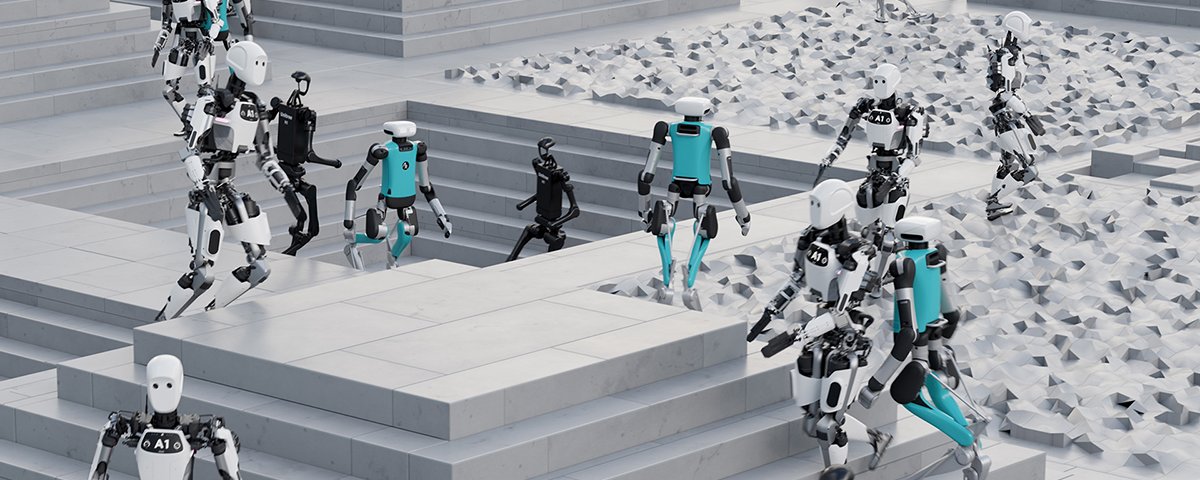
Nope, definitely, absolutely no value in capturing this data for pennies on the dollar while building multi-billion dollar infrastructure projects all around the country.
Why would we ever do something as forward looking as that?

A scan gives you a picture. A simulation needs objects.
We can output Revit files, USD, IFC. Anything needed for BIM/Simulation workflows.
This is a real process plant in Rotterdam. On the left is the raw LiDAR, about 5 million NavVis points. On the right is our reconstruction, filmed from the same camera.
Most scan-to-3D pipelines stop at one fused mesh, which looks right but behaves like a single rock. A robot can't open, avoid or reason about something it can't tell apart from the floor.
So after we rebuild the geometry, we separate the scene into objects. In this plant that's 89 of them: pumps, vessels, heat exchangers, stairs, guardrails, pipe networks, foundations. Each one:
→ is its own mesh with its own pivot point, so you can select it, move it or swap it
→ is labelled by type, like "pump assembly" or "vertical heat exchanger"
→ traces back to the scan panoramas and points it came from
→ is flagged where we had to infer hidden geometry rather than measure it
The interesting part of Mind Robotics hiring Doug Field isn't the résumé. It's Rivian giving them a live factory to learn in.
If that becomes the playbook, robotics labs won't just buy datasets. They'll compete for operating partners with messy, repeatable work.

Doug Field joins Mind Robotics as president to lead product development and operations. bizjournals.com/sanjose/news…

"The CEO may be easier to automate than the welder."
The office has spent decades recording itself. The welder’s best decisions may never have been captured.
AI doesn’t care about the org chart.
archivesignal.ca/insights/ce…
