

Editor, Cinefile, Communist, Dario Argento fan
Saint-Petersburg
Joined February 2014
- Tweets5.2K
- Following495
- Followers142
- Likes7.2K


Pinned Tweet
It shouldn't belong to any private collector.
@Film_Foundation, please, help to save and restore George Romero's MARTIN DIRECTOR'S CUT julienslive.com/lot-details/…
@THETomSavini

Ruslan Akhmetov ☭ retweeted

55 years since its original release, Ken Russell’s The Devils is returning to theaters in October as part of a 4k restoration. This is one of Cinema’s most controversial films & originally received an X rating upon its release. Not only that, some countries banned the film. I have to be 100% honest: I’ve never seen this movie. I’m going to try and refrain from watching until this is sent back out into theaters. This feels like something best suited for a packed house. For anyone who has seen it, can you tell me if it’s as crazy as advertised?
Ruslan Akhmetov ☭ retweeted

ソ連がどうとか、弩級のイントロで頭撃ち抜かれて一旦どうでもよくなる、一生に一度は聴いておきたい極上ソ連ジャズ・ファンク・クラシック!
いや〜やっぱソ連の音楽ってタマランですよね……もっとみんな聴けばいいのに!
#ソ連ファンク
Ruslan Akhmetov ☭ retweeted

La aparición del fantasma de la versión soviética de HAMLET (1964) es una masterclass de horror gótico que ya quisieran muchas películas de terror. La cámara lenta, los susurros, la capa ondeante y la tormenta es una combinación expresionista perfecta.
Ruslan Akhmetov ☭ retweeted
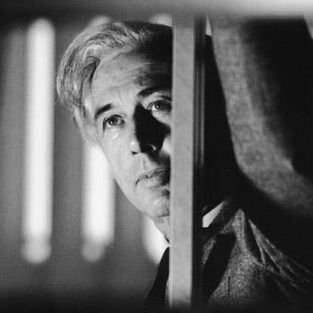
Glauber Rocha lists the movies that inspired the Brazilian "Cinema Novo" movement & the reason they didn't like Jean-Luc Godard in the beginning:
"One could say that three kinds of films were fundamental in the development of the Cinema Novo: the first films of Rossellini and Visconti—'Rome, Open City' (1945), 'La Terra Trema' (1948) and 'Paisan' (1946); the Mexican films of Bunuel, like 'Los Olvidados' (1950) and 'Nazarin' (1959); and the old Russian films of Dovzhenko and Eisenstein.
These films interested us a lot and we studied their theory. But we fought a lot against the New Wave because we didn’t like their films. We like Godard now; but before we did not since we considered him very formalist and very rational, very bourgeois."
(Glauber Rocha's interview to Cineaste, 1970)
Clip from:
Los Olvidados (1950)
Director: Luis Buñuel
Ruslan Akhmetov ☭ retweeted

The Killer (1989)
Dir. John Woo
Quentin Tarantino on why John Woo’s films were better than most American action films.
"What he does that Americans don't have is he just has good ideas, like in "The Killer." When it comes to the woman's, the blind gal's apartment, all right, the cop and the hit man are there and they can't say who they are, so the blind girl doesn't know, but they each get like a Mexican standoff going there, but they gotta act like they don't.
That stuff is just incredible, man. I mean, you'd watch 20 years of American movies and never see anything that clever."
Ruslan Akhmetov ☭ retweeted

This scene in Miami Vice where "In the Air Tonight" by Phil Collins plays stands as one of TV's all time greatest cinematic sequences. It effortlessly establishes the mood and highlights just how far today's television industry has fallen. This authentic soul is gone.


Ruslan Akhmetov ☭ retweeted
"Abel Ferrara's 'Bad Lieutenant' (1992) is among the greatest pictures made about a man’s descent in search of redemption."
--- Martin Scorsese
Full Excerpt:
"I thought 'Bad Lieutenant' (1992) was a key film. It’s the kind of film that I wanted 'The Last Temptation of Christ' (1988) to be. But maybe it was because I dealt with the iconography of Jesus directly that I was not able to get certain aspects that I wanted.
Harvey Keitel really felt that it’s what he was aiming for all his life; we had stumbled around it ourselves in the movies we made together, Keitel and myself. And we tried to get it directly in 'The Last Temptation of Christ', but it’s better the way Ferrara and he got it here — especially the confrontation with the image of Jesus in the church. And not just the obviously shocking part of it; it’s when he breaks down and cries and says he’s bad. There’s this beautiful ending with the boy leaving, then Keitel being shot in the car. And there’s the use of Pledging My Love by Johnny Ace, which we had in 'Mean Streets' (1973).
In any event, it’s an exceptional movie, extraordinary — I mean, it’s not to everybody’s taste. I loved the themes, and the way Ferrara’s style is so straightforward. You cut into a scene with two women, and they’re naked and music is playing, and then suddenly Keitel is naked, in a sort of trance. Then you cut and you’re into another scene. It’s so strong you don’t need a style. Another example: he goes and gets shot up with some heroin from a woman who is obviously a junkie — it must be for real. So what do you need to know? If you dare, follow him through till the end of the night. It’s among the greatest pictures made about a man’s descent in search of redemption."
('Projections 7', edited by John Boorman and Walter Donohue, 1997)
Ruslan Akhmetov ☭ retweeted
The original A Clockwork Orange (1971) trailer is built entirely from Kubrick outtakes.
Ruslan Akhmetov ☭ retweeted

The FBI wiretapped real mobsters and caught them discussing The Sopranos (2001)
Ruslan Akhmetov ☭ retweeted

Deleted scene from The Sopranos season 6. Not inviting Tony to his party may be the real reason Christopher was eliminated.


Ruslan Akhmetov ☭ retweeted

Stanley Kubrick on Vsevolod Pudovkin's influential theories of editing:
"I read Eisenstein’s books at the time, and to this day I still don’t really understand them. The most instructive book on film aesthetics I came across was Pudovkin’s Film Technique, which simply explained that editing was the aspect of the film art form which was completely unique, and which separated it from all other art forms. The ability to show a simple action like a man cutting wheat from a number of angles in a brief moment, to be able to see it in a special way not possible except through film—that this is what it was all about. This is obvious, of course, but it’s so important it cannot be too strongly stressed. Pudovkin gives many clear examples of how good film editing enhances a scene, and I would recommend his book to anyone seriously interested in film technique."
-Interview with Joseph Gelmis in 1970.


Ruslan Akhmetov ☭ retweeted
Me and Dave were guests on the brilliant Bang! podcast this afternoon, talking about Cold War songs by Nik Kershaw, Kim Wilde, Sting, Elton John, and Fishbone! We had a great time, and the episode is out on Monday. Until then, enjoy a montage of classic 80s nuclear pop!

