A 100 page pocket guide of three self-guided walks through Dublin city. Intelligently structured to maximise tourists' time in the city.
Dublin
Joined October 2017
- Tweets196
- Following494
- Followers191
- Likes70







Thanks guys! We downloaded it here and our initial impression is that the quality of the video is very noticeably better. It also has a host of features to play with. Keep the tech stuff coming as it is very useful - especially the free stuff! xitter.cf/bookofdublin/status/97…

Tech stuff: Many of you may be using VLC media player for looking at videos. It is the one with the little orange and white traffic cone as an icon. It has been updated and you may want to download the latest version (3.0.0), free, from videolan.org However.....
Malton's print (poor colour quality) is of Charlemount-House, built from 1762, and now the Hugh Lane Gallery, Parnell Square. In 1929 Dublin Corporation demolished a great part of it, keeping only the front rooms. The trees on the left are where the Garden of Remembrance is now.


Almost hidden away in a corner of Merrion Square is this wonderful 1923 sculpture by Andrew O'Connor entitled The 'Victims'. Dedicated to the victims of war, it depicts a dead war hero returned home and being mourned by his wife who kneels beside him and mother who stands.

Two great sites guys. Thanks for those. I used the second one to find a manual for an old version of a washing machine. Found it in 30 seconds. Thanks again. xitter.cf/bookofdublin/status/97…
This nice image by Declan O Doherty shows No. 15 Usher's Island (no longer an island). Two of James Joyce's aunts ran a music school here. Joyce made it the setting for his short story The Dead. We think the house was sold recently but have no idea what will happen it.


Francis Bacon Francis Bacon (1909–1992) was an Irish figurative painter known for his bold, often grotesque, and emotionally charged, raw imagery. His work typically focused on a single subject for sustained periods, often in triptych or diptych formats.


In 1998 the Hugh Lane Gallery, acquired and moved Bacon's studio and its entire contents from London to Dublin. The move involved art historians and archaeologists who made the survey and elevation drawings of the studio, mapping out the spaces and locations of the objects.


It is interesting that one is allowed to fish here. Imagine trying to do that in Stephen's Green! It is not all that many years ago that the Lough was decimated of fish when Eastern Europeans fished it at an almost industrial scale. The ducks and geese were not that safe either xitter.cf/bookofdublin/status/97…
From this morning in Cork at The Lough @corkcitycouncil (public amenity area with ducks and geese) - nice spot. I'm just not so sure what it says about the women who frequent the area 😂

Originally Werburgh's had a steeple (two versions actually). British authorities were suspicious of the tower as it overlooked their seat of power in Dublin castle, so between 1810 and 1836 it was removed. It can be seen in the centre of Malton's print of the Castle.


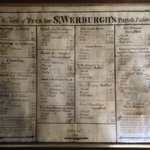
We like the church's 'rate card' for various church services. There are two rates for everything; one for parishioners and another more expensive rate for "foreigners". Muffled bell ringing at a funeral for example was £1.1s for parishioners, but six shillings more for outsiders.

St. Werburgh's Church was originally built in 1178, shortly after the arrival of the Anglo-Normans in Dublin, and named after St. Werburgh, abbess of Ely and patron saint of Chester who died in 699 AD. John Field the composer (see earlier post) was baptised here (see plaque).


Please forgive the retweet. We are trying to get the bottom of a glitch in twitter. xitter.cf/DublinWalkGuide/status…

John Field (1782-1837) was a Dublin born pianist, composer, and teacher. He is best known as the inventor of the nocturne, but this is not certain. He was highly regarded by his contemporaries and he influenced many major composers, including Chopin, Brahms, Schumann, and Liszt.

Well it's that time of the year again. Unfortunately. The man responsible for little Oscar, is Cedric Gibbons (1893-1960) from Dublin, who became MGMs Art Director. It was he, who designed the statuette. Cedric was one of he most important art directors in history.

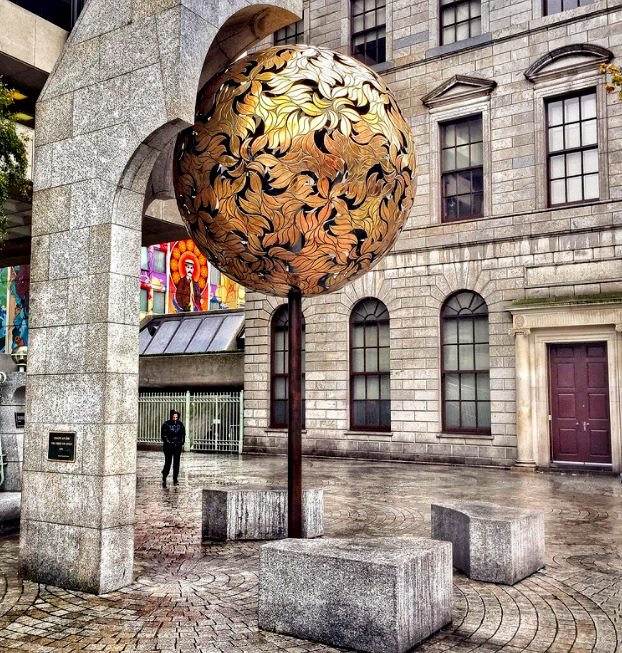
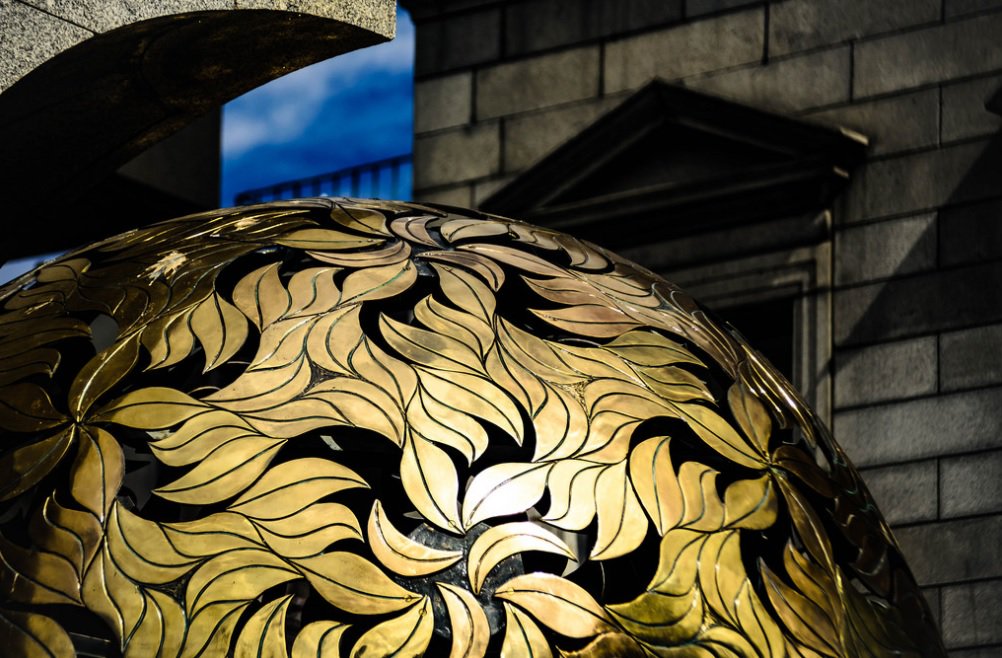
The tree symbolises growth under careful management, & the building the role of the Central Bank in protecting the wealth of the country - something they have made a complete arse of. The bank has now moved but they have left the tree as they feel uneasy about the representation.