

Neuroscientist, psychologist, European and blogger based in Cambridge, UK. Interested in cognition, the brain and education. Tweets are my views. He/him/his.
Cambridge, United Kingdom
Joined October 2014
- Tweets16.8K
- Following1.8K
- Followers9.1K
- Likes34.3K






Pinned Tweet
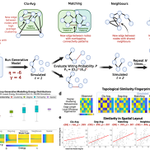
V. excited by this in @TrendsCognSci. A long time in the writing, w/ Mark Johnson and @DanAkarca.
Can computational models tell us something fundamental about cognitive and brain development?
We think so. We term it "computational neuroconstructivism".
doi.org/10.1016/j.tics.2023.…
Duncan Astle retweeted

netneurotools: a trainee-oriented approach to network neuroscience | doi.org/10.1038/s41596-026-0…
Our lab’s internal toolkit for accomplishing everyday tasks in brain imaging @NatureProtocols ⤵️

Duncan Astle retweeted

Cambridge University announces a new Cambridge Mind and Brain Institute focused on understanding and improving brain health across our lifespan, from early childhood through to old age.
This autumn, it will welcome its first cohorts of postgraduate students and researchers, providing exceptional training in cutting-edge research topics and techniques.
Find out more 👉 bit.ly/3VzHOTj

ALT A large red-brick building with multiple windows and a glass conservatory is surrounded by greenery. A news headline reads, "Cambridge University announces a new Cambridge Mind and Brain institute."

Duncan Astle retweeted

Trends in Cognitive Sciences
Embracing the suboptimal organization of the human brain
This article argues that AI researchers should move beyond the idea that the brain is an optimal information-processing machine.
The authors emphasize that brains are shaped by evolutionary history, biological constraints, development, noise, energy limits, and anatomical imperfections. Because of this, human cognition is not always perfectly rational or computationally optimal.
Their main point is that these “imperfections” are not just flaws. They may actually explain why biological intelligence is flexible, robust, adaptive, and efficient in real-world environments.
So, instead of copying only idealized brain principles, AI should also learn from the brain’s constraints, shortcuts, biases, and messy architecture. This could lead to more realistic neuroscience theories and more human-like artificial intelligence.
cell.com/trends/cognitive-sc…

Duncan Astle retweeted

🔥Our opinion piece with @DuncanAstle on “why we might be better off accepting and embracing the fact that the brain’s connectivity profile is in no way optimal” is now out on @TrendsCognSci. There, we discuss implications for Neuro-AI and psychopathology.
cell.com/trends/cognitive-sc…


Duncan Astle retweeted
netneurotools: a trainee-oriented approach to network neuroscience | doi.org/10.1101/2025.09.09.6…
Our lab’s internal toolkit for accomplishing everyday tasks in brain imaging ⤵️

Duncan Astle retweeted

One of the great publications using massive data from #FiberDataHub to speed up brain research.
I am honored to take part in.
"Topological turning points across the human lifespan"
nature.com/articles/s41467-0…
Duncan Astle retweeted

One of our top-rated posts on @altmetric this past week was published open access in @NatureComms. You can read 'Topological turning points across the human lifespan' here: spklr.io/6010BX7z0

Duncan Astle retweeted

Topological turning points across the human lifespan
“we identified four major topological turning points across the lifespan – around nine, 32, 66, and 83 years old.”
🧠 “the beginning of the fourth decade of life marks the end of a phase of increasing efficiency and integration and the start of a period of increasing segregation.”
nature.com/articles/s41467-0…

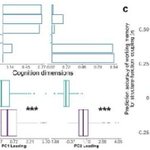
Out in @eLife, led by the fab Alicja Monaghan @mrccbu, w/ @rai_bethlehem, @DanAkarca & @DanielMargulies
Canonical neurodevelopmental trajectories of structural and functional manifolds doi.org/10.7554/eLife.103097
Funders: @TempletonWorld @MRC @wellcometrust @ERC_Research
TLDR?🧵

Individual differences in this coupling metric are sensitive to individual differences in cognition - specifically working memory - and earlier in development, and particularly in higher-order networks.

Duncan Astle retweeted

Celebrating 50 years of @LNFMedea! 🎉 Inspiring talks by @CorteseSamuele, @DuncanAstle & @GioMento. We shared our latest research on understanding neurodevelopmental conditions and supporting children in their everyday challenges💫
#NeuroDev
@GiuliStefa
@FiorellaDPC
@GianDuma


Duncan Astle retweeted

Check out the 4D Lab’s latest blog by @kaysonfakhar on their website relating to their research funded by @templetonworld: brainwiring.net/post/how-did…
#brainnetworks #socialnetworks #brainwiring

Duncan Astle retweeted

NetBat - a new method for harmonizing structural connectomes based on stochastic block models
Seems to perform better than Com- and Cov-Bat when applied to connectivity matrices
sciencedirect.com/science/ar…

Duncan Astle retweeted

A new paper has been released as part of the Brain Network Development Under Adversity project:

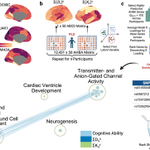
*New Paper* How genes for IQ shape brain organisation. Amazing work led by Alicja Monaghan @mrccbu reveals 2 ways. First, they’re associated w/ the ‘costs’ of network formation. Second, they define ‘high value’ areas within the network. How she did it…🧵
doi.org/10.1162/IMAG.a.31

Duncan Astle retweeted

Interesting work on developing IQ led by Corpus PhD student Alicja.
*New Paper* How genes for IQ shape brain organisation. Amazing work led by Alicja Monaghan @mrccbu reveals 2 ways. First, they’re associated w/ the ‘costs’ of network formation. Second, they define ‘high value’ areas within the network. How she did it…🧵
doi.org/10.1162/IMAG.a.31