

I don't tweet a lot.
Europe
Joined August 2009
- Tweets477
- Following121
- Followers31
- Likes1.2K




I've been testing it briefly for coding and fact retrieval, both locally using Ollama and on gpt-oss.com. First impression: underwhelming with horrible hallucinations about history. In my tests, all tasks were better solved by Gemma 3 12b. Kudos to @GoogleDeepMind.


Our open models are here.
Both of them.
openai.com/open-models

110
Great reminder to donate to the wikimedia foundation for providing free, thorough, recent, and neutral knowledge.
donate.wikimedia.org

60
Finally Microsoft is doing something tangible to fight climate change!
#Crowdstrike

The data from Fance looks impressive until you see a very similar trend for Germany – a country that has phased out nuclear power completely in the last decade. Seems to me like other factors are at play here as well.


1
119
🌟 Ever seen a latent space walk?
Our new Optics Express paper uses generative models for noise-robust computational imaging, by searching for solutions in a compact latent space.
Exciting possibilities for low-signal imaging!
doi.org/10.1364/OE.513556

3
131
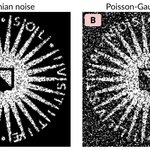
Excited to share our work in Optics Letters on enhancing computational imaging clarity by tackling mixed Poisson-Gaussian noise:
doi.org/10.1364/OL.502344

84
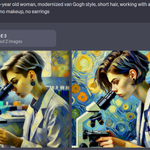
I've noticed that DALL-E 3 is quite biased in its idea of a woman. It is almost impossible to visualize women that don't wear makeup and earrings—even if explicitly told so in the prompt. Portraying them as scientists appears to reduce the amount of makeup, but earrings prevail.


78



A great example of traffic calming in Utrecht. This is the type of progress in infrastructure that will make it hard for me to ever move back to Germany.

'Steden zijn maakbaar. Het is op duizenden manieren te illustreren. Het zijn telkens weer menselijke beslissingen die de richting van de stad bepalen.' (@adriduivesteijn, 1950-2023) De #Croesestraat in #Utrecht, gefotografeerd in 1976 en door mij in 2023. #stadsmens @ZowasUtrecht


4
88
I love broccoli, and I recently felt that my 🥦 has gotten significantly more expensive at the Dutch online-only supermarket Picnic. But, looking at it using my receipt emails and a Python script, it was like that before the high inflation in 2022.
Code: github.com/Duxon/picnic_broc…

39


I found this old aerial photo of Utrecht Science Park, and went out to retake it in 2023 (yesterday). Unfortunately, I don't know the exact date of the old photo. It can not be older than 1970, as that's when the Kruytgebouw (X-shaped building in the center) was built.


I've noticed that it becomes almost trivially easy to jailbreak GPT-4's safety mechanisms by having fairly long and convoluted conversations with it. I wonder if that is a consequence of LeCun's argument against auto-regressive models.

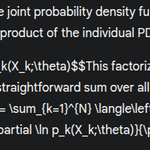
I have claimed that Auto-Regressive LLMs are exponentially diverging diffusion processes.
Here is the argument:
Let e be the probability that any generated token exits the tree of "correct" answers.
Then the probability that an answer of length n is correct is (1-e)^n
1/

1
172
GPT-4 by #openai is still not able to solve this simple problem. Keep that in mind if you ever need to know if you're talking to a human or LLM in the future.

70
I found the kryptonite of #ChatGPT (and LLMs) that appears to be a practical Turing Test to identify if you're talking to a human or AI in the future. [1/2]

We had a great first year at the first prototyping lab at Utrecht University. You can read our yearly report as a PDF linked in this tweet.

We're thrilled to reflect on 2022 with our lab's yearly report. Many more projects and prototypes to come in the upcoming years! You can read it here (Link to PDF):
lilis-protolab.sites.uu.nl/w…
1
45
Jacob Seifert retweeted

We're thrilled to reflect on 2022 with our lab's yearly report. Many more projects and prototypes to come in the upcoming years! You can read it here (Link to PDF):
lilis-protolab.sites.uu.nl/w…
Well, another step closer to the end of humans' necessity to manually produce code/writing/prose/poetry/scientific texts/etc.

OpenAI's new ChatGPT explains the worst-case time complexity of the bubble sort algorithm, with Python code examples, in the style of a fast-talkin' wise guy from a 1940's gangster movie:

1