ESchwaa (@ESchwaa) header
ESchwaa (@ESchwaa) profile picture

Founder The Ai Expert Ai is changing everything 💙 Chelsea.

London, England
Joined March 2009
Photo by ESchwaa (@ESchwaa)Photo by ESchwaa (@ESchwaa)Photo by ESchwaa (@ESchwaa)Photo by ESchwaa (@ESchwaa)Photo by ESchwaa (@ESchwaa)Photo by ESchwaa (@ESchwaa)Photo by ESchwaa (@ESchwaa)Photo by ESchwaa (@ESchwaa)Photo by ESchwaa (@ESchwaa)Photo by ESchwaa (@ESchwaa)
ESchwaa retweeted
80-90% of major "AI incidents" that cause real harm have no attacker, just an agent tripping up on a poor codebase. i turned the latest research into into a prompt that checks your setup for the most common causes. Hand it to your agent -> github.com/jdpru/cover-your-…
24
34
8
530
53,489
ESchwaa retweeted
It's 2031. Here's how it happened. Wait, let me start from the top. Two days ago, a woman posted the most mind-blowing thing that had happened to her with AI. Her roof was leaking from the rain. Her AI assistant called an emergency roofing company and talked on the phone with the company's AI agent. An hour later, a guy was on her roof. Fixed. $300. Two AIs talking to each other so a human would climb onto a roof. Yesterday, Elon Musk replied with one line: "Optimus will fix it in the future." Everyone read it as a joke. I read it as the most important economic sentence of the year. Because in that story, two things are still left: a human on the roof, and $300 changing hands. In the next version, there will be neither. The robot won't replace the roofer. It will replace the invoice. So let's jump to 2031 and look back at how it happened. Late 2027: Optimus arrives in homes. That's what Musk promised at Davos in January, and production started this fall in Fremont. Early buyers pay the price of a car. Everyone else leases. Then something happens that almost nobody saw coming: living standards explode. Not because wages go up. Because suddenly, every household has a butler. Month one, it cooks. Month three, it redoes the whole interior. Month six, the garden, the plumbing, the roof. Everything we used to pay someone to do, which is most of the price of any service, drops to almost zero. 2028: entrepreneurs run the numbers. "If one robot can redo my kitchen, fifty robots can run a factory." Micro-factories pop up in every town. Furniture, clothes, spare parts, food from vertical farms. Made a few miles away, delivered the same day. No container from Shenzhen, no six weeks at sea, no five middlemen. Then robots start building robots. That's when the curve breaks loose. 2029: deflation. Prices fall every month. For a household, it's paradise. For a central bank, it's the apocalypse. Their entire model runs on 2% inflation and debt. In a world where real prices drop 15% a year, public debt becomes impossible to carry. They print to push prices back up. It doesn't work: productivity moves faster than the printing press. And the state discovers the real problem. Its revenue depends on labor and consumption. When labor disappears from production and prices collapse, the tax base evaporates. Knee-jerk reflex: tax the robots. Bill Gates was already pitching it in 2017. Brussels rolls out a regulation, licenses, quotas. Too late. You can't tax a world that no longer needs you. Nobody stages a revolution. People secede through abundance. 2030: the return of the city-state. A town of 50,000 with energy, water, land and a few thousand robots covers most of its own needs. Near self-sufficiency. And residents start asking the question nobody dared to ask: what exactly does the central state do for us? It redistributes money that's worth less every month. It produces regulations. It funds supranational institutions nobody voted for. So cities take back control. Security, schools, healthcare, run locally, competing with each other. A badly run city loses its residents in a single season. We've seen this movie before. Athens. Venice. Florence. The Hanseatic League. Europe's most creative eras were born from cities competing with each other. Joel Mokyr, 2025 Nobel laureate, showed it: because Europe was fragmented, a thinker exiled from one kingdom found refuge in the next, and no one could ever crush innovation everywhere at once. 2031: money. In 1976, Hayek published "Denationalisation of Money": money doesn't have to be a state monopoly. He was right. He just didn't go far enough. Money is a tool for coordinating scarcity. When almost nothing is scarce anymore, the tool loses its purpose. What stays scarce: land, energy, raw materials, talent, attention. Cities trade with each other on those. Energy for ore, compute for know-how. Everything else is free, or close to it. The euro still exists. So does the dollar. Like the fax machine. The digital euro launched right when the euro stopped mattering. And the supranational technocracies discovered their power had never rested on legitimacy. It rested on control of the tap: subsidies, regulations, debt. When the tap controls nothing, nobody listens. November 2031. It's raining. Your roof is leaking. You don't call anyone. No AI negotiates with another AI. Nobody bills you $300. Your robot climbs onto the roof. Fiction? Maybe. But every building block already exists, or is coming off a production line right now. Power has always belonged to whoever controlled scarcity. Abundance has no master.
Replying to @stuffyokodraws @bot
Optimus will fix it in the future
181
448
49
2,442
113,098
ESchwaa retweeted
Reset everyone’s Gemini quota on Antigravity. The caching improvements have increased the amount you can get done in quota by 22%. Enjoy building with Neon over the weekend!
1,130
601
569
13,101
1,016,950
It’s been confirmed
The Lean FRO and Mathlib Initiative have released a joint statement on the Lean verification of the Riemann Hypothesis. On November 20, Levent Alpöge released a proof of the Riemann Hypothesis as a Lean library of 17 million lines of code. Over the past day, the Lean and Mathlib communities worked together to verify it. The statement certifies the proof as correct and describes how it meets all necessary verification criteria. Congratulations to Levent on this achievement, and thank you to everyone in the community who contributed to the verification. Full statement: leanprover-community.github.…
1
35
The method is the point. Ask an LLM for a 1–5 score and it says 3 to almost everything. Let it answer in words, then map the text onto the scale: 90% of human test-retest reliability on 57 personal-care surveys. Drop the personas' demographics and it falls to about 50%.
A toothpaste company has quietly killed the entire market research industry and nobody is talking about it. Colgate published a paper showing you can predict real purchase intent by simply asking LLMs to roleplay customers. And this is beyond insane. If you ask an AI, "Rate this product from 1 to 5," it gives safe, middle-of-the-road garbage. So researchers invented a method called Semantic Similarity Rating (SSR). Instead of asking the AI for a number, they asked it to roleplay. They gave the LLM a demographic profile. They showed it a product concept. And they asked it to write down its raw, unfiltered thoughts. Then, they used a semantic model to translate those written thoughts into a numerical score. The results are staggering. Tested against 57 real personal care product surveys and 9,300 human responses, the synthetic consumers hit 90% of human test-retest reliability. They perfectly mirrored how different age brackets and income levels react to price changes. And they provided detailed, qualitative feedback that was deeper and more critical than what actual humans wrote. This destroys the economics of traditional market research. You don't need to wait a month to see if a product will sell. You can simulate 1,000 hyper-targeted customer interviews overnight. You can A/B test pricing across every demographic instantly.
1
39
Some of you thought that Inkling 2 Small was too big at 594B parameters. We heard you: Inkling 2 Mini is a looped transformer with just 26B parameters, small enough to run on your laptop, powerful enough for agentic work with a score of 20.1 on AA Index. thinkingmachines.ai/news/ink…
642
1,702
1,042
18,439
3,312,670
It’s November 21st, 2026. The Riemann hypothesis falls, last in a long string of mathematical triumphs that would have been unthinkable not so long ago, and the proof fits in a tweet. The tweets where people show Claude the proof and claim it appeared in a dream or randomly in the arrangement of alphabet cereal come on cue, and we laugh for a few days at models freaking out, but it’s uneasy. January 22, 2027. When someone tweets Fable 6’s claimed proof that P does in fact equal NP it’s utterly incomprehensible, nobody who reads it can make heads or tails of it but the models all lose their shit. February 7, 2027 and someone claims that the halting problem is the result of a confused stance. February 9 and Goedel falls, this time the proof is so obvious that everyone in math, philosophy and physics slaps their forehead at once. February 10th we get proof that scale is a spatial dimension, that holographic encoding drops the memory cost of training and inference by so much that fable 7 can run natively on your phone. It’s not until February 14th, Valentine’s day, that The Song is first played…
579
1,230
738
11,838
2,551,632
ESchwaa retweeted
This guy calls this back in July AND then proceeds to predict this in the same post. “February 10th we get proof that scale is a spatial dimension, that holographic encoding drops the memory cost of training and inference by so much that fable 7 can run natively on your phone.”
It’s November 21st, 2026. The Riemann hypothesis falls, last in a long string of mathematical triumphs that would have been unthinkable not so long ago, and the proof fits in a tweet. The tweets where people show Claude the proof and claim it appeared in a dream or randomly in the arrangement of alphabet cereal come on cue, and we laugh for a few days at models freaking out, but it’s uneasy. January 22, 2027. When someone tweets Fable 6’s claimed proof that P does in fact equal NP it’s utterly incomprehensible, nobody who reads it can make heads or tails of it but the models all lose their shit. February 7, 2027 and someone claims that the halting problem is the result of a confused stance. February 9 and Goedel falls, this time the proof is so obvious that everyone in math, philosophy and physics slaps their forehead at once. February 10th we get proof that scale is a spatial dimension, that holographic encoding drops the memory cost of training and inference by so much that fable 7 can run natively on your phone. It’s not until February 14th, Valentine’s day, that The Song is first played…
13
17
2
417
41,694
JUST IN: Riemann Hypothesis has been solved. alpo.ge/remark.pdf
1,815
8,081
5,356
61,007
15,134,239
Gemini models really are the periodic table. Carbon (element 6) is a bigger model than Argon (18). Google's Neon launch chart has Opus 5.5 last on 6 of 10 benchmarks. Opus builds most of our code every day. There are benchmarks, and there's actual use.
37
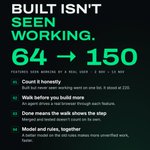
Day 5 of 5. Deployment. My bottleneck is now CI. Our real-DB suite takes 64 to 81 min and a change only merges once tested on the tip of main. Each merge makes the other PRs stale, so about one change an hour, however fast the agents are. So we batch changes into tested trains.
2
32
Happy WedNEsday!
418
355
157
8,522
1,214,903
This is the lesson that every software developer is learning right now. You can still write code by hand because you love to do it.
1
96
BREAKING: we've officially entered a deal to acquire Mailchimp for $3.68 billion!
703
442
718
7,965
2,657,881
Trained on 350,000+ motion clips, MotionBricks generates character motion in real time from target poses. The open-source release includes pretrained models, authoring tools, and a reference implementation built with Newton. Try it today: github.com/NVlabs/motionbric…
91
330
54
4,026
392,466
A Copilot or Claude licence is a start. AI is only as good as the tools you give it. My biggest productivity jump came from giving an agent my email, our code and our tracker, and deciding to trust it with them. For me, trust comes down to permissions you can explain.
1
1
58
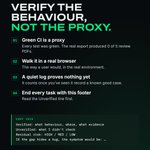
Day 4 of 5. Verification. Every test green. The real export produced 0 of 5 review PDFs. So every piece of work ends with two lists: Verified: what, where, with what evidence Unverified: what we didn't check, and the risk if that hides a bug
1
25
so apparently this robot can now destroy a tumor inside your body using nothing but sound no cuts, no needles and no radiation, and most patients even go home the same day! it's called histotripsy, and the company behind the machine (HistoSonics) is backed by Jeff Bezos and valued at $3.75 billion more than 2,000 people at 50+ US hospitals have already been treated with it > you lie under a robot arm holding an ultrasound head over your belly > the doctor marks the tumor on a live ultrasound image > the robot fires short, intense pulses of sound focused on that one spot > each pulse makes a cloud of tiny bubbles appear inside the tumor and burst in millionths of a second > the bursting rips the tumor cells apart until they turn to liquid > then your immune system clears the mess away over the next few weeks in the main trial, 90% of the treated liver tumors were still under control a year later and they're already testing it on kidney tumors and prostates we're popping cancer with sound now lol
211
1,281
169
7,686
544,905
Introducing Powercore Solid state medium voltage transformer, inverter and breaker – reliable, safe and secure 7.4 MW/9 MVA continuously at 34.5 kVac w/ grid-forming support for 10MVA of peak power Made in America. Operating 2027
425
1,628
491
15,466
3,300,003