

Australian electric vehicle and EV market commentator and car enthusiast
Australia
Joined May 2023
- Tweets10.5K
- Following913
- Followers1.5K
- Likes30K



Pinned Tweet
I’ve had a policy since day one of not blocking anyone. That was back when there was genuine debate.
No longer. I’m here to talk EVs with people who are interested in them, not bots, trolls, and halfwits.
And I still don’t follow accounts that talk politics. That won’t change.

VW is seemingly damned by commentators for pivoting to EVs too soon, and also damned for not doing enough fast enough.

Volkswagen hat ein Problem. Die Kunden kaufen Elektroautos, und ausgerechnet das könnte den Konzern eine Milliarde Euro kosten.
So jedenfalls eine Insiderschätzung, über die das manager magazin berichtet. Rund 40 Prozent des europäischen Auftragsbestands sind inzwischen vollelektrisch, knapp 150.000 Bestellungen liegen für die neuen Elektro-Kleinwagen vor. Und in Wolfsburg macht man sich offenbar Sorgen um die Marge.
Dabei ist das Erstaunliche nicht die Nachfrage, sondern wie lange man Zeit hatte, sich darauf vorzubereiten.
Bereits 2007 förderte der Bund gezielt die Batterieforschung. 2009 erklärte die Bundesregierung den Aufbau einer vollständigen deutschen Batteriewertschöpfungskette einschließlich industrieller Zellfertigung zum strategischen Ziel.
2018 wurde Angela Merkel gegenüber der Automobilindustrie ungewöhnlich deutlich. Sie kritisierte die fehlende europäische Zellproduktion und warnte vor der Abhängigkeit von Asien. Selbst ihr war offenbar unverständlich, warum man die Hersteller von der Bedeutung dieser Technologie erst überzeugen musste.
2024 erinnerte Robert Habeck Volkswagen daran, dass man Volkswagen und nicht Luxuswagen heiße. Er verlangte bezahlbare Elektroautos um 20.000 Euro. VW hatte ein entsprechendes Modell da bereits angekündigt, allerdings erst für 2027.
Und was ist inzwischen passiert?
2019 eröffnete VW eine Pilotfertigung für Batteriezellen, 2022 gründete man PowerCo und seit Dezember 2025 produziert Salzgitter eigene NMC-Zellen. Der günstigste elektrische Polo fährt dagegen mit LFP-Technologie, deren Zellen nach Recherchen von electrive derzeit vom chinesischen Partner Gotion geliefert werden. Eine entsprechende europäische Großserienfertigung wird erst aufgebaut.
Währenddessen ist China, einst eine gewaltige Gewinnquelle für Volkswagen, längst zum Problem geworden. Reuters berichtet, dass der chinesische Beitrag zum Konzernergebnis von früher nahezu der Hälfte auf rund zehn Prozent geschrumpft ist. Der Konzern hat dort seine einstige Marktstellung weitgehend eingebüßt.
Man hat also viele Jahre gut mit der bisherigen Technik verdient, den Wandel durchaus erkannt, seine industrielle Umsetzung aber nicht schnell genug hinbekommen.
Und jetzt sollen ausgerechnet die Kunden ein Renditeproblem verursachen, weil sie Elektroautos kaufen, deren Batteriekosten VW noch nicht ausreichend im Griff hat?
Das ist schon eine bemerkenswerte Interpretation unternehmerischer Verantwortung.
Die Batterie ist beim Elektroauto eine der entscheidenden Komponenten für Kosten, Leistung und Wertschöpfung. Wer dort nicht konkurrenzfähig produziert oder einkauft, kann sich über niedrigere Margen eigentlich nicht wundern.
Die Politik hat geforscht, gefördert und gewarnt. Volkswagen hat schließlich investiert, aber bei wesentlichen Teilen der neuen Wertschöpfung offensichtlich zu spät die notwendige Wettbewerbsfähigkeit erreicht.
Und jetzt soll eine längere politische Zukunft für den Verbrenner helfen?
Man kann den Kunden natürlich weiter erklären, weshalb sie lieber Benziner und Diesel kaufen sollten.
Man könnte allerdings auch endlich dafür sorgen, dass Volkswagen mit den Elektroautos Geld verdient, die seine Kunden tatsächlich haben wollen.


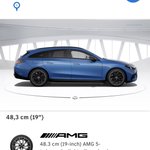
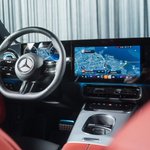
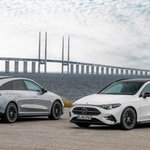
Hey there’s a wagon version of the CLA electric now! And just as I was thinking when I saw this one that it’s a shame there’s no wagon anymore.


I agree. There almost certainly is no demand for an electric supercar. Or an electric ‘32 Ford hot rod, or an electric classic E-Type.
It also doesn’t matter as these cars are barely driven. Their impact is close to zero.


Last week Toyota was also calling for more relaxed emissions rules for diesels in Australia. Toyota just does not care.


“Tesla wants to deliver for all the people that put down deposit money all those years ago, and I think they will.”
Just like they did with FSD that people paid for 5-6 years ago.

Marques Brownlee says Tesla will never deliver the Rocket version of their new Roadster:
“There’s no way you or I will be able to buy this car. We might as well ignore this becoming a real product. The base one, the fan car one, I can see that being possible. But at this point, I don’t even think it matters, because Tesla has proven to us that the Roadster is by far their least important product.”
I think Marques will be proven wrong, on all fronts. They didn’t spend years developing it to just not make it. While this new Roadster still has plenty of development work to go, the 2017 Roadster was much more of a prototype than this new one IMO. Tesla wants to deliver for all the people that put down deposit money all those years ago, and I think they will.
Cautionary tale.
In 1990 Honda launched the NSX. Great car. Probably better than almost every Euro brand supercar of the era. So it was a massive success, right?
No. Because it had a Honda badge on it (or an Acura one in some places).
Understand?


I’m not sure how OP meant this to be interpreted, but this is a great take.
Because neither is wrong; just depends on whether you like classic, beautiful and drawing on a long history, or brash, out there and a bit showbiz.
(Tech aside because I’m sad the Porsche is ICE).


FYI, the guys in your comments who don’t like EVs are the same guys who would wear clothes like these.

I was hoping Tesla would produce another sports car like the original roadster, or the 2017 concept.
Today’s Roadster announcement is a supercar. Fine if you like them. Just not what I was hoping to see.


Did they say anything about the battery location? I missed the first part of the presentation.

Roadster is a true pilot's car: active aerodynamics, a multi-mode suction system & cold-gas thrusters
Exterior
– Concealed headlights, full-length taillight & flush-mounted surfaces for a minimalist, highly technical form
– Super light wheels w/ thin spokes that reinforce structural strength when earthbound
– Ano White paint brings an aerospace-derived finish w/ UV & cryogenic protection, electrostatic dissipation & corrosion resistance
– Gold Glazed tinted glass mimicking the copper coating of spacesuit visors, w/ subtle titanium accents


