

orchidlove since 2007 • 📷 photography • married • © pictures
Deutschland
Joined January 2024
- Tweets1.2K
- Following305
- Followers460
- Likes48.3K




Pinned Tweet
Catasetum ivaneae ‘Purple Fantasy’ × Ctsm. Orchidglade ‘Davie Ranches’ AM/AOS is showing me its deep red flowers with distinctive light spots. It looks different from what was described or shown to me before. It’s a shame the second spike dried up✨❤️💛❤️✨

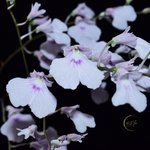
Ionopsis utricularioides (commonly known as the delicate violet orchid) is native to the warmer parts of the Americas and is primarily an epiphyte that grows on twigs and small branches in humid tropical forests and similar habitats.
A beautiful, truly easy-to-care-for species that adorns any windowsill with its airy, fluffy-looking flowers.✨🤍💜🤍✨

Barkeria Jim Balch (scandens × uniflora) has produced two growths with flowers. The nice thing about this hybrid is that it re-sprouts on the old stems and keeps putting out new blooms again and again. It’s not fully colored yet, but already a real beauty✨🩷🤍🩷✨

Catasetum JimD (Ctsm. Frilly Doris x Ctsm. spitzii) has been in my collection since 2017. It always takes a bit longer, and I suspect this hybrid needs somewhat more light specifically because of the Ctsm. spitzii parentage. It takes a long time to bloom, and I have to be quick to photograph it because the flowers already start changing color after just 4–5 days. With its wonderful greenish-yellow to cream-colored appearance, it has a very deliciously spicy fragrance✨💚💛🤍✨

Now Catasetum denticulatum is blooming on the other side of the pseudobulb too. This species typically flowers from late spring to summer. I hope it still settles into it´s rhythm ✨🧡✨


Catasetum denticulatum is a relatively small epiphytic orchid in the subtribe Catasetinae. It was described in 1986 by Francisco E. L. Miranda. The species name refers to the finely toothed (denticulate) margins of the lip. Its common English name is therefore the Small-Toothed Catasetum.
I’ve been growing this stunning Catasetum for a year now. I’m still working on getting its rhythm right, because it normally blooms from early spring to early summer. Maybe I’ll have it figured out by next season. It has a wonderful spicy-minty fragrance ✨🧡🤎🤍✨

The buds are opening little by little. You always hope to see as many as possible all at once. The other flower stalks aren’t quite ready yet, though. It’s still a beautiful show ✨🤍✨


The sight of Cycnoches peruvianum has delighted me from the very beginning. It also has a wonderful fragrance; unfortunately, growing it didn’t work out for me in the second season ✨💛🤍✨


Dendrobium Uni-Scabi (unicum × scabrinlingue) has been in my care since 2018 and it blooms very reliably.
It generally likes to dry out well between waterings. Because I wasn’t careful, some of the pseudobulbs rotted. I managed to save the plant though, and it is now growing very satisfactorily again with three to four pseudobulbs ✨🧡🧡🧡✨


Dendrobium bellatulum prefers a bright to very bright location and cool to intermediate growing conditions. I grow it shaded and mounted in a south-facing window. A cool rest period in winter encourages flowering ✨🤍🧡❤️✨

62
509
More flowers mean more banana fragrance. It fills the whole room ✨🧡❤️🧡✨

I received Cycnodes Taiwan Gold ‘Orange’ as a young bulb. In the first year I had excellent growth, but it’s only just now deciding to bloom.
The flower color leans more toward orange-brown. The blooms are truly palm-sized and, as many describe, they smell like banana. So if you love bananas and orchids, you shouldn’t pass up this special orchid ✨🧡❤️🧡✨

Bulbophyllum lindleyanum is developing 5–6 flower spikes, and the first little flowers opened the blooming season today ✨🤍✨

After a couple of days, the color became even more intense.

I received Cycnodes Taiwan Gold ‘Orange’ as a young bulb. In the first year I had excellent growth, but it’s only just now deciding to bloom.
The flower color leans more toward orange-brown. The blooms are truly palm-sized and, as many describe, they smell like banana. So if you love bananas and orchids, you shouldn’t pass up this special orchid ✨🧡❤️🧡✨
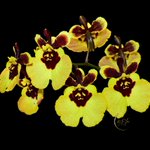
I got Tolumnia Jairak Lion just under two years ago as a very young plant. It’s still very small, but it’s giving me nine bright yellow flowers for the first time✨💛🤎💛✨

Laelia rubescens is a medium-sized to smaller epiphytic orchid. The species name rubescens means “reddish” or “blushing” and refers to the flower color.
It grows primarily as an epiphyte (occasionally also as a lithophyte) in seasonally dry, deciduous forests, usually on sun-exposed branches and trunks, at elevations from sea level to about 5,580 feet (1,700 meters).
I had this compact Laelia in my collection for many years and reliably got it to bloom ✨💜🤍💜✨

Paphiopedilum fairrieanum is a small, cool-growing lady’s slipper orchid. The name honors the English orchid enthusiast R. Fairrie, who exhibited the plant.
Its native range is the eastern Himalayas to Assam (India, Sikkim, Arunachal Pradesh, and Bhutan). It grows terrestrially or as a lithophyte on limestone outcrops, grassy slopes, riverbanks, and in oak forests at elevations of about 4,265–7,220 feet (1,300–2,200 meters).
Growing this wonderful slipper isn’t entirely straightforward, and I didn’t succeed with it either. Still, I have to say that this extraordinary bloom amazes every Paphi fan ✨🤍💚🤎✨

43
490
