
#1 Amazon Bestselling Author, Genetic researcher & health coach helping high-performers optimize via DNA, hormones & root causes Rejuvenate Podcast
Joined November 2022
- Tweets1.6K
- Following148
- Followers570
- Likes637




When a child is really aggressive, it may not be their character. It can be lead toxicity.
Lead works differently from most toxins. Your body can't tell lead and calcium apart very well, so if you have a lot of lead, your body starts using it in place of calcium, including on the proteins that control how your nerves send signals, and then those cells don't work.
That's an even bigger issue in a growing child, who's still building their brain and body. Lead can cause a lot of behavioral issues. It can also stunt their growth and significantly lower their IQ, which is the biggest predictor of success, and even of health, over a person's lifetime.
If that happens when you're young, I'd say it's as ruinous as severe trauma and abuse, possibly even more so, because you can maybe overcome those, but you can't overcome a low IQ.
So when I hear about a child who's super aggressive, the kind who might get labeled with oppositional defiant disorder or ADD, my reaction is: test them for lead. Maybe they have those issues and it's nothing to do with any toxin, but aggression can be an indicator.
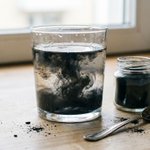
I started taking activated charcoal after every meal, and I ended up absorbing more nutrients, not fewer. That's the opposite of the common worry, which is that charcoal soaks up your nutrients.
I'd been underweight all my life. I started the charcoal as part of a protocol for mycotoxins, the toxins mold produces, and took it about two to two and a half hours after each meal, as the first thing I drank.
Once I was doing that, I got hungrier more quickly, because one of the main things stopping me from being hungry, it turns out, was the toxins. If you feel poisoned enough, you're not hungry. The charcoal mopped them up, I was able to eat more, and so I was able to absorb more. Charcoal was a meaningful part of that, and so was bile flow. They worked together.
I know it's anecdotal, and I wouldn't generalize from it. But I went from about 70 kilos (154 pounds), and quite deficient in quite a few nutrients according to thorough testing, to having almost no deficiencies two years later in amino acids, vitamins, minerals or essential fats. By then I weighed around 85 kilos (187 pounds), with my waist the same size.

A foot bath with baking soda and citric acid, two cooking ingredients you can get in most stores, leaves me warmer and more relaxed afterwards.
You put about equal amounts of each into the water. When they combine they produce carbon dioxide (CO2), so the water starts fizzing and bubbling and smells just like carbonated water. Then you let those little bubbles rest on your skin, and the CO2 is absorbed through it.
It's a nice little boost, and it feels really good. CO2 helps to speed up the metabolism, so afterwards I notice my temperature is higher, I feel more relaxed and I feel better.
This comes from the work of Dr. Ray Peat and his followers. It's an experimental practice, not a clinically validated protocol, but many people find it valuable.
If you want to try it, start with a few tablespoons of each in a foot bath the first time, so you know how your body responds. Using too much can actually give you a panic attack instead of relaxing you, so build up over time. Keep the water around body temperature or slightly lower, not too hot, because the CO2 is better absorbed that way. If you have sensitive skin, test a smaller amount first, as citric acid can irritate some people's skin. And if you have a serious heart or lung condition, don't do this without checking with your doctor first.
For most people it's a pleasant, deeply relaxing experience.

Which common kind of medicine that people take for allergies may also be reducing their ability to get an erection?
A lot of people also take this kind of medicine for stomach acid, so if you have acid reflux, you might be on one without realizing it.
Answer in the reply.
In one study of human testicles, there were about 330 micrograms of microplastics in every gram of tissue on average. That's about 0.03 percent, which doesn't sound like much.
But think about what else is in there at that kind of level. There's probably more plastic in that tissue than there is zinc, or iron, or selenium, or vitamin B12, and those are all essential nutrients. Your body has no need for plastic at all, and it's just disrupting things in there.
We don't know whether microplastics ever get detoxified or removed from the body. So I'd focus on taking in less, rather than relying on getting them out. If you use plastic in the kitchen, start with the chopping board and switch to a wooden one.
Full article on the study: sciencedaily.com/releases/20…

I used to think I had my health handled, because I felt well. But what was actually happening is that I was building up more and more cholestasis, which is the medical word for bile that has stopped flowing properly.
And there's another reason a liver problem is easy to miss. A liver under real strain usually doesn't announce itself as liver pain, because your liver either doesn't have nerve endings or doesn't have the type that let you feel what's going on inside it.
What people tend to get instead is referred pain in the area around it. The right shoulder blade is the common one, then the right side of the neck, then the trapezius, the big muscle across the top of your shoulder.
So tension in those places that stretching and massage never quite fix is worth taking seriously, because it may not be a muscle problem at all.
My book The Detox Paradox goes further on this: how to tell whether your bile is moving, and how to get it moving again. It's at rejuvenateblueprint.com

If you take your health seriously and you've ever tried to "support your liver", this is for you. Most people who set out to do that buy milk thistle or a liver formula, and then they wonder why they feel worse.
Your liver processes most toxins in two phases. Phase 1 breaks a toxin apart, and the compounds it creates are often more toxic than the original substance. Phase 2 then packages those compounds so your body can get rid of them.
If Phase 2 is slow, because you're low in the nutrients it needs or your genetics make some of its pathways sluggish, those more toxic compounds circulate and do more damage than the originals would have. That's exactly what was happening in my body. My Phase 1 was working fine, but my Phase 2 was genetically compromised.
This is one of the reasons some people feel terrible when they take an herb or supplement that "supports the liver", like milk thistle. If Phase 2 can't keep pace with Phase 1, you end up with more of those toxic compounds than you can remove.
Milk thistle isn't a bad herb, but taken on its own it can actually make you feel worse, not better.
So I'd go at it the other way around and get the nutrients in place before reaching for a liver herb. Every one of the pathways your liver uses to package a toxin for removal needs specific nutrients to run, and if those nutrients aren't there, it doesn't matter how many detox supplements you take.

If you do breathwork to help your body clear toxins, this one's for you: breathing harder doesn't get more toxins out through your lungs.
Your lungs really are an exit. With every breath they let out a meaningful amount of volatile toxins, the ones that evaporate easily into the air.
But hyperventilating, holding your breath and other intense breathing, like fire breath in yoga, release stored toxins into your blood rather than getting more out. What over-breathing does is blow off carbon dioxide. As your carbon dioxide drops, less oxygen gets released to your tissues, and your body reads the low CO2 as a stress signal.
I'm not saying breathwork is bad. Whether something like Wim Hof breathing is a good thing overall isn't settled in either direction.
Other than breathing from your diaphragm (belly breathing), there isn't a huge amount you can do to help your lungs get toxins out. So supporting your lungs is really about cutting down the toxins going into them. A good air purifier, running all the time in the rooms where you spend your time, is in my opinion one of the most underrated health investments you can make. If mold is the worry, get one that says it filters mycotoxins, the toxins mold makes, because a HEPA filter alone isn't enough.
My new book, The Detox Paradox, goes further into this, from what releases toxins from storage to how to cut down the toxins you breathe in. You can find it at rejuvenateblueprint.com
When you hear that smoking's bad for you, it's easy to kid yourself that you won't be the one who gets lung cancer.
I started smoking at 13 and was a chronic smoker until I was about 27. I knew it was bad for me, and I'd read the same health warnings as everyone else.
Around that time, a dentist told me that if I didn't stop soon, my teeth were going to fall out. I already had a lot of gum disease, my gums had receded a lot, I'd had a lot of bone loss, and my teeth were really starting to get loose.
That wasn't a maybe. It was already happening to me, and it was one of the things that really shocked me into quitting.
What stopped me was a combination of two things: hitting a point where the cost of carrying on was clearly higher than the cost of stopping, and finding another way of dealing with the feelings I'd been using cigarettes and other substances to avoid. Without that second piece, the first one would've just meant staying off them through sheer willpower for a while, then relapsing.
A gut binder like activated charcoal or clay won't kill an infection, but it may still help your immune system clear one.
It mops up a lot of the toxins the infection creates, so your immune system doesn't have to deal with them, and that may free it to deal with the infection itself.
That matters because the more toxicity you already have, the more your body's resources are split. Your body is trying to deal with the toxins and the infection at the same time, so the infection is harder to clear.
If it's an acute infection, one that's potentially life threatening or could really damage you, you almost certainly do want to treat the infection.
And if your immune system can't clear it, the infection itself still needs addressing, but the binder is at least minimizing the damage in the meantime.
My new book, The Detox Paradox, goes much further into binders and into infections that keep making new toxins. You can find it at rejuvenateblueprint.com
In the 1950s and 1960s, a Soviet physician called Dr. Konstantin Buteyko was given the job of monitoring the breathing of two very different groups of people: those in peak physical condition, including athletes and cosmonauts, and those who were terminally ill. He found that the healthier and fitter a person was, the less air they breathed, and the people who were sickest and closest to death breathed the most.
Until then, people had assumed heavy breathing was simply a consequence of being ill. Buteyko asked a different question: what if the over-breathing wasn't just a symptom, but a cause? So he trained seriously ill patients, many with breathing disorders, to breathe less, and according to his clinical records and the accounts of those who worked with him, many of them got better.
That's the insight we owe him: chronic over-breathing is a driver of poor health, rather than merely a sign of it. I don't think what he taught is a fix for every health issue, but I do think it's an essential foundational pillar of good health.
Every time you breathe out, you lose carbon dioxide (CO2). If you're breathing more air, more often, than your body needs, you lose more CO2 than your body is producing, and your CO2 drops. Low CO2 is a stress signal that makes you want to breathe even more, so people get stuck in a loop.
At its extreme, that loop is hyperventilating, which is why the standard advice for someone who's hyperventilating is to breathe into a paper bag: they keep breathing their CO2 back in instead of losing it, and the cycle breaks.
But most people aren't at the extreme. They're slightly, chronically over-breathing, all day, every day, for years, and most of them have no idea they're doing it.
One acetaminophen (paracetamol) tablet, once, is very unlikely to cause a problem: it uses up a little of your glutathione, the main antioxidant your body makes for itself, and unless your body is severely struggling, your levels bounce right back.
Even half the maximum dose on the label, taken daily, or on and off, say two weeks out of every month, draws your glutathione reserves down more and more over time, and at the very least that means more oxidative stress.
That same regular use, if you also have high levels of another toxin that needs glutathione, like heavy metals or mycotoxins from mold, leaves your body with much less glutathione left for them.
So staying under the maximum on the label doesn't mean you can carry on indefinitely. If you take acetaminophen regularly, support your reserves with cysteine, glycine and taurine, with a binder in place since taurine and glycine thin your bile and help it flow, and treat it as an occasional painkiller rather than a daily one where you can.
My new book, The Detox Paradox, goes further on this in its section on painkillers, including how acetaminophen also burns through taurine and sulfate, two other things your liver uses to package toxins for removal. It's at rejuvenateblueprint.com
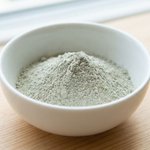
A purified zeolite clay cut the amount of lead people absorbed from their gut by about 90%, when they swallowed the clay and the lead together.
That's from a randomized, double-blind, placebo-controlled trial in 42 healthy people. The clay was purified clinoptilolite, which is a type of zeolite, and the lead was a traceable form of lead they swallowed along with it.
To me that's a big deal. Zeolite is a binder, something you swallow that stops lead in your gut from being reabsorbed, so it leaves with your stool instead. This result means it's also massively reducing how much lead you absorb from your food and drink in the first place.
I tried one form of zeolite myself, and it didn't make any difference to my lead levels when I tested. But the research on lead specifically surprised me. Of the binders you can buy without a prescription, like activated charcoal and bentonite clay, zeolite is the one with the most evidence for lead.
