

Post-SSRI Sexual Dysfunction for 7 years. Struggling with physical and cognitive symptoms. Raising awareness and building community with other PSSD sufferers
Canada
Joined November 2023
- Tweets1.3K
- Following247
- Followers630
- Likes3.9K




Pinned Tweet
After 6 years of debilitating Post-SSRI Sexual Dysfunction (PSSD), it is good to finally see detailed mainstream coverage.
Thank you Daniel Bergner for your sensitive and well-researched piece.
nytimes.com/2025/11/12/magaz…

Emily Grey retweeted

Then, after the break, Vanderbilt senior Lauren Friedman is here to talk about Post-SSRI Sexual Dysfunction and why UK regulators now officially warn patients about it, but the FDA still does not. She says an antidepressant took away her sexual and emotional function, and even after stopping, she still struggles to feel joy, attraction, or even love for her own family. Find more on Instagram at @StolenYouthMovement.

Bobby Lee was on hard opioids by age 12. He got sober, relapsed, and relapsed again after his dad died. The MADtv & Bad Friends star joins me to discuss his rock bottom, staying sober today & his upcoming stand-up special Bobby Lee: Finally. LIVE at 5 ET teapawt.net/i/broadcasts/2gqvBnblK…
Emily Grey retweeted

This whole thing with SSRIs are dangerous to use long term, but fine to use short term have to stop.
Some of the worst cases of PSSD I have seen from people are the ones who took these drugs for no more than a month. Some even a couple of weeks, or a couple of days at a low dose.
A lot of people take these drugs for decades and stop without a problem, and without any lasting side effects.
People need to stop making definitive blanket statements when we clearly do not understand exactly who is susceptible to these post drug syndromes, or why this even occurs.
Emily Grey retweeted

A #PSSD friend and I are looking for volunteers for a Photograph campaign to raise awareness for this devastating iatrogenic syndrome. Our stories need to be heard from the outside world 🌍 Please reach out to me if you like to join !
#pssdisreal

Emily Grey retweeted

"Is it fair and honest to describe PSSD as permanent?"
Persistent harm must be understood in practical, patient-centered terms
Objection: "There is no proof that PSSD is biologically irreversible. Isn't describing it as permanent scientifically inaccurate?"
My response:
I am using permanent in a practical, patient-centered sense. There are currently no established treatments. We do not know how long it might take for treatments to start to emerge.
I am not claiming that researchers have established that every underlying biological abnormality is impossible to reverse.
But a condition that oftentimes naturally persists indefinitely, doesn't have clear biomarkers, and for which there are no treatments deserves to be taken seriously.
To put it concisely:
-A condition that persists for decades may be functionally permanent.
There is currently no established intervention that reliably reverses PSSD.
Reliable long-term recovery rates remain unknown.
Some people may live with the condition for the remainder of their lives.-
If someone develops PSSD at 40 and experiences it until death, the condition was permanent in their lived experience.
The theoretical possibility that scientists might eventually discover a treatment does not restore the years they have already lost.
Patients should not have to demonstrate molecular irreversibility before decades of treatment-associated disability are recognized as potentially lifelong harm.
Emily Grey retweeted
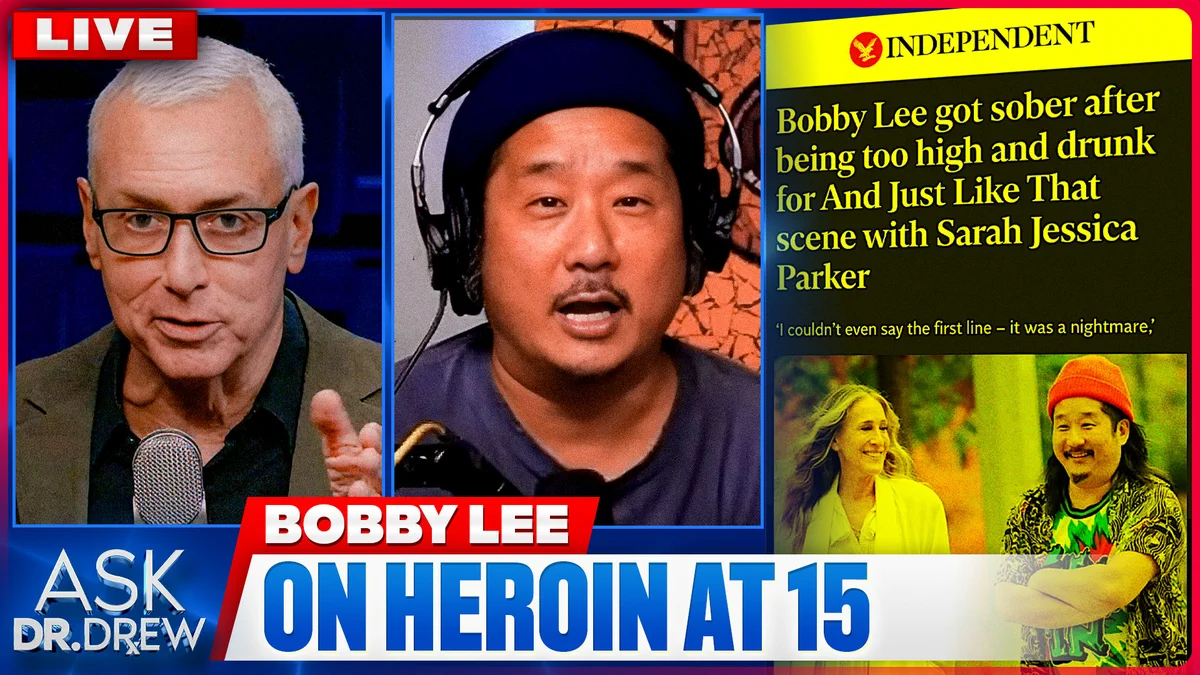
Following Bobby Lee on today's @AskDrDrew:
Vanderbilt senior Lauren Friedman says an antidepressant left her with Post-SSRI Sexual Dysfunction (PSSD), a condition UK regulators now warn about while the FDA has not.
Americans for Ibogaine CEO Bryan Hubbard @w_bryan_hubbard speaks on Texas's $50 million ibogaine trials, and what Stanford's research on veterans with traumatic brain injuries shows about the psychedelic.
LIVE at 2pm PT / 5pm ET
teapawt.net/i/broadcasts/2gqvBnblK…
Emily Grey retweeted

youtube.com/watch?v=TPUvsWjW…
Really appreciate everyone who participated in this discussion and helped bring more attention to PSSD. I'm especially glad to see greater acknowledgment that the symptoms extend far beyond sexual dysfunction, including a wide range of physical, neurological, and emotional symptoms that can be absolutely devastating.
This is an important discussion that deserves far more views and attention than it's received. I highly encourage people to take the time to watch and share it.

Emily Grey retweeted

The MHRA has finally acknowledged PSSD and planned to add it to patient information leaflets. And that's just with low reported numbers. Imagine what we could achieve if everyone reported their condition.
We know that hundreds of thousands of people have PSSD. Right now, the global reported cases are in the hundreds. If this number increased even to thousands, we would have a much stronger case for institutions to respond and take us seriously. But how can they make a case without data?
If you haven't reported PSSD, please take a look at the PSSD Network's handy guide that takes you through it step by step.
#MedSafetyWeek

This week, 129 countries are participating in #MedSafetyWeek to encourage people to report medication side effects.
PSSD patients: MAKE YOUR VOICES HEARD!
PSSD is severely underreported. Every unreported case makes our condition harder to recognize and understand.
Reporting takes just 10–20 minutes. Your report matters.
Report your symptoms here:
@PSSDNetwork
Or
@SIDEfxHUB
Reporting can lead to real change.
Australia's medicines regulator recognized persistent sexual dysfunction after antidepressant use. Malaysia subsequently issued a similar safety communication.
More recently, the UK's influential medicines regulator, the MHRA, acknowledged PSSD by name.
Other countries may follow.
But regulators need the data to act.
If you haven't reported your PSSD, do it today. Make your case count.
#MedSafetyWeek #PSSD #PatientSafety

Emily Grey retweeted

The leading drug market in the world fails when it comes to warning Consumers about the dangers of their products.

Shockingly, the US FDA has yet to require a specific warning about persistent post-SSRI sexual dysfunction (PSSD), revealing how much the US system has been captured by the drug companies it allegedly regulates.
~@AKECassels
Why Weren’t We Warned?
brownstone.org/articles/why-…

Emily Grey retweeted

And yet, when people with PSSD say that SSRIs have left them unable to feel love, emotions, sexual desire, or intimacy, we're told it's not a big deal.

Anytime someone claims that antidepressants are being "demonized" ask them what specifically patients should be told about their risks prior to treatment.
9 times out of 10 they will deny the risks even exist. These people do not actually care about accurate medical information or patient autonomy. They simply feel uncomfortable and scared to know that the drugs they are on can have negative long-term consequences and want med-harmed people to shut up so they can go back to feeling comfortable. It's not deeper than that.
Emily Grey retweeted
POV: you took medication that was supposed to help you, but now you can't feel your own body, your sexuality, or your emotions. months pass, and you're still begging your own nervous system to come back. this is PSSD. 💔
and there is no treatment
The new MHRA safeguards for antidepressant prescription are a big step in the right direction. Glad to see them mention PSSD directly. Congratulations to UK PSSD advocates including @KatieRColl and ally @yassie_pirani for this victory.

The MHRA is introducing a series of new measures to strengthen how risks associated with antidepressant medicines are communicated to patients, carers and healthcare professionals. Read the full drug safety update here: brnw.ch/21x6qlr


Emily Grey retweeted
The Daily Mail has covered my experience relating to #antidepressants in this article about #PSSD
For more information see @PSSDNetwork
dailymail.com/health/article…


Antidepressants ruined my sex life... and I'm still suffering the side effects nearly 15 years later. Now I realise I didn't need the pills to begin with. You must think before taking these drugs trib.al/Cy6zLRo

Thank you @KatieRColl. Amazing PSSD representation!
Antidepressants ruined my sex life... and I'm still suffering the side effects nearly 15 years later. Now I realise I didn't need the pills to begin with. You must think before taking these drugs trib.al/Cy6zLRo
Emily Grey retweeted

Anyone who labels an iatrogenic harm testimonial as “fear mongering” is just a pure coward. Plain and simple.
This.
This is why this injury has remained in the dark for decades. Because when we tell them- they just straight-up lie and refuse to record or report what we're telling them.
Depression doesn't cause numb genitals. No one actually thinks that's a symptom of depression.
#PSSD

Emily Grey retweeted

When Lauren Friedman showed up at Amherst College, she was surprised to discover that almost every single girl in her dorm and on her athletic team was already taking SSRIs.
Inside jokes about Zoloft & Lexapro were common on campus, and everyone seemed deeply grateful their persistent anxiety and depression from teenage years was magically disappearing from a pharmaceutical drug.
Like her peers, @lololizzle had struggled earlier in life with both anxiety and depression -- so Zoloft seemed like a perfect solution. After all, all of her friends were taking it too, so how bad could it be?
Little did she know, SSRIs are causing a silent epidemic among Gen Zers called Post-SSRI Sexual Dysfunction, or PSSD. Like untold tens of thousands of other people just like her, Lauren now has completely lost her libido, sensation in her genitals, and even a sense of emotional connection with the people around her... PERMANENTLY.
She says she and others like her were NEVER given informed consent about the risk of developing PSSD, and American doctors will rarely even diagnose the condition at all.
Whether it's birth control being thrown in the faces of teenage girls to magically "regulate your hormones" or Zoloft instantly prescribed to "make you happy," one thing is clear--the young women of Generation Z are being poisoned en masse without any understanding of what may happen to them down the line.
Emily Grey retweeted

More and more people are speaking out. Please also speak out, reduce the stigma around it and tell your truth.

A reminder to the post-drug syndrome community: we need more of you to speak up.
If you’re living with PFS, PSSD, Post-Accutane Syndrome, or another persistent post-drug condition, please consider recording a short testimonial for Moral Medicine.
It does not need to be a full interview. It does not need to be polished. A simple 2–5 minute video on your phone is enough.
Tell people what you took, what happened, what symptoms have persisted, and how this has changed your life.
Awareness only grows when people are willing to speak.
For years, patients have been dismissed, minimized, and told these conditions are rare, psychological, or unrelated to the drugs they took. The more real people who come forward, the harder that becomes to maintain.
If you’ve been asking what you can do to help this movement, this is something you can do right now.
Record your story and send it to [email protected].
You can also record it in your native language. English is not required.
Please don’t wait for someone else to speak for you. If you’re able to tell your story, tell it.
For more information about submitting a testimonial, please reach out to [email protected].