
Commercial Management specialist in Aviation with interests in regional economic events and developments.
Kampala, Uganda
Joined September 2010
- Tweets1.4K
- Following1.5K
- Followers332
- Likes1.6K


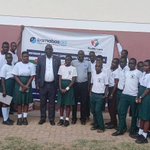
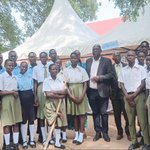
*Adjumani, 13th Nov 2026*
JOINT PDM MONITORING AND BARAZA IN DZAIPI - UPDATE
Yesterday and today, we undertook joint PDM monitoring and Baraza in the 5 parishes of Dzaipi Sub-County, Adjumani District and found a mixed bag of achievements and challenges.
Achievements:
1) Some SACCOs are well organised, with clean records and visible enterprises in agriculture, poultry, goats and small business.
2) Some beneficiaries have invested wisely and are already seeing returns.
Challenges:
1) Some SACCOs still have weak record keeping.
2) Some beneficiaries have delayed repayment, which threatens the revolving nature of the fund.
3) A few cases of poor enterprise selection and limited follow-up by parish leaders were noted and corrective actions being undertaken.
Our focus remains on repayment sensitisation.
We have emphasised to all beneficiaries that PDM money is not a grant but a revolving fund. Paying back on time allows others in the same parish to also benefit. When you fail to pay, you kill the SACCO.
We shall continue to follow up, parish by parish, to ensure every shilling is accounted for and every enterprise is supported to succeed. – at Adjumani, Uganda



1
55
*Adjumani, 12th Nov 2026*
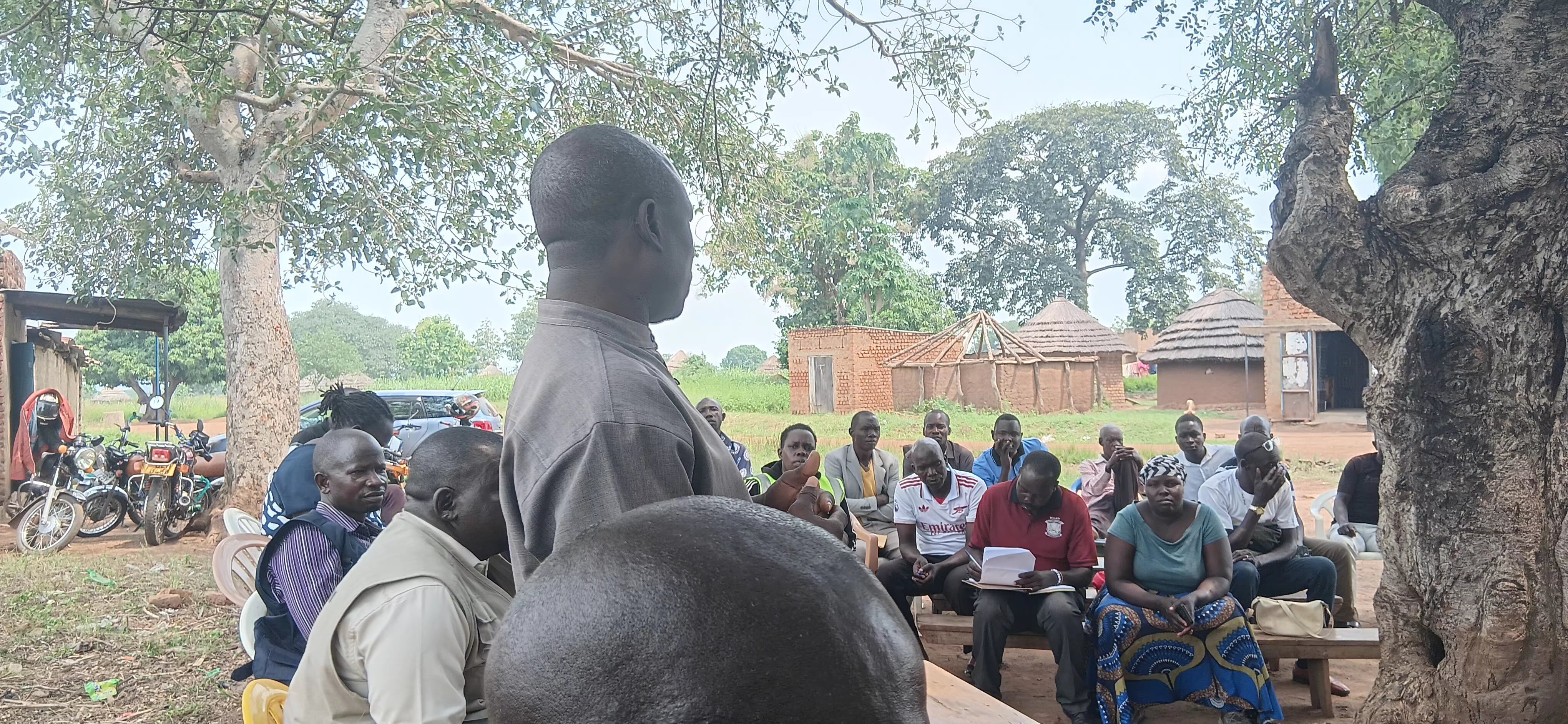
Today we (as a district and sub-county security, political and technical team) had a joint PDM monitoring and Baraza at Dzaipi sub-county headquarters for communities of Adidi and Gbwere parishes and later at Logoangwa parish, appreciating beneficiary achievements, challenges and better delivery commitments. We urged beneficiaries to overcome the challenges faced, use their money for prescribed production and pay back on time, so their neighbours can also benefit. – at Adjumani, Uganda


40
*Adjumani, 11th Nov 2026*
Attending our District Baraza with the Itirikwa Sub County community, receiving various accountability updates on service delivery in the various sectors by Sub county Accounting officer and the district technical heads.
Itirikwa sub-county is the district's food basket, hosting Ugandans from various parts of the country and producing for those outside the district.
This is the 3rd Baraza since the start of this FY. The district political and security leadership are in good attendance.


Adjumani sits in a dry corridor, so when we get two or three days of cool mornings, light breeze, a little cloud cover, not that heavy dusty heat like the case most times, we immediately feel how much easier everything is.
This kind of weather we witnessed over the weekend does not just happen. It must be supported by strong presence and preservation of more trees, wetlands, and soil cover holding moisture. So, continuous tree growing, not just one-off planting is not negotiable, must be given the energy given to other activities in Adjumani.
Imagine if we brought more tree cover back around all our sub-counties? Supposing we together develop a concept of "Adjumani Green Mondays" - where each department, school, Lower Local Government structure and partner plant or protect just one tree every Monday? Low cost, but in a year it is 50 trees per institution. Let's all agree to be champions. – at Adjumani, Uganda
37
*Adjumani, 3rd Nov 2026*
Together with the District and sub-county political, technical and security leadership, today, we launched the District Community Access Roads maintenance works in Ofua and Adropi subcounties.
Our people must have more convenient access to markets with their PDM-enhanced produce for better livelihood and infrastructure development has been one of the NRM Government's priority areas.
This launch appropriately responds to the cries of our people. Upon completion, mothers will better access hospitals and health facilities, children will also reach schools more securely, police will reach crime scenes more timely and life will be better for everyone.
I challenged the stakeholders to fully understand the scope of the works and duration and also help in ensuring quality work, under Force on Account.
The roads are:
1) Kureku- Amelo (6km)
2) Mirieyi - Ofua (8.5km)
3) Ofua - Subbe - Mirieyi (10km)
4) Openzinzi - Obilokongo (9km)
5 Obilokongo - Ayiri (12km)
👍 👍 👍 👍 – at Adjumani, Uganda


1
1
52
"As siblings, when we stand before you today as Dr, Engineer, Senior Counsel, IT Consultant, Teacher and more, we do not stand as individuals. We stand as a product of three forces: The grace of God, the sacrifice of our parents, and the discipline we demanded from each other. Our parents ate less so we could learn more. They wore old so we could wear gowns. We thank God first, our parents second, and ourselves for refusing to betray that sacrifice."
This statement above melted my heart and I thanked God too how family heads can focus themselves and generations that follow. A very powerful moment to charge other families to do much more for their families. Behind each title is a mother's prayer, a father's sweat, and a sibling who refused to let the other fail.
Forever, be thankful to God for grace, to yourselves for hard work and unity, and to your parents for a sacrifice no one else will ever understand. God bless us all as we endeavour to do this. – at Adjumani, Uganda
42
Uganda needs to implement National Health Insurance Scheme
National Health Insurance is the difference between "pay before treatment" and "treat first, pool the risk".
In Sub-Saharan Africa, where 60-70% of health spending was out-of-pocket and pushed families into poverty, insurance has 4 core importances:
1. Financial Protection - Stops catastrophic health expenditure. Without it, one cancer admission or C-section in Mulago private wing costs 3 months salary.
2. Access - Insured people are 2-3x more likely to use outpatient, antenatal, skilled birth attendance and hospital care than uninsured.
3. Equity - Premiums based on income, with government subsidizing poorest. Means poor farmer in Adjumani gets same ward as teacher.
4. Universal Health Coverage (UHC) - Core to SDG 3.8 and Abuja Declaration of 15% budget to health.
Success Stories in Sub-Saharan Africa
1. RWANDA - Mutuelles de Santé - The Gold Standard
Started 2004 after genocide. Model: every household pays ∼$8/year, graded by Ubudehe income category, government pays for poorest. Decentralized to health centres, managed by community.
Result by 2023:
• 85-90% of population insured - highest in Africa
• Out-of-pocket fell to lowest in Africa
• Life expectancy 49 years in 2000 -> 69+ in 2023, infant mortality down 66%, child mortality down 70%, maternal care near universal
• First in SSA to roll out pneumococcal and HPV vaccines through insurance 8beab524
Lesson: Political will + community ownership + donor pooling.
2. GHANA - NHIS (2003)
Replaced brutal "cash-and-carry" where you paid before being touched. Bill Gates called it one of Africa's most successful health models.
Coverage: Outpatient, inpatient, maternity, eye, oral, emergency. Funded by NHIS levy (2.5% VAT), payroll tax, informal premiums.
Result:
• Over 10 million active members by 2023 (∼52% population)
• Covered over 60% of exempt groups - pregnant women, children under 18, elderly
• Increased hospital deliveries and reduced self-medication
Challenge: Delay in claim reimbursement and exclusion of cancer, transplant, cosmetic.
3. KENYA - NHIF to SHA
Started as formal sector hospital fund, now reforming to Social Health Authority (SHA) covering informal sector via mobile money. Insured more likely to use care and have lower out-of-pocket. M-Pesa premium collection is innovation.
4. ETHIOPIA - Community Based Health Insurance (CBHI)
From 2010/11 pilot to 7.5% and growing. Studies show CBHI beneficiaries use more outpatient care and are less exposed to catastrophic spending.
Why Uganda Should Care Now
Uganda is the last major EAC country without a functional national scheme. Parliament passed NHIS Bill in 2021/2023 but implementation stalled. Uganda Bureau of Statistics shows 38% of Ugandans borrow or sell assets to pay hospital bills.
If Adjumani + West Nile or any district had CBHI like Rwanda:
• District hospital would get predictable revenue, not rely on PHC grant
• Private clinics would compete on quality, not just price
The Rwanda model is most relevant for Uganda: low income, agrarian, post-conflict north, high community trust.
Time to review the NHIS Bill 2021/2023 earlier passed by Parliament but not operationalised. – at Kampala, Uganda
106
In Uganda this week, the debate is about accountability for miracle claims, not about whether God does miracles.
Here is the summary of what happened:
The Challenge:
Motivational speaker and commentator Frank Gashumba offered Shs200M, later raised to Shs500M, to any pastor, prophet or apostle who could accompany him to the ICU at Mulago, Nsambya or Mengo Hospital and instantly heal a critically ill patient under verifiable conditions. He said he would get saved and apologize publicly if it happened.
His argument: pastors who publicly claim to heal cancer and serious illnesses should be willing to demonstrate it where thousands are fighting for life, and that some use the name of Jesus to extort money from poor followers.
The Response from Pentecostal leaders:
Pastors were put on the defensive. Pastor Robert Kayanja of Miracle Centre Cathedral Rubaga responded: "Our miracles aren't fake. They are God-made".
The row widened to family - Sheila Gashumba clashed with Kayanja Jr, and Gashumba said his wife Patience Mutoni Malaika was worried about backlash but he would not back down, calling some pastors "crooks" and "thugs".
Gen. Muhoozi Kainerugaba also weighed in today, demanding an apology from Gashumba for despising Pastor Kayanja and defending religious freedom.
Is the Devil on the loose?
Two views are circulating online:
1. Believers' view: Some Pentecostals see this as a biblical test similar to the devil tempting Jesus in the desert - that true power never performs for a bet. To them, mocking men of God invites spiritual attack.
2. Critics' view: Others see it as "The Miracle Business" debate - where desperate Ugandans battling illness, unemployment and debt are sold hope for money, and the question is consumer protection, not theology.
Gashumba himself insists he is not attacking God or Jesus, but what he calls fake prophets.
What can be done?
Under Article 29 of the 1995 Constitution, Uganda guarantees both freedom of worship and freedom of expression. The Government cannot declare who does real or fake miracles - that would violate secular state principle.
The best practice from past religious tensions has been 3 things:
1. Don't take sides publicly - Calling one side fake or the other side crooks will inflame 10+ million Pentecostals and also alienate those demanding accountability.
2. Activate existing structures: Direct the Inter-Religious Council of Uganda (IRCU) and the Directorate for Ethics & Integrity to host a closed-door dialogue between Frank Gashumba and the Born-Again faith federation. Gen Muhoozi's call for apology shows the security establishment is already concerned.
3. Separate two issues: a) Protection of freedom of worship and safety of pastors and Gashumba's family, b) Long-term regulation - Strengthening URSB / NGO Bureau financial transparency for all faith-based organizations that solicit public money.
Quelling this tension should not be about silencing Gashumba or shutting churches. It is about moving the debate from TikTok insults and pulpit curses to a structured conversation about faith, evidence, and exploitation of vulnerable believers. – at Kampala, Uganda
2
143
No African country has 100% eradicated charcoal but Morocco and others came very close.
Morocco effectively eliminated charcoal for household cooking in the 1980s-90s through the "Boutagas" program.
• Government subsidized LPG (12kg butane bottle at ~ $3.50). Every corner shop sells it.
• Result: Today >85% of Moroccan households cook with LPG, <1% use charcoal. Charcoal only for BBQ restaurants.
• Same in Tunisia, Algeria, Egypt - charcoal is not a household fuel anymore.
These countries heavily subsidised on gas (Morocco spends ~ $600M/year). They applied a National distribution network - gas available within 2km everywhere and thirdly, they banned charcoal production from state forests early.
In the Sub-Saharan Africa, there has been no eradication, but RWANDA is the closest attempt.
• In 2004, 79% of households used charcoal. Target was 42% by 2024, 0% in Kigali City by mid 2020s.
The strategy was to ban charcoal in Kigali, levy heavy fines, subsidized pellet stoves and improved cookstoves - 90% subsidy for poorest, 45% for middle class. 25 companies were licensed to make clean stoves, PAYG LPG pilot by BBOXX. Finally, distribute 500,000 improved stoves by 2026.
But even Rwanda has not eradicated - 83% of Western Province still uses wood, 380 hectares of forest cut weekly for charcoal.
Other near examples include Senegal, Seychelles and Mauritius.
In Uganda’s case, Executive Order no 3 banned commercial production and trading in charcoal but allowed a small window of 1-2 bags for household consumption. This was abused by charcoal dealers through bodaboda trips to designated collection points, making it a challenge to enforce.
So as we ban charcoal, it is only reasonable that the government offers a cheaper alternative at the same price point. Morocco succeeded because a gas bottle became cheaper than a charcoal bag. In Uganda a gas refill is 130k vs charcoal bag 100k, so total ban alone might sound a harsh judgment upon the poor whose population percentage is high in urban and peri-urban areas. – at Kampala, Uganda
The Shilling will not strengthen because we beg for dollars. It will strengthen when we keep the dollars we already earn - coffee, gold, tourism - and stop burning dollars on what we can produce - fuel, oil, vegetable oil.
If government does not repatriate export dollars and UNOC does not cut dealer margins, petrol will hit 7,500 by December regardless of world price.
PROPOSED IMMEDIATE FISCAL INTERVENTIONS (0-90 Days)
A. Fuel Price Relief
i. Suspend incremental Excise Duty of Shs 200/litre introduced FY 2025/26 for 9 months (up to June 2027). Revenue foregone: ~Shs 180bn. Impact: -Shs 200 at pump.
ii. Zero-rate VAT at import for Uganda National Oil Company (UNOC) bulk fuel for 12 months. Foregone: Shs 95bn. Impact: -Shs 120 at pump.
iii. Introduce Diesel Rebate Voucher (10%) for registered farmers/fishermen/manufacturers via TIN/EFRIS.
B. Reduce Government-Induced Dollar Demand
i. Moratorium on new external disbursements for non-priority, non-oil projects (6 months) and freeze MDA foreign vehicle/foreign travel paid in dollars. Saving: ∼$`200m forex demand.
ii. Immediate payment of Shs 1 trillion domestic arrears to SMEs to reduce private dollar borrowing.
C. Force Repatriation of Export Proceeds
Introduce 2% Refundable Export Levy on gold and coffee where proceeds are not repatriated through BOU within 90 days. Levy refunded upon proof of repatriation. Expected inflow: `$400-600m in 6 months. No new law needed - can be done via Finance (Amendment) Statutory Instrument.
3. MEDIUM-TERM (3-12 Months)
i. Amend Investment Code: Mandate 40% local content paid in UGX and 20% profit retention for 2 years for FDI >$50m.
ii. Grant UNOC refinery 10-year tax holiday conditional on 50% domestic supply at import parity minus Shs 300.
iii. VAT refund of 50% to hotels/tour operators who repatriate dollars via formal banking.
100
Uganda is one of the top 2 FDI destinations in East Africa because of oil, but that FDI is import-intensive and profit-repatriating. Combined with offshore investors pulling out of government bonds and weak gold/coffee dollar return, it creates the weakest shilling in East Africa and record repatriation - classic enclave economy syndrome.
Solution that economists are now proposing include (1) force gold exporters to repatriate 30% of forex, and (2) make coffee export proceeds return faster.
According to Bank of Uganda and UNCTAD World Investment Report 2026:
1. FDI - Uganda IS top, but not the absolute highest:
• UNCTAD 2026: East Africa FDI rose to 15bn in 2025. Ethiopia was #1 at 4.0bn, Uganda #2 at 3.4bn, Tanzania about 2bn. Kenya is not in top list this year.
• In Central Africa, DRC leads with ∼$`3bn.
• The FDI is not broad - 90% is oil and gas [Tilenga, Kingfisher, EACOP pipeline, refinery] and battery storage. It is enclave investment: dollars come in to buy imported drilling rigs, pipes, expatriate salaries - they don't circulate in Kampala markets. – at Kampala, Uganda
58
Fellow Ugandans, and especially our children who start UCE tomorrow.
I wish you success. You are the 39th generation of UCE under NRM, a generation that has not known the darkness of lack of schools that was there before.
These exams are not just about passing; they are about proving that you have acquired knowledge that will help you create wealth and fight poverty in your homes. Uganda does not need mere job seekers, we need job creators.
I ask you to be disciplined. No malpractice. No fear. The NRA fought for your right to sit that paper freely and peacefully.
I thank your parents, your teachers, and the Ministry of Education and Sports.
Go and do us proud. – at Kampala, Uganda
2
59
In 1962 Uganda was called "Pearl of Africa" - small, rich, well-governed, with excellent social indicators. The 1971-86 period destroyed that baseline. What you see in 2026 is recovery and massive quantitative growth (population x6, economy x22, schools x100).
The much required qualitative transformation - industrialization, per capita income, and institutional strength - is still work in progress.
Happy Independence reflections... – at Kampala, Uganda
LAWS OF MONEY
1: Money doesn't come to those that WANT it, but to those that DESERVE it.
2: Money doesn't stay with big earners, but with wise spenders.
3: Money can serve you, it can equally make you serve it.
4: The money you save in times of abundance, will save you in times of need.
5: The blind love of money will cost you your humanity.
6: No amount of money will ever be enough as long as you have desires and needs.
30
Welcome to Entebbe, the front door entrance to the Pearl of Africa - where most visitors land, and where lake, nature and history meet.
Ugandans are warm, welcoming people with a diverse culture (50+ tribes). Take time and see for yourselves a few of possible areas of interest:
1) Gorilla trekking in Bwindi Impenetrable Forest - half of world's mountain gorillas
2) Source of the Nile in Jinja
3) Wildlife safaris - Murchison Falls, Queen Elizabeth, Kidepo Valley National Parks (lions, elephants, tree-climbing lions)
4) Lake Victoria - Africa's largest lake
Our tourism opportunities are numerous. – at Adjumani, Uganda
1
7
324
There is a common thread connecting emerging issues in Uganda. It is basically time for accountability. From RDCs, to PDM SACCO leaders, to surveyors, to MPs - the public is asking: *"Where is our money and where are our services?"*
The political temperature is about delivery, not titles. – at Adjumani, Uganda
25
Incredible!!!
This happened yesterday, 30th September on Fydubai flight FZ1073 Dubai to Tel Aviv.
It is confirmed by Israeli PM, Indian PM, and Flydubai.
• Flight FZ1073 was cruising at ∼34,000 feet with 174 people on board.
• Co-pilot, reported to be an Omani national, stabbed Captain Smit Machchhar, an Indian national, and tried to take control to crash the aircraft.
• The aircraft lost nearly 14,000 feet in less than 30 seconds and transmitted emergency codes 7700 and 7500 (unlawful interference).
• Despite massive blood loss, Captain Machchhar fought back and managed to unlock the cockpit door, allowing passengers and crew to rush in and overpower the attacker.
• Two off-duty flydubai pilots who were on board as passengers then landed the Boeing 737 MAX 8 safely in Tabuk, Saudi Arabia. 65541aaa2db2ac9a9884
Captain Machchhar is an ex-SpiceJet Training Captain with ∼9,750 hours on Boeing 737, joined flydubai in June 2022. He is in hospital in Tabuk in stable condition after surgery.
Israeli PM Netanyahu called him a "true hero" who prevented a catastrophic disaster, and PM Modi also posted: "Captain Smit Machchhar is a HERO... India is proud of Captain Machchhar".
This is absolute heroism. We all wish him a full and quick recovery. – at Adjumani, Uganda

1
136